What is AI Max in Google Ads?
AI Max is Google's 2025–2026 Search campaign optimization layer. It's not a separate campaign type but a feature set activatable on existing Search campaigns or new AI Max-optimized campaigns.
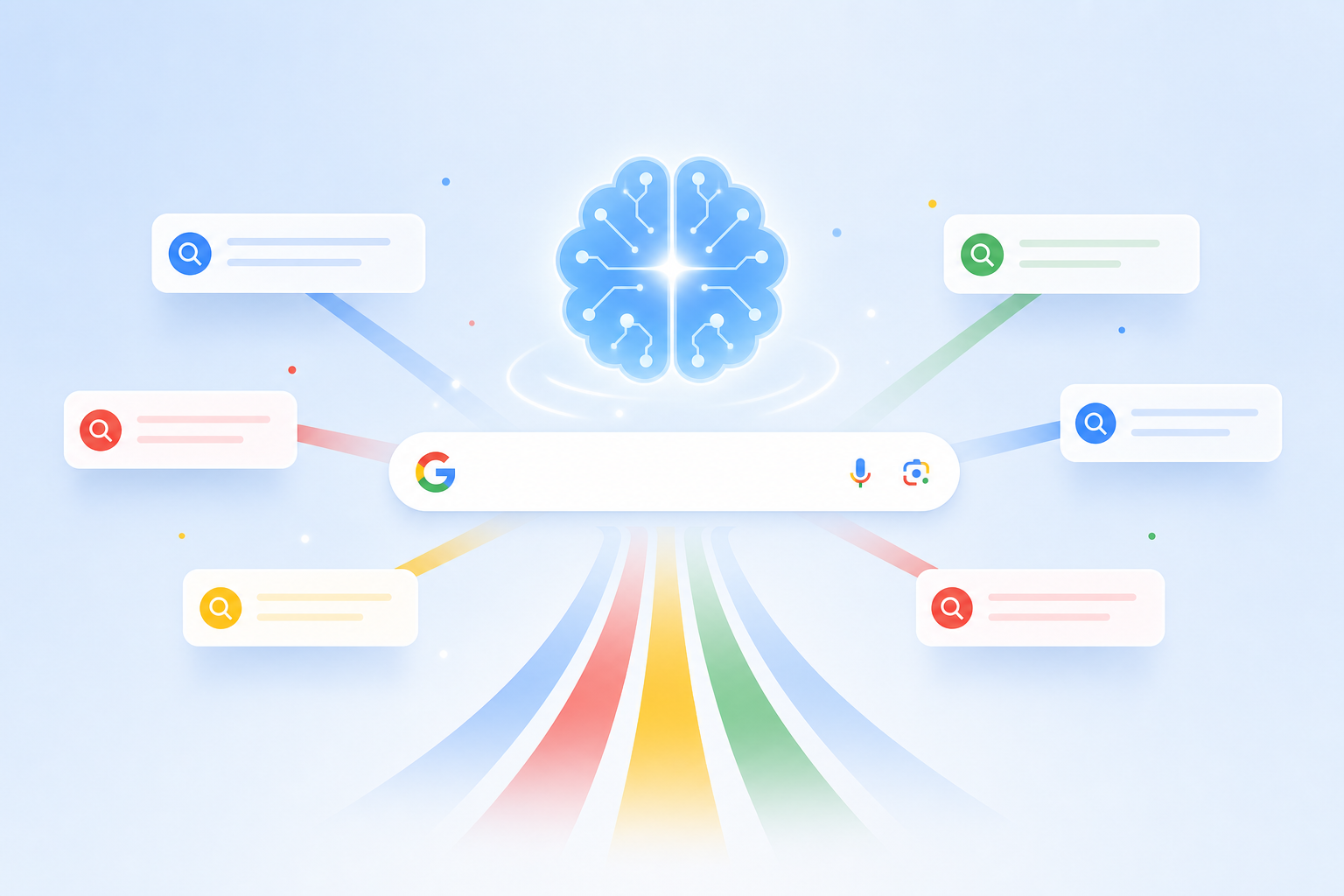
Core idea: Google uses generative AI to create and test ad variations, expand search terms based on context, and leverage landing page content to improve ad messaging. The goal is less manual work while maintaining or improving conversions.
AI Max is especially interesting for multilingual markets: it supports localized content and can generate natural headlines and descriptions that take hours to test manually.
Key AI Max features
AI Max combines several overlapping features. The most important in 2026:
- Automatic text assets: AI generates headlines and descriptions from landing page content and historical performance
- Final URL expansion: extends ads to relevant subpages on the same domain
- Text customization: dynamically adapts ad copy to search context
- Broad match + Smart Bidding combo: wider query coverage with intelligent bidding
- Asset optimization: weak assets automatically replaced with better variants
When should you adopt AI Max?
AI Max works best when you have sufficient conversion data (at least 15–30 conversions per month per campaign), quality landing page content, and clear brand messaging. It won't fix a bad product or broken tracking.
Good use cases: e-commerce with wide catalogs, SaaS with multiple feature pages, local services with clear service pages. Poor use case: very narrow B2B niches where every keyword needs manual control and compliance review.
We recommend piloting on one non-brand Search campaign before broader rollout. Compare a 4-week before/after period — conversions, CPA/ROAS, and impression share.
Optimization strategy for AI Max campaigns
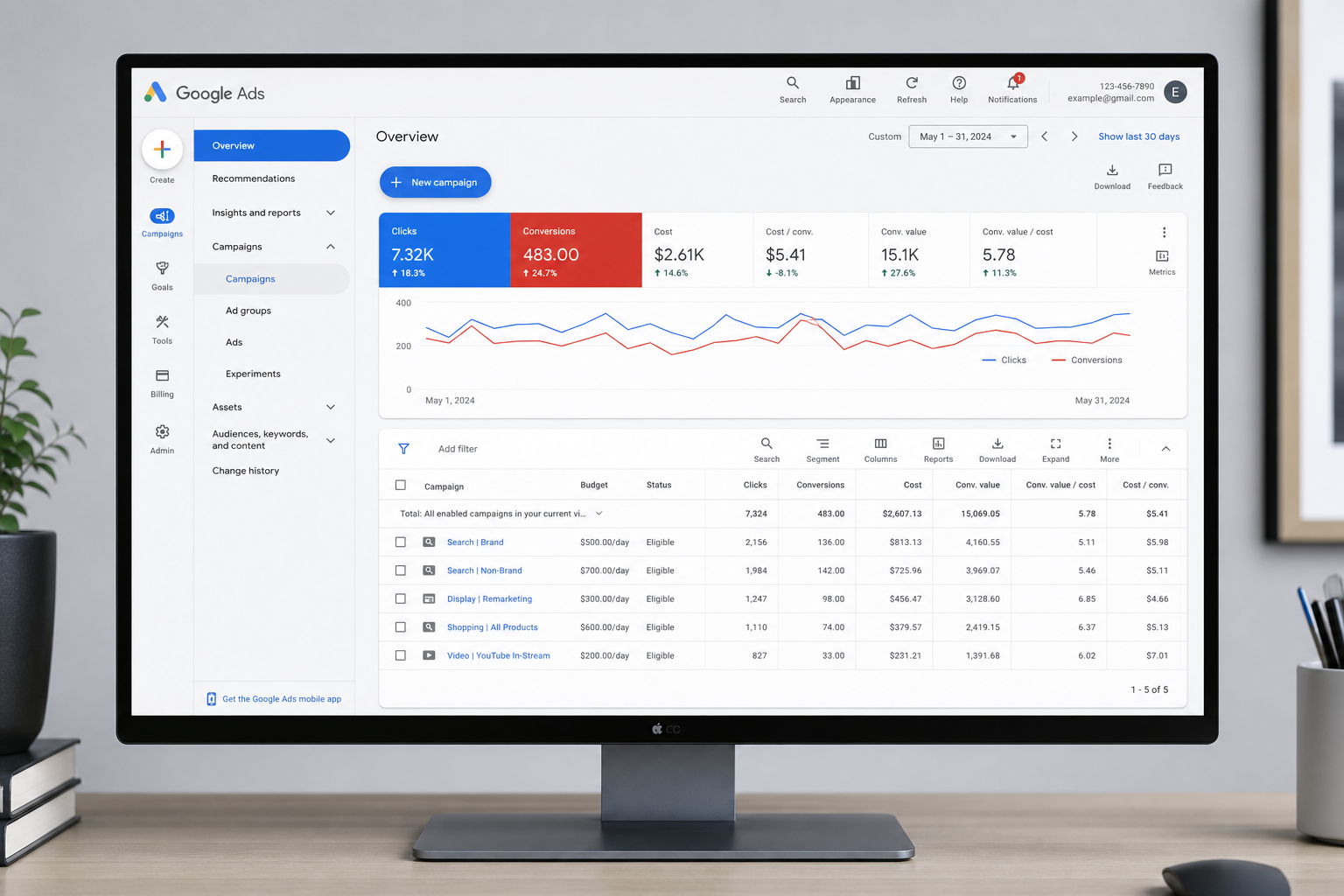
AI Max requires different optimization than manual Search campaigns. Keyword control shifts partially to the algorithm — your job is ensuring signal quality.
Keep negative keyword lists updated weekly during the first month. AI Max expands queries more aggressively than phrase match campaigns. The Search terms report is your most important tool.
Landing page quality matters more: AI reads page content and generates ads from it. Weak, generic landing pages produce weak ads. Invest in page-specific content before activating AI Max.
Bidding: use Target CPA or Target ROAS when you have enough data. Maximize Conversions works during learning, but set budget caps to prevent over-spending.
AI Max vs. Performance Max — which when?
These two are often confused. The difference is simple: AI Max optimizes the Search channel; Performance Max optimizes all channels together.
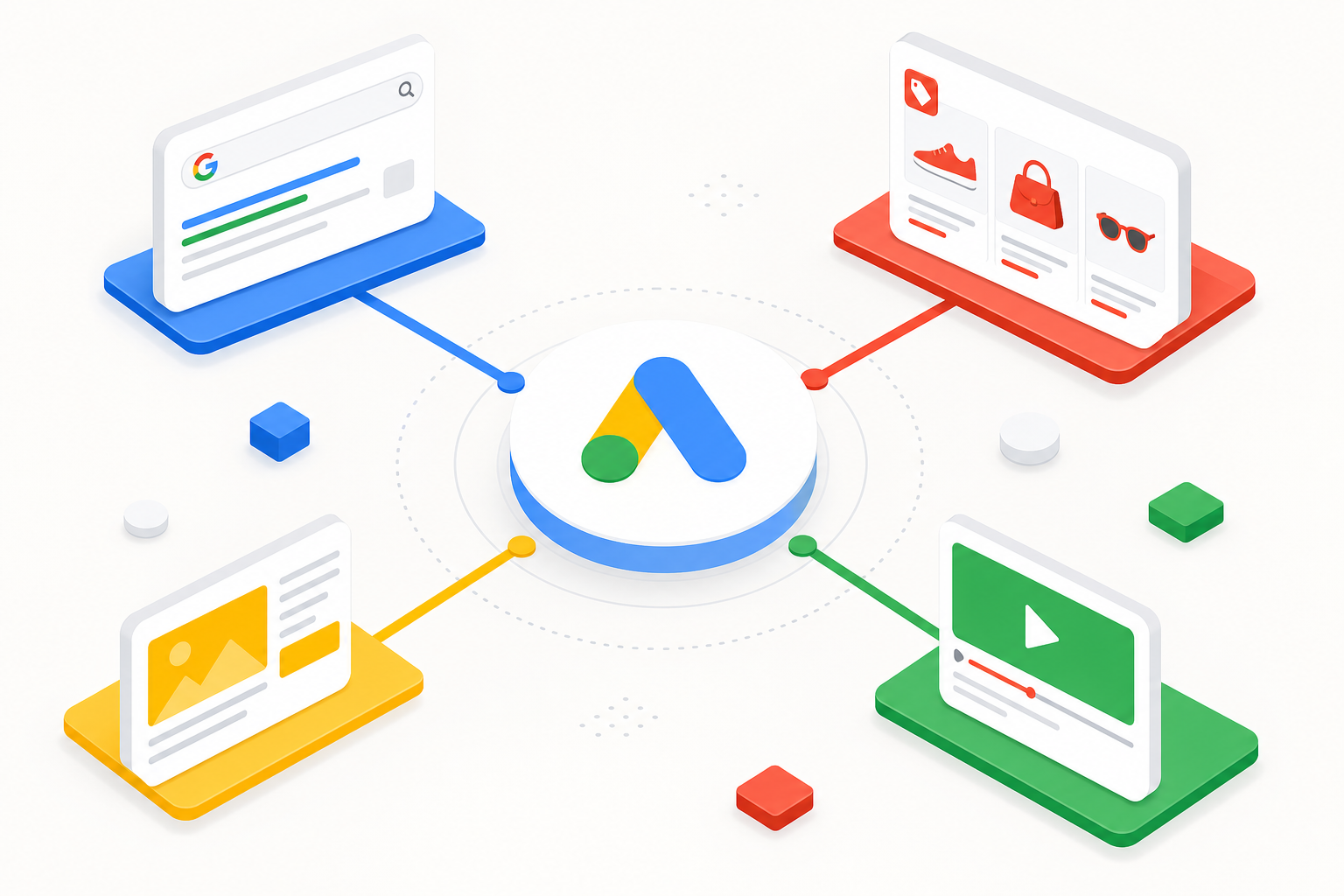
Use AI Max when you want to scale search traffic while keeping Search control and when landing pages are strong. Use PMax for cross-channel scaling, especially Shopping + Display + YouTube.
In the best setup they work in parallel: AI Max handles non-brand Search expansion, PMax scales Shopping and discovery channels, Brand Search protects brand terms.
Step-by-step implementation
How to adopt AI Max safely:
- 1. Audit conversion tracking and remove junk conversions
- 2. Select one non-brand Search campaign for pilot (min. 15 conv./month)
- 3. Activate AI Max from campaign settings
- 4. Enable Final URL expansion only if site structure supports it
- 5. Monitor Search terms report weekly — add negative keywords
- 6. Evaluate results after 4 weeks before expanding to other campaigns
Frequently asked questions
Is AI Max the same as Performance Max?
No. AI Max is Search campaign AI optimization. Performance Max is a separate campaign type covering all channels. They complement each other.
Does AI Max work with non-English search terms?
Yes. Google has expanded language support. Generated assets still need review — automatic generation can produce awkward phrasing.
Do I lose keyword control with AI Max?
Partially. Broad match logic expands queries automatically. Negative keyword lists and Search terms monitoring are more important than ever.
How much does AI Max cost?
AI Max itself adds no cost — you pay normal clicks. Efficiency gains can increase spend if budget caps aren't properly set.