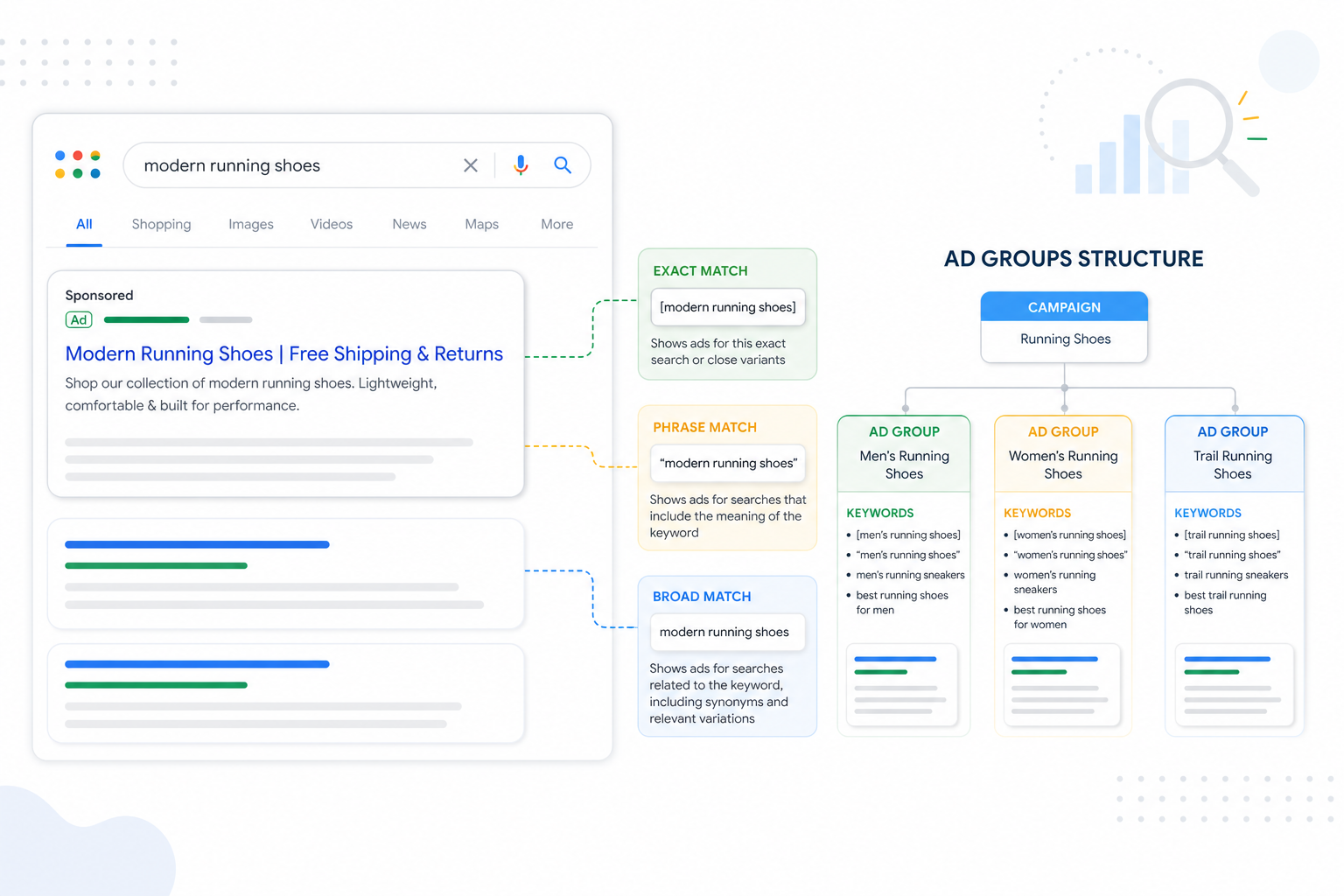
Google Ads is the world's most powerful paid search channel — but only if campaigns, bids, and ad copy are optimized continuously based on data. Manual management does not scale: algorithms react to changes in real time, while humans check reports once a week. AlgoTerra combines Google Ads expertise with an automated optimization engine — Search, Display, Shopping, and Performance Max in one system.
Why is Google Ads still the most important paid traffic channel?
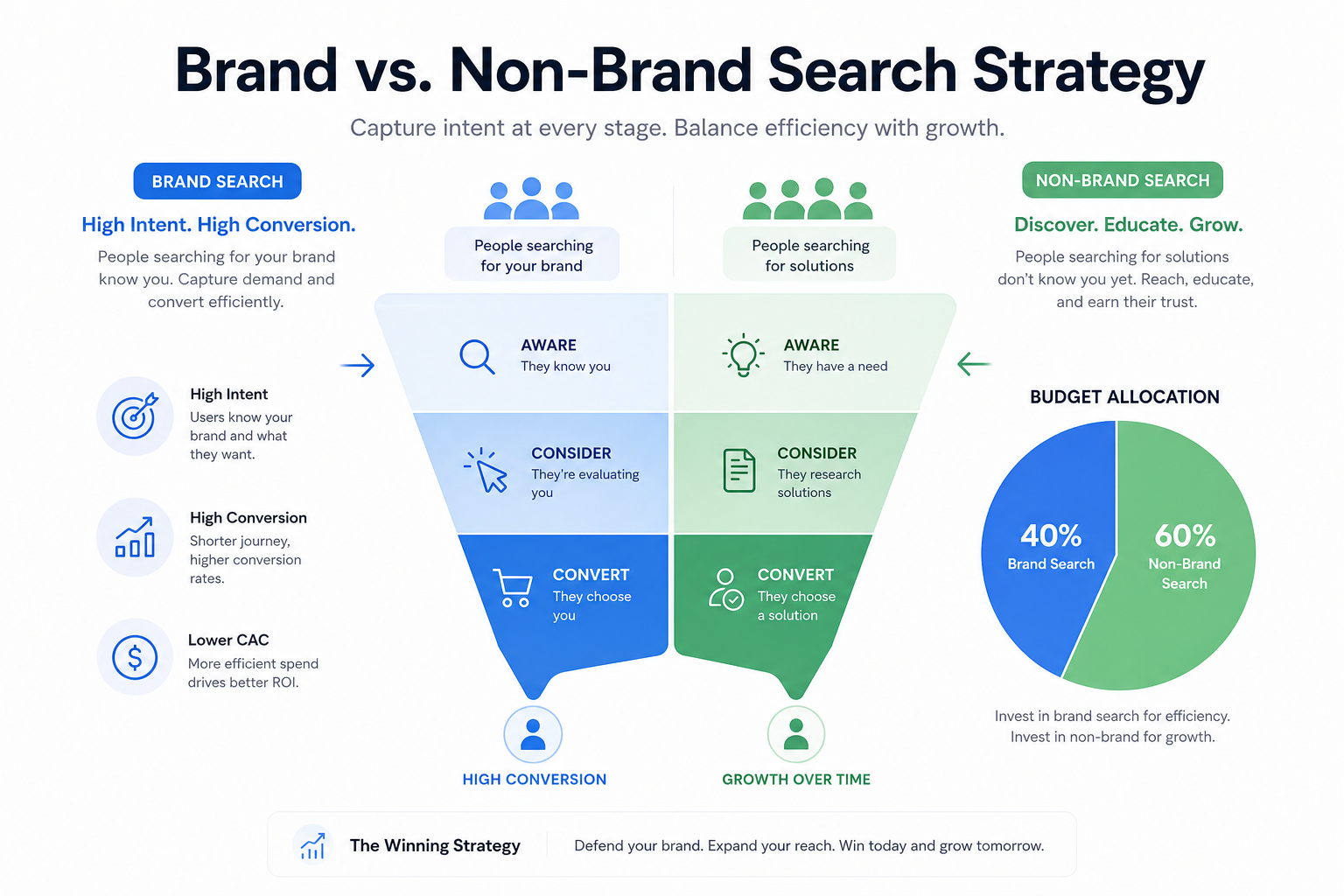
Google processes over 8.5 billion searches per day. When a potential customer looks for a solution — a product, service, or information — they usually start on Google. Search intent is at its highest when the user is actively searching. This makes Google Ads more effective than passive social advertising in many B2B and high-intent verticals.
Google Ads is not a "set and forget" channel. Keyword competition grows constantly, Quality Score directly affects cost per click, and Google's own algorithms — especially Smart Bidding and Performance Max — require continuous data and optimization to work effectively. A poorly managed account burns budget quickly without measurable results.
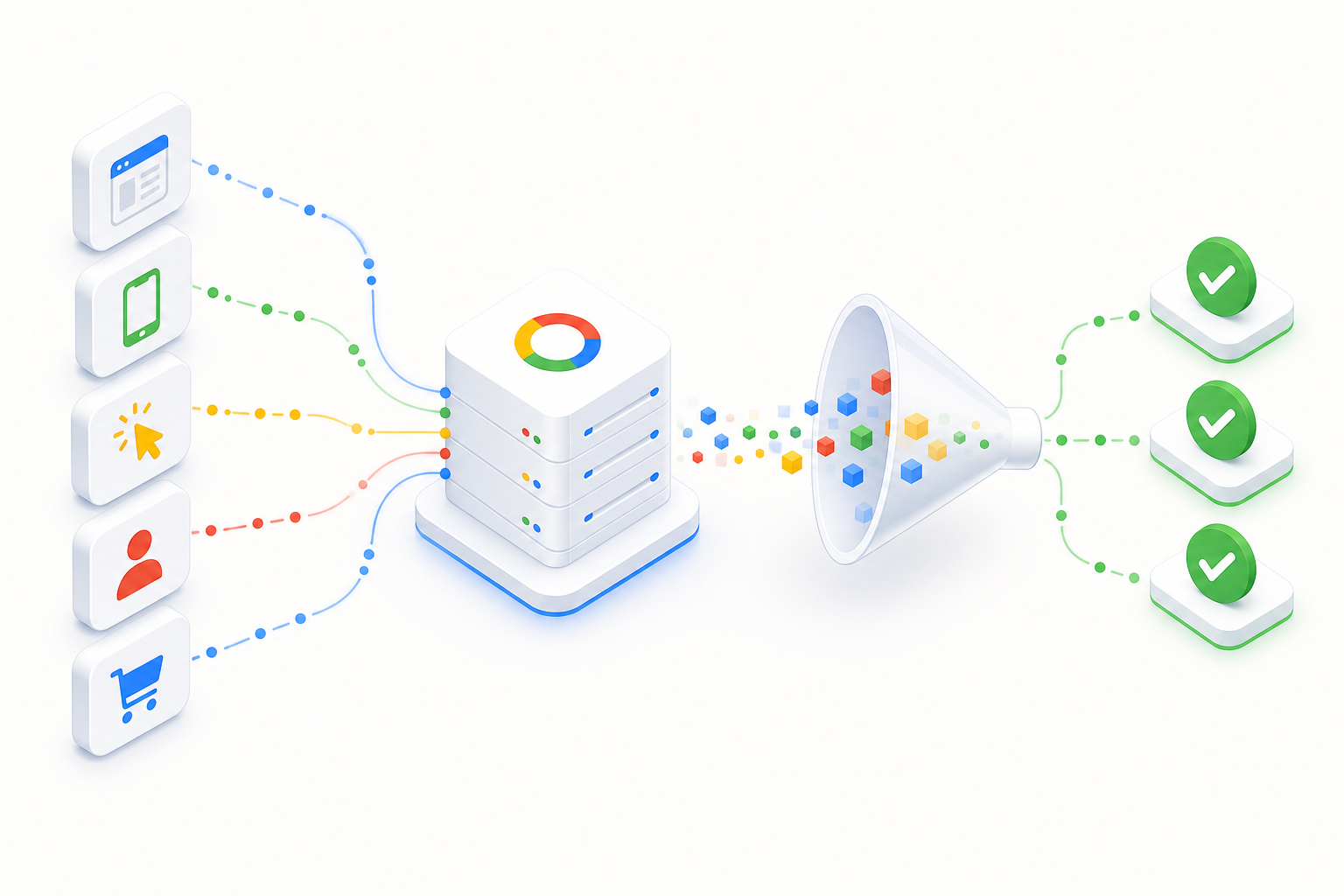
AlgoTerra's approach is based on Google Ads campaigns being part of a broader marketing algorithm. We do not optimize individual campaigns in isolation, but the entire account — budgets, audiences, ad copy, and landing pages — as one data-driven system that improves every day.
- Immediate visibility — no waiting period like organic SEO
- Precise targeting by keyword, location, device, and audience
- Full measurability: every click, conversion, and euro tracked
- Scalability — increase budget quickly in winning campaigns
- Integrates with Google Analytics 4 and CRM systems
Google Ads campaign channels — what does each one do?

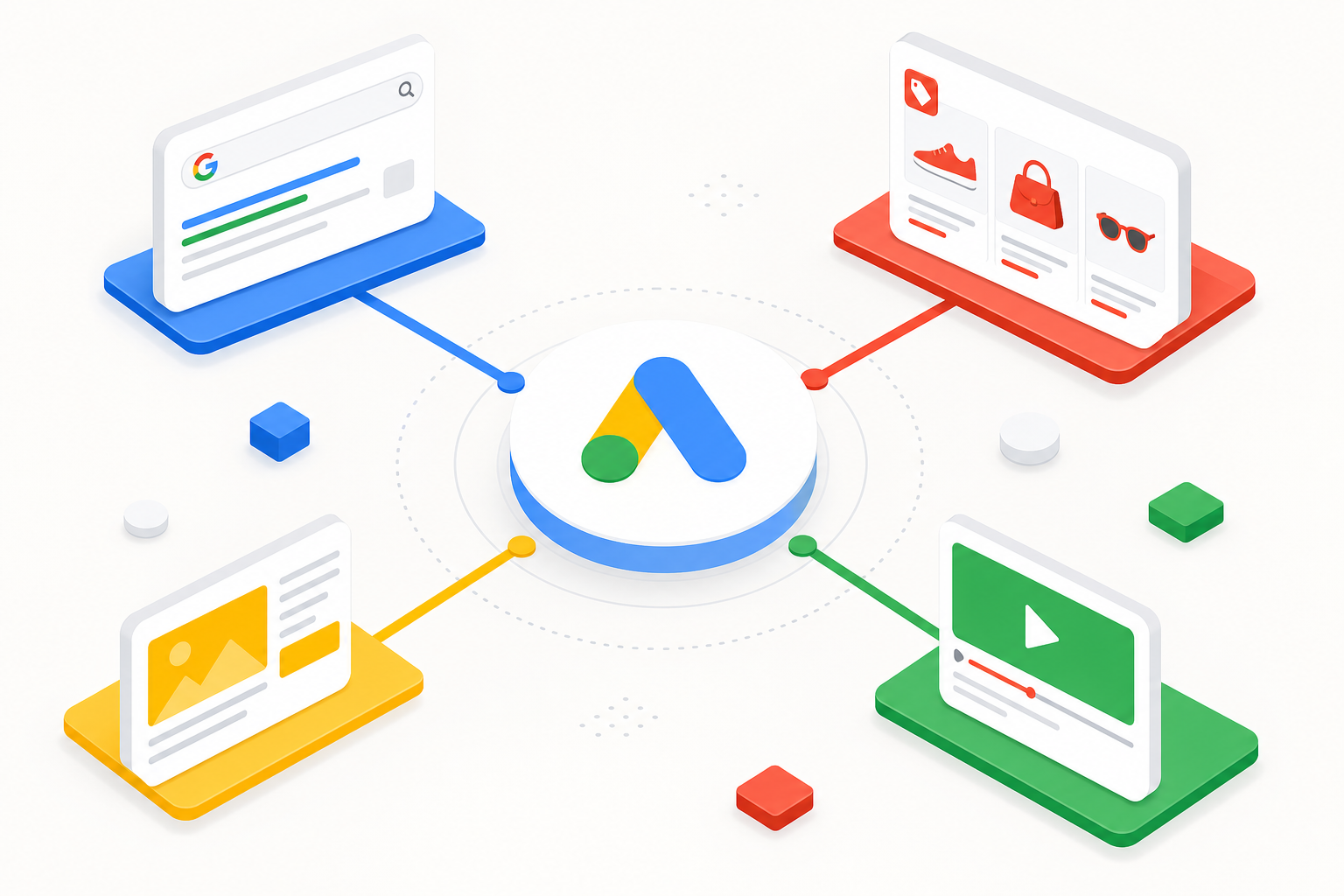
The Google Ads ecosystem consists of several campaign types, each serving a different purpose in the funnel. An effective account combines the right channels to the right funnel stage — not everything for everyone.
Search
Text ads in Google search results. Highest intent — the user is actively looking for a solution. Best channel for lead generation and direct sales.
- CPC: €0.40–3.50
- CTR: 3–8%
- Conversion: 2–12%
Performance Max
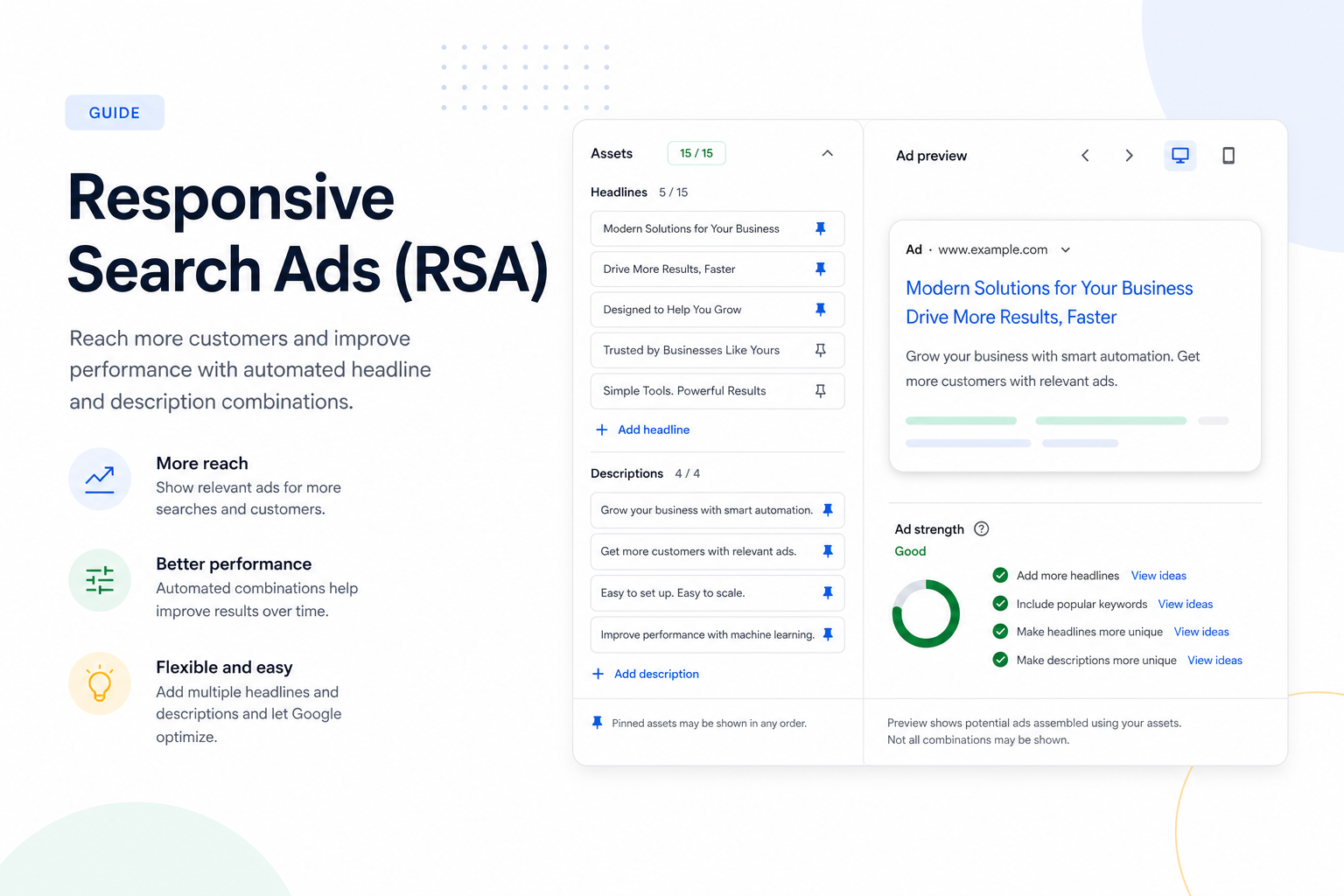
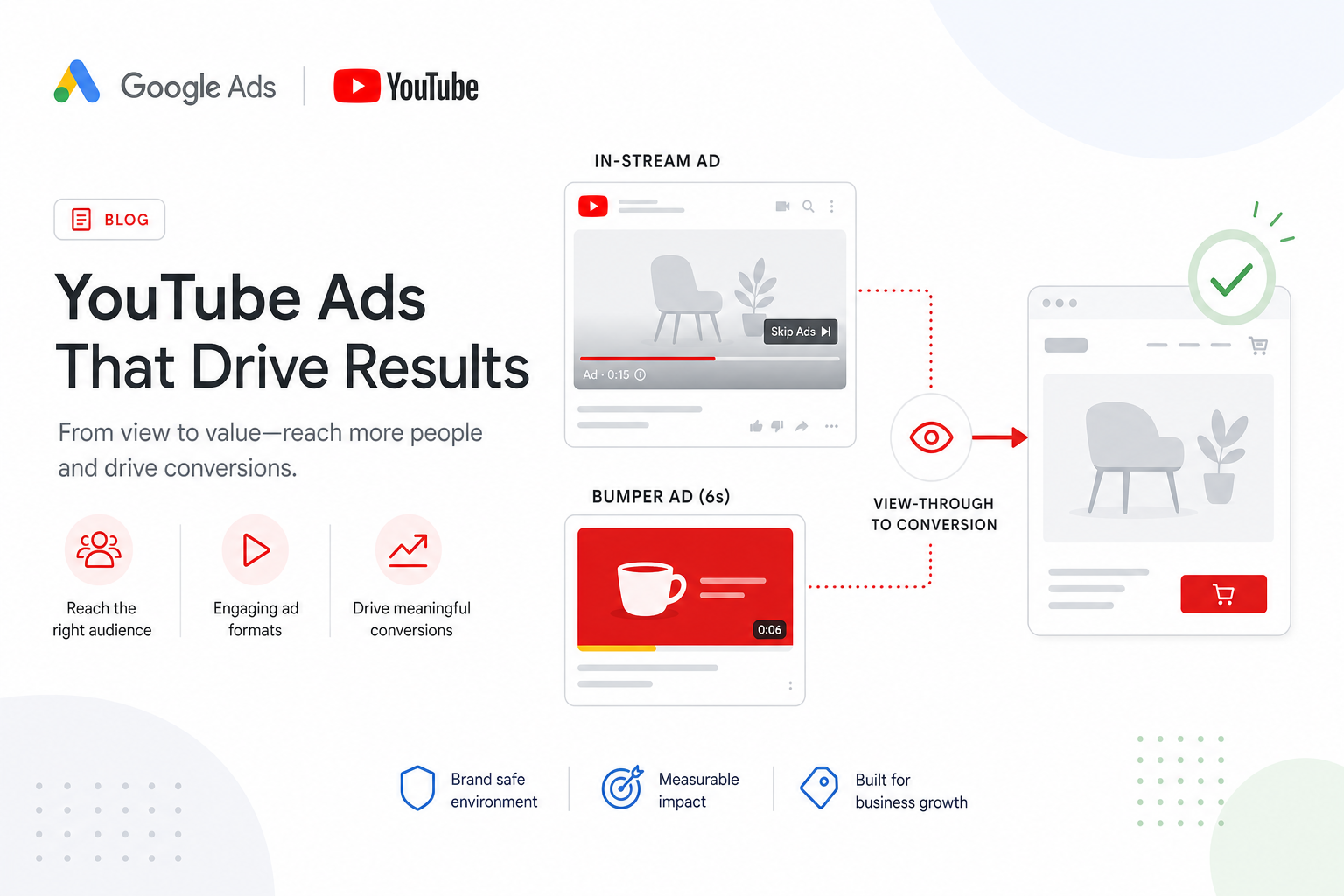
Google's AI-powered campaign type that shows ads across Search, Display, YouTube, Gmail, and Discover automatically. Requires conversion data to perform.
- ROAS: 3–8×
- Automatic channel mix
- Product feed support
Display
Visual banner ads across 2+ million websites. Retargeting, brand awareness, and audience expansion. Works best combined with Search campaigns.
- CPM: €1–5
- Wide reach
- Custom intent audiences
Shopping
Product ads with image, price, and reviews directly in search results. Essential for e-commerce. Integrates with Google Merchant Center and product feed.
- ROAS: 4–12×
- Product feed optimization
- Local inventory support
Smart Bidding — how do automated bids work?
Smart Bidding is Google's machine learning bid strategy suite that adjusts your bids in every auction in real time. Instead of setting a fixed CPC bid, the algorithm predicts each click's conversion probability and adjusts the bid accordingly.
Common Smart Bidding strategies: Target ROAS (target return on ad spend), Target CPA (target cost per acquisition), Maximize Conversions (maximize conversions within budget), and Maximize Conversion Value (maximize conversion value). The choice depends on your business goals, conversion data volume, and campaign maturity.
AlgoTerra selects and tests bid strategies systematically. Switching to Target ROAS too early can kill a campaign because the algorithm needs at least 30–50 conversions in a 30-day window for reliable optimization. That's why we often start with Maximize Conversions and gradually move to target ROAS.
- Target ROAS — best when conversion value varies (e-commerce)
- Target CPA — best when conversion value is consistent (lead gen)
- Portfolio bidding — one strategy across multiple campaigns
- Seasonality adjustments — account for seasonal variation
- Data exclusions — filter anomalous days from the algorithm
Performance Max — the future of Google Ads?
Performance Max (PMax) is Google's fastest-growing campaign type. It combines all Google advertising channels into one campaign and uses machine learning to optimize ad distribution, creative elements, and bids automatically.
PMax requires: strong conversion tracking, sufficient conversion data (recommended 30+ conversions/month), quality assets (images, videos, headlines, descriptions), and clear conversion goals. Without these, PMax can spend budget on Display and YouTube channels where conversion rates are lower.
AlgoTerra's PMax strategy is based on asset group structure, product feed optimization (for e-commerce), and continuous asset testing. We monitor channel-level performance on the Insights page and adjust asset groups based on data — we don't let the algorithm drift toward cheapest traffic.
Conversion tracking — the foundation of everything
Google Ads optimization is only as good as its data. Without accurate conversion tracking, Smart Bidding operates blindly — it optimizes clicks, not revenue. This is the most common reason Google Ads accounts fail to deliver expected ROAS.
AlgoTerra always audits conversion tracking before campaign optimization: Google Ads tag, Google Analytics 4 linking, Enhanced Conversions, server-side tracking (when needed), and offline conversion import from CRM. We define primary and secondary conversions clearly — e.g. purchase vs. newsletter signup.
Conversion value definition is critical in lead generation: if sales closes 20% of leads at an average €5,000 deal, lead value is €1,000. This value is fed to the Smart Bidding algorithm, which can optimize for real customers — not cheap but low-quality clicks.
- Google Tag Manager implementation and validation
- GA4 + Google Ads linking and audience import
- Enhanced Conversions — more accurate attribution
- Offline conversion import — CRM → Google Ads
- Micro and macro conversion hierarchy
Manual Google Ads management vs. algorithmic optimization
Many companies manage Google Ads accounts manually or with a part-time freelancer. This comparison shows why a data-driven approach consistently delivers better results.
| Manual management | AlgoTerra | |
|---|---|---|
| Bid optimization | Checked 1–2× per week, delayed reaction | Real-time Smart Bidding + algorithmic adjustment 24/7 |
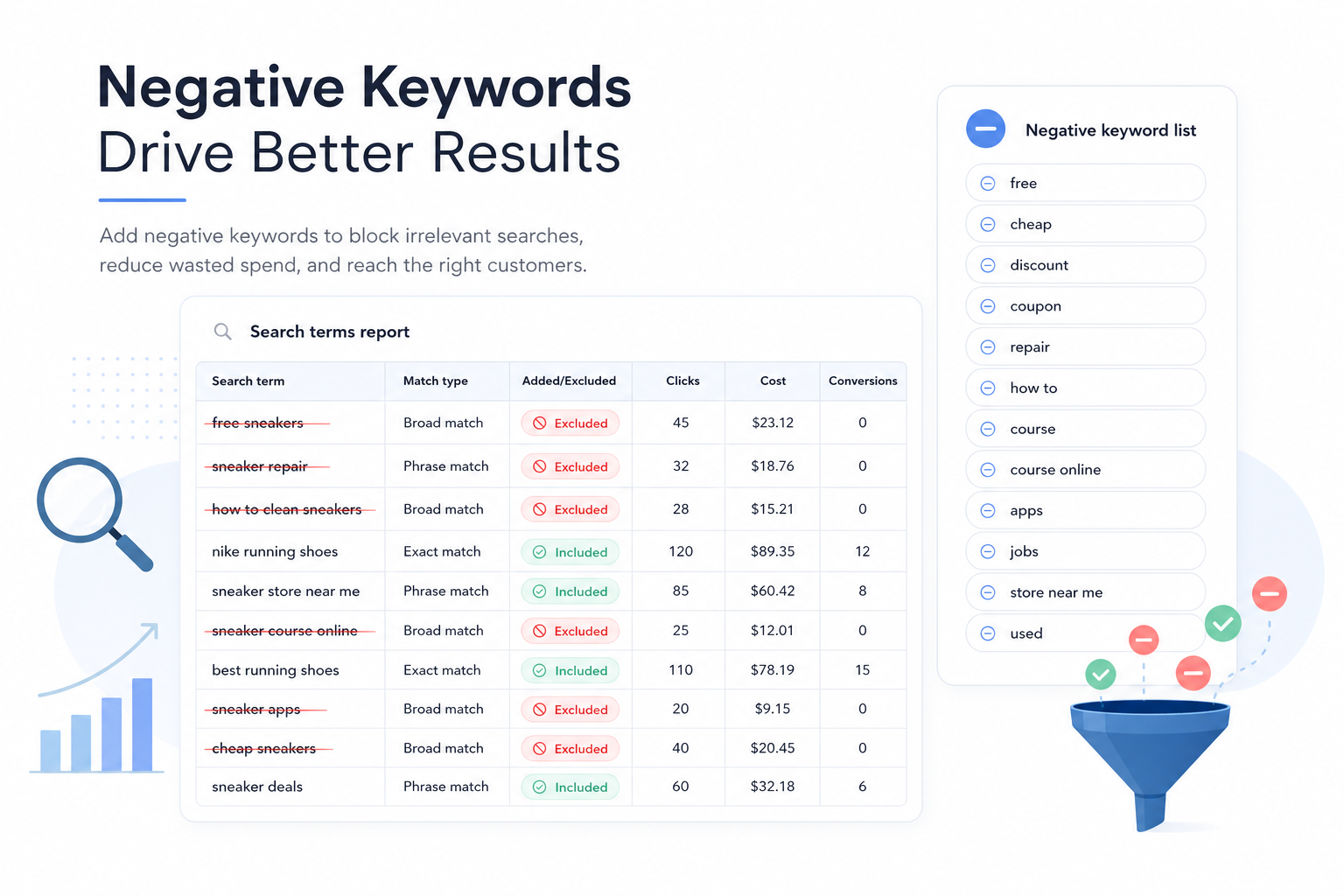
| Negative keywords | Manual review monthly | Automatic search + weekly audit |
| A/B testing | Random, not systematic | Continuous ad copy and landing page suggestion testing |
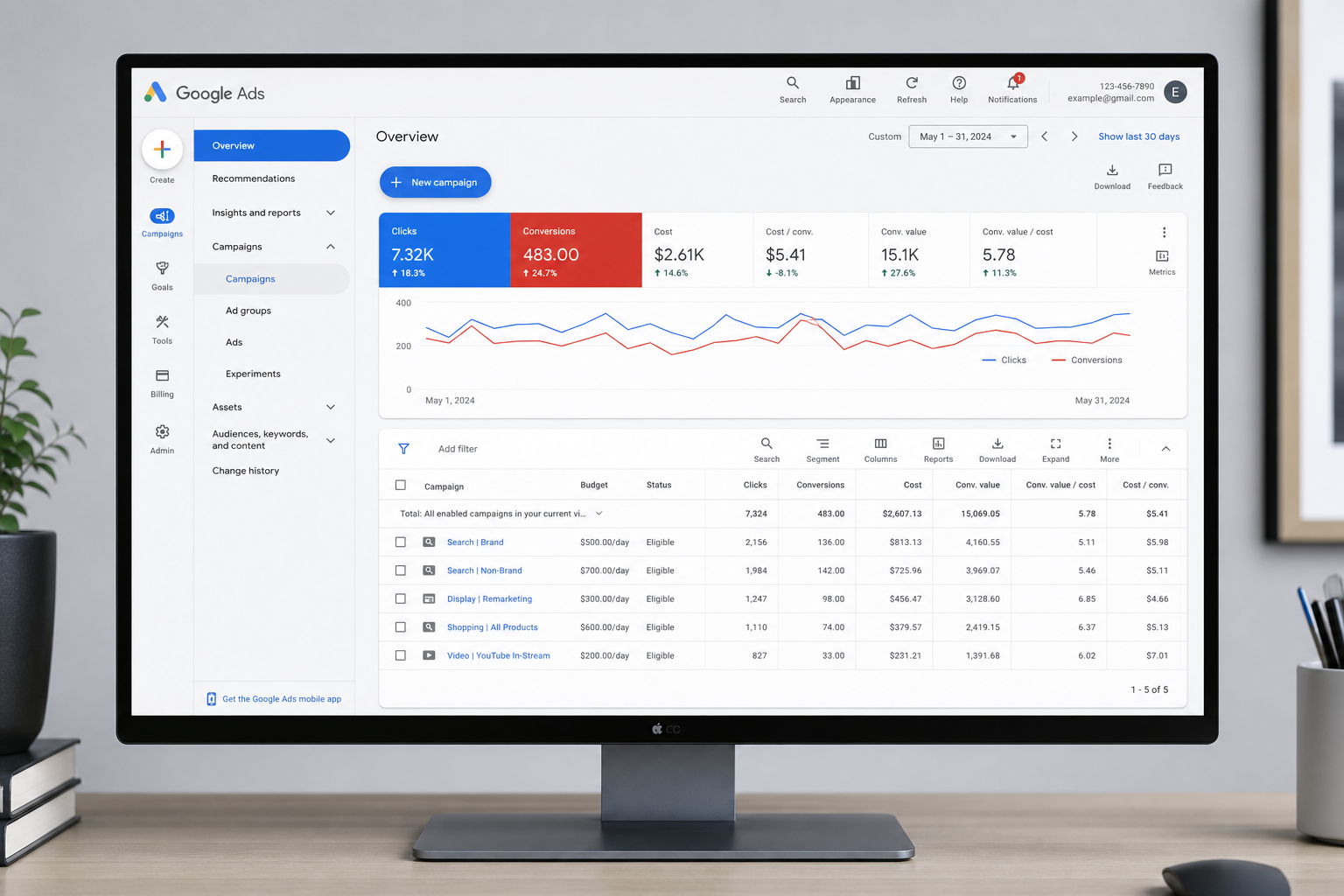
| Reporting | Static PDF reports | Real-time dashboard + monthly analysis |
| Performance Max | Often "set and forget" | Asset group optimization + channel-level monitoring |
| Conversion tracking | Basic setup, no validation | Full audit + Enhanced Conversions + CRM integration |
| Scaling | Slow — requires manual work | Automatic budget shift to winning campaigns |
Google Ads service 90-day process
Every AlgoTerra client relationship starts with an audit and follows a clear 90-day process. The goal is measurable ROAS improvement within the first quarter.
Account audit & conversion tracking
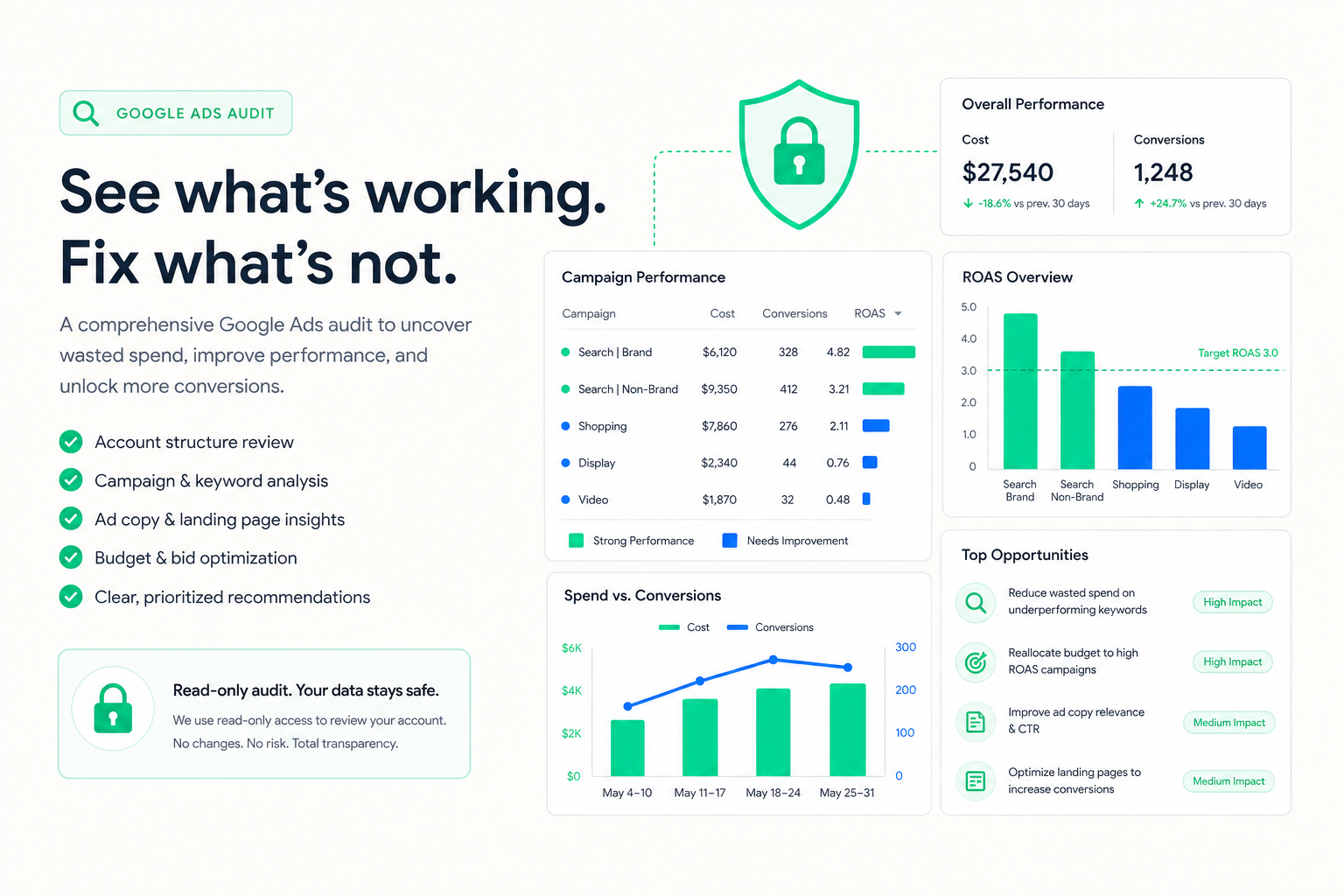
We analyze current account structure, conversion tracking, Quality Score, wasted budget, and competitors. We fix tracking and rebuild campaign structure.
Launch & data collection
We launch optimized campaigns with Smart Bidding strategies. We collect conversion data for algorithm training. We test ad copy and audiences.
Optimization & A/B testing
We move to Target ROAS/CPA strategies when data is sufficient. We expand winning keywords, add negatives, and optimize PMax assets.
Scaling & automation
We increase budget in winning campaigns. We activate full algorithmic optimization. We deliver a 90-day results report and scaling plan.
Who is AlgoTerra's Google Ads service for?
Our service is designed for companies that want measurable growth from paid traffic — not just "Google Ads advertising." We achieve the best results with clients who have a clear conversion goal and at least €1,500/month ad budget.
- E-commerce — Shopping + PMax + Search, product feed optimization, ROAS targets
- B2B service companies — lead generation, CPA optimization, CRM integration
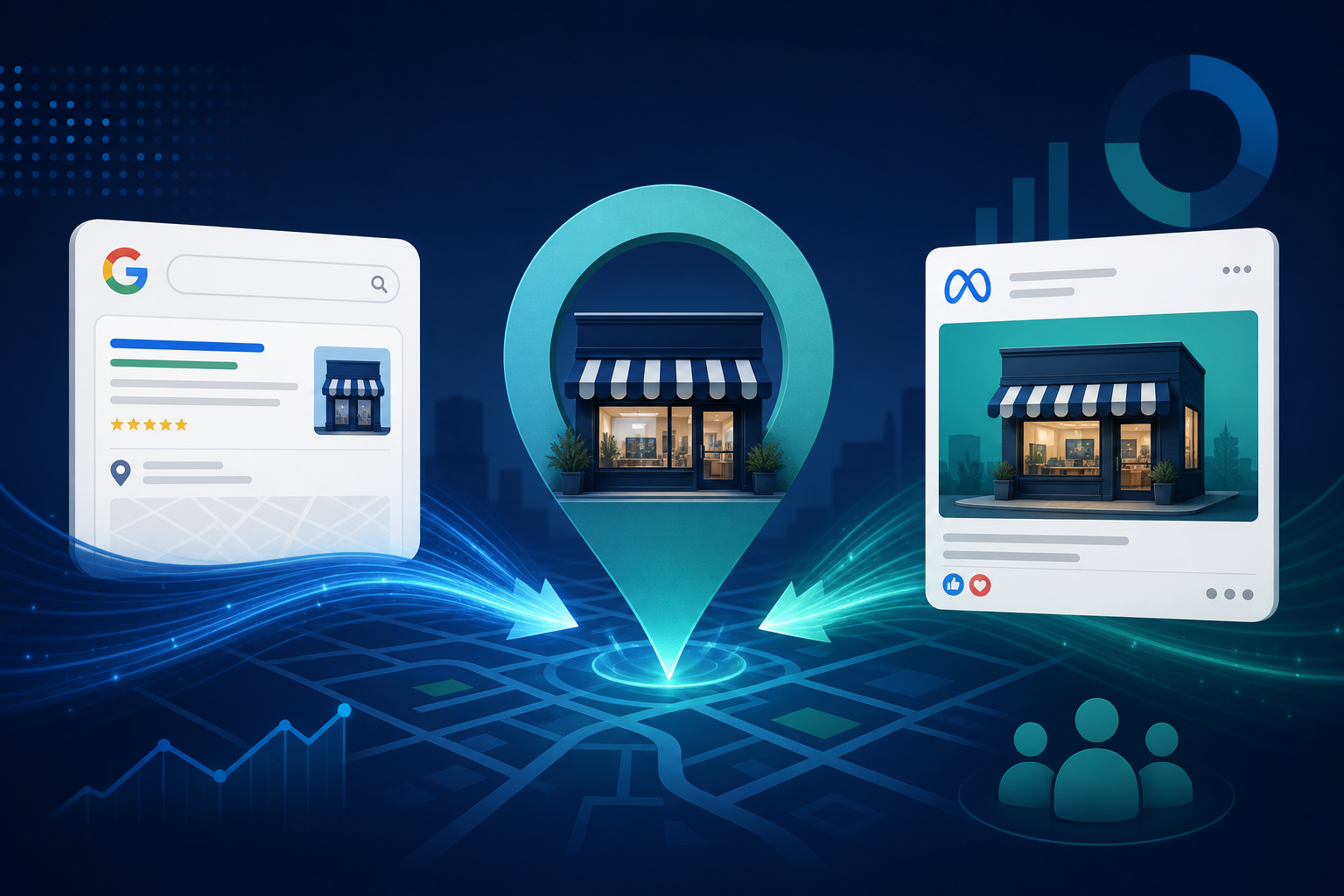
- Local businesses — Local campaigns, Google Business Profile integration
- SaaS companies — trial signup optimization, freemium funnels
- New Google Ads users — we build the account correctly from scratch, avoiding costly mistakes
- Disappointed current users — audit usually reveals 20–40% wasted budget
Want to know how your Google Ads campaigns could perform?
Start a free Google Ads audit with Google sign-in — get the report in your inbox in minutes. No commitment required.
2.1× → 5.3× ROAS"AlgoTerra took over our Google Ads account in three weeks. ROAS rose from 2.1 to 5.3 in the first quarter — without increasing ad budget."
Ready to get started?
Start with a free Google Ads audit or request a deeper review via the form. We build an automated campaign system within 14 days.
Glossary
The Google Ads ecosystem has many technical terms. Below we explain the key concepts you will encounter when managing and reporting on your campaigns. View full glossary →
- Smart Bidding
- Google's machine learning automated bid strategies. The algorithm adjusts bids in every auction based on conversion probability. Includes Target ROAS, Target CPA, Maximize Conversions, and Maximize Conversion Value.
- Performance Max (PMax)
- Google's AI-powered campaign type that automatically shows ads across all Google channels: Search, Display, YouTube, Gmail, Discover, and Maps. Requires conversion data and quality assets.
- Quality Score
- Google's 1–10 scale for ad, keyword, and landing page relevance. Higher Quality Score lowers CPC and improves ad visibility. Depends on expected CTR, ad relevance, and page experience.
- ROAS (Return on Ad Spend)
- Return on ad spend: revenue ÷ ad spend. ROAS 4× means every ad euro generated €4 in revenue. The most important metric for e-commerce and direct sales campaigns.
- CPC (Cost Per Click)
- Cost per click: ad spend ÷ clicks. In Google Ads auctions, CPC varies by competition, Quality Score, and bid. AlgoTerra optimizes CPC by improving relevance, not just lowering bids.
- CPA (Cost Per Acquisition)
- Cost per acquisition: ad spend ÷ conversions. Key metric in lead generation and service business campaigns where conversion value is consistent.
- Search Intent
- User purpose in a search: informational (seeking info), navigational (seeking a specific site), commercial (comparing options), or transactional (ready to buy). Search campaign targeting is based on intent.
- Conversion Tracking
- Measurement system that records valuable actions (purchase, form, call) to the Google Ads account. Without accurate conversion tracking, Smart Bidding cannot optimize effectively.
- Asset Group
- Performance Max campaign structure containing ad materials: headlines, descriptions, images, videos, and logos. Multiple asset groups can be created for different product lines or audiences.
- Insights Page
- Google Ads account analytics view showing Performance Max channel distribution (Search, Display, YouTube etc.) and helping identify where budget actually goes.
- Enhanced Conversions
- Google conversion tracking enhancement that sends hashed customer data (email, phone) at conversion time. Improves attribution accuracy especially after iOS 14+ updates.
- Negative Keywords
- Keywords for which ads are not shown. Prevent irrelevant clicks and protect budget. E.g. "free" or "jobs" for a B2B service. AlgoTerra manages negatives automatically.