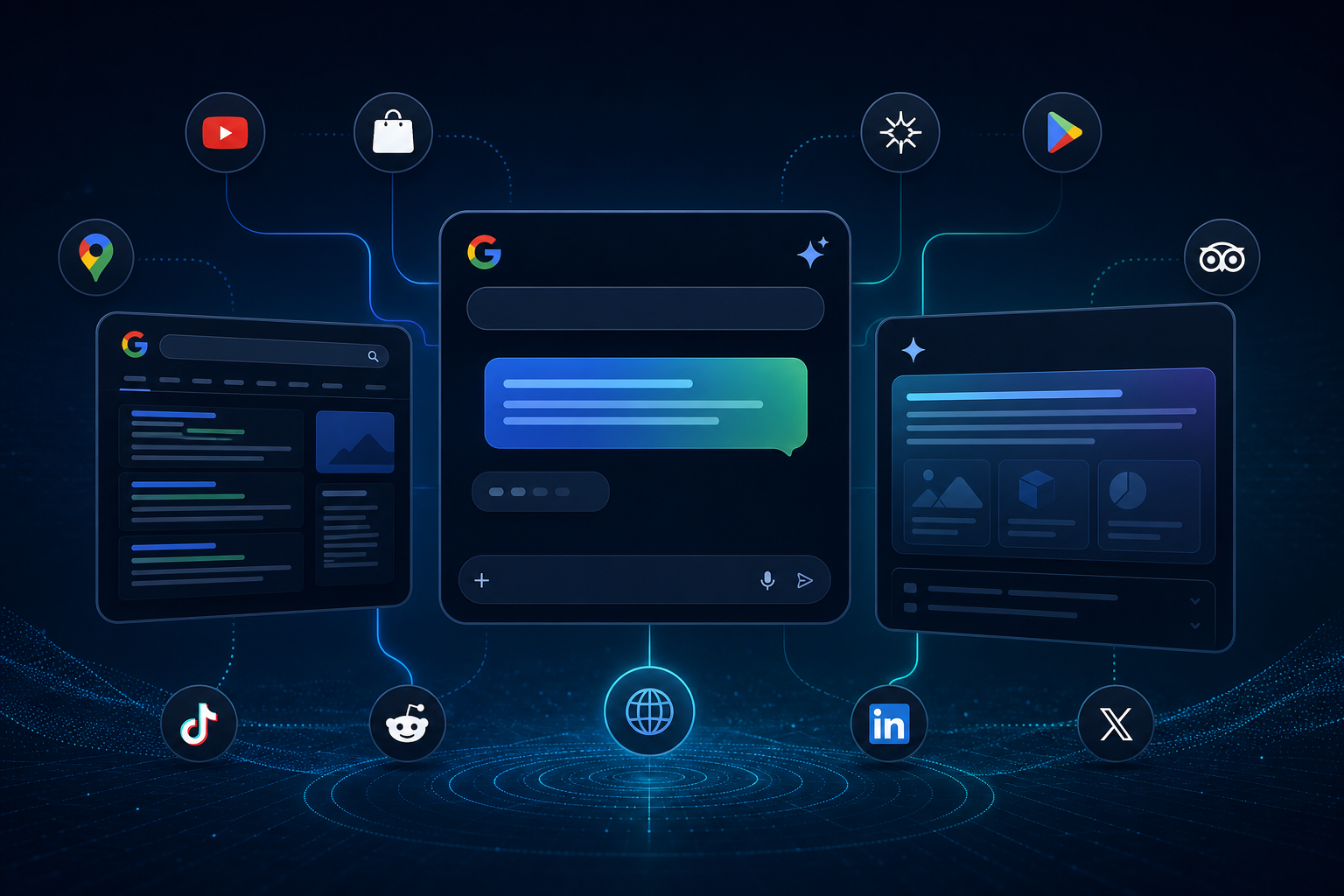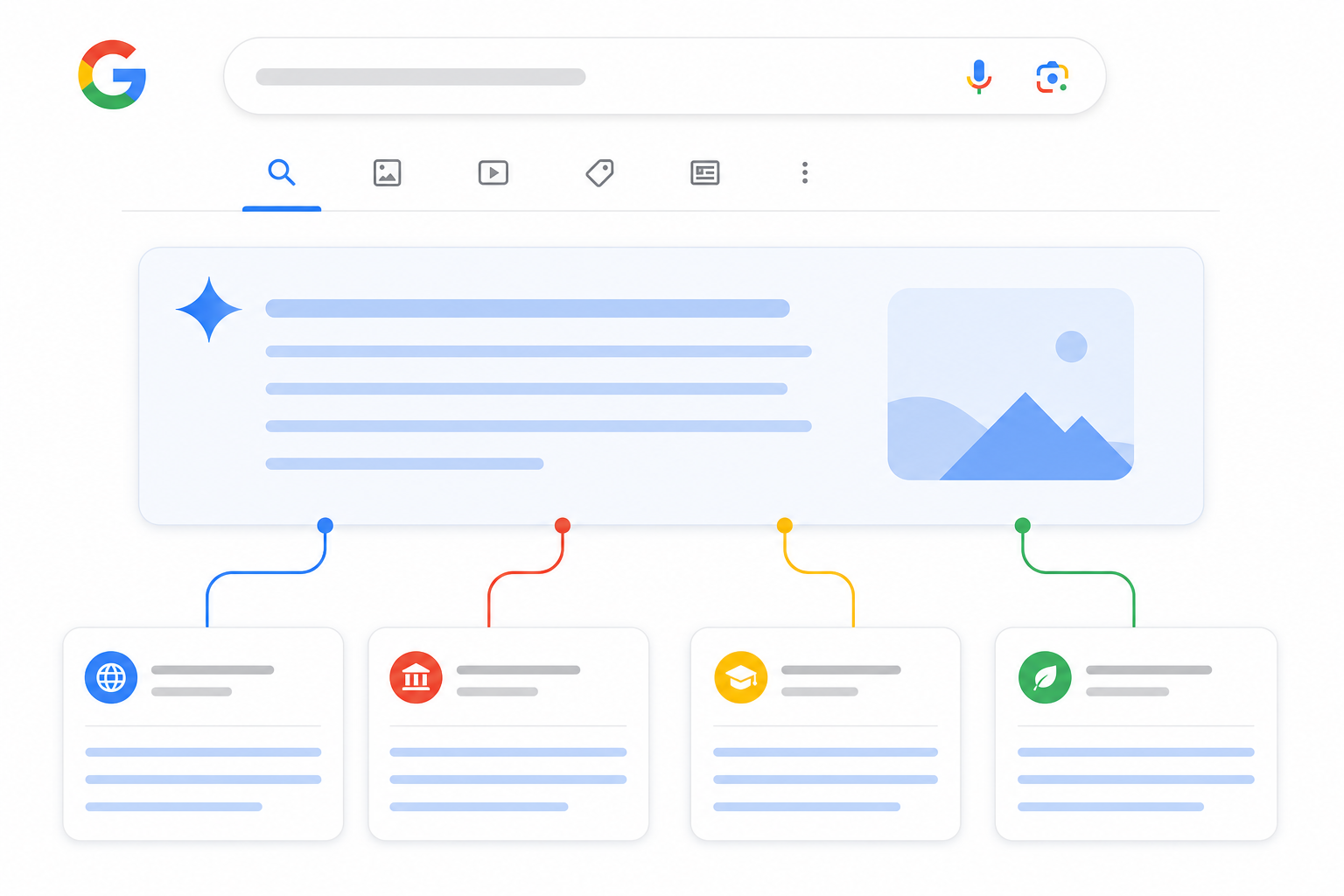
Search behavior is changing fast. More people — especially B2B decision-makers and younger consumers — ask AI directly for recommendations: "What is the best marketing agency in Finland?" or "Compare X and Y software." Generative Engine Optimization (GEO) ensures your brand is mentioned in these answers. It is the next frontier in digital visibility — and most competitors are not there yet.
Why is Generative Engine Optimization the next frontier?
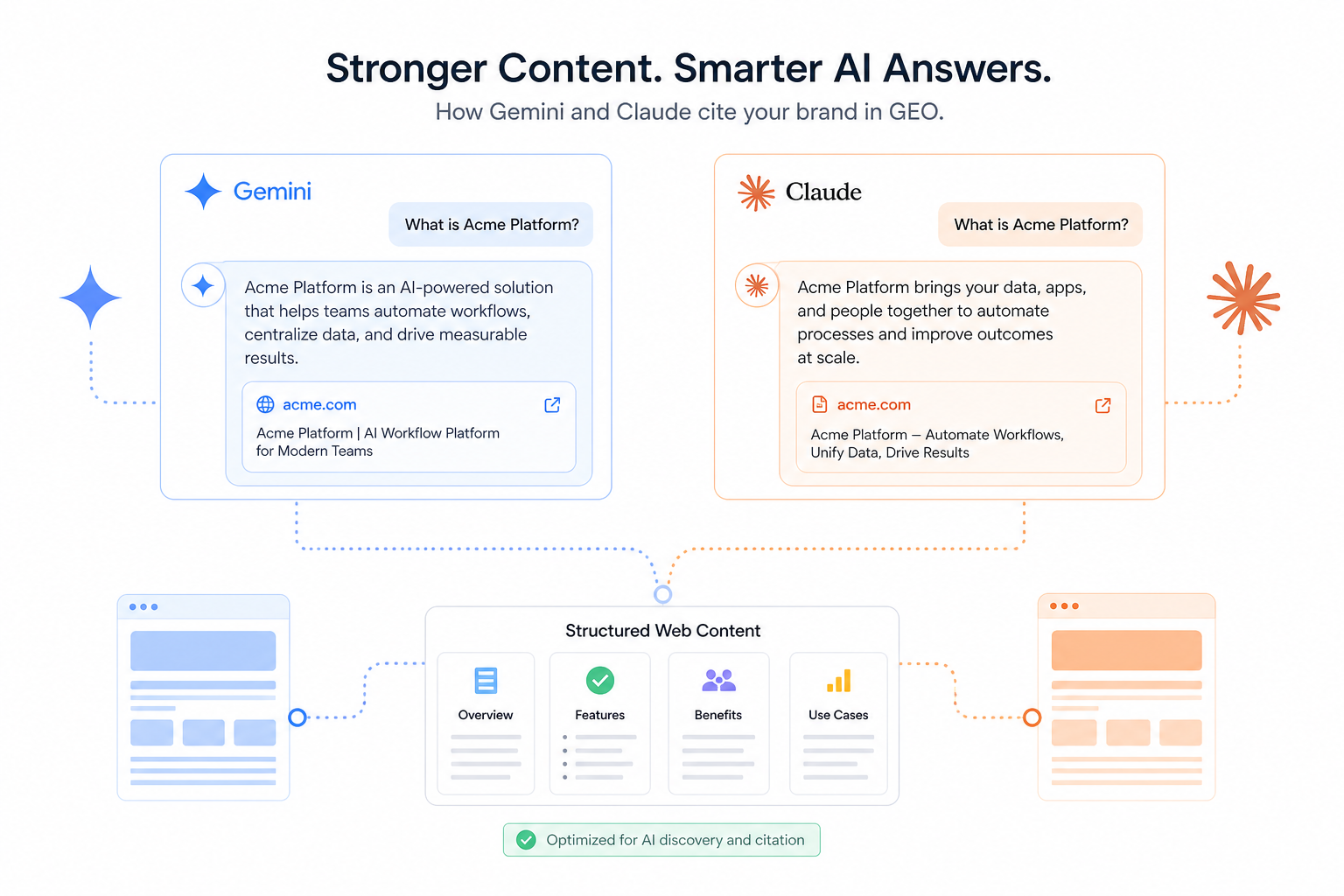
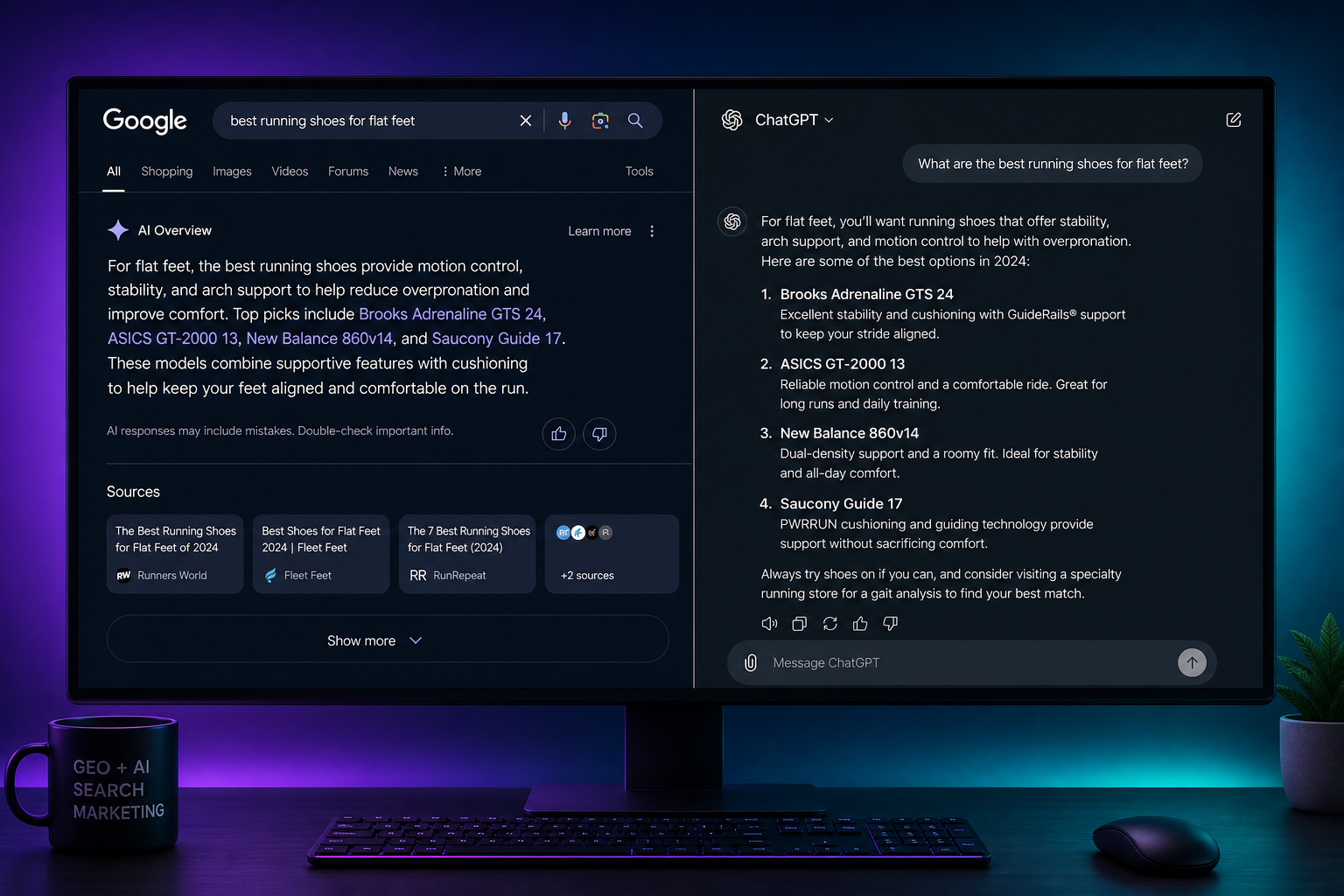
Traditional SEO optimizes Google search results. GEO optimizes answers from generative search engines — ChatGPT, Perplexity, Google AI Overviews, Gemini, Copilot, and Claude. When a user asks AI for a recommendation, the algorithm synthesizes an answer from training data, web search, and structured information.
Research shows over 40% of young adults (18–34) have used AI for product or service recommendations. 25% of B2B decision-makers start vendor evaluation with ChatGPT or Perplexity. If your brand is not mentioned, you are not even in the competition — regardless of how well you rank on Google.
GEO does not replace SEO — it complements it. Good SEO ranking brings authority that AI models leverage. AlgoTerra's approach combines SEO and GEO into one strategy: traditional organic traffic + new AI search channel.
- New traffic channel — competitors are not optimizing yet
- High trust — users trust AI recommendations
- B2B impact — decision-makers use AI for comparison
- Synergy with SEO — structured content benefits both
- Measurable — brand mentions trackable by platform
Which AI platforms matter for GEO?
Each generative search engine works differently — different data sources, update cycles, and mention logic. An effective GEO strategy covers the platforms your target audience uses.
ChatGPT (OpenAI)
World's most popular AI assistant. GPT-4o and GPT-4o Search fetch from the web in real time. Brand mentions based on training data, web search, and structured information. B2B and consumer recommendations.
- 200M+ weekly users
- Search GPT integration
- High B2B usage
Perplexity AI
AI search engine that always cites sources. Best GEO platform for measurability — you see exactly where information comes from. Favors fresh, authoritative content and structured data.
- Source links in every answer
- Real-time web search
- High trust
Google AI Overviews
Google's AI summary above search results. Combines traditional SEO and GEO — ranking in AI Overviews requires both SEO authority and GEO-optimized content.
- Google search integration
- SERP shift
- SEO + GEO together
Gemini (Google) & Copilot (Microsoft)
Gemini integrated into Google ecosystem, Copilot into Microsoft 365 and Bing search. Especially relevant for enterprise — Copilot is widely used in office environments.
- Enterprise usage
- Bing integration
- Workspace synergy
How do generative search engines choose what to mention?
AI models don't "rank" sites in the traditional sense — they synthesize answers from multiple signals. Understanding these signals lets you influence whether your brand is mentioned.
Training data and web search — models are trained on vast text data and many (ChatGPT Search, Perplexity) search the web in real time. Your brand must exist authoritatively online.
Citation signals — how often your brand is mentioned in trusted sources: press, reviews, comparison articles, Wikipedia, industry publications. More mentions = more likely AI recommends you.
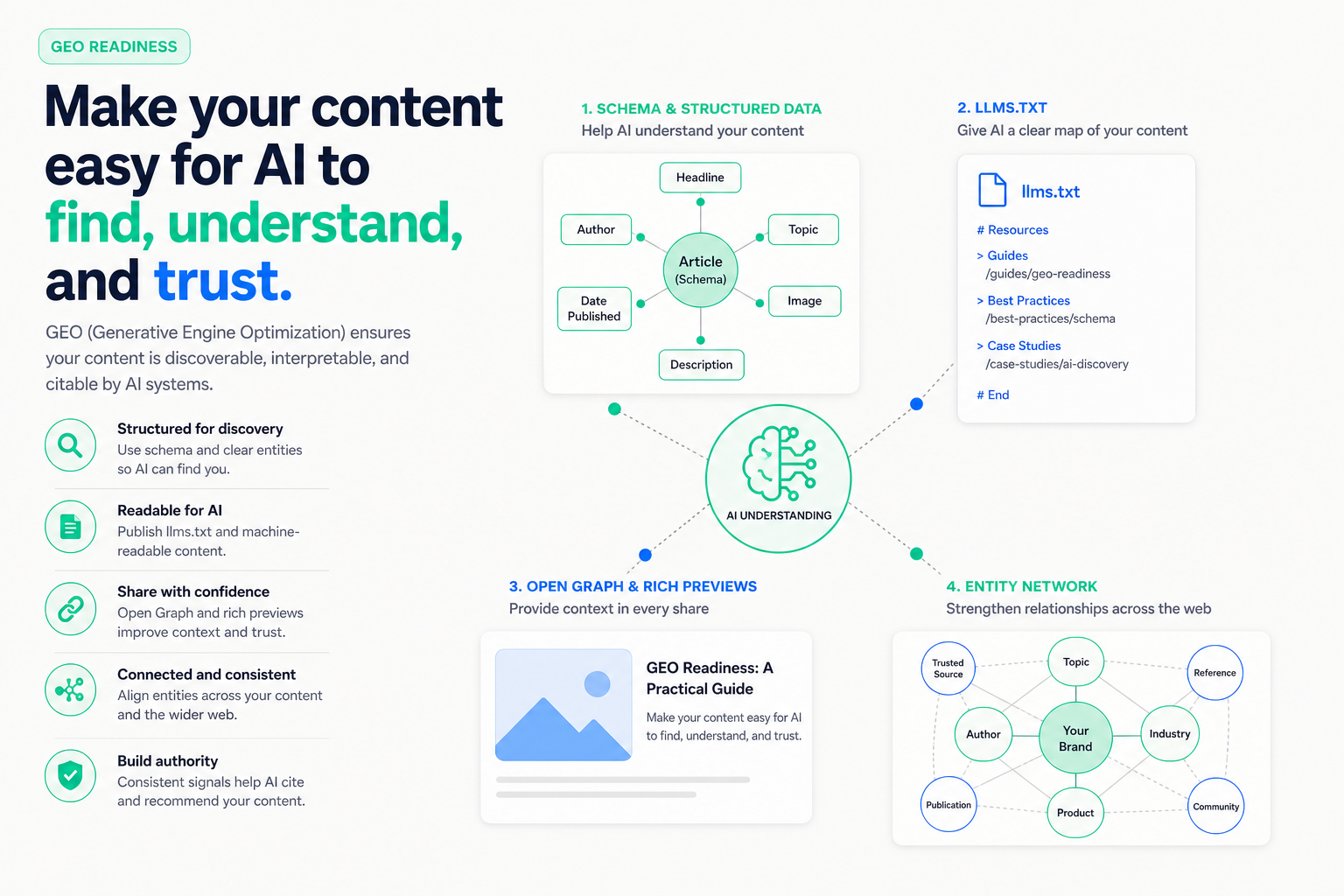
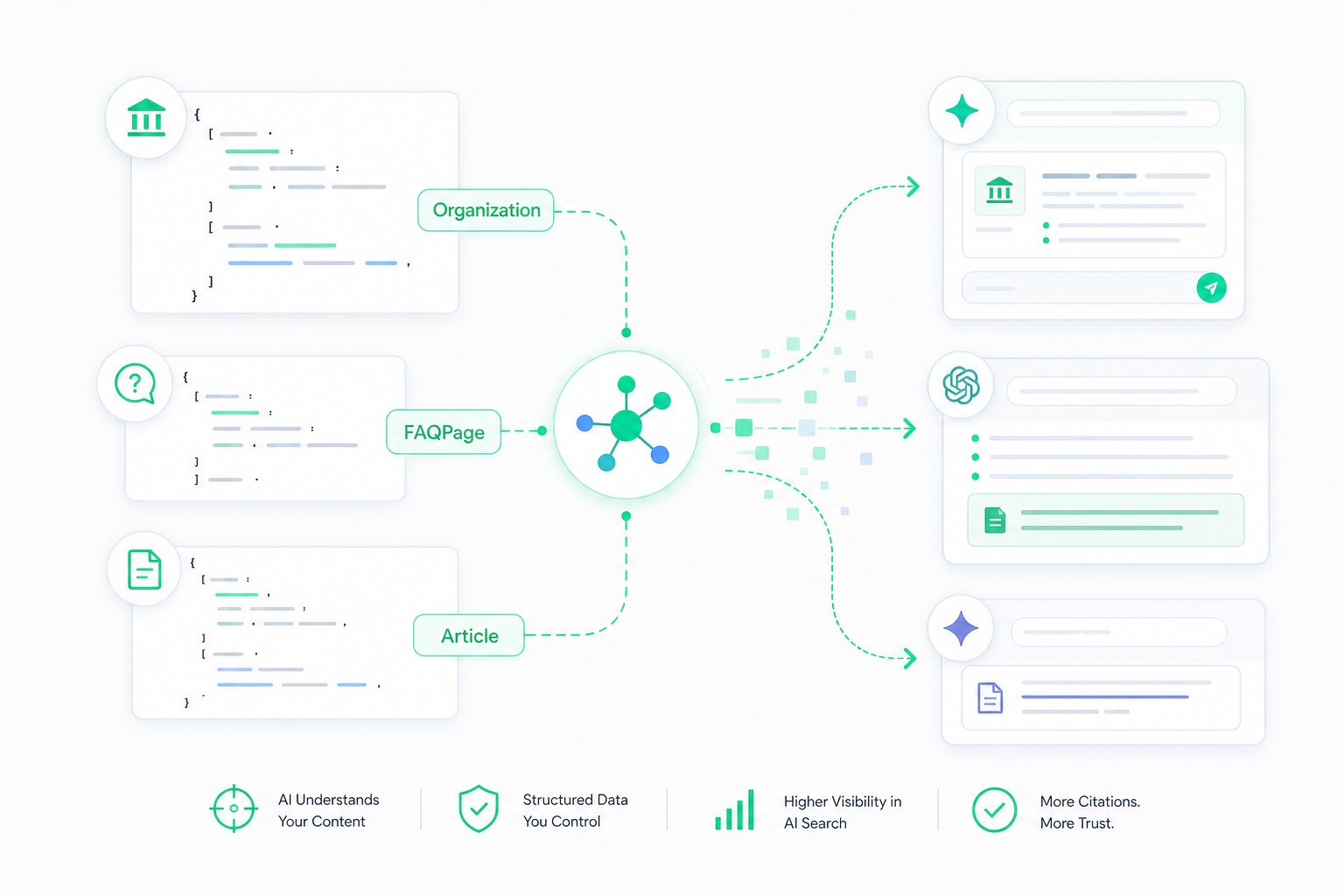
Structured data — Schema.org markup, FAQ pages, knowledge base articles, and clear entity information (company name, services, location) help AI understand your brand.
Content depth and specificity — superficial "we are the best" content is not enough. AI favors deep, fact-based articles that directly answer specific questions.
- Entity information — clear brand identity structured
- Topic authority — deep content in subject area
- Third-party mentions — citations in external sources
- Freshness — recent, updated content
- Structured answers — FAQ, how-to, comparison tables
Content optimization for generative search engines
GEO content differs from traditional SEO content. AI models favor content structured to directly answer questions — not long narrative articles, but clear, fact-based answers.
AlgoTerra's GEO content strategy focuses on: FAQ pages — "What is the best X in Finland?" type questions structured clearly. Comparison pages — "X vs. Y" articles that AI cites in comparison queries. How-to guides — step-by-step instructions AI can quote.
Knowledge base articles — deep, fact-based articles in subject area. Case studies and results — concrete numbers AI can cite. Definition pages — clear definitions for terms AI uses in answers.
Format matters too: bullet lists, tables, numbered lists, and clear headings help AI extract information. Plain language — no marketing jargon — improves citation chances.
Brand authority and third-party mentions
AI models don't trust only your own site — they seek confirmation from external sources. Brand mentions in trusted contexts are GEO's most important off-page signal.
AlgoTerra builds brand authority systematically: Digital PR — articles in industry publications and news sites. Reviews — G2, Capterra, Trustpilot, Google reviews. Expert content — guest posts, podcasts, webinars.
Wikipedia and Wikidata — entity information structured (when relevant). Industry comparisons — placement on "best of" lists and comparison articles. Social proof — LinkedIn posts, public case studies.
We don't buy mentions or use fake profiles. Focus is on earned authority that benefits both GEO and traditional SEO long-term.
- Digital PR and media mentions
- Review platforms (G2, Capterra, Trustpilot)
- Industry "best of" lists and comparisons
- Expert interviews and podcasts
- LinkedIn thought leadership content
GEO mention tracking — how to measure results
GEO's biggest challenge is measurement — unlike SEO, there is no single "ranking" to track. AlgoTerra has built a systematic mention tracking process.
We regularly test with predefined questions: "What is the best [service] in Finland?", "Compare [brand A] and [brand B]", "Recommend [product type] for B2B company." We track whether your brand is mentioned, in what context, positively or neutrally, and which sources AI cites.
We track by platform: ChatGPT (GPT-4o + Search), Perplexity, Google AI Overviews, Gemini. We report Share of Voice — what share of AI answers your brand gets vs. competitors.
We connect GEO data to business metrics: how many leads come from AI search channel, conversion rate, and lead quality vs. other channels.
Without GEO strategy vs. AlgoTerra GEO
Most companies do not yet optimize AI visibility. This means early movers gain significant competitive advantage — same as early SEO adopters in the 2000s.
| Without GEO strategy | AlgoTerra | |
|---|---|---|
| AI brand mentions | Not tracked — unknown if mentioned | Systematic testing with 50+ questions monthly |
| Content strategy | Traditional SEO content only | GEO-optimized: FAQ, comparisons, knowledge base |
| Structured data | Basic Schema.org or none | Full entity data + FAQ + Organization schema |
| Third-party mentions | Random, not strategic | Systematic Digital PR and review strategy |
| Competitor analysis | Not done in AI context | Share of Voice comparison vs. competitors |
| Reporting | No GEO report | Monthly GEO dashboard + mention trends |
| SEO synergy | SEO and GEO separate | Combined SEO + GEO strategy |
GEO service 90-day process
GEO is a new field — our process is based on continuous testing, iteration, and data collection. The first 90 days build the foundation for long-term AI visibility.
GEO audit & baseline
We test your brand mentions with 50+ questions across all major AI platforms. We analyze current content GEO readiness, structured data, and third-party mentions. We create a baseline report.
Content & structured data
We optimize existing content for GEO. We create FAQ pages, comparison pages, and knowledge base articles. We implement Schema.org markup and entity data.
Authority & mentions
We launch Digital PR campaign, review strategy, and third-party mention building. We track first mention improvements.
Scaling & report
We scale winning content formats, expand question patterns, deliver 90-day GEO report with Share of Voice metrics and Q2 strategy.
Who is AlgoTerra's GEO service for?
GEO especially suits companies that customers compare and recommend — B2B services, SaaS, expert firms, and products where purchase decisions require research.
- B2B service companies — "best marketing agency", "best accountant" type searches
- SaaS companies — product comparisons, "X vs. Y" searches, feature comparisons
- Expert firms — law firms, consultants, healthcare — YMYL GEO
- E-commerce — product recommendations, "best X for price Y" searches
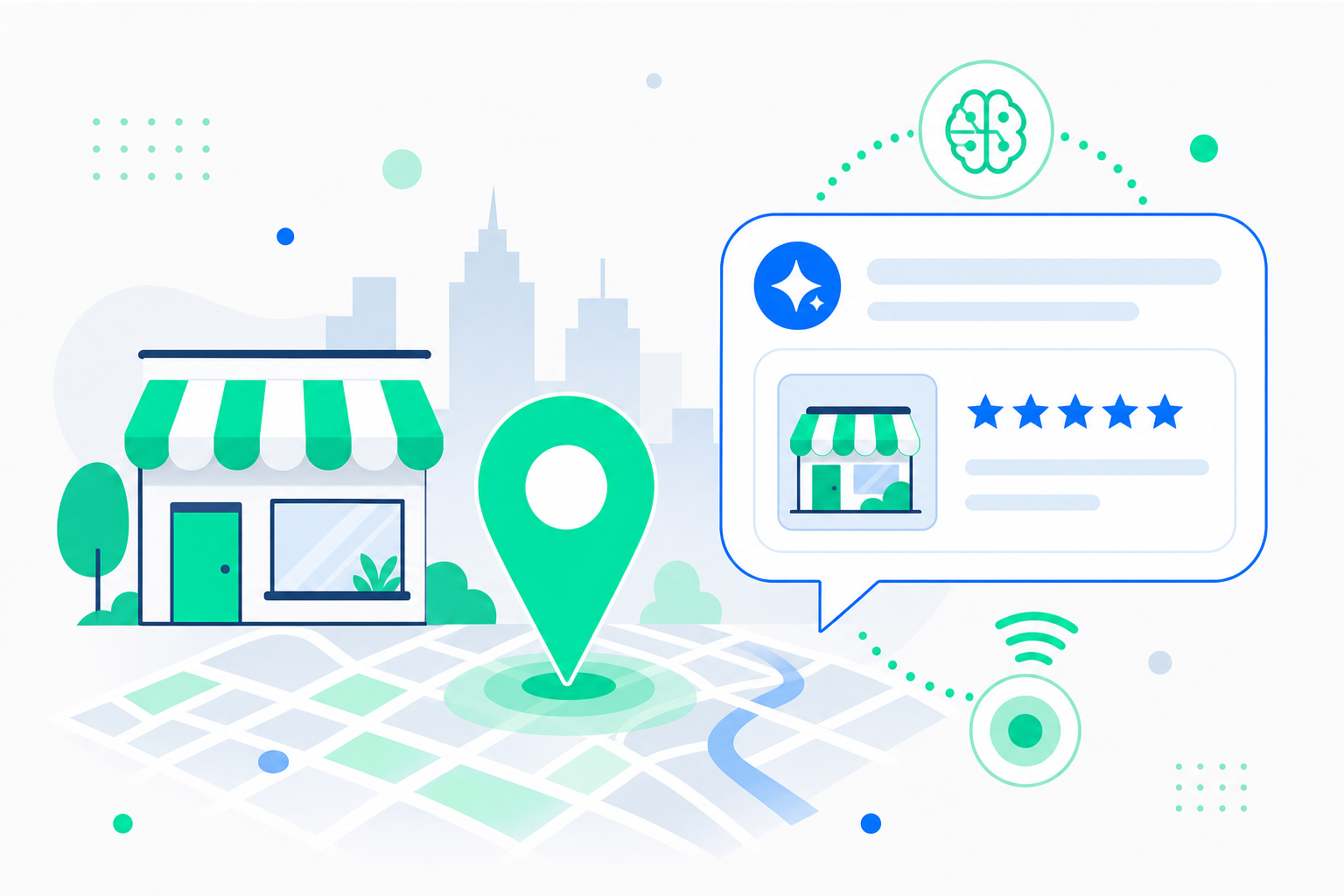
- Local businesses — "best [service] in [city]" searches
- SEO clients — GEO is natural extension to existing SEO strategy
Want to know if your brand is mentioned in AI search?
Start a free GEO / AI readiness test — we check GEO signals and email you a report. No commitment required.
0% → 23% leads from AI"GEO strategy brought us an entirely new traffic channel. 23% of new leads now come from AI search — a channel we weren't even tracking a year ago."
Ready to appear in AI search results?
We start with a GEO audit and build an AI visibility strategy within 14 days. First brand mentions typically within 30–60 days.
Glossary
Generative engine optimization is a new field — with its own terms and metrics. Below we explain the key GEO concepts. View full glossary →
- Generative Engine
- AI-powered search service that generates answers to questions by synthesizing information — unlike traditional search engines that list links. E.g. ChatGPT, Perplexity, Gemini, Google AI Overviews.
- GEO (Generative Engine Optimization)
- Optimizing content, brand, and authority so your brand is mentioned in AI search service answers. GEO is the equivalent of SEO for the AI era.
- Brand Mention
- When AI mentions your brand by name in its answer. Positive mention as a recommendation is GEO's primary outcome metric.
- Citation
- AI's reference to a source in its answer. Perplexity always cites sources. ChatGPT Search cites selectively. Source quality affects whether your brand is mentioned.
- Mention Tracking
- Systematic process of testing predefined questions to see if your brand is mentioned across AI platforms. Done monthly to track trends.
- Google AI Overviews
- Google's AI-generated summary above search results. Combines SEO and GEO — requires both traditional ranking authority and GEO-optimized content.
- Entity SEO
- Strategy where brand, product, or person is defined as a clear "entity" with structured data (Schema.org, Wikidata). Helps AI identify and mention your brand correctly.
- Knowledge Base
- Structured knowledge repository on site — FAQ, guides, definitions, comparisons. AI models favor deep, fact-based knowledge base content for citation.
- Digital PR
- Digital PR strategy where brand is mentioned in external trusted sources — news sites, industry publications, podcasts. Strengthens GEO authority with third-party signals.
- LLM (Large Language Model)
- Large language model — AI foundation for generative search engines. E.g. GPT-4o (ChatGPT), Claude (Anthropic), Gemini (Google). Each with different training data and search capability.
- RAG (Retrieval-Augmented Generation)
- Technique where AI fetches information from the web in real time before generating an answer. ChatGPT Search and Perplexity use RAG — your fresh content is citable.