Why is cross-channel attribution essential?
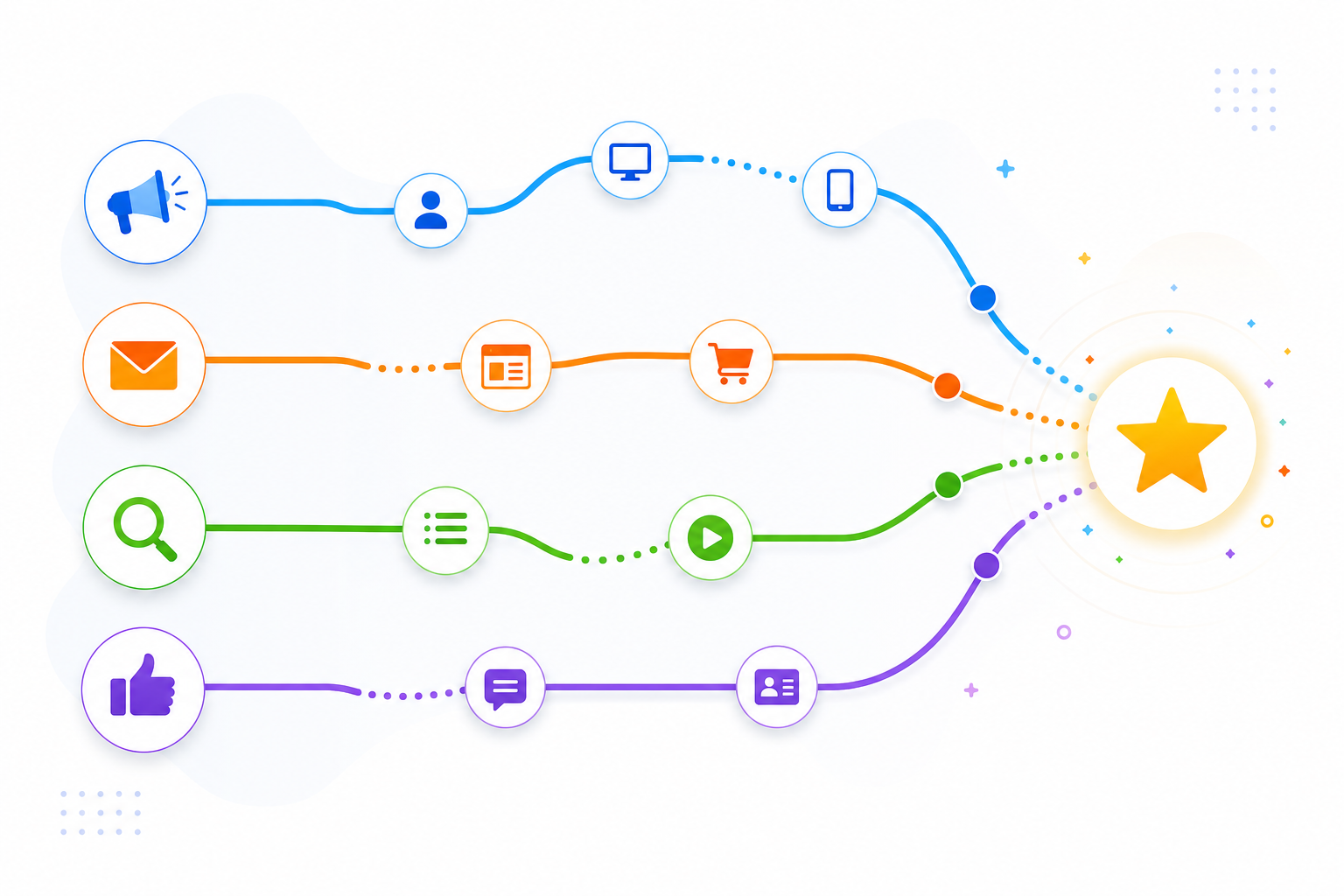
The modern purchase path is complex. The average B2C customer encounters a brand across 7–12 channels before buying. In B2B, the path is longer — 30–90 days and 10+ touchpoints. Last-click attribution gives all credit to the last channel, even though other channels created demand.
This leads to systematic budgeting errors: organic search looks overvalued, display and video undervalued. The marketing director cuts budget from the channel that actually drives revenue — because its impact only shows later in another channel.
Cross-channel attribution distributes conversion credit correctly across channels. It's not perfect — no model is — but it's significantly better than last-click or first-click. Implemented correctly, it improves budget allocation by 15–30%.
Attribution models: linear, time-decay, and data-driven
An attribution model defines how conversion credit is distributed across touchpoints. The most common models:
- Last-click: 100% credit to last channel — simple but misleading
- First-click: 100% credit to first channel — good for brand awareness measurement
- Linear: equal credit to all touchpoints — better than last-click, but doesn't weight importance
- Time-decay: more credit closer to conversion — suits short purchase paths
- Position-based (U-shaped): 40% first, 40% last, 20% others — good compromise
- Data-driven: machine learning distributes credit by actual impact — best, requires sufficient data
MTA vs. MMM: two complementary approaches
Multi-Touch Attribution (MTA) tracks individual users across channels and distributes conversion credit by touchpoint. It works best in digital channels where tracking is possible. MTA limitation: it doesn't see offline channels, TV advertising, or brand-building impact.
Marketing Mix Modeling (MMM) is a statistical model analyzing channel impact on revenue using time-series data. It sees offline channels, seasonality, and external factors. MMM limitation: requires 2+ years of historical data and doesn't reveal individual campaign impact.
Best organizations combine MTA and MMM: MTA for operational optimization (week/month), MMM for strategic budgeting (quarter/year). This hybrid model provides both granularity and the big picture.
GA4 Attribution: how to use it correctly
Google Analytics 4 offers data-driven attribution when the account has sufficient conversion data (typically 600+ conversions/month and 3,000+ clicks per channel). GA4's data-driven model uses Shapley values to distribute credit across channels.
GA4 Advertising reports show attribution across models side by side: data-driven, last-click, first-click, linear, time-decay, and position-based. Compare models monthly — large gaps between last-click and data-driven indicate a significant attribution problem.
GA4 limitation: it sees only the Google ecosystem and tagged traffic. Meta Ads, LinkedIn, and offline channels require separate integration. Conversions API and Enhanced Conversions significantly improve data quality.
- Enable data-driven attribution in GA4 as soon as data supports it
- Compare attribution models monthly in Advertising reports
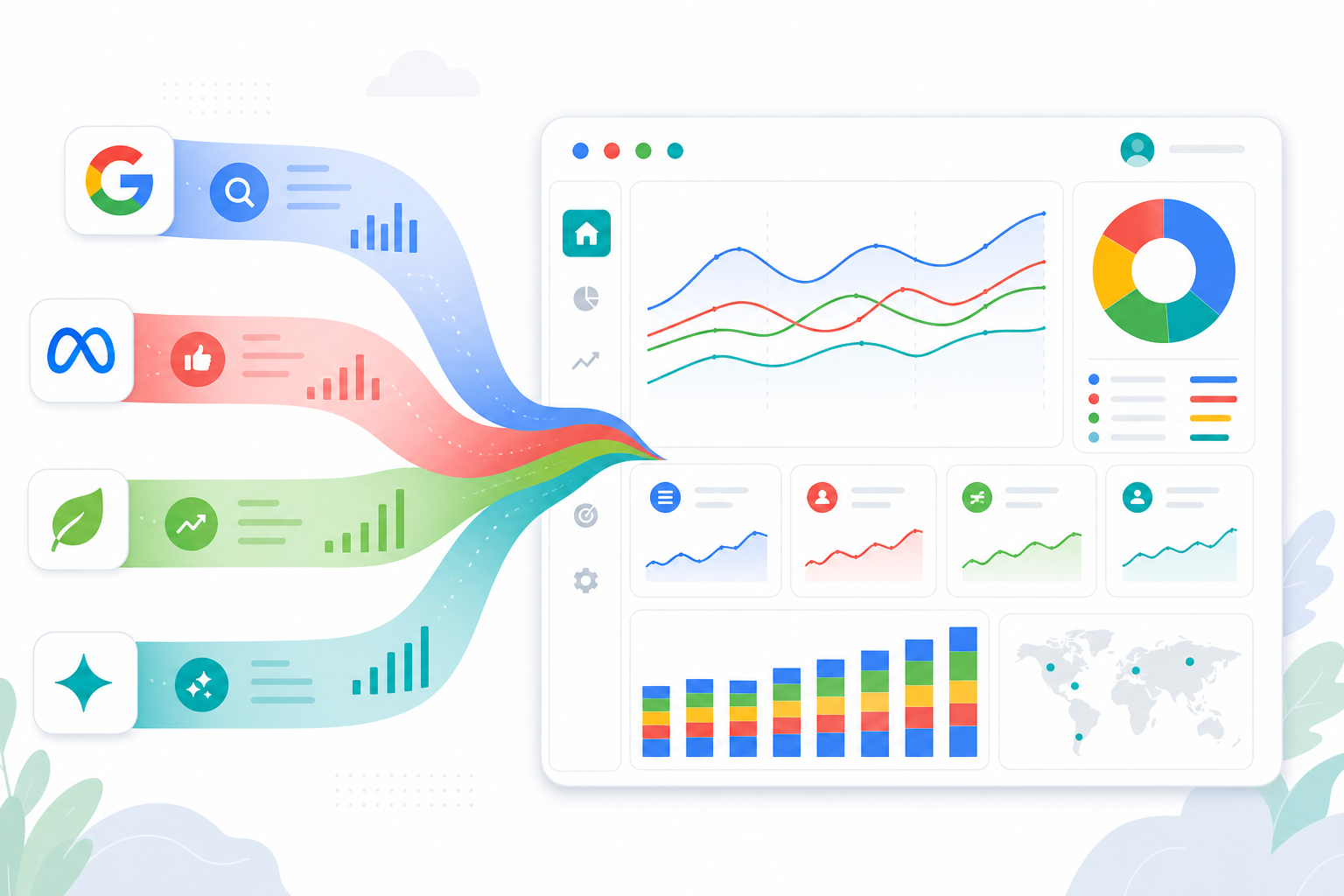
- Connect GA4 + Google Ads + Meta CAPI in one unified view
- Use BigQuery export for deeper analysis
- Set attribution window to match your business: 30 days B2C, 90 days B2B

Practical implementation: start in 30 days
Cross-channel attribution doesn't require months-long projects. A solid foundation is buildable in 30 days with the right tools and processes.
Week 1: Audit current tracking. Ensure GA4, Google Ads, Meta CAPI, and CRM produce reliable data. Fix event match quality and conversion definitions.
Week 2: Enable data-driven attribution in GA4. Build a Looker Studio dashboard showing attribution across models. Add channel-level costs.
Weeks 3–4: Build a QBR report template connecting attribution data to budget allocation. Test position-based vs. data-driven and document differences.
Reporting and QBR: attribution in decision-making
Attribution data is useful only if it leads to decisions. The Quarterly Business Review (QBR) process is the best place to review attribution with leadership and the executive team.
The QBR attribution section includes: channel ROAS/CPA with data-driven model, comparison to last-click (delta), budget allocation recommendation for next quarter, and offline conversion impact (CRM data).
Most important: be honest about data limitations. Attribution is an estimate, not truth. Always present multiple models side by side and explain why data-driven is better than last-click — but acknowledge uncertainty.
Five most common attribution mistakes
We see these mistakes repeatedly in attribution audits — often in companies with otherwise solid analytics.
- Using last-click attribution for decisions → Move to position-based or data-driven model
- Missing Meta Ads data in GA4 → Enable Conversions API and ensure event match quality
- Wrong attribution window length → 30 days B2C, 90 days B2B — not defaults
- Neglecting offline conversions → Offline conversion import from CRM to Google Ads and Meta
- Attribution data without budget allocation → QBR process connects data to decisions
Frequently asked questions
Which attribution model is best?
Data-driven attribution is best when data supports it (600+ conversions/month). Below that, position-based (U-shaped) is a good compromise. Last-click is misleading in multi-channel environments.
How do I connect Meta Ads data to GA4 attribution?
Enable Meta Conversions API (CAPI) and ensure event match quality > 8/10. GA4 sees Meta traffic automatically, but conversion quality improves significantly with CAPI.
Do I need a separate attribution tool?
GA4 data-driven attribution suffices for most companies. Dedicated tools (Northbeam, Triple Whale, Rockerbox) are justified when channel count exceeds 5 and budget exceeds €500,000/year.
How do I measure offline channel impact?
Offline conversion import from CRM to Google Ads and Meta. Marketing Mix Modeling (MMM) sees offline channels via time-series data. Promo codes and brand surveys ("How did you hear about us?") are simple supplementary tools.