Why integrated marketing beats siloed marketing
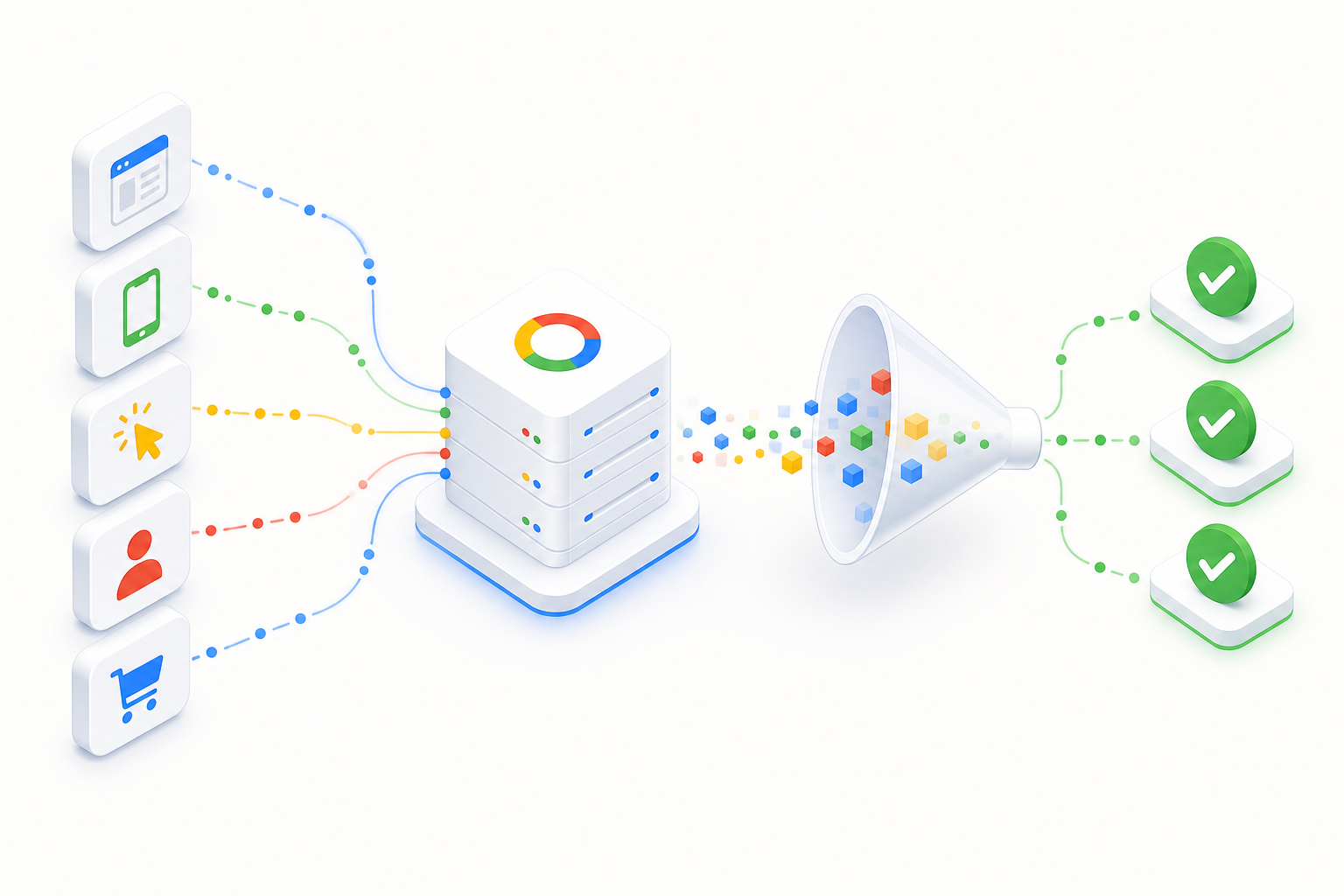
Marketing channels do not operate in a vacuum. When a customer sees a Meta ad, searches the brand on Google, reads an article, and finally returns through a Google Ads ad to buy, every touchpoint contributed to the outcome. If channels are optimized in isolation, this chain stays invisible — and optimization gets distorted.
The cost of siloing is concrete: channels compete for the same budget without a shared priority, the same audience is reached repeatedly without coordination, and attribution gives credit to the wrong channel (usually the last click). As a result, budget flows to what looks good in isolation — not to what delivers as a whole.
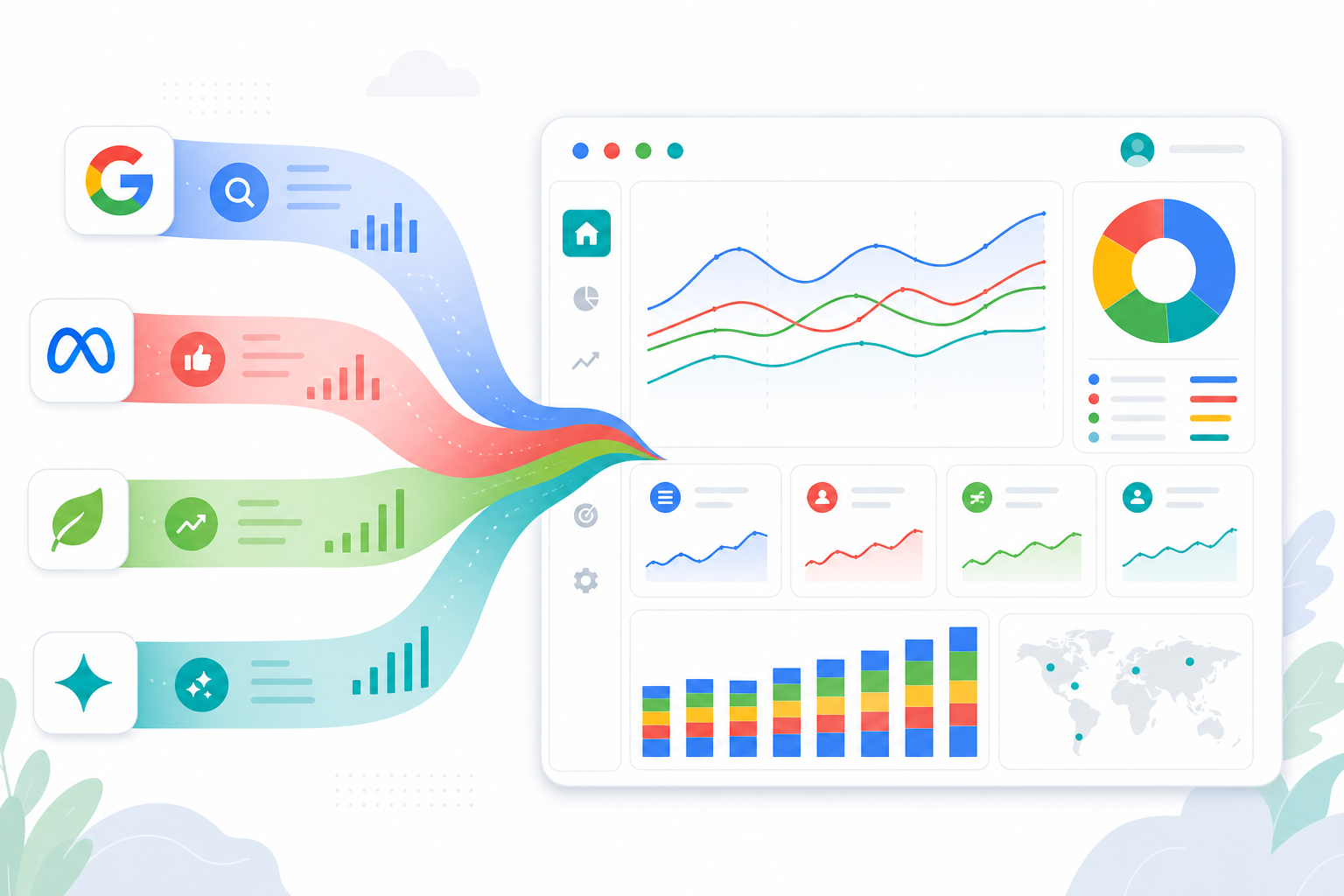
The full-stack approach flips this: channels are managed as one portfolio where each has a clear role and a shared goal. When Google Ads, Meta, SEO, and GEO support each other, the total result is greater than the sum of its parts — typically 20–40% more efficient than a siloed model.
Channel roles across the buying journey
Every channel has an inherent strength at different stages of the buying journey. The core of an integrated strategy is to give each channel a role where it excels — not to force every channel to do everything.
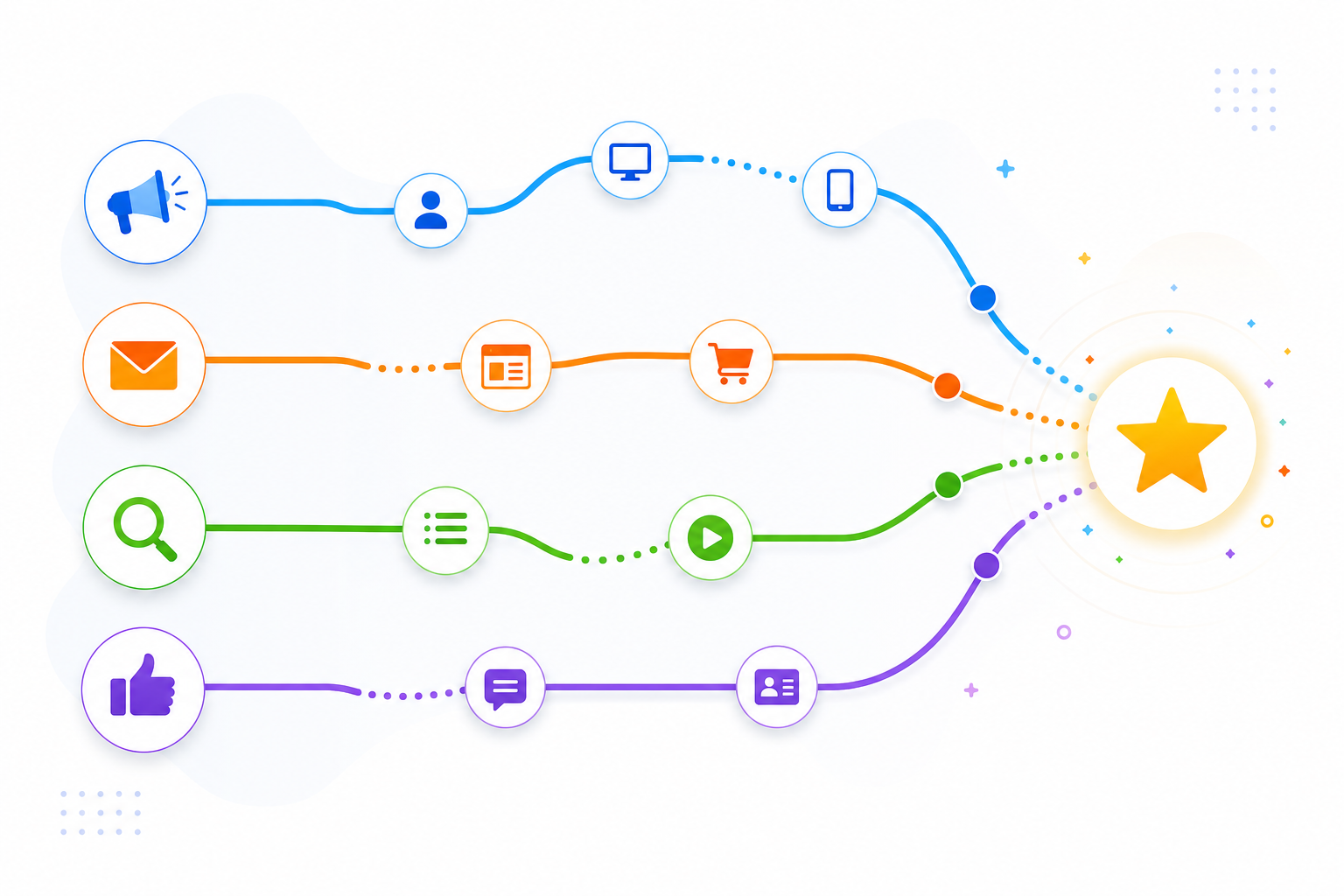
Meta and display build demand and awareness (awareness): they reach audiences not yet searching for a solution. SEO and GEO capture exploratory demand (consideration): when a customer seeks information or compares, your content and visibility in AI answers decide. Google Ads (Search) captures ready demand (decision): when a customer searches with buying terms, you are there.
When these roles are clear, channels feed each other: Meta and content build brand searches that Google Ads captures more cheaply; SEO content serves as a source in GEO answers; and remarketing ties the path together. This is the essence of integration.
- Meta / display: demand generation and awareness (awareness)
- SEO: capturing exploratory demand organically (consideration)
- GEO: visibility in AI answers during the exploratory phase (consideration)
- Google Ads Search: capturing ready buying demand (decision)
- Remarketing: tying the path together and closing the conversion
Allocating budget across channels
Budget allocation is the hardest and most important decision in a full-stack strategy. The starting point is not an even split but allocation based on goal and maturity: how much ready demand exists (Search potential), how much demand must be built (Meta), and how justified a long-term organic investment (SEO/GEO) is.
A practical model: first capture all profitable ready demand (Search, brand + generic buying terms), because it is the most efficient. Then allocate to demand generation (Meta, prospecting) based on how much you want to grow beyond current demand. Reserve a long-term share for organic (SEO/GEO), which lowers acquisition cost over time.
The key is that the budget is fluid, not locked. When marginal returns fall on one channel (e.g. Search is maxed out), shift the marginal euro to where it produces the most. This requires a shared metric — which is why data and attribution are the foundation of full-stack.
Content serves every channel
Content is not just an SEO matter. The same quality content serves the whole full-stack: it ranks organically (SEO), serves as a source in AI answers (GEO), provides material for social ads (Meta), and improves landing-page quality (Google Ads Quality Score).
Topic clusters and pillar content build authority that benefits all channels. Case studies and proof reinforce conversion on every channel. Good content is therefore an investment that pays back on several fronts simultaneously.
An integrated content strategy designs content to serve the whole path: awareness content feeds Meta and organic discoverability, consideration content supports SEO/GEO, and decision-stage content (pricing, case studies) supports conversion on paid channels.
Organizing team and process
Full-stack does not happen if the team is organized into channel silos with separate goals and reports. Integration requires a shared goal (e.g. profitable growth, not per-channel ROAS) and a shared view of the data.
Working models vary in practice: a small company can use one full-stack partner that runs all channels as a single whole. Larger organizations need a coordinating role (e.g. a marketing director or fractional CMO) that allocates the budget and ensures the channels support a shared strategy.
What matters is the rhythm: a regular review that looks at the whole — not just individual channel metrics. Which channel produces the most at the margin? Where are returns falling? Where should the next euro go? These decisions are made on whole-portfolio data, not silos.
Measuring the whole
Measuring full-stack differs from per-channel measurement: the most important metric is not a single channel's ROAS but overall profitability and growth. A single channel may look mediocre in isolation yet be an essential part of a winning whole (e.g. Meta builds searches that Search captures).
Whole-portfolio metrics to track: total CAC (customer acquisition cost across all channels), blended ROAS, brand-search trend, organic traffic growth, and the ratio of new vs. returning customers. These tell you whether the system works — not the isolated numbers of a single channel.
Incrementality is the cornerstone of advanced measurement: how much additional revenue does a channel bring compared to a situation without it? Geo tests and experiments (e.g. pausing a channel in a region) reveal the true impact that attribution alone does not show.
Common mistakes in full-stack marketing
These mistakes prevent the benefits of integration — often in organizations with expertise in individual channels but no whole-portfolio view.
- Per-channel ROAS targets → optimizing silos, not the whole
- Broken attribution → credit goes to the last click, budget misallocated
- Locked budget → money does not move to where the marginal return is highest
- Seeing content as only an SEO matter → cross-use in other channels is lost
- Siloed team without a shared goal → channels compete instead of supporting
- Staring only at the last click → the role of Meta and content is underrated
Frequently asked questions
What does full-stack marketing mean?
Full-stack marketing means running Google Ads, Meta, SEO, and GEO as one integrated system with shared data and a shared goal — not as separate silos. Channels get clear roles at different stages of the buying journey and support each other.
Why can't I just optimize channels separately?
Because channels affect each other: Meta builds searches, SEO content feeds GEO, and attribution easily credits the wrong channel. Separate optimization makes budget flow to what looks good alone — not to what delivers as a whole.
How should budget be split across channels?
First capture profitable ready demand (Search), then allocate to demand generation (Meta) based on your growth goal, and reserve a long-term share for organic (SEO/GEO). Keep the budget fluid and move the marginal euro to where the marginal return is highest.
What is the most important metric in full-stack?
Overall profitability and growth, not a single channel's ROAS. Track total CAC, blended ROAS, brand-search and organic-traffic trends, and incrementality — how much additional revenue a channel brings to the whole.
Does full-stack require a separate team?
Not necessarily, but it requires a shared goal and a shared view of the data. A small company can use one full-stack partner; larger ones need a coordinating role (marketing director or fractional CMO) that allocates budget based on the whole.