Why does conversion data decide?
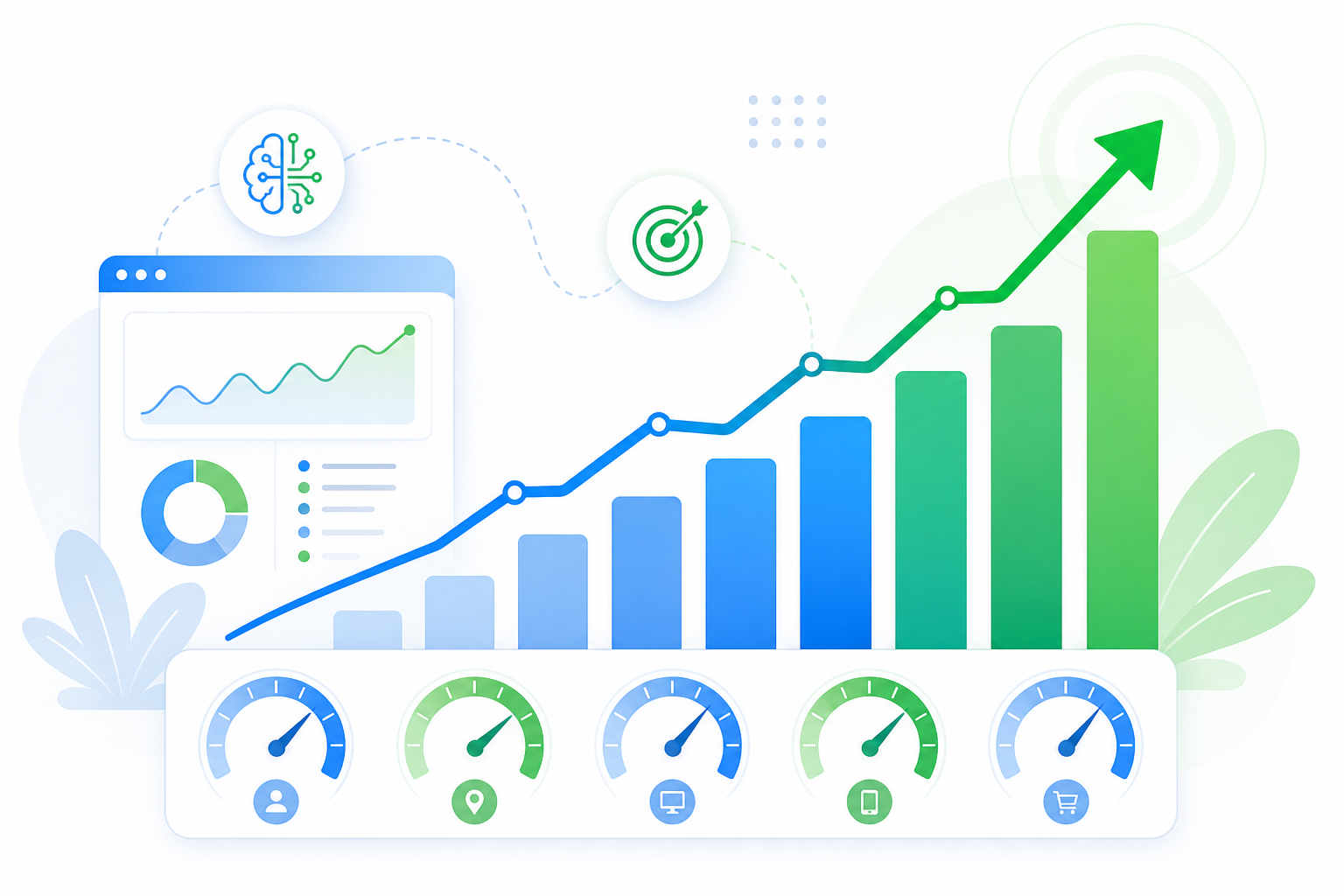
Modern Google Ads optimization relies on machine learning: Smart Bidding strategies (Target CPA, Target ROAS, Maximize Conversions) adjust bids in every auction based on conversion data. The more accurate and complete the data, the better the decisions the algorithm makes.
The problem is that conversion tracking leaks in many places: third-party cookie restrictions, iOS ATT, ad blockers, missing consent, and the unreliability of client-side tracking. Every lost conversion is a missing signal to the algorithm — and worse optimization.
Accurate conversion tracking is not just for reporting. It is directly tied to results: better data → better Smart Bidding → better ROAS. That is why tracking should be built carefully before raising budgets.
Enhanced Conversions: improve data coverage
Enhanced Conversions supplements conversion tracking by securely sending Google hashed (SHA-256), first-party customer data — such as email. Google matches it to signed-in users and recovers otherwise-lost conversions, especially in situations weakened by browser restrictions.
Enhanced Conversions for Leads suits a lead-based B2B model where the conversion is a form submission. Enhanced Conversions for Web improves coverage for e-commerce and other web conversions. Data is hashed before sending, so privacy is preserved.
Implementation works via the Google tag, Google Tag Manager, or the API. The GTM implementation is the most common: it collects the approved fields and sends them hashed. Make sure the implementation respects consent (Consent Mode).
Server-side tracking: a more reliable data flow
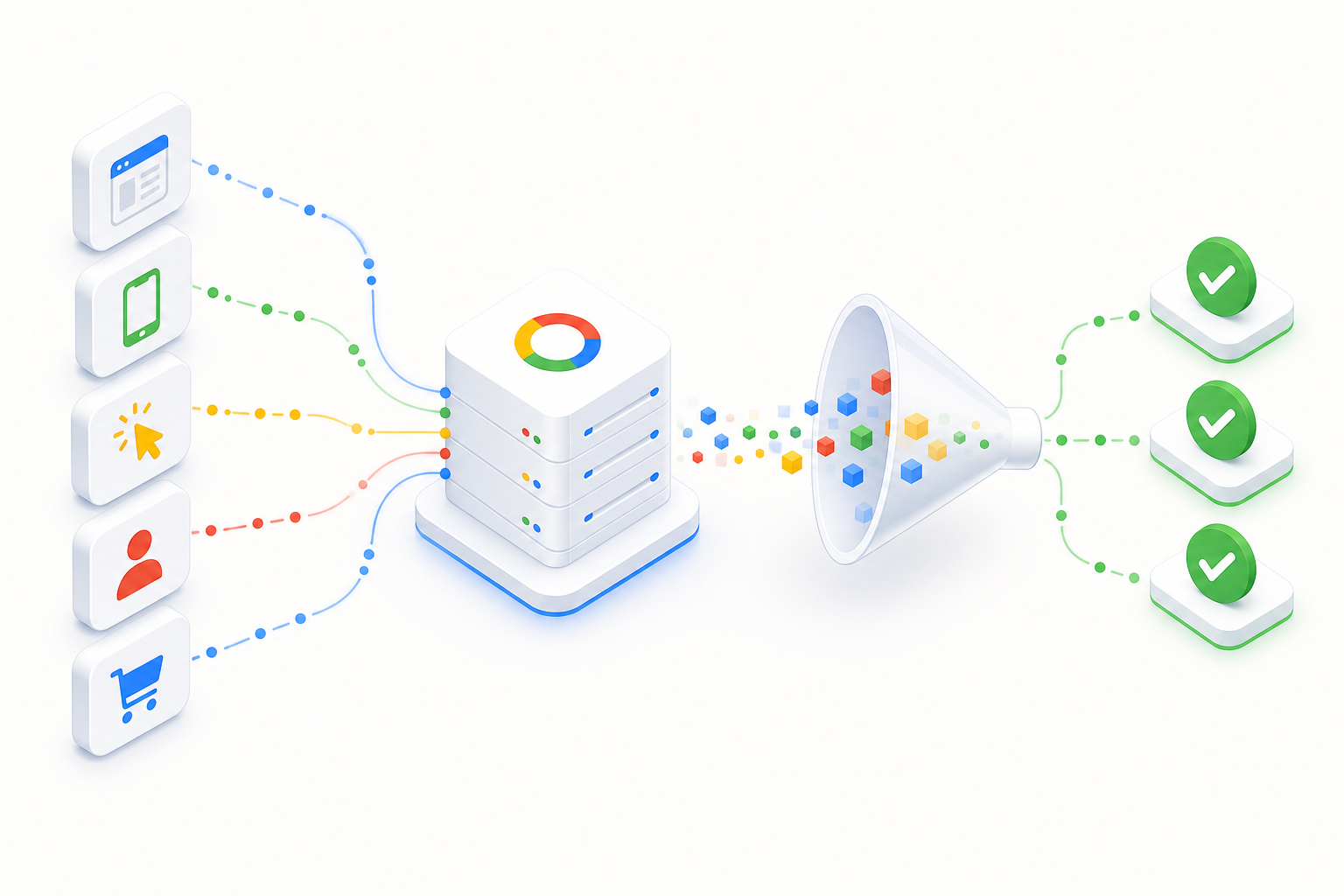
Server-side tracking moves tracking from the browser to the server: events are first sent to your own server-side container (e.g. server-side GTM), which forwards them to Google and other platforms. This improves data reliability and resilience against browser restrictions.
Benefits: less data lost to ad blockers and cookie restrictions, more control over what data is sent, and a faster page (fewer client-side scripts). Especially in iOS and Safari traffic, server-side significantly improves coverage.
Server-side does not remove the need for consent — Consent Mode still applies. It is a technical improvement to data quality, not a way to bypass privacy rules.
Consent Mode v2: consent and conversion modeling
Consent Mode v2 is Google's mechanism that adapts tag behavior to the user's cookie consent. In the EU it is effectively mandatory for personalized Google Ads and GA4 features. Without it you lose data and remarketing audiences.
Consent Mode v2 added two new signals: ad_user_data and ad_personalization. When a user does not grant consent, Google does not set cookies but can send anonymous, cookieless pings. From these, Google models (estimates) the lost conversions — so Smart Bidding still gets useful data.
In practice, Consent Mode v2 is implemented with a cookie banner: the banner default is "denied", and once the user accepts, the signals update to "granted". This combination (banner + Consent Mode) is both compliant and optimal for optimization.
Offline conversions: close the loop in B2B
In much of B2B sales, the real conversion does not happen online but later in the CRM: a lead becomes a quote and a deal weeks or months later. If Google only sees the form submission, it optimizes for the number of leads — not quality or deals.
Offline Conversion Import (OCI) solves this: when a lead progresses to a deal in the CRM, the information is imported back into Google Ads via the GCLID. This way the algorithm learns which clicks lead to real deals and optimizes toward them.
This is critical in B2B: in a 30–90 day sales cycle the algorithm needs feedback on closed deals. Without offline conversions, Smart Bidding optimizes the wrong goal — cheap leads instead of quality deals.
Common mistakes in conversion tracking
We see these mistakes repeatedly in Google Ads account audits — often on accounts whose campaigns look good but optimize on incomplete data.
- Scaling budget before verifying tracking → the algorithm learns on distorted data
- Not using Enhanced Conversions → you lose recoverable conversions
- Missing Consent Mode v2 in the EU → you lose data and remarketing audiences
- Client-side tracking only → ad blockers and iOS erode coverage
- Neglecting offline conversions in B2B → optimizing for lead count, not deals
- Double counting → the same conversion is recorded multiple times and distorts data
Frequently asked questions
What are Enhanced Conversions?
Enhanced Conversions supplement tracking by securely sending hashed (SHA-256), first-party customer data (such as email) to Google. Google matches it to signed-in users and recovers otherwise-lost conversions without compromising privacy.
Do I need server-side tracking?
It is not mandatory, but it significantly improves data reliability — especially in iOS/Safari traffic and against ad blockers. Server-side GTM is the most common implementation. It does not replace consent (Consent Mode still applies).
Is Consent Mode v2 mandatory?
In the EU it is effectively mandatory for personalized Google Ads and GA4 features. Without it you lose data and remarketing audiences. It is implemented with a cookie banner: default "denied", "granted" after consent.
Why are offline conversions important in B2B?
In B2B, the deal often happens weeks after the form submission in the CRM. By importing deal data back into Google Ads (GCLID), the algorithm learns to optimize for deals, not just leads — critical in a 30–90 day sales cycle.