Why B2B SaaS marketing is different from ecommerce
In B2B SaaS the buying process is long: research, comparison, demo request, multiple sales calls, and only then a contract. Conversion does not happen on the first click — and algorithms need more time to learn than in ecommerce. Traffic volume or cheap CPC alone is therefore a misleading metric.
The primary conversion is a qualified demo request (or free trial if the product supports it). A weak demo request — wrong role, company too small, not a decision maker — wastes sales time and skews optimization. Marketing's job is to produce the right demo requests, not maximize form fills.
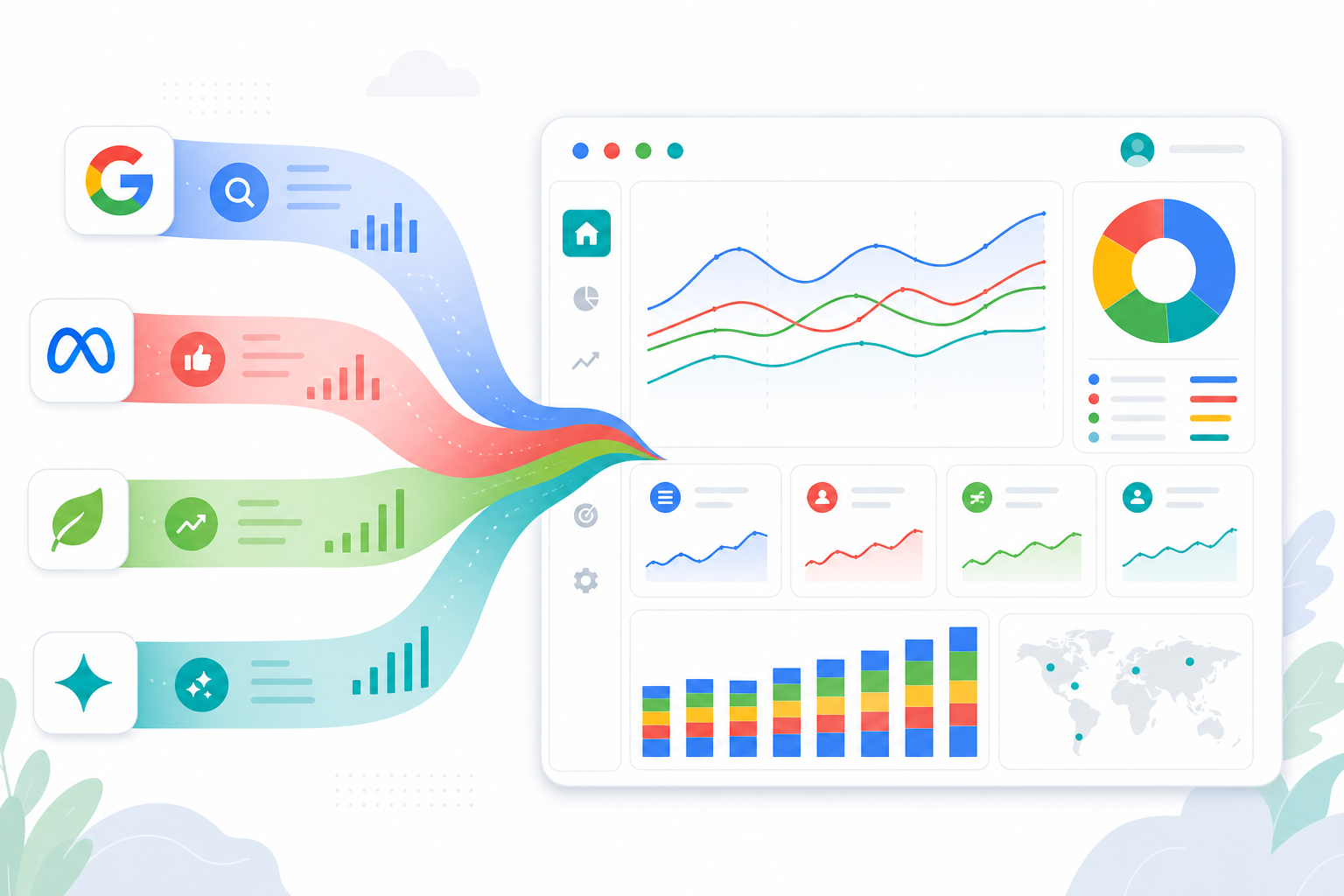
That requires channels working together: SEO builds organic authority and captures researching demand, Google Ads captures ready demand and brand searches, content supports both and feeds sales. The Full Stack model connects these into one demo pipeline — not three separate projects.
The demo request pipeline: the core of marketing
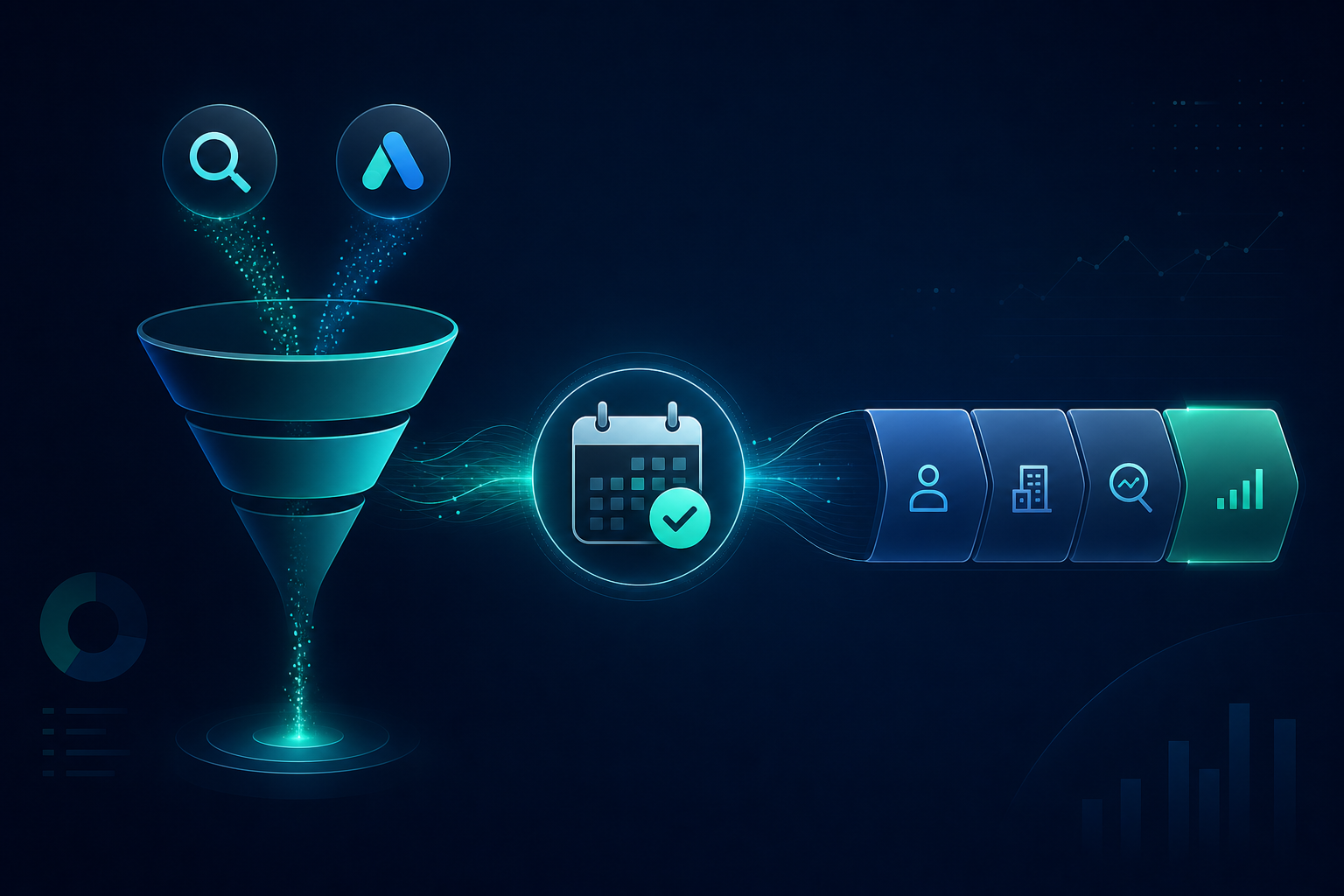
The demo pipeline runs from first touch to closed deal. Marketing owns the top: awareness, consideration, and qualified demo request. Sales owns the bottom: demo, proposal, negotiation, close. Drawing that line is critical — marketing cannot optimize to closed deals without offline conversion import.
Pipeline stages: (1) researching traffic — blogs, comparison articles, organic search; (2) consideration — case studies, pricing, integrations; (3) decision — demo request, trial, contact. Each stage needs different content and channel emphasis. The demo form is the conversion point — its fields, qualification questions, and thank-you page directly affect lead quality.
Qualification on the form matters: company size, role, current solution, timeline. That data flows to CRM and optionally back to Google Ads conversions (offline import) so the algorithm learns to produce better demo requests — not just more.
SEO: capturing researching demand
B2B SaaS SEO is not just writing blogs — it is building topic clusters that match each stage of the buying process. Comparison queries ("X vs Y"), integration searches, use cases, and problem-solution articles drive traffic that converts to demo requests better than generic brand search.
Technical SEO is the foundation: fast pages, clear structure, schema (Organization, SoftwareApplication, FAQ), and internal linking between topic clusters. Without a technical base, content does not rank — and organic growth hits a ceiling.
SEO delivers long-term growth and lowers acquisition cost. It is especially valuable in SaaS with long sales cycles: a prospect may return through organic content multiple times before requesting a demo. Our SEO service is built to support the demo pipeline — not as a standalone blog project.
Google Ads for B2B SaaS: Search and qualification
Google Ads for SaaS focuses on Search campaigns: brand, competitor comparison, generic solution queries, and integration searches. Display and PMax can complement, but Search is usually the core — especially when conversion data is limited compared to ecommerce.
Conversion tracking: primary action is qualified demo request (or MQL if CRM defines it clearly). Enhanced Conversions for Leads and offline conversion import are critical: when sales closes a deal 30–90 days after the demo request, the algorithm needs a feedback loop to learn. Without it, Smart Bidding optimizes for cheap, low-quality demo requests.
Keyword targeting needs aggressive negatives: "free", "job", "training", "tutorial" — depending on the product. B2B SaaS budget is smaller than ecommerce, so quality before volume. Target CPA works when you have at least 30 demo requests per month per campaign.
Competitor conquesting campaigns can produce qualified demo requests but CPC is high and brand-sensitive. Use them with a limited budget so they do not consume core solution-query budget. In ad copy, avoid direct competitor naming if it violates policies — compare features and benefits instead.
Content strategy and topic clusters
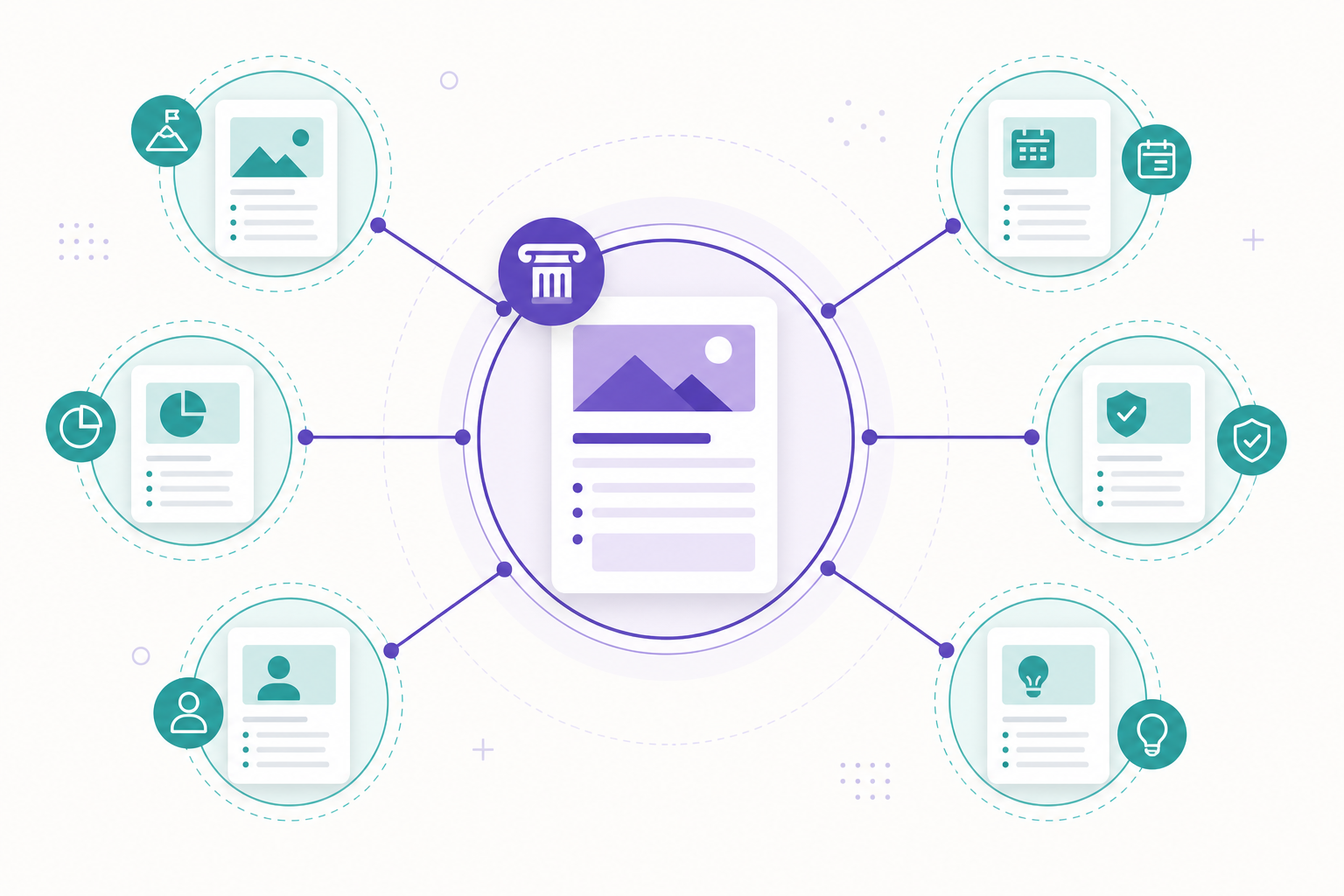
Content is the backbone of SaaS marketing: it serves SEO, Google Ads landing pages, sales collateral, and email nurture. Topic clusters build authority: a pillar page (e.g. "Project management software") and supporting articles (comparisons, use cases, integrations) linked together.
Content must match buying stages: awareness (problem articles), consideration (comparisons, case studies), decision (pricing, demo page). The same content works organically and paid — a strong article is both an SEO page and a Search ad landing page.
Deeper coverage is in our content strategy article. In a SaaS context the key point is that content is designed to serve the demo pipeline — not only to maximize organic traffic.
Measurement: from demo requests to closed deals
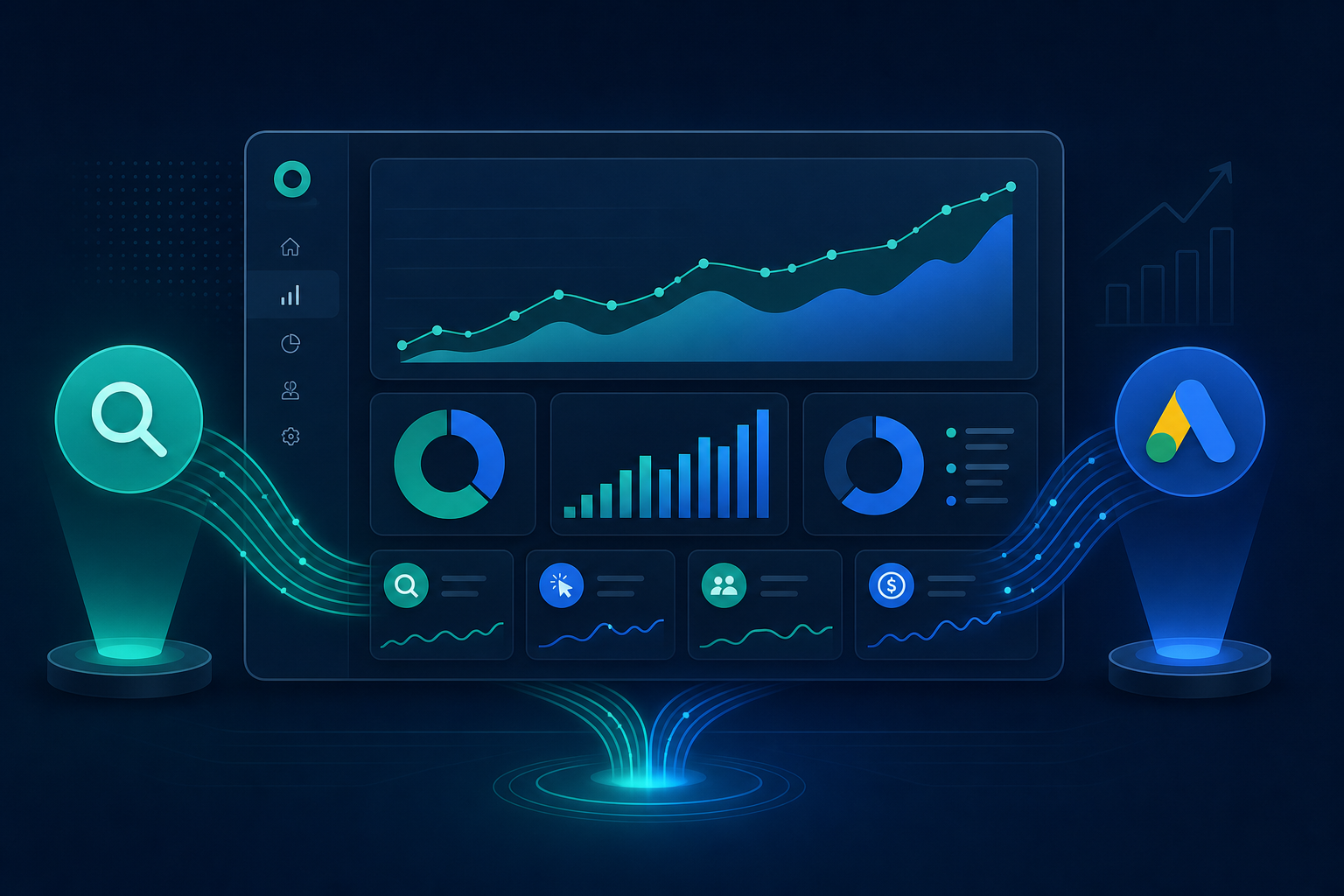
B2B SaaS measurement goes beyond Google Ads conversions. Track demo request volume and quality (ICP match), demo → proposal conversion, proposal → close, CAC (Customer Acquisition Cost), LTV:CAC ratio, and payback period. Marketing reports demo requests; sales reports closes — shared truth comes from CRM.
Attribution is hard with long cycles. Data-driven attribution in GA4 shares credit across touchpoints. Offline conversion import to Google Ads closes the loop: when sales marks a deal closed, the algorithm learns which campaigns produced real value — not just cheap demo requests.
Incrementality reveals truth: geo tests, channel pause by region, or holdout groups show whether a channel adds demo requests versus organic baseline. Without this, budget can flow to a channel that looks good in last-click attribution but does not add revenue.
Pipeline velocity — how fast a demo request becomes a closed deal — is a shared marketing and sales KPI. If demo requests grow but velocity falls, the problem is quality or sales capacity, not campaign volume. Track velocity by channel: organic leads often close better than cold Ads traffic, which guides budget allocation.
Full Stack: channels as one demo pipeline
B2B SaaS marketing wins through integration: SEO, Google Ads, and content do not compete for the same budget but support the same demo pipeline. SEO produces researching traffic that converts through remarketing and Search; Google Ads captures ready demand SEO does not yet cover; content serves both and sales.
The Full Stack approach means shared strategy, shared data, and shared goal — qualified demo request and ultimately profitable customer. Budget is allocated by channel marginal return, not fixed splits. When Search is maxed out, shift to SEO investment; when organic growth accelerates, Search supports capture.
That requires a partner who owns all layers — not separate SEO and Ads agencies without a shared view. Full Stack is built for this: one team, one pipeline, one truth.
Demo page and form optimization
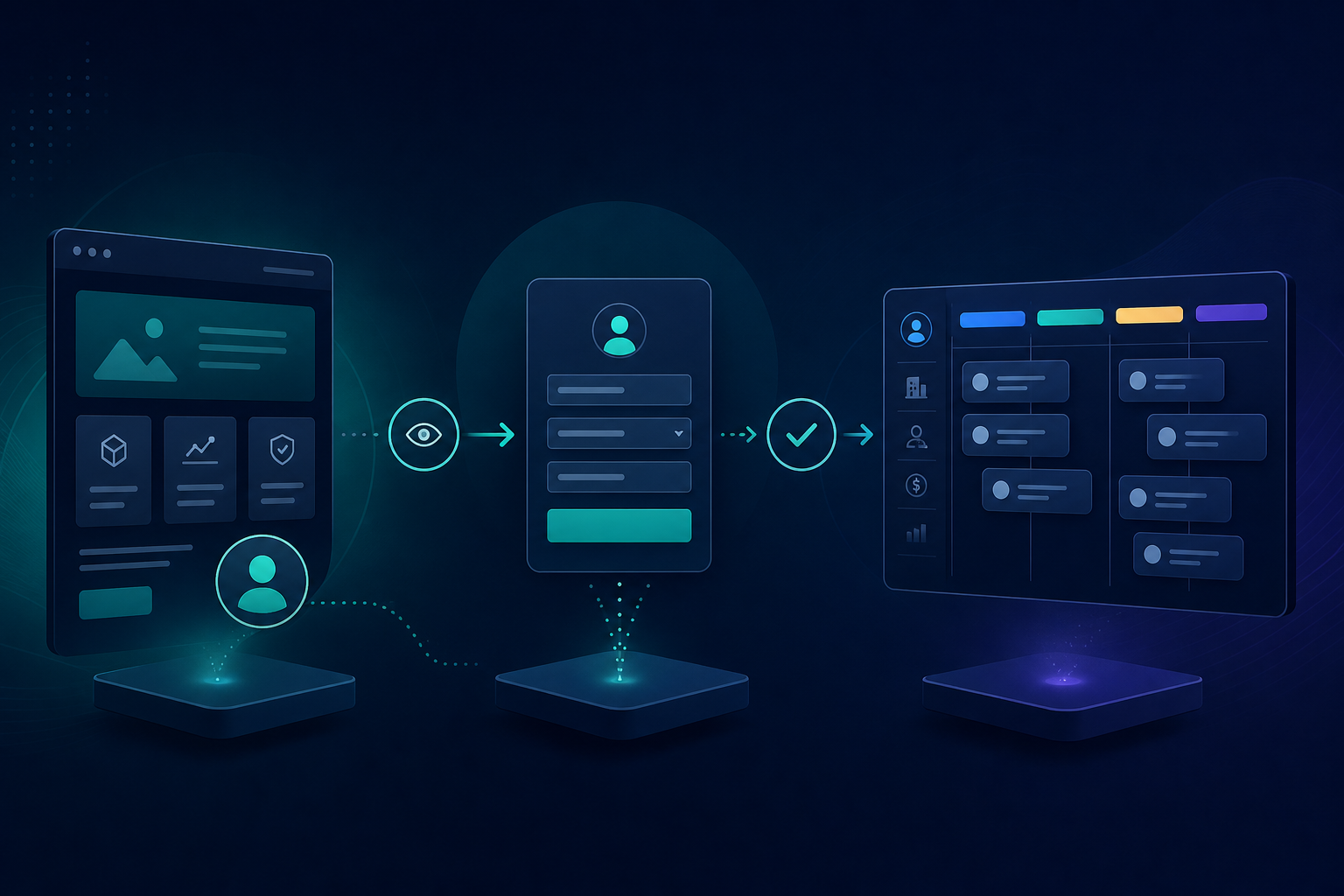
The demo request page is the most important landing page in B2B SaaS marketing — and often the weakest optimized. Its job is not to explain everything about the product but to convince the right visitor to leave contact details. A form that is too long lowers conversion; one that is too short produces low-quality leads. Balance comes through qualification questions.
An effective demo page includes: a clear value proposition (what the demo solves), social proof (logos, short quotes, case references), an FAQ section for common objections, and a short form (name, email, company, role + 1–2 qualification questions). On the thank-you page, explain clearly what happens next — wait time, what to prepare, who will contact them.
A/B test headline, form length, and CTA copy. A separate demo page variant for Google Ads traffic can improve Quality Score and conversion when ad copy and landing page say the same thing. Track demo request quality in CRM — if conversion rises but ICP match falls, the form is too easy.
Sales and marketing alignment
The problem in B2B SaaS marketing is often not the channel but friction between sales and marketing. Sales complains about leads, marketing complains that sales does not follow up in time, and neither trusts the other's data. The fix is a shared definition: what is an MQL (Marketing Qualified Lead) and what is an SQL (Sales Qualified Lead).
MQL definition is based on ICP — company size, role, need, timeline. Marketing produces MQLs; sales qualifies them to SQL in the demo call. Feedback loop is critical: sales marks in CRM whether the lead was good or bad, and that data flows back to Google Ads via offline import. Without feedback, marketing optimizes blindly.
Regular pipeline reviews (weekly or biweekly) align teams: how many demo requests, how many SQLs, how many proposals, how many closes. Marketing sees which channels produce closable leads; sales sees which channels bring the best customers. This is the practical core of Full Stack thinking — not separate reports but one shared truth.
Nurture, email, and the long sales cycle
A B2B SaaS buyer does not request a demo on the first visit — often not on the third. Nurture emails and remarketing keep the brand top of mind during the research phase, which can last weeks or months. Without nurture, organic traffic and Google Ads clicks disappear while the prospect compares competitors.
An effective nurture sequence follows buying stages: welcome email after demo request (what to expect), value-series content for researchers (case studies, comparisons, integration guides), product deep-dives in consideration, and pricing/ROI calculator at decision. Each email links back to content that supports SEO and Google Ads landing pages — same assets, multiple channels.
Remarketing supports nurture: research-phase visitors (blog, comparison page) get display or YouTube ads without aggressive demo CTAs — value first, then request. Demo submitters are excluded from prospecting audiences and moved to sales nurture. That stops budget going to already converted or in-pipeline contacts.
Email and nurture do not replace SEO or Google Ads — they complete the pipeline. Our SEO service produces content nurture uses; Full Stack connects channels into one demo pipeline. Without integration, email is a separate project that does not feed back into Ads optimization.
What we see at SaaS case level
In practical SaaS projects we see the same pattern: before integration, demo requests are uneven, sales complains about lead quality, and Google Ads CPA looks good but deals do not close. After offline import, qualification, and content strategy, demo request quality improves and the sales cycle shortens.
At case level we measure demo request ICP match, demo → close conversion, and CAC — not traffic alone. Organic growth lowers blended CAC over time; Google Ads captures ready demand SEO does not yet cover. Together they produce predictable pipeline.
A concrete example is on our SaaS case study page: it shows how the demo pipeline, SEO, and Google Ads were built and which results we tracked. This article is the strategic frame — the case shows the numbers.
Who is a B2B SaaS marketing partner for?
B2B SaaS marketing is worth partnering on when the demo pipeline, SEO, and Google Ads need more coordination than the in-house team can maintain. Separate agencies without a shared goal produce conflicting signals and low-quality demo requests.
The right partner understands the SaaS sales cycle: marketing optimizes demo requests, sales closes deals, and offline import connects them. Work is transparent: ICP definition, qualification criteria, channel reporting, and shared pipeline reviews.
If you recognize your situation, see our page for B2B SaaS: it describes which SaaS companies AlgoTerra's Full Stack model fits best and how engagement starts with an audit.
Five common B2B SaaS marketing mistakes
These mistakes block the demo pipeline — often in SaaS companies with skills in individual channels but no system view.
- Demo request volume as the goal → qualification and ICP before volume
- No offline conversion import → algorithm optimizes cheap, low-quality leads
- SEO and Ads as separate projects → same content and goal, different agencies
- Generic content without topic clusters → comparison and integration queries unused
- Micro-conversions as primary actions → qualified demo request only as primary
- No shared CRM view → marketing and sales report different truths
Frequently asked questions
What is the most important conversion in B2B SaaS marketing?
A qualified demo request (or free trial if the product supports it). It is the primary conversion that SEO, Google Ads, and content optimize for. A weak demo request wastes sales time and skews algorithm learning.
Does B2B SaaS need offline conversion import?
Yes, when the sales cycle is more than a few weeks. Demo request and close happen at different times — without offline import, Google Ads optimizes demo request volume, not deal quality or closes.
How do SEO and Google Ads work together in SaaS?
SEO produces researching organic traffic and builds authority; Google Ads captures ready demand and brand searches. The same content serves both — articles rank organically and work as Search ad landing pages.
What is a good CAC for B2B SaaS?
Good CAC depends on LTV and payback period. A common rule: LTV:CAC at least 3:1 and payback under 12–18 months. Measure blended CAC (all channels) and compare organic vs paid acquisition cost over time.
When should B2B SaaS marketing be outsourced?
When the demo pipeline, SEO, Google Ads, and content strategy need more integration than the in-house team can maintain, or when demo request quality is weak and sales complains about leads. An audit quickly reveals whether the problem is in channels or the pipeline.