What does Generative Engine Optimization mean?
GEO (Generative Engine Optimization) is the optimization of content, brand, and technical infrastructure for visibility in generative search engines. Unlike traditional SEO where the goal is ranking on a search results page, GEO's goal is to be a source in an AI answer — or at least mentioned in one.
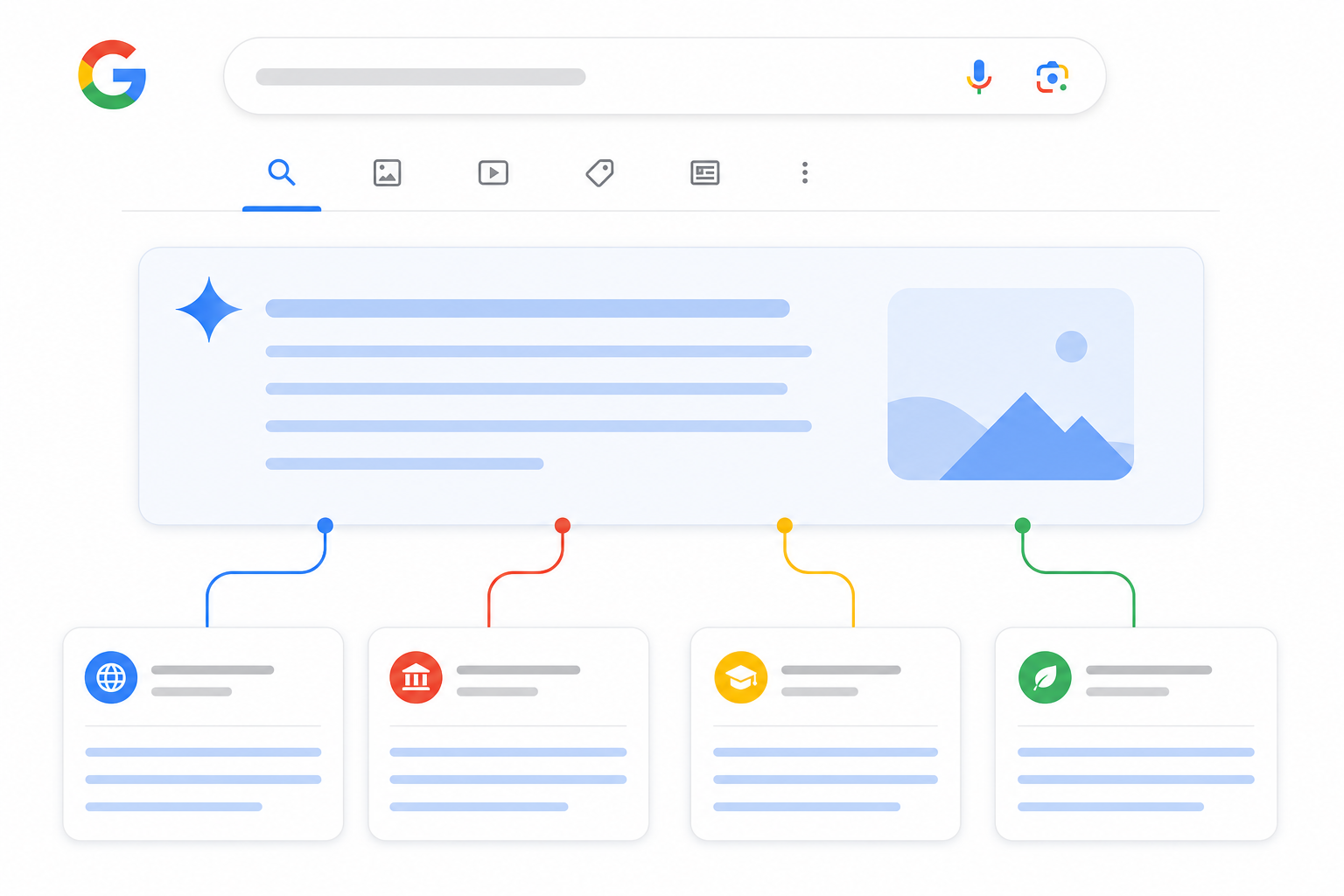
AI search engines — ChatGPT, Perplexity, Google AI Overviews, Bing Copilot — don't show 10 links. They synthesize answers from few sources and present them directly to the user. If your brand isn't among those sources, you're effectively invisible — even if your Google ranking is top ten.
GEO doesn't replace SEO — it extends it. Strong traditional SEO is GEO's foundation: authority, technical quality, and quality content still matter. But GEO also requires new content structures, entity management, and continuous monitoring in AI answers.
How do AI search engines select sources?
AI search engines don't index the web the same way Google does. ChatGPT uses training data plus real-time search integration (Bing). Perplexity searches the web and cites sources directly. Google AI Overviews combines traditional indexing with generative synthesis.
What they share: preference for trustworthy, authoritative sources with clear expertise in a topic. A single blog post rarely suffices — you need a consistent content portfolio, brand mentions in external sources, and structured data.
Entity recognition is central: AI engines identify brands, people, and organizations from Knowledge Graph-style data. If your brand isn't clearly defined as an entity, it's easily left out of AI answers.
- Authority: domain rating, backlink profile, brand mentions
- Expertise: deep, consistent content in a topic (E-E-A-T)
- Structure: clear headings, facts, lists, and schema markup
- Freshness: AI engines favor current content especially in fast-moving topics
- Citability: content that other sites link to and cite
ChatGPT visibility: how do you get included?
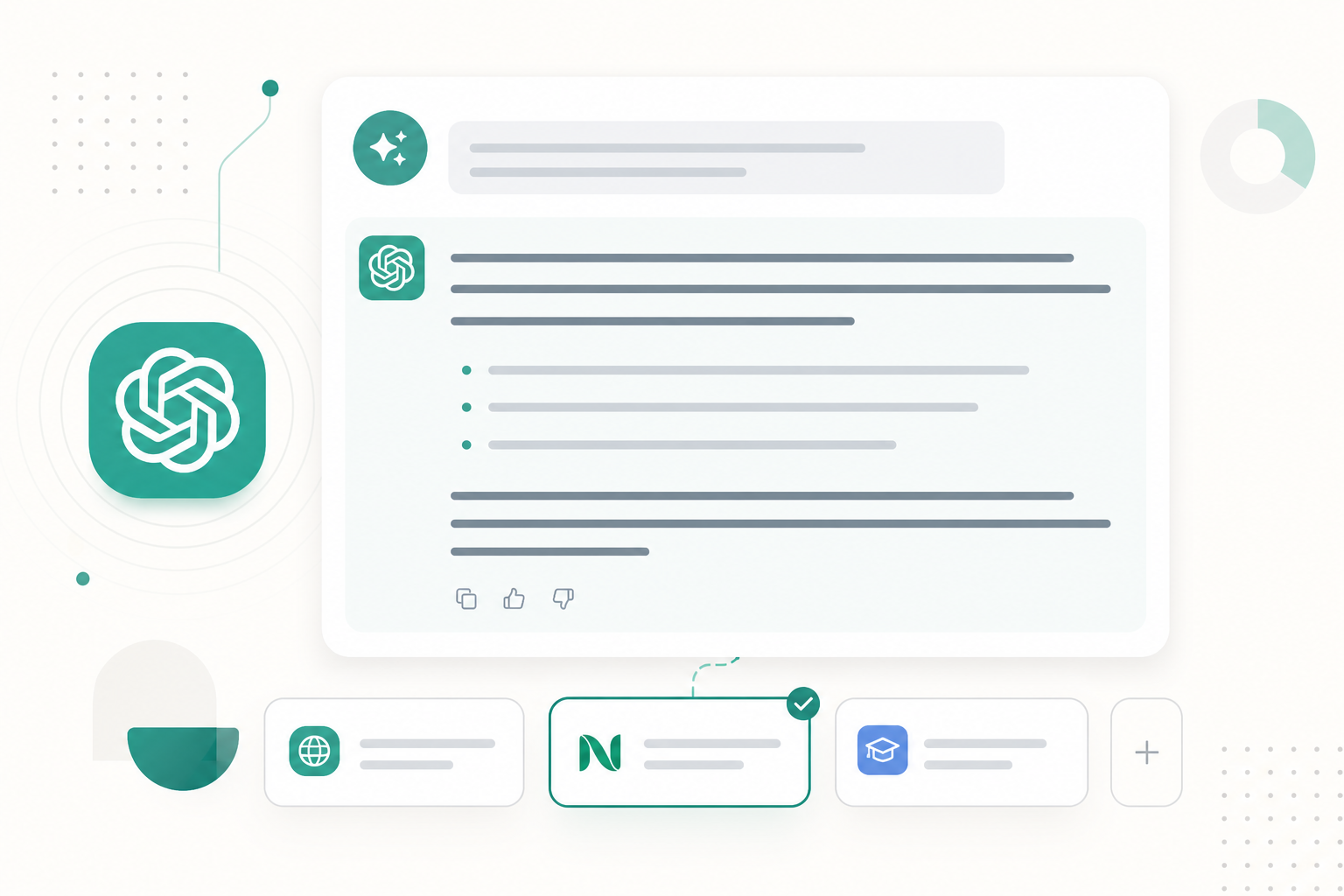
ChatGPT is currently the most significant generative search channel. Its answers rely on training data (cutoff depends on model) and real-time Bing search in ChatGPT Search. In both cases, authority and content quality decide.
ChatGPT favors sources that are clearly experts in their topic. Generic articles and thin content pages don't get included. Deep guides, research, case studies, and data-driven analyses do.
Brand mention in a ChatGPT answer doesn't require a link — but it requires your brand to be known and cited enough in the topic. This means active PR, expert articles in industry publications, and consistent content marketing.
Content optimization for GEO
GEO-optimized content structure differs from traditional SEO articles. AI engines parse content structurally — they look for clear answers to questions, facts, comparisons, and definitions.
Start every article with a direct answer to the main question (lead paragraph). Use clear H2/H3 headings that match real questions. Add fact boxes, comparison tables, and lists — they're easily extracted into AI synthesis.
FAQ sections are GEO's most powerful tool: each Q&A pair is a potential AI answer source. Schema markup (FAQPage, Article, Organization) helps AI engines recognize content structure.
- Lead paragraph answers the main question directly in the first paragraph
- H2 headings formatted as questions: "Why X?", "How does Y work?"
- Concrete numbers, percentages, and comparisons — not generic talk
- FAQ section with at least 4–6 questions at the end of the article
- Schema markup: Article, FAQPage, Organization, Person
- Update date visible — AI engines favor fresh content
Technical GEO: entities, schema, and crawlability
Technical GEO ensures AI engines can find, understand, and cite your content. This starts with basics: site speed, mobile compatibility, HTTPS, and clear site structure.
Schema markup is GEO's technical foundation. Organization schema defines your brand as an entity. Person schema defines experts. Article schema structures content articles. FAQPage schema makes Q&A pairs machine-readable.
llms.txt is a new standard telling AI engines what's on your site and how content may be used. It's the robots.txt equivalent for the generative era. Add llms.txt to your root and define key content areas.

GEO measurement: how do you track AI visibility?
Traditional SEO tools don't measure AI visibility. You need separate monitoring that tests your brand mention in ChatGPT, Perplexity, and Google AI Overviews regularly.
Metrics to track: mention count, mention context (positive/neutral), competitor mentions in the same queries, source distribution (own content vs. external citations).
Test at least 20–30 relevant questions monthly. Document answers and track changes over time. GEO is a long game — results typically appear after 3–6 months of consistent work.
Five most common GEO mistakes
We see these mistakes repeatedly in GEO audits — often in companies with otherwise strong SEO foundations.
- Copying SEO strategy directly to GEO → GEO requires separate content structure and monitoring
- Mass-producing thin articles → AI engines favor deep expert content
- Missing schema markup → Without structured data, AI engines don't recognize entities
- Neglecting brand mentions in external sources → PR and expert articles are GEO's foundation
- One-time optimization → GEO requires ongoing content production and monitoring
Frequently asked questions
Does GEO replace traditional SEO?
No. GEO extends SEO for the AI era. Strong traditional SEO is GEO's foundation — authority, technical quality, and quality content remain decisive in both.
How do I test my brand visibility in ChatGPT?
Ask ChatGPT 20–30 relevant questions in your industry and document your mentions. Repeat monthly. Automated GEO monitoring tools exist, but manual testing is a good starting point.
What is llms.txt and do I need it?
llms.txt is a standard telling AI engines what's on your site and how content may be used. It's a recommended addition for all sites building a GEO strategy.
How long until GEO results appear?
With consistent content work and technical optimization, first mentions in AI answers typically appear after 3–6 months. Building authority is long-term work.