What is Google AI Mode and how does it differ from classic search?
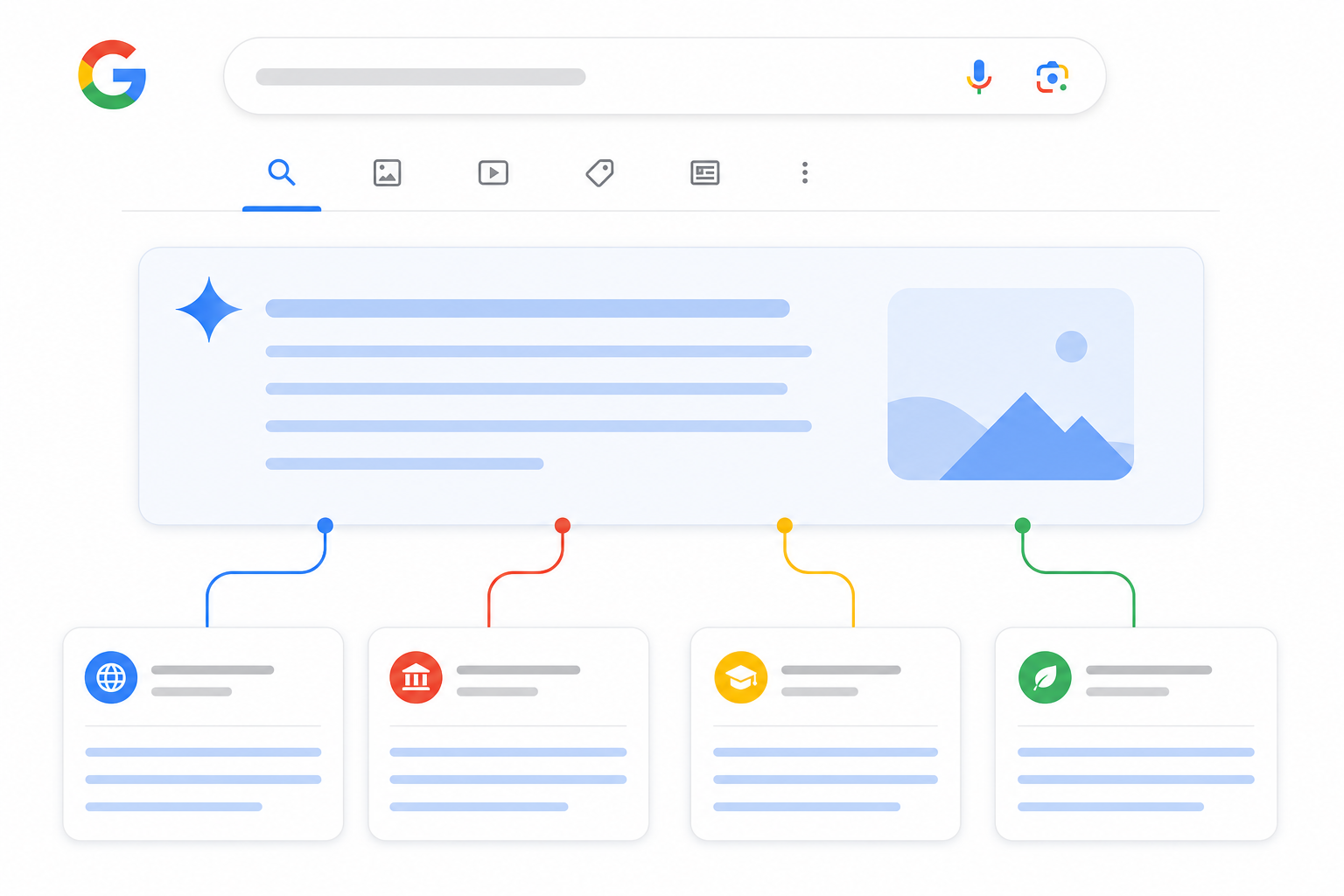
Google AI Mode is a generative search experience where Google answers with synthesized text before or instead of the traditional link list. It expands the AI Overviews concept into a fuller mode where users can choose between classic search and AI-driven answers, or receive AI answers by default for certain query types.
Classic search shows ten blue links. AI Mode assembles answers from few sources — typically 3–8 — and presents the synthesis directly. For B2B, the difference is decisive: ranking #3 organically does not help if a competitor is the primary source in the AI answer.
AI Mode does not replace the index — it uses Google existing index and ranking signals for source selection. Good SEO remains the foundation, but GEO-specific elements (citable structure, entities, FAQ schema) determine whether you become a source in the synthesis. Read the AI Overviews guide on how Google selects sources in generative answers.
In B2B context, AI Mode emphasizes informational and comparison queries: "what is X", "best Y 2026", "X vs Y". Transactional queries ("buy", "price") often stay more classic — but the research phase where purchase decisions begin shifts increasingly to AI answers.
Search Everywhere: search everywhere, not just google.com
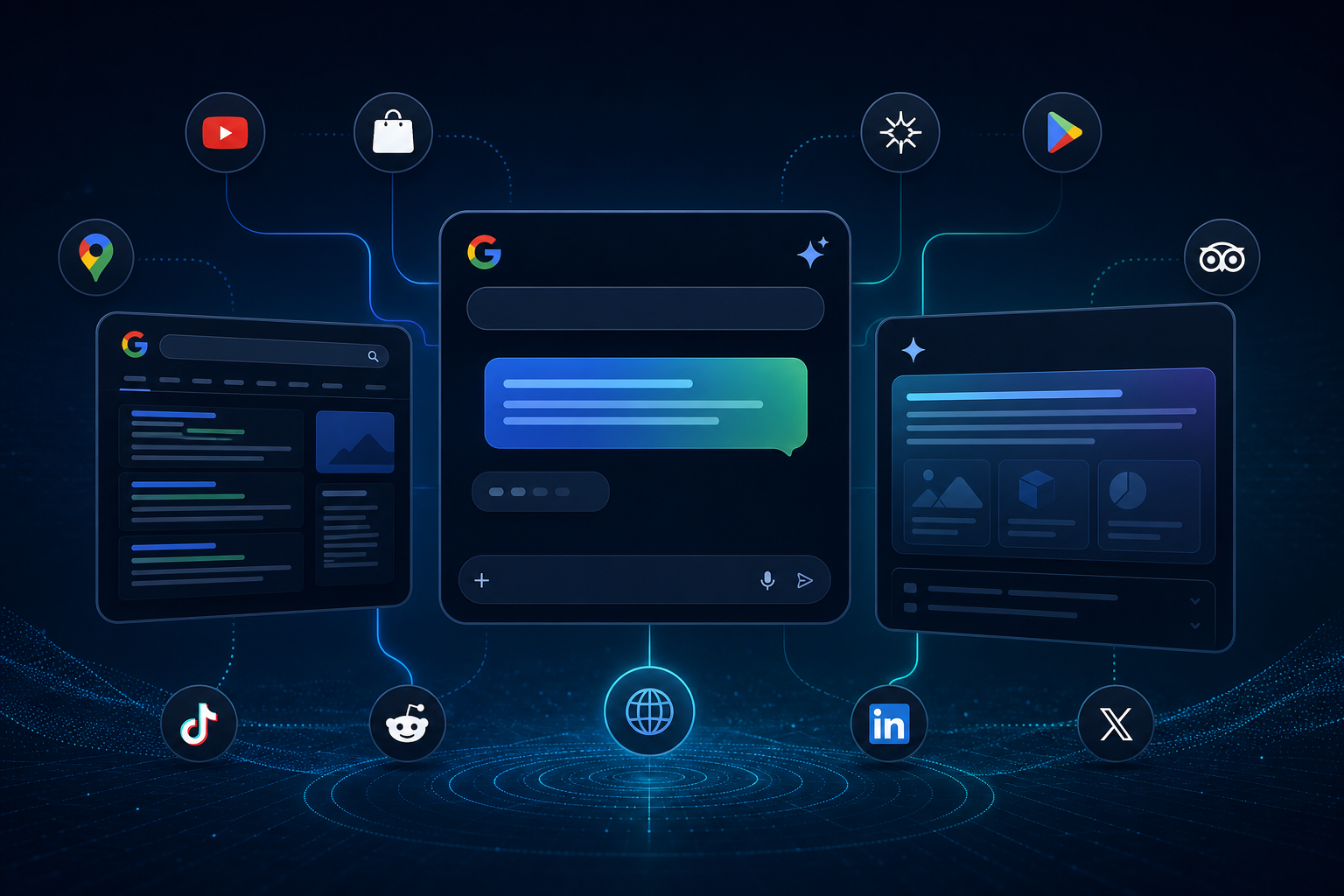
Search Everywhere is Google strategy to bring search and AI answers into user context — browser extensions, Android devices, Workspace apps, partner sites, and integrations. The search experience is not limited to the google.com search bar.
For B2B decision-makers, this means brand visibility spreads across channels. An AI answer in Chrome, Gmail sidebar, or Android search can cite the same content — but context and source selection may vary by integration.
Search Everywhere strengthens entity importance. When Google recognizes your brand as a trusted entity in a topic, it can recommend it in more contexts — not just one SERP view. Schema, sameAs links, and consistent brand profiles are critical.
Technically, Search Everywhere relies on the same index and crawl logic as classic search. Your site must be indexable, fast, and clearly structured — otherwise you are absent in every integration. This combines the SEO service technical foundation with GEO service citability requirements.
What do AI Mode and Search Everywhere mean for B2B companies?
B2B purchase processes start with research queries. When a decision-maker asks AI "best CRM solutions for mid-market companies" or "how to choose a marketing agency", the answer shapes the shortlist before RFP or first demo request.
If your brand is missing from the AI answer, you are not even under consideration — even if organic ranking is top ten. This is silent traffic and lead loss that traditional analytics does not show until brand queries and direct conversions decline.
The upside: a B2B company producing deep, citable content and strengthening its entity can rise as an AI source faster than mass-market brands relying on domain authority alone. Expertise and E-E-A-T are GEO currency.
Search Everywhere amplifies impact: the same AI answer can appear in multiple places during the workday — browser, phone, email integration. One strong source can multiply visibility compared to a single SERP view.
The marketing leader task in 2026: combine SEO reporting (GSC, organic traffic) with GEO tracking (mentions, citations, SOV). Report both to leadership — otherwise decisions rely on an incomplete picture.
- Research phase shifts to AI answers — shortlist forms before site visit
- Citation as source drives brand visibility and often clicks
- Entity and E-E-A-T decide B2B source selection
- Search Everywhere multiplies visibility channels
- SEO + GEO combined strategy — not either-or
SEO + GEO actions for B2B in 2026
Google AI Mode and Search Everywhere do not make SEO obsolete — they make GEO a mandatory extension. Effective B2B strategy combines both in the same content.
SEO foundation: indexability, Core Web Vitals, mobile, HTTPS, clear site structure, and authority. Without this Google does not index your content — you are not in AI Mode sources either. Secure technical SEO via SEO service audit or internal checklist.
GEO extension: citable content structure (direct answer first, FAQ, concrete numbers), Organization and Person schema, FAQPage markup, entity management, and continuous AI visibility tracking. The same article can rank organically AND serve as AI source — when structure serves both.
Prioritize content types where AI Mode activates: definitions, comparisons, how-to guides, "best X 2026" lists. Transactional pages (pricing, demo) remain key for conversion — but research-phase content builds AI source position.
Update existing pillar pages for citability before producing new content volume. One optimized article that becomes an AI source delivers more than ten thin pages without structure.
Technical preparation: crawlability, schema, and llms.txt
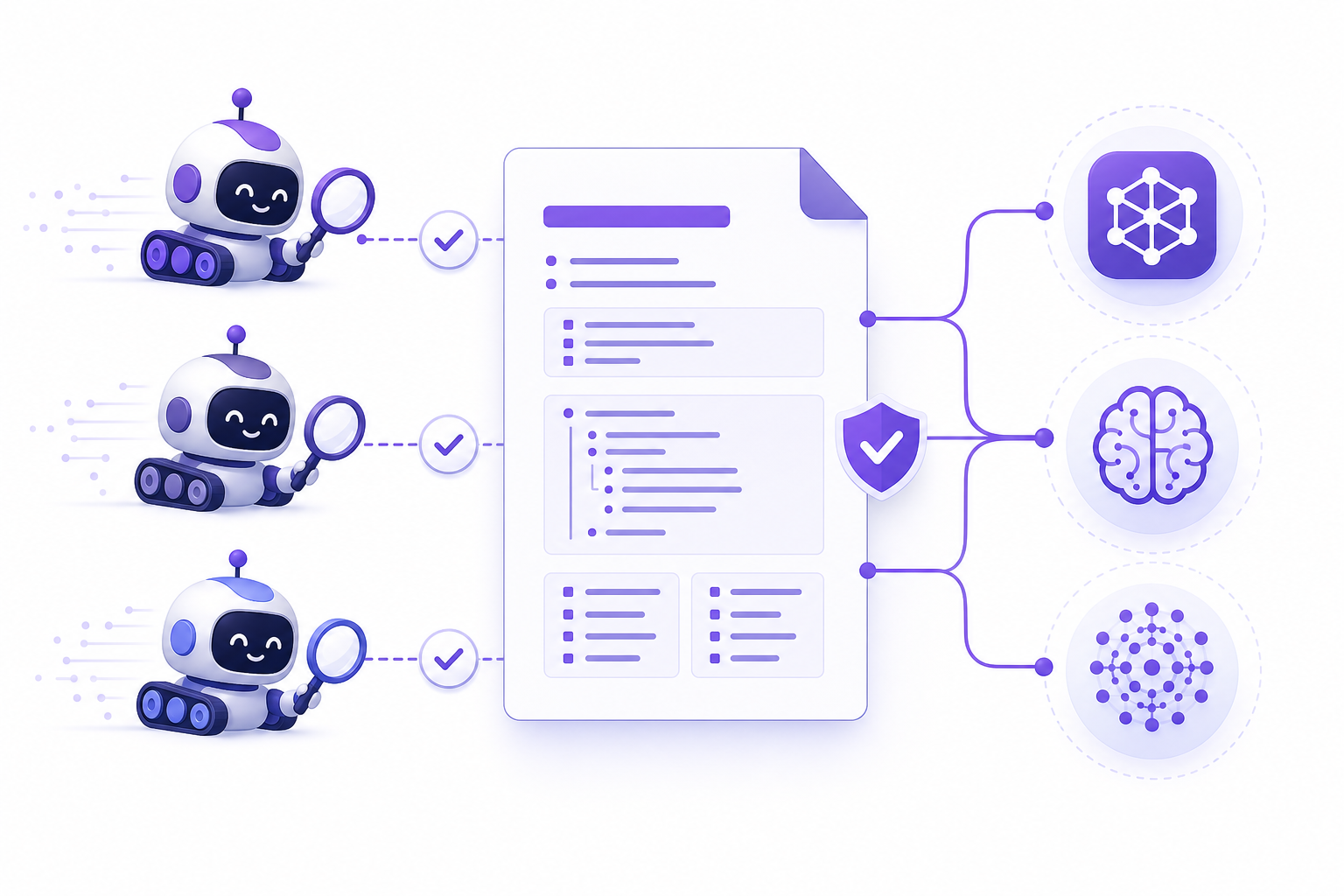
Google AI Mode and Search Everywhere rely on indexed, crawled content. Technical preparation starts by ensuring Googlebot and AI crawlers reach key content.
Robots.txt: allow Googlebot and do not unnecessarily block AI crawlers if you want GEO visibility in ChatGPT and Perplexity too. Separate unnecessary areas (admin, search) from important content.
llms.txt at root guides AI engines to key pages: services, about, blog pillars, FAQ. Google reads it increasingly for crawl guidance. See the llms.txt guide for implementation.
Schema markup: Organization, Article, FAQPage, Person. Connect with @id references for consistent knowledge graph. FAQPage is especially effective in AI source selection — it makes Q&A pairs directly extractable.
Speed and mobile: Search Everywhere integrations emphasize fast load. Core Web Vitals below targets weaken both ranking and likelihood of becoming a source. Check largest pillar pages first.
Multilingual: if your B2B audience searches in Finnish, ensure hreflang and Finnish citable content. AI Mode often returns language-specific sources.
Summary: B2B preparation for the AI Mode era
Google AI Mode and Search Everywhere make search generative and multi-channel. B2B companies must treat visibility as an AI source as important as organic ranking — the research phase forms in AI answers.
Actions in 2026: strengthen SEO foundation, optimize content for citability (GEO), implement schema and llms.txt, track AI visibility monthly, and report SEO + GEO combined to leadership.
Start with relevant queries in your industry: test AI Mode, document sources, optimize three weakest queries. GEO is iterative — first citations can come in months, lasting position requires continuous work. The GEO service helps with auditing, optimization, and tracking if resources are limited.
Frequently asked questions
What is the difference between Google AI Mode and AI Overviews?
AI Overviews is a generative answer block in certain queries within the classic SERP. AI Mode is a broader search experience where generative answers can be default or primary mode. Both select sources with similar logic — GEO optimization serves both. AI Overviews is often first contact; AI Mode expands coverage.
Does AI Mode replace B2B SEO?
No. AI Mode uses Google index and ranking signals. Good SEO is prerequisite for AI source selection. GEO extends SEO with citable structure, entities, and tracking. B2B needs both — SEO for conversion and transactional queries, GEO for research-phase visibility.
What does Search Everywhere mean for marketing?
Search and AI answers appear in multiple contexts — browser, mobile, Workspace, integrations — not just google.com. Brands must be recognizable and citable everywhere. Technical foundation and entity are shared; content must answer questions directly.
Where should a B2B company start in 2026?
List 20–30 relevant queries, test AI Mode, and document sources. Secure technical foundation (robots.txt, llms.txt, schema). Optimize three key articles for citability. Start monthly GEO tracking and combine with SEO reporting. Request a GEO audit from professionals if needed.