Same Meta, different platforms
Facebook and Instagram both belong to Meta, and their advertising is managed from the same Meta Ads Manager with the same tools, audiences, and conversion tracking. This means you do not need separate campaigns or systems — both are placements within the same campaign.
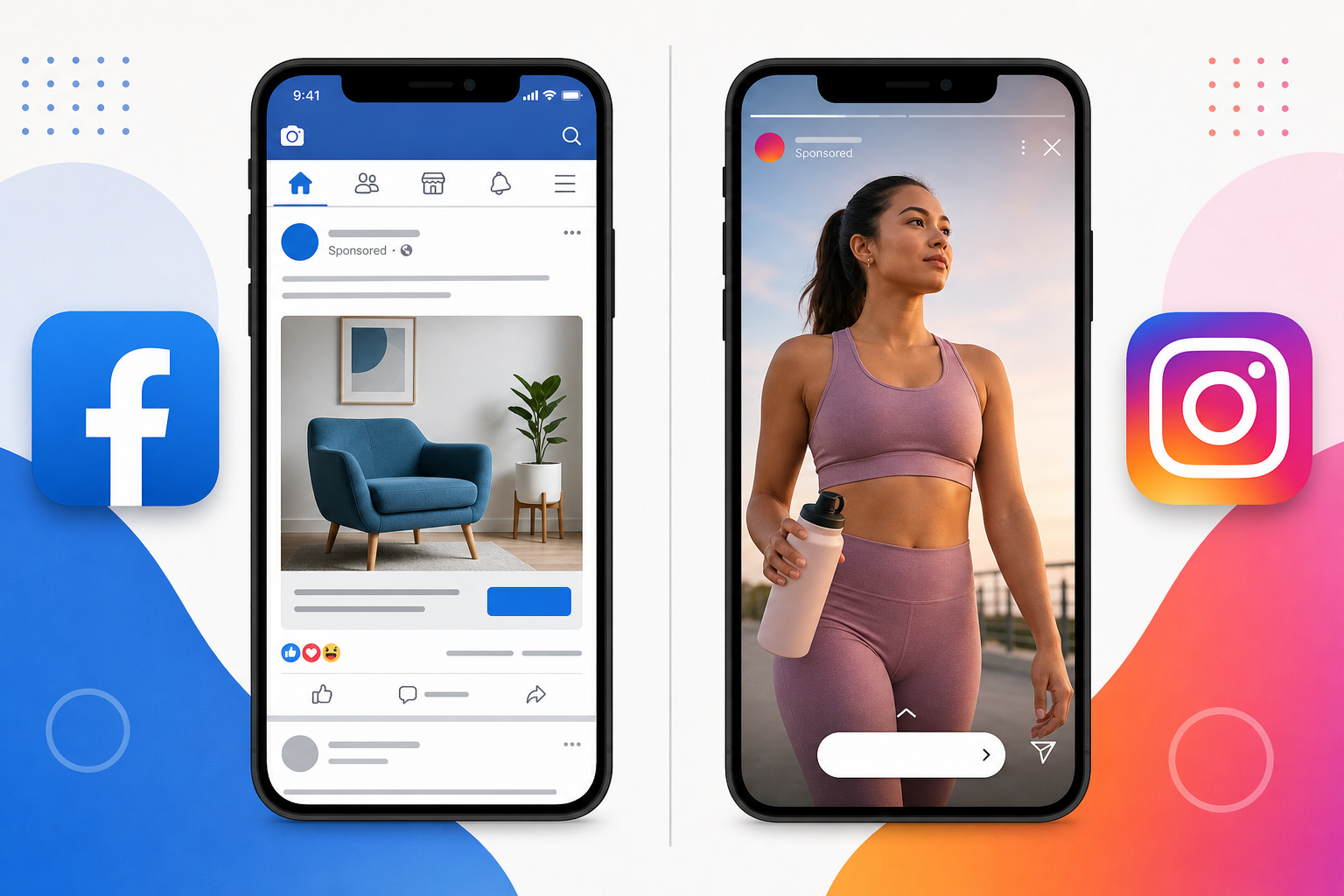
The difference is therefore not technical but contextual: the platforms have different user bases, use contexts, and content norms. The same ad can perform differently in the Facebook feed than in Instagram Reels, because the user's mindset and expectations differ.
The strategic starting point in 2026 is that it rarely pays to force advertising onto only one platform. Most often the best result comes from letting both be active and Meta's algorithm find the most effective placements — while you still understand the platform differences when designing creative and message.
Audience differences
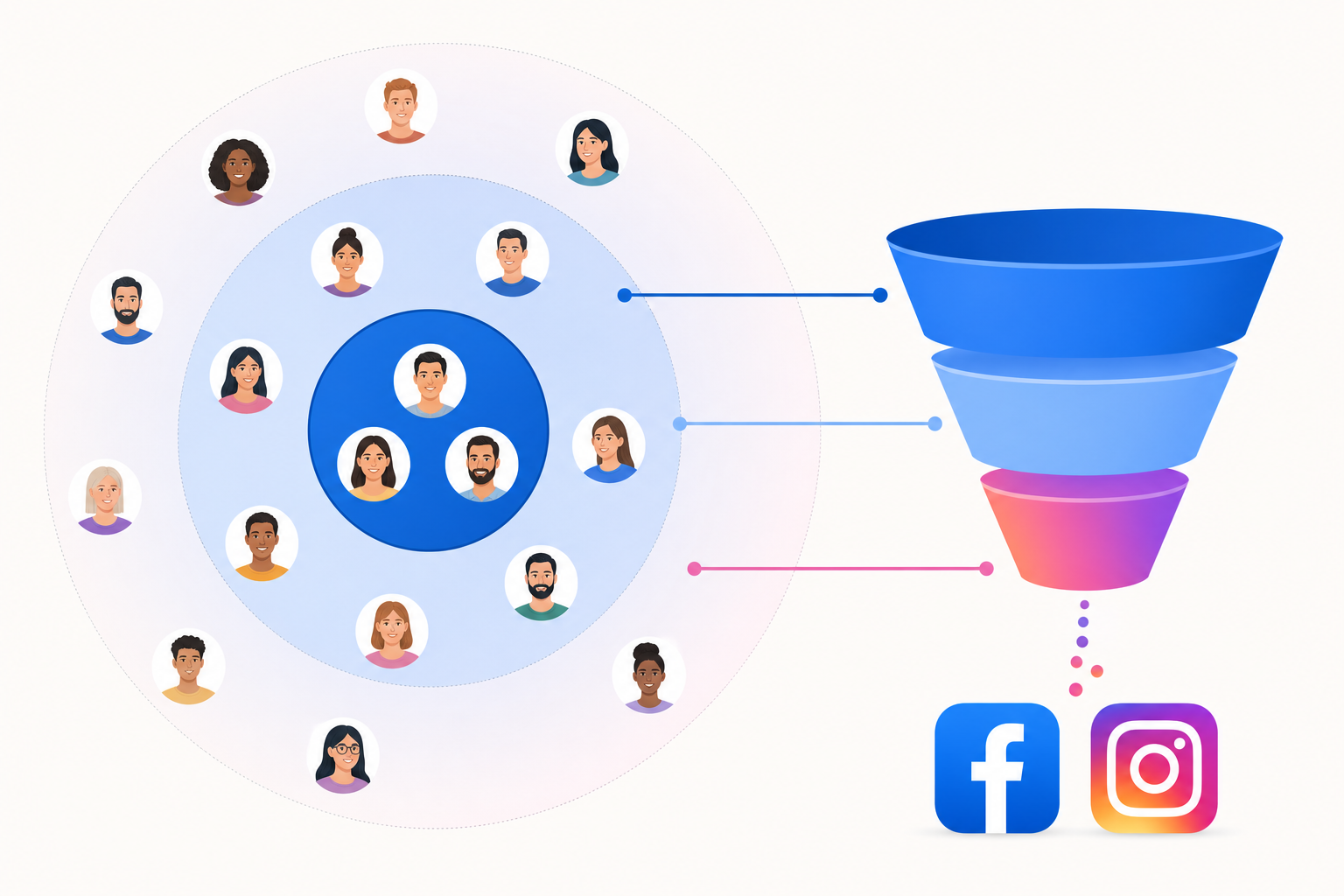
Facebook's user base skews slightly older and covers a broad population. It is strong in many industries, especially local services, B2B (older decision-makers), and products serving a broad audience. Groups and communities are also strong on Facebook.
Instagram skews toward a younger, visually oriented audience. It is strong in fashion, beauty, interior design, food, travel, and other visual categories, as well as brands targeting a younger, trend-aware audience.
In practice, however, the audiences overlap heavily, and the same person often uses both. Do not make too sharp assumptions like "Facebook is for the old, Instagram for the young" — test and let the data tell you where your audience actually converts.
Formats and tone
Facebook supports versatile formats: feed images and videos, carousels, collections, and link ads. The Facebook feed works well with content that can be more informative and text-oriented — users are accustomed to longer content and links too.
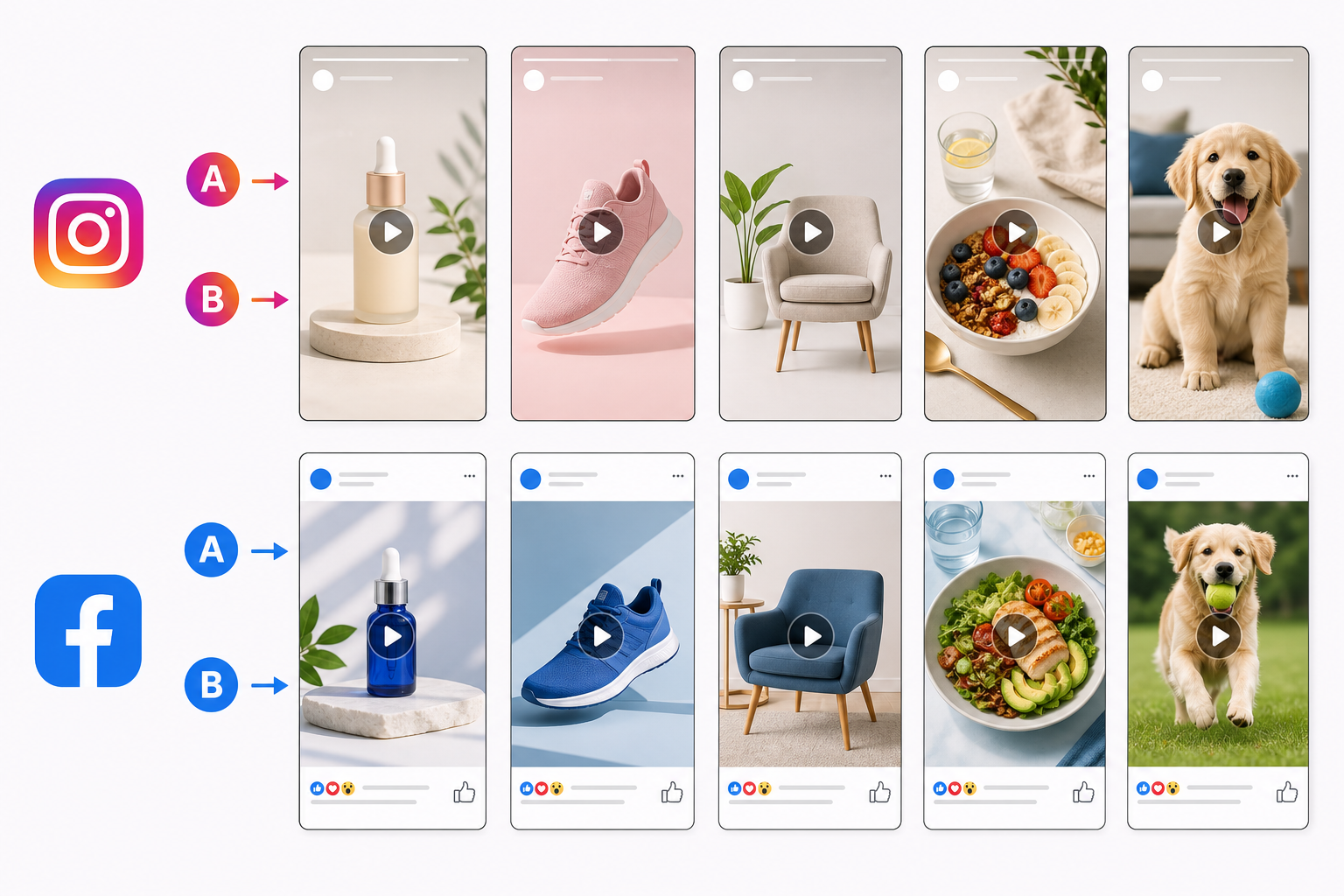
Instagram is at the heart of visuality: Reels (vertical video) is its fastest-growing and most visible format, with Stories and feed images complementing. On Instagram, aesthetics and authenticity stand out — content that looks unpolished but is high-quality and visual works best.
The key principle: vertical video (9:16) works on both platforms and in all placements (Reels, Stories, feed). It is the safest default format. But adapt the tone to the platform: Instagram-native, authentic style vs. Facebook's slightly more informative approach.
- Facebook: feed images/videos, carousels, collections, link ads
- Instagram: Reels (vertical video), Stories, feed — the visual core
- Vertical video (9:16): works on both, the safest default
- Tone: Instagram authentic/visual, Facebook more informative
Placements and Advantage+ Placements
Placements determine where the ad appears: Facebook feed, Instagram feed, Reels, Stories, Marketplace, Audience Network, and others. You can select placements manually, but Meta's recommendation and often the best result come from the Advantage+ Placements setting, which lets the algorithm distribute impressions most effectively.
Advantage+ Placements optimizes placements based on conversion data: it shows the ad where it performs best for each user, regardless of platform. This is usually more effective than manual restriction, because the algorithm sees data you do not — and the same euro produces more when it is not locked to one placement.
Manual placement restriction is justified only in special cases: if the creative works only in a certain format (e.g. vertical video only), brand safety requires removing certain placements, or you have clear data that a placement does not fit. Otherwise let Advantage+ do the work.
When to emphasize Instagram, when Facebook?
Although the default is to let both be active, an emphasis can be justified in certain situations. Emphasize Instagram if your brand is strongly visual (fashion, beauty, interior design, food, travel), your audience is younger and trend-aware, and your content is Reels/video-driven.
Emphasize Facebook if your audience is broad or older, the advertising is local service or B2B, the message requires more text or context, or you leverage Facebook's special features (Marketplace, groups, events, lead forms for an older audience).
Most often, however, the best strategy is to let both be active with Advantage+ Placements and produce creatives that work on both — and track from the data where the algorithm leans. Let the result, not the assumption, steer the emphasis.
Common mistakes in Instagram/Facebook advertising
We see these mistakes repeatedly — often when the platforms are treated as separate or based on assumptions.
- Choosing a platform by stereotypes, not data
- Unnecessary manual placement restriction → prevents Advantage+ optimization
- Using the same horizontal format everywhere → vertical video works better
- Forcing a Facebook-style text-heavy ad onto Instagram
- Using only one platform without testing → you lose potential
- Ignoring tone → Instagram requires a more authentic approach
Frequently asked questions
Do Facebook and Instagram advertising need to be done separately?
Usually not. Both are managed from the same Meta Ads Manager and are placements within the same campaign. Most often the best result comes from letting Advantage+ Placements split impressions between both rather than building separate campaigns.
Which is better, Instagram or Facebook?
Neither is universally better — it depends on audience and content. Instagram is strong in visual industries and with younger audiences; Facebook with broad or older audiences, local services, and more text-oriented messaging.
Which format works on both platforms?
Vertical video (9:16) is the safest default — it works in Reels, Stories, and feed on both platforms. Adapt the tone to the platform: Instagram more authentic and visual, Facebook can be more informative.
Should I select placements manually?
Usually not. Advantage+ Placements optimizes placements based on conversion data and often produces a better result than manual restriction. Restrict manually only for a special reason (creative works only in a certain format, brand safety).
How do I know which platform my audience responds to?
Let both be active and look at the data to see where conversions happen. Do not rely on stereotypes — audiences overlap heavily, and the same person often uses both. The result, not the assumption, steers the emphasis.