Why does creative decide on Meta in 2026?
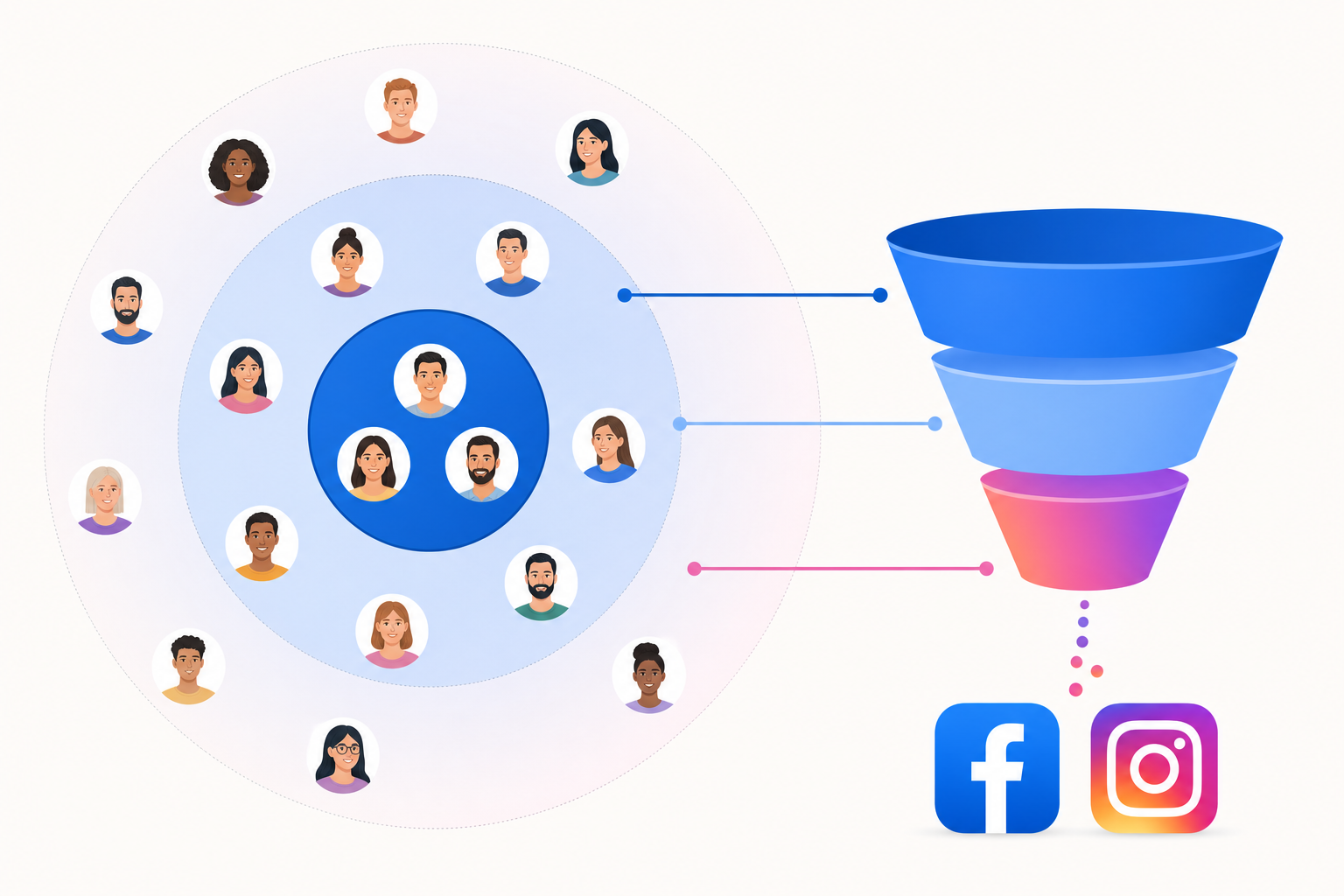
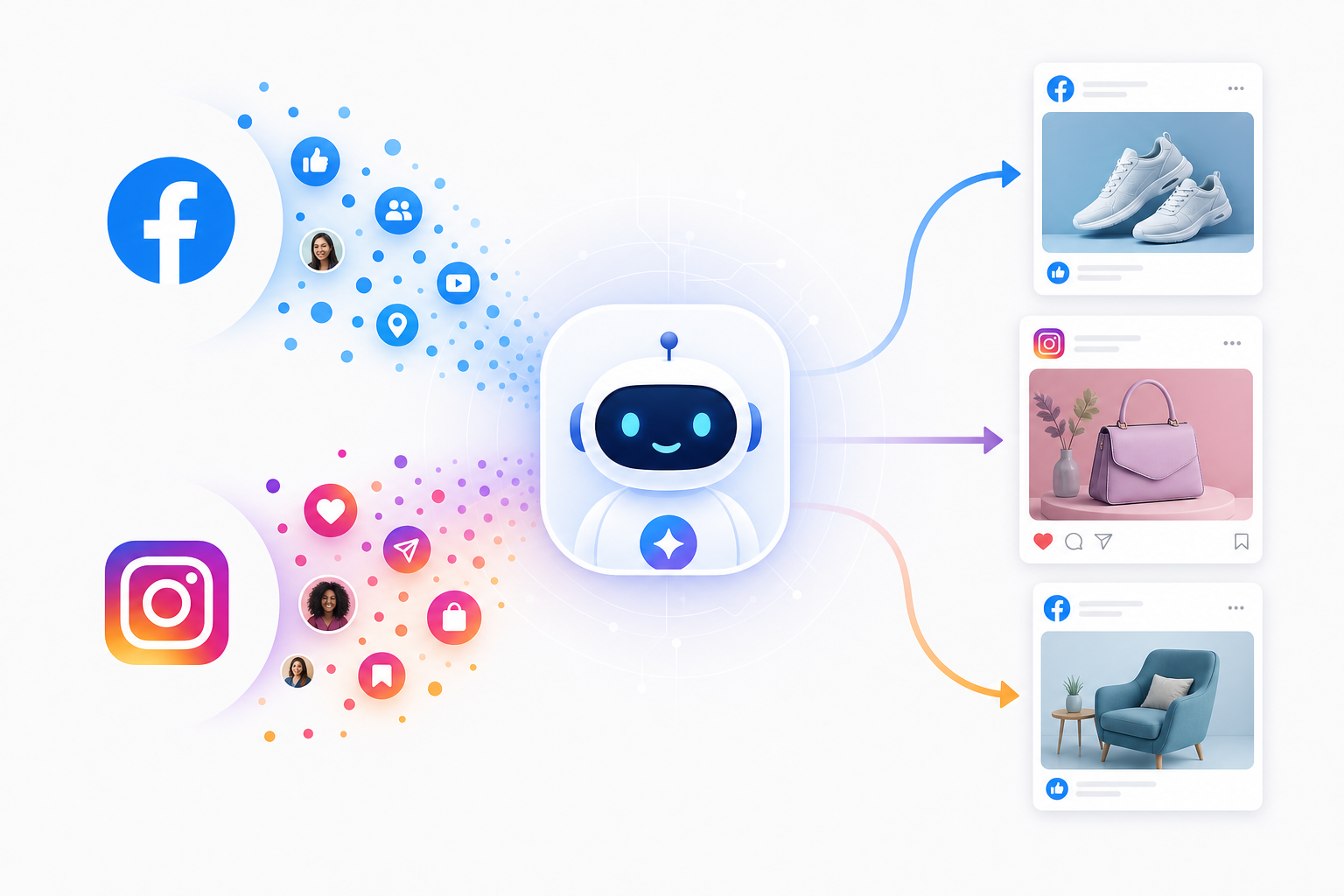
In the past, the competitive edge in Meta advertising came from precise targeting and manual optimization. Advantage+ and machine learning have changed this: the algorithm finds the right audience and allocates budget more efficiently than any manual tweak. Targeting is no longer a competitive edge — it is a commodity.
This means the decisive difference now comes from creative. When two advertisers reach the same audience with the same algorithm, the one whose ad stops the scroller and drives action wins. Meta itself highlights creative as the single most important performance factor.
In practice this shifts the focus from campaign settings to content production: you need a constant stream of fresh, tested creatives. The advertiser who produces and tests more quality creatives wins over the long term.
Hook: the first three seconds
The hook is the first few seconds of the ad that decide whether the scroller stops or keeps going. In a feed environment you have about three seconds. If the hook does not work, the best offer or production cannot save the ad — no one sees it.
An effective hook speaks to the viewer immediately: a problem they recognize, a surprising claim, a visual hook, or a direct question. Avoid a slow intro and a brand logo at the start — get straight to the point. The first frame and the first sentence decide.
Test hooks separately: the same ad body with different hooks quickly reveals what stops people. Hold rate (how many watch past 3 seconds) is a good measure of hook strength.
UGC and authenticity
User-generated content (UGC) — authentic-looking, phone-shot videos — often outperforms polished studio production. The reason is authenticity: UGC blends into the organic feed and does not look like an ad, making the scroller more likely to stop.
UGC-style formats like testimonials, "unboxing", product-in-everyday-use, and before/after comparisons build trust. They work especially well when a real customer or a trustworthy-seeming person shares their experience.
This does not mean production should be poor — it means it should look authentic. Combine an authentic style with a clear message and a strong hook. Many brands build creator networks for a constant stream of UGC.
- Testimonials: a real customer shares the result
- Product in everyday life: real environment, not a studio
- Before/after: a concrete change shown visually
- Creator collaborations: a constant stream of authentic content
- Captions always — sound-off viewing is the norm
Formats and variations
Meta offers several formats: Reels (vertical video), feed images and videos, carousels, and collections. Vertical video (9:16) is the dominant format because it fills the mobile screen and works in Reels, Stories, and the feed.
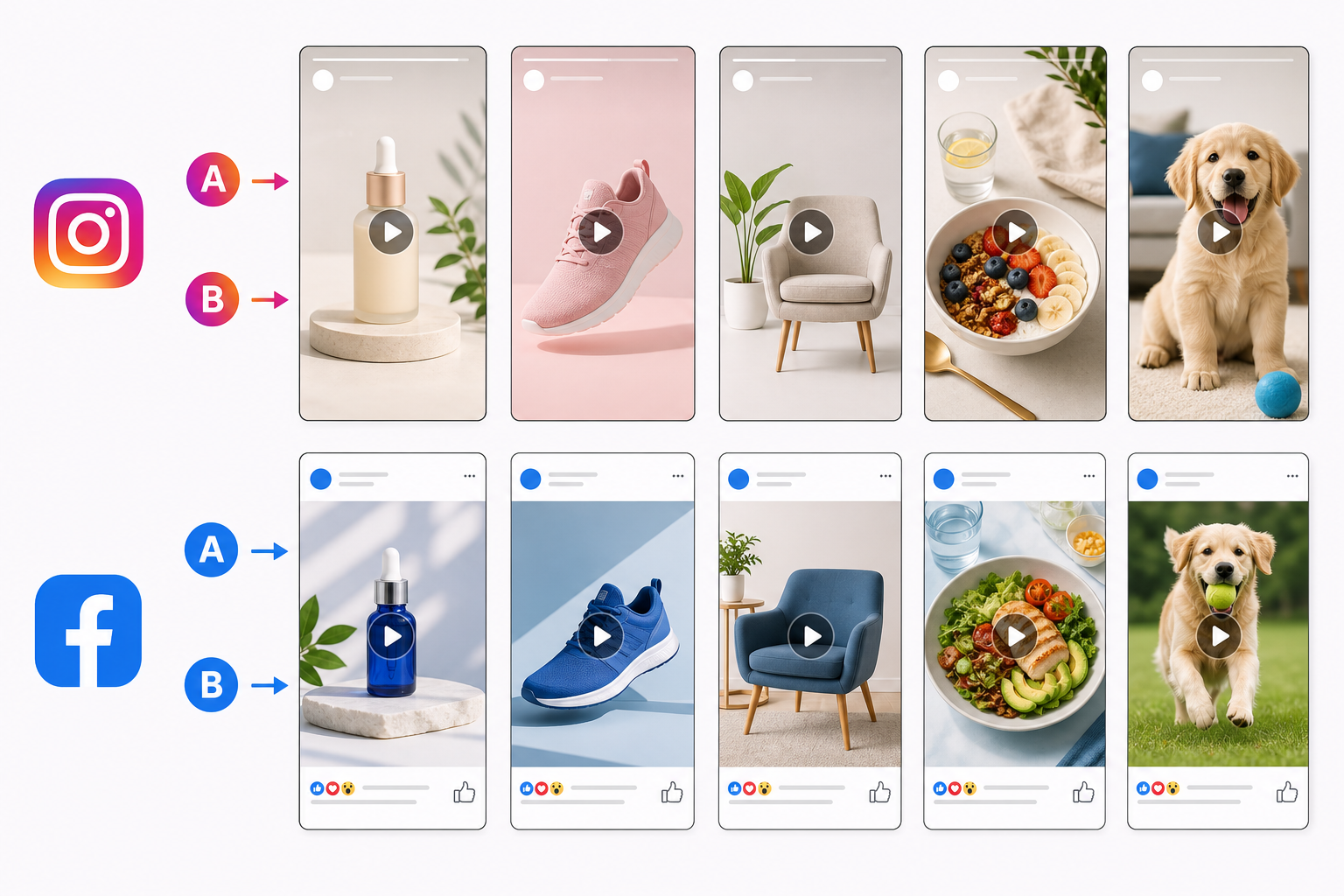
Do not rely on one creative: produce variations. The same message with different hooks, in different formats, and from different angles gives the algorithm material to find the best-performing combinations. Advantage+ Creative tests elements automatically, but the raw material must be produced.
Carousels work for showcasing a product range, a step-by-step story, or multiple benefits. Collections and Advantage+ Catalog ads leverage the product feed in e-commerce. Choose the format based on the goal.
Creative testing: a systematic approach
Testing creative is not guesswork but a system. Test 4–6 creatives per batch, give the algorithm enough budget and time to gather data (avoid drawing conclusions too early), and identify winners with clear metrics: hold rate, click-through rate, cost per acquisition (CPA), and ROAS.
Test one variable at a time when you want to learn (e.g. different hooks on the same body), or several creatives in parallel when you want to find a winner quickly. Document the learnings: which hooks, formats, and messages work — this builds the organization's creative know-how.
Scale the winners and replace the losers. A winning creative does not last forever, however — which is why testing is continuous, not a one-off.
Creative fatigue: when a creative wears out
Creative fatigue means the decline in a creative's performance when the same audience sees the ad too many times. The signs: frequency rises, click-through rate falls, and cost per acquisition rises even though targeting and budget stay the same.
Beat fatigue by continuously producing fresh creatives and rotating them. Monitor frequency and CTR trends — when they turn unfavorable, it is time to bring in new creatives. Do not wait for the winner to collapse entirely.
The solution is a continuous creative pipeline: there are always new creatives in testing and ready to replace the ones wearing out. This is why creative is a process, not a project.
Common mistakes in Meta creative
We see these mistakes repeatedly in Meta account audits — often on accounts whose campaign settings are fine but results fall short.
- Too few creatives → the algorithm has no material to optimize
- Weak hook → the best offer cannot save it if the scroller does not stop
- Studio polish instead of UGC → polished content looks like an ad
- Relying on sound → many watch sound-off without captions
- Neglecting testing → winners are not found by guessing
- Ignoring creative fatigue → an old creative eats budget
Frequently asked questions
Why is creative so important in Meta advertising now?
Because Advantage+ and machine learning handle targeting and budget allocation automatically. When the algorithm levels the field, the decisive difference comes from creative — the ad that stops the scroller and drives action.
What makes a good hook?
A hook is the first ~3 seconds of the ad that decide whether the scroller stops. A good hook speaks immediately: a recognizable problem, a surprising claim, or a direct question. Design it for sound-off viewing with captions.
Does UGC work better than studio production?
Often yes. UGC blends into the organic feed and does not look like an ad, so the scroller is more likely to stop. The key is an authentic style combined with a clear message and a strong hook.
How many creatives should I test at once?
Typically 4–6 creatives. Give the algorithm enough budget and time to gather data, identify winners with clear metrics (hold rate, CTR, CPA, ROAS), scale the winners, and replace the losers.
What is creative fatigue and how do I beat it?
Creative fatigue is a performance decline when the same audience sees the ad too much: frequency rises, CTR falls, CPA rises. Beat it by continuously producing fresh creatives and rotating them before the winner collapses.