Why good ad traffic doesn't convert
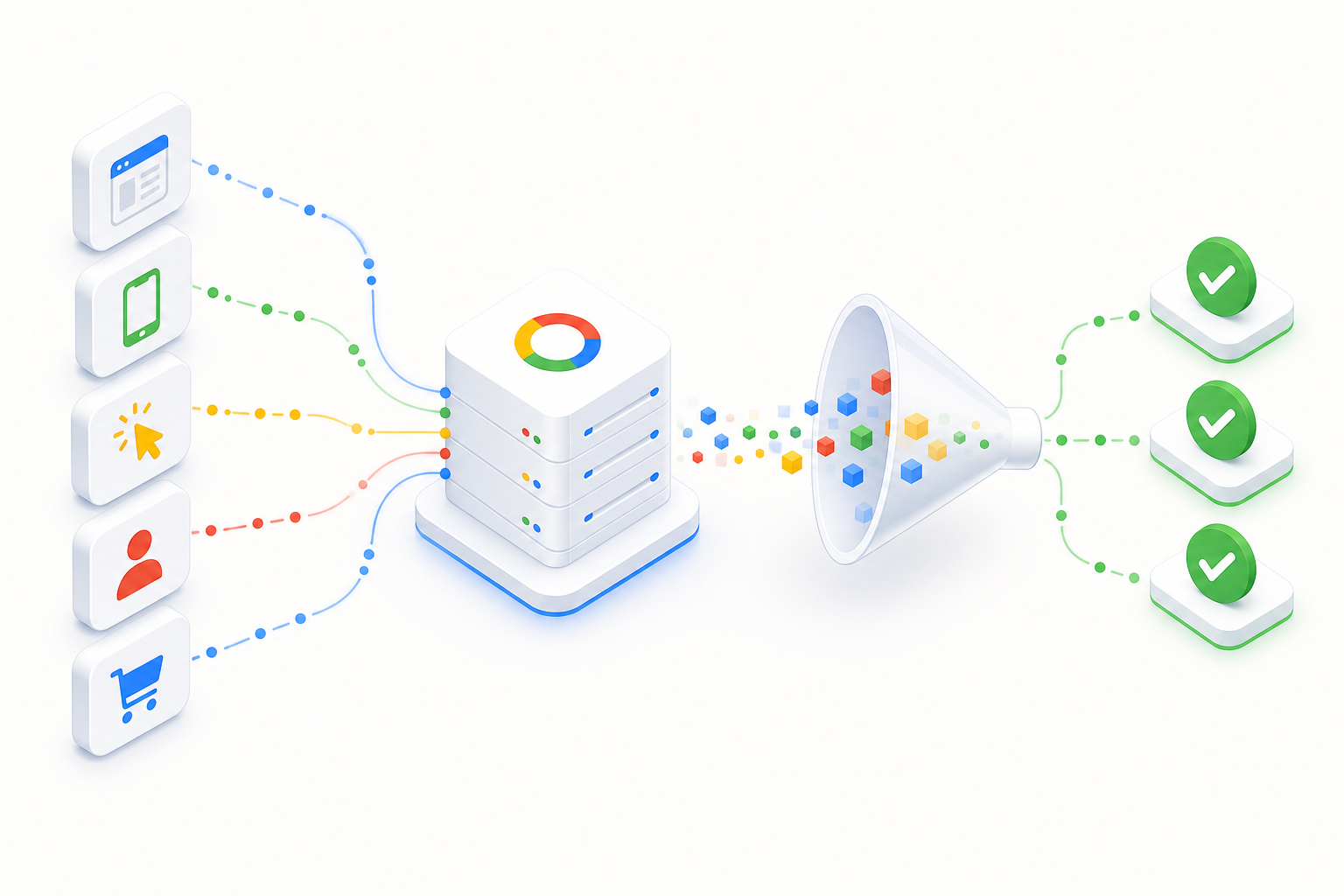
The campaign looks good in the dashboard: high CTR, reasonable CPC, plenty of clicks. But conversions are few or none. This is one of the most common problems in Google Ads and Meta accounts — and the cause is rarely the ad itself.
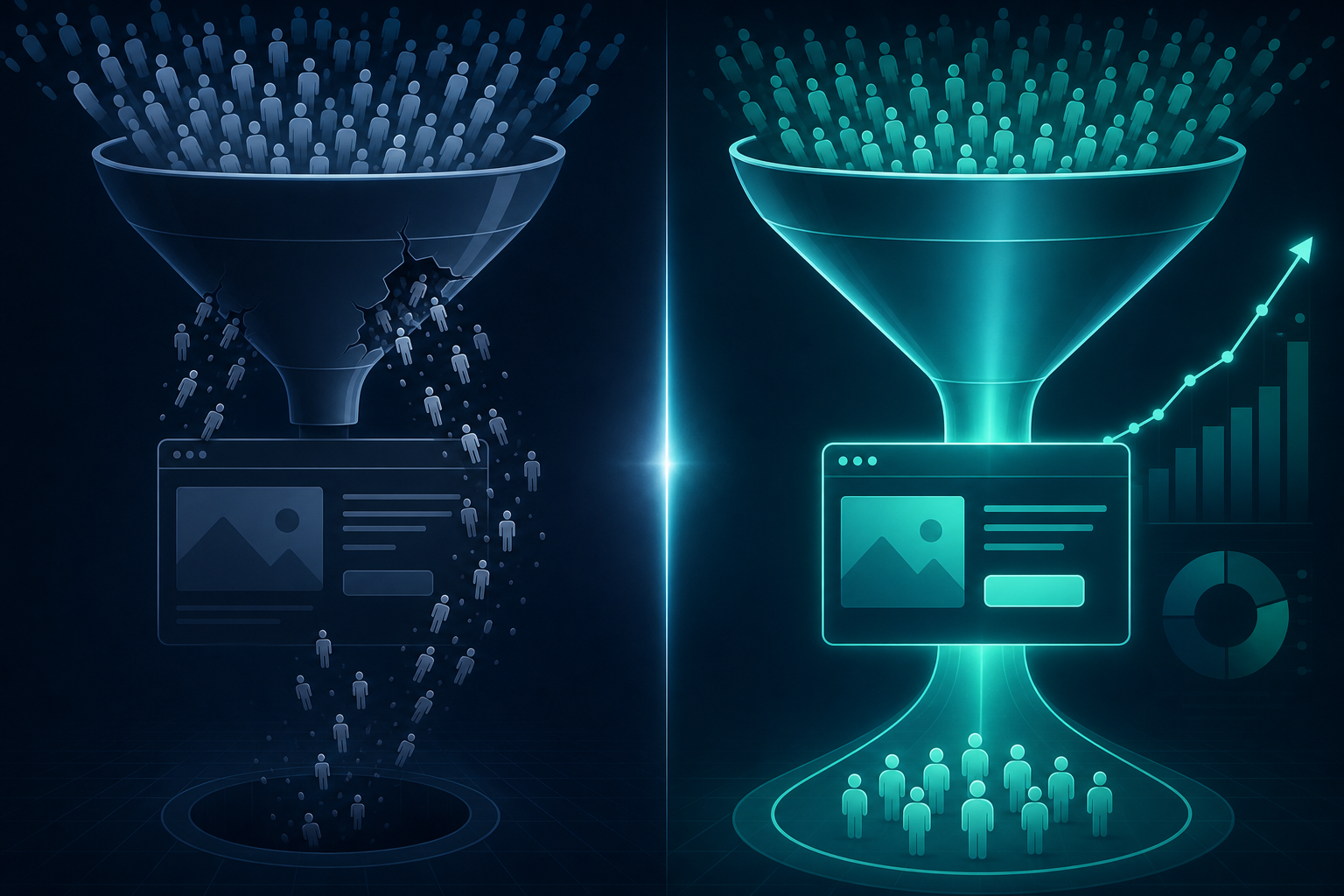
Conversion happens on the landing page, not in the ad. The ad creates interest and brings the right audience; the landing page convinces, clarifies, and drives action. If the landing page is slow, unclear, message-inconsistent with the ad, or the conversion point is hidden, good traffic leaks away.
The algorithm optimizes what you measure. If conversion tracking is solid but the landing page converts poorly, Smart Bidding and Meta optimization learn to bring cheap traffic — not quality conversions. Fix starts with the landing page, not budget increases.
Typical scenario: Search ad promises "Free demo in 15 minutes", landing page sends to homepage where demo is three clicks away. Or Meta ad shows the product, landing page is a generic brand page with no clear CTA. Message mismatch kills conversion before the user reads the first sentence.
Another common cause is technical: slow load, broken form on mobile, cookie banner covering CTA, or conversion tracking that doesn't work — so dashboard shows zero conversions even when some users convert. Before landing page redesign, ensure tracking is solid.
Message match: ad and landing page on the same message
Message match means the ad's promise, headline, and visual message continue seamlessly on the landing page. The user clicks expecting something specific — if the landing page offers something else, trust breaks and conversion drops.
In Google Search advertising, message match is direct: search term, ad headline, and landing page headline must align. "Google Ads management" search → ad "Google Ads specialist for businesses" → landing page headline "Google Ads management for growth companies". Not homepage, not generic service page.
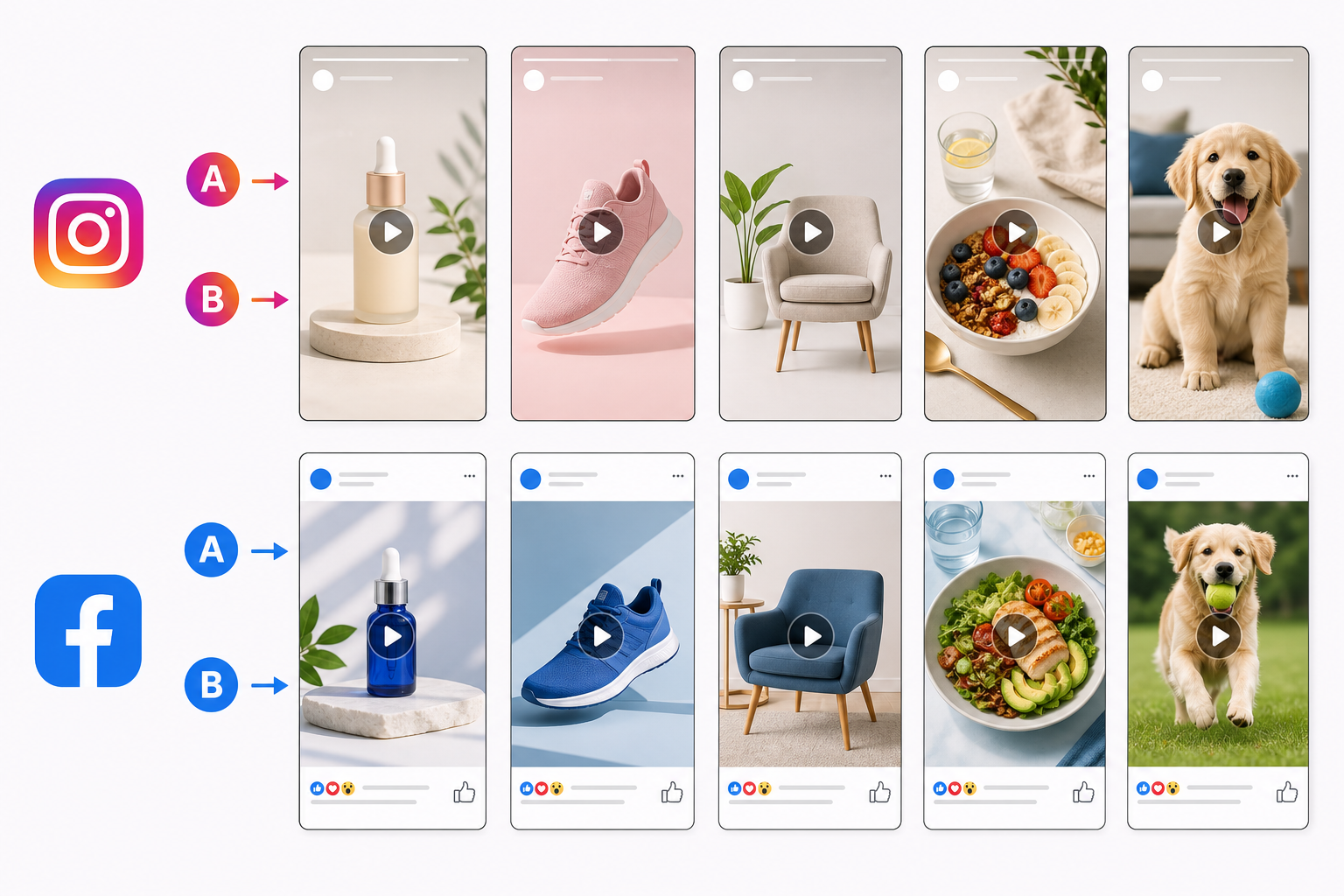
In Meta advertising, message match covers visual and copy: product, price, or offer shown in the ad must appear on the landing page immediately. Scrolling to find what the ad promised is a conversion killer. Read more in our Meta creative article on how creative and landing page work together.
Dynamic advertising (Responsive Search Ads, Advantage+ creative) requires multiple landing page variants or one strong general page covering all ad messages. One generic page for all ads weakens message match and conversion.
Message match also covers price and offer: if ad mentions "20% off first order", discount code or offer must appear on landing page immediately — not hidden at bottom. Ambiguity creates distrust and increases bounce.
- Ad headline = landing page headline (or nearly identical)
- Ad promise visible on landing page above the fold
- Visual continuity in Meta ads: same product, same offer
- Never homepage — always relevant landing page for ad message
Landing page fundamentals: speed, clarity, and one goal
A good landing page is fast, clear, and focused on one conversion point. It's not a homepage or navigation hub — it's a path to one action: demo booking, form fill, purchase, download.
Speed: landing page loads in under 3 seconds on mobile. Every second of delay lowers conversion. Core Web Vitals (LCP, FID, CLS) matter directly — slow pages cost both conversion and Google Ads quality score.
Clarity: one clear headline, one subheadline, one primary CTA. No distracting navigation, no competing links. User knows within 5 seconds what's offered and what to do next.
Trust: logo, customer references, security badges, clear contact info. In B2B especially, demo or lead forms need trust — short form (name, email, company) converts better than 15-field forms.
Mobile first: over 60% of ad traffic is mobile. Landing page must work excellently on small screens — CTA visible, form fillable, text readable without zooming.
B2B vs B2C landing page: in B2B trust and clarity beat visual flash — references, clear value proposition, short form. In B2C product image, price, and fast purchase path decide. Same ad may need different landing page structure for different segments.
Above the fold rule: user decides in 3–5 seconds whether to stay. Headline, subheadline, hero image, and CTA must fit first view on mobile — scrolling to find promise is lost conversion.

Google Ads + landing page: Search, Display, and PMax
In Google Ads, landing page quality directly affects Quality Score and thus CPC. Relevant landing page improves quality score, lowers cost, and improves conversion — three benefits from one fix.
Search campaigns: one ad group → one landing page (or tightly limited set). Keyword-specific landing page converts better than generic service page. Dynamic Search Ads need clear landing pages by product category — otherwise Google sends traffic to wrong pages.
Performance Max and Display: landing page scope expands — Final URL expansion can send traffic to different pages. If landing page quality varies by category, segment campaigns or asset groups and disable expansion on weak pages.
Conversion tracking is prerequisite: Smart Bidding optimizes conversions, not clicks. Ensure tracking is solid before landing page testing — otherwise you don't know which change worked. Read our conversion tracking guide on Enhanced Conversions, server-side tracking, and Consent Mode v2.
Landing page testing in Google Ads: use Google Ads Experiments or separate campaigns for different landing page variants. Ensure sufficient traffic (at least 100 conversions per variant) before deciding.
Brand vs non-brand: brand traffic often converts better on generic page — user already knows brand. Non-brand requires tight message match: search term, ad, and landing page on same message. Don't send non-brand traffic to homepage.
Shopping and PMax: product card is part of advertising, but landing page is still conversion point — especially for high-ticket products and B2B ecommerce. Product page quality (images, reviews, shipping, returns) directly affects conversion.
Keyword research and landing page: long-tail keywords need specific landing page message — generic service page converts poorly even if ad is relevant. Build landing page library by product, service, or customer segment.
Meta Ads + landing page: creative and landing page together
In Meta Ads, the landing page continues the creative: visual, offer, and copy shown in the ad must continue on the page. Meta algorithm optimizes conversions (or leads) — weak landing page teaches the algorithm to bring cheap traffic, not quality conversions.
Instant Experience (Canvas) and landing page: some traffic stays in Meta, some goes to external page. External landing page quality decides conversion — Instant Experience doesn't replace weak page, it complements it.
Lead Ads vs. landing page: Meta Lead Ads collect leads directly on platform — fast, but lead quality can be weaker than landing page form. In B2B, landing page form + conversion tracking gives better data for optimization.
Creative and landing page consistency: if ad shows product X at price Y, landing page must show product X at price Y immediately. Scrolling, popups, and distracting elements lower conversion. Read our Meta creative article on creative strategy and landing page connection.
Meta CAPI (Conversions API) and landing page: server-side conversion tracking improves data quality when cookies aren't enough. Connect CAPI to landing page conversions — algorithm gets sharper signal and optimizes better.
Meta creative lifecycle: when creative fatigues, CTR drops and landing page must carry more — weak page won't save tired ad. Conversely: strong landing page can maintain conversion longer on same creative. Read our Meta creative article on creative and landing page collaboration.
Conversion optimization (CRO): systematic improvement
CRO (Conversion Rate Optimization) improves landing page conversion systematically: hypothesis → test → measure → implement. It's not one-time redesign but ongoing process, especially as ad budget grows.
CRO starts with data: where do users drop off? Heatmaps, session recordings, and funnel analysis reveal problem points. Common bottlenecks: slow load, unclear headline, form too long, hidden CTA, lack of trust.
Elements to test: headline, subheadline, CTA text and color, form length, social proof, images vs. video, length (long vs. short page). Test one element at a time — otherwise you don't know which change mattered.
Statistical significance: CRO tests need sufficient traffic. With low traffic (under 1000 visitors/week), tests take weeks. Prioritize highest-impact elements: headline, CTA, form.
CRO and advertising together: landing page improvement improves ROAS without increasing ad budget. 20% conversion improvement = 20% more conversions on same budget — or same conversions on smaller budget.
Prioritize high-traffic landing pages: 80/20 rule — improve pages where advertising drives most clicks first. Small CVR gain on largest page beats large gain on marginal page.
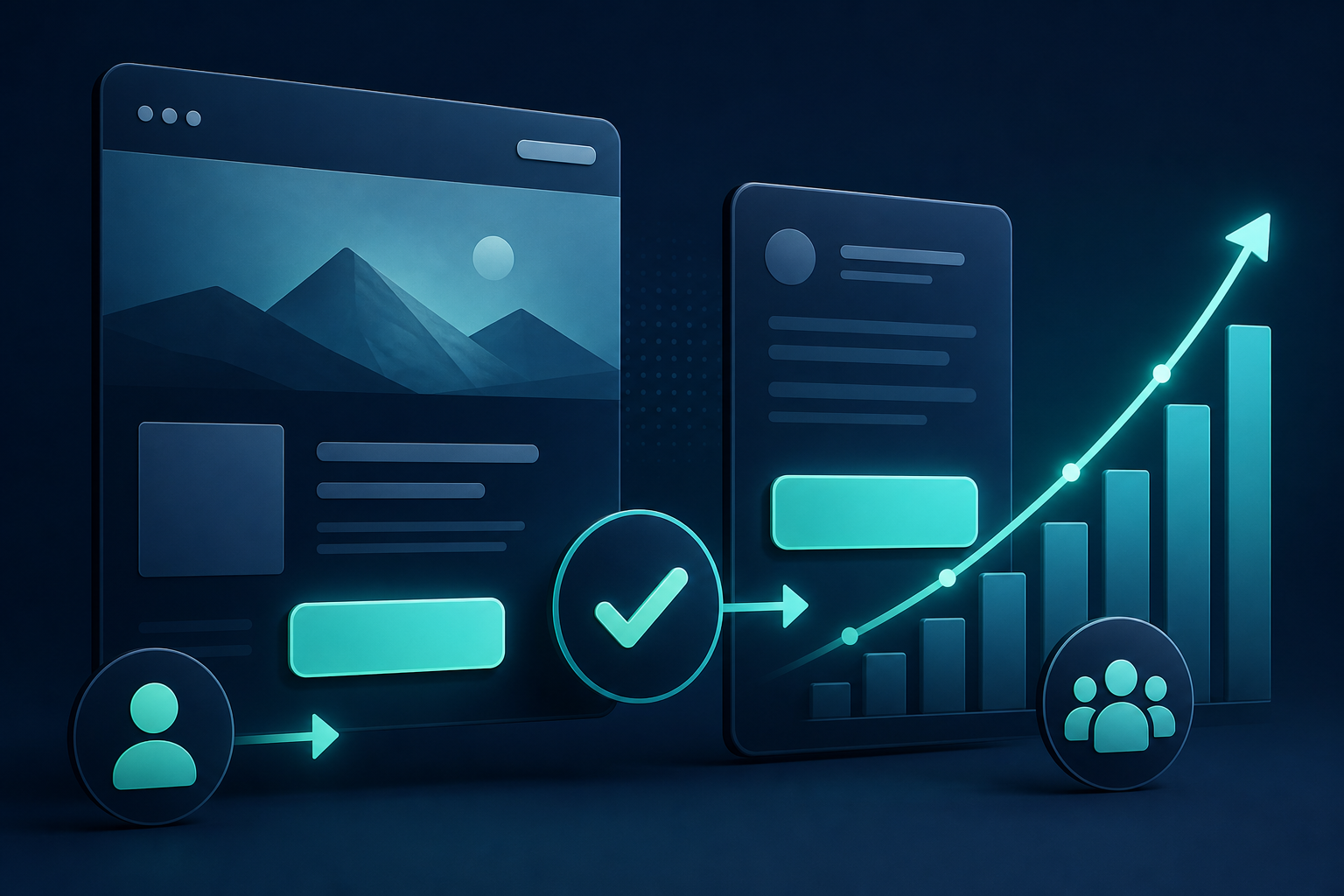
User path from ad to conversion: ad → landing page → form/purchase → thank-you page. Each step can leak — thank-you page conversion tracking ensures measurement works end to end. Thank-you page is also upsell and retargeting opportunity.
Testing framework: A/B, multivariate, and iteration
A/B testing: two landing page variants, random split, measure conversion rate. Simple, reliable when traffic is sufficient. Google Optimize is discontinued — use Google Ads Experiments, separate campaigns, or tools like VWO, Optimizely, or Unbounce.
Multivariate testing: multiple elements simultaneously. Requires more traffic — use only when A/B has confirmed direction. With low traffic, A/B is enough.
Iteration: CRO doesn't end with one test. Best variant becomes new baseline — test next element. Continuous 1–2% improvement per quarter compounds into significant ROAS gain.
Testing order: first message match and fundamentals (speed, clarity), then CTA and form, finally fine-tuning (colors, images). Don't test details before foundation works.
Document tests: hypothesis, variants, duration, result, decision. Without documentation the same mistake repeats — and team doesn't learn what worked. CRO is cumulative learning, not one-off experiments.
- Step 1: Message match — right landing page for right ad
- Step 2: Speed and clarity — Core Web Vitals, one CTA
- Step 3: CTA and form — text, length, placement
- Step 4: Trust and social proof
- Step 5: Fine-tuning — visuals, length, layout
Tracking and metrics: conversion vs. traffic
Measure conversion, not just clicks. Conversion rate (CVR), cost per conversion (CPA), and conversion value are landing page success metrics. CTR and CPC tell ad quality — CVR tells landing page quality.
Google Ads: conversion at landing page level in GA4 or Google Ads conversions. Compare campaign-level CVR — weak campaigns may stem from wrong landing page. Enhanced Conversions and offline conversions in B2B — read conversion tracking.
Meta: conversion in Events Manager, CAPI improves data quality. Compare ad set-level CVR — different creatives may need different landing page variants.
Attribution: landing page converts, but which channel produced? Blended CAC and channel-level ROAS tell the full story. Don't optimize one campaign in isolation — landing page improvement benefits all channels.
Segmentation in reporting: compare CVR by device (mobile vs desktop), campaign, and ad group. Mobile CVR below desktop is normal — but if gap is extreme, landing page is likely broken on mobile.
Common mistakes in landing page + advertising
These mistakes appear repeatedly in Google Ads and Meta account audits — often on accounts whose ads perform but conversion lags.
- Traffic to homepage → message mismatch, weak conversion
- Multiple CTAs → user doesn't know what to do
- Slow landing page → conversion drops, Quality Score suffers
- Ad promises X, landing page offers Y → trust breaks
- Budget scaling before landing page fix → more wasted traffic
- No conversion tracking → algorithm optimizes clicks, not conversions
- One landing page for all ads → weak message match
- Landing page and ad in different languages or markets mixed → wrong audience converts poorly
- No A/B testing → improvements by guess without data
Landing page checklist before scaling budget
Before increasing ad budget, ensure landing page can handle more traffic — otherwise you scale waste, not conversions.
Message match: every active ad group or ad set sends to relevant landing page — not homepage. Speed: Core Web Vitals solid on mobile, load under 3 seconds. Clarity: one headline, one CTA, promise above the fold.
Tracking: conversion tracking works — test form or purchase path yourself. Our conversion tracking guide covers Enhanced Conversions and Consent Mode v2. Meta: CAPI and Events Manager in order.
Testing: at least one A/B test running or planned for next month. Prioritize highest-traffic pages. Combine Google Ads and Meta Ads optimization with landing page improvements — ROAS improves before budget increase.
- Relevant landing page for each ad message
- Load time <3 s on mobile
- One clear CTA above the fold
- Conversion tracking tested and working
- A/B test planned or running
- Mobile CVR compared to desktop
Frequently asked questions
Why does my ad get clicks but no conversions?
The problem is usually the landing page or message match. Ads bring traffic — conversion happens on the landing page. Check: right landing page, speed, clear CTA, ad promise visible on page.
What is message match?
Message match means the ad headline, promise, and visual continue on the landing page. User clicks expecting something specific — if landing page offers something else, conversion drops.
How many landing pages do I need?
Depends on advertising. Search campaigns: one relevant landing page per ad group or keyword theme. Meta ads: at least one landing page per product/offer. Generic homepage for all ads weakens conversion.
Does landing page optimization improve ROAS without increasing ad budget?
Yes. 20% conversion improvement = 20% more conversions on same budget. CRO is often the most effective way to improve ROAS — before increasing ad budget.
Do I need a separate landing page tool?
Not necessarily. WordPress, Webflow, or your site's pages work if they're fast and focused on one conversion point. Unbounce, Leadpages, or Instapage make A/B testing and fast iteration easier.