Why local SEO is a local business most important channel
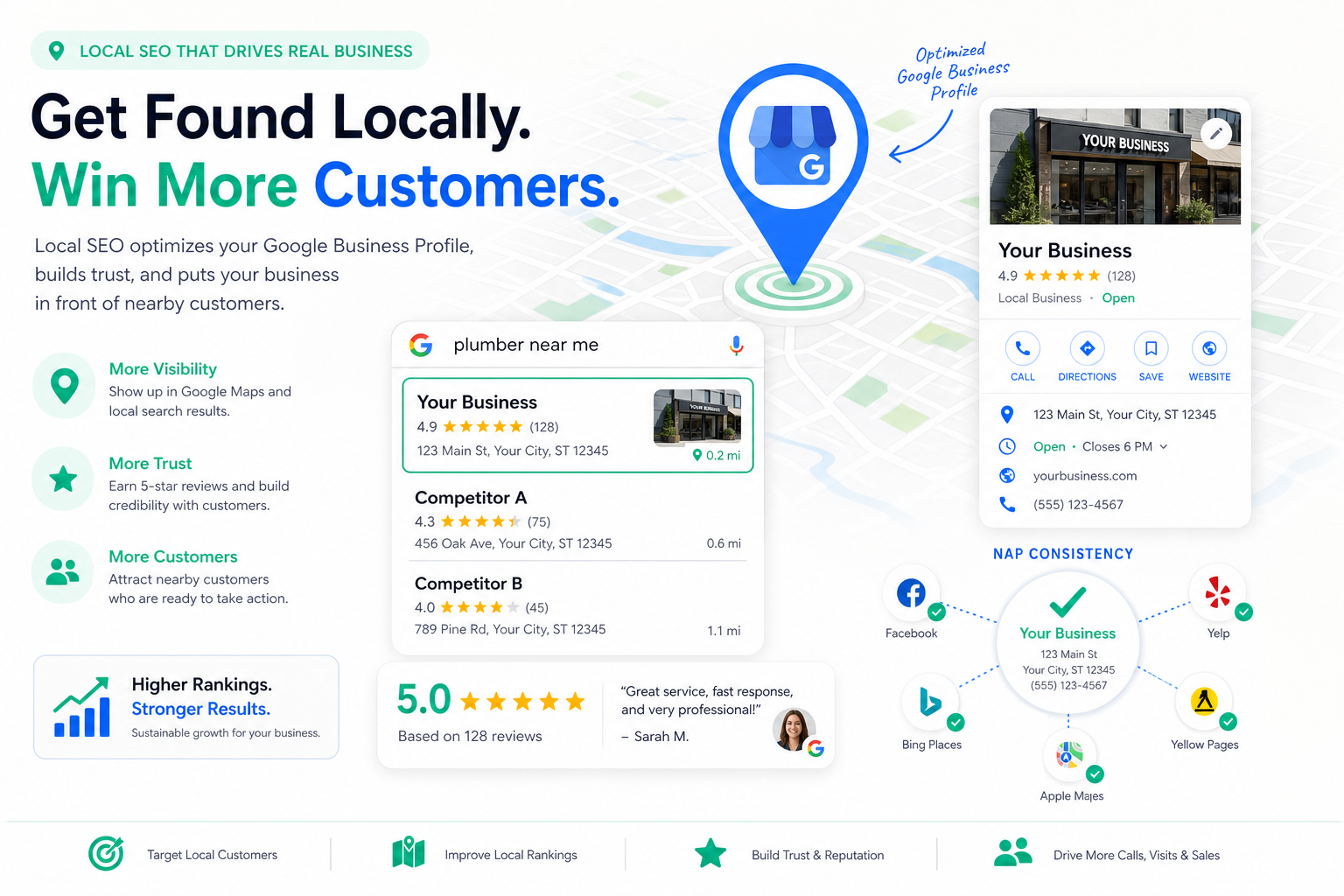
Local SEO brings in customers exactly when they are searching for your service nearby, right at the buying moment. "Near me" searches and map results drive directly to a purchase decision.
A large share of Google searches are local, and many end in a call, directions, or a visit the same day. The search intent is exceptionally strong.
Local SEO differs from general search optimization: location, Google Business Profile, and reviews matter more than content alone. This guide focuses on exactly these factors.
Read the broader context in our local business digital marketing article, which connects SEO to paid advertising.
Buying-moment search
Google Business Profile — the core of local SEO
Google Business Profile (formerly Google My Business) is the single most important tool for local visibility. It determines whether you appear in map results and branded search.
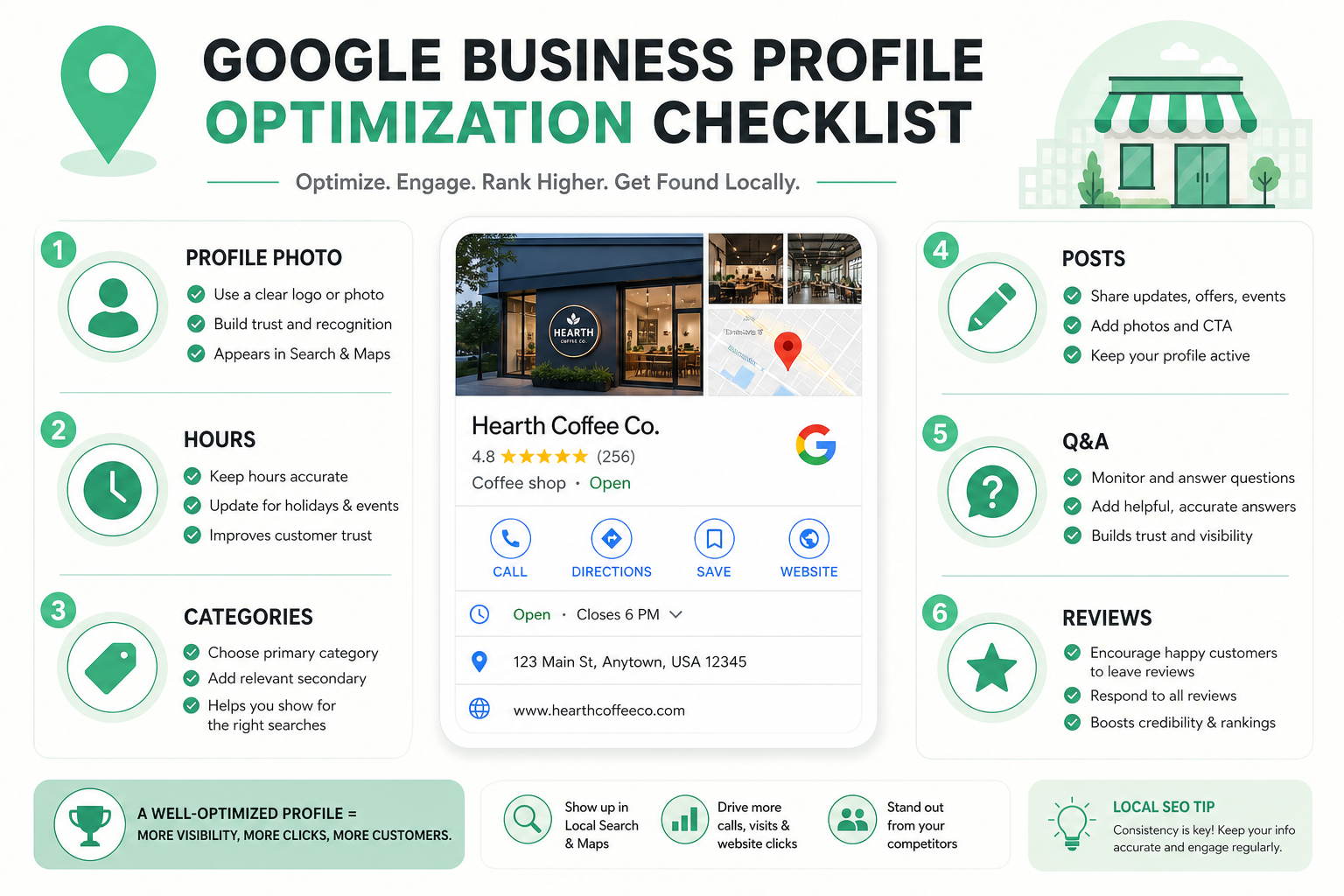
Complete the profile fully: correct category, opening hours, services, photos, and description. The more complete the profile, the more Google trusts and shows it.
Keep the profile current: update hours on holidays, add photos regularly, and publish updates (Posts). An active profile ranks better.
- Pick the most specific primary category + relevant secondary ones
- Fill in hours, services, attributes, and description
- Add quality photos (storefront, premises, products, team)
- Publish updates and answer questions (Q&A)
- Verify the business — without verification you do not show
NAP data and directories — consistency is everything
NAP stands for Name, Address, and Phone. These must be exactly the same everywhere online.
Conflicting data (different address format, old phone number) confuses Google and weakens trust. Consistency strengthens your local ranking.
List the business in key directories and make sure the details match your Google Business Profile. Fix old or incorrect mentions.
- Same name, address, and phone everywhere (including formatting)
- Show NAP in the website footer and contact page
- List in key directories and industry catalogs
- Use LocalBusiness structured data (schema)
Local keywords — location + service
Local keywords combine service and location: "dentist Tampere", "accounting Espoo". These searches are purchase-ready and competition is often reasonable.
Build a dedicated landing page for each key service and location if you operate in several areas. One generic page will not rank for every city.
Include local terms in headings, content, and meta data naturally. Learn how to find keywords in keyword research and search intent.
- Combine service + city in keywords
- A dedicated page for each key area (not one generic page)
- Local terms in headings, content, and metadata
- Include nearby areas and neighborhoods for long-tail searches
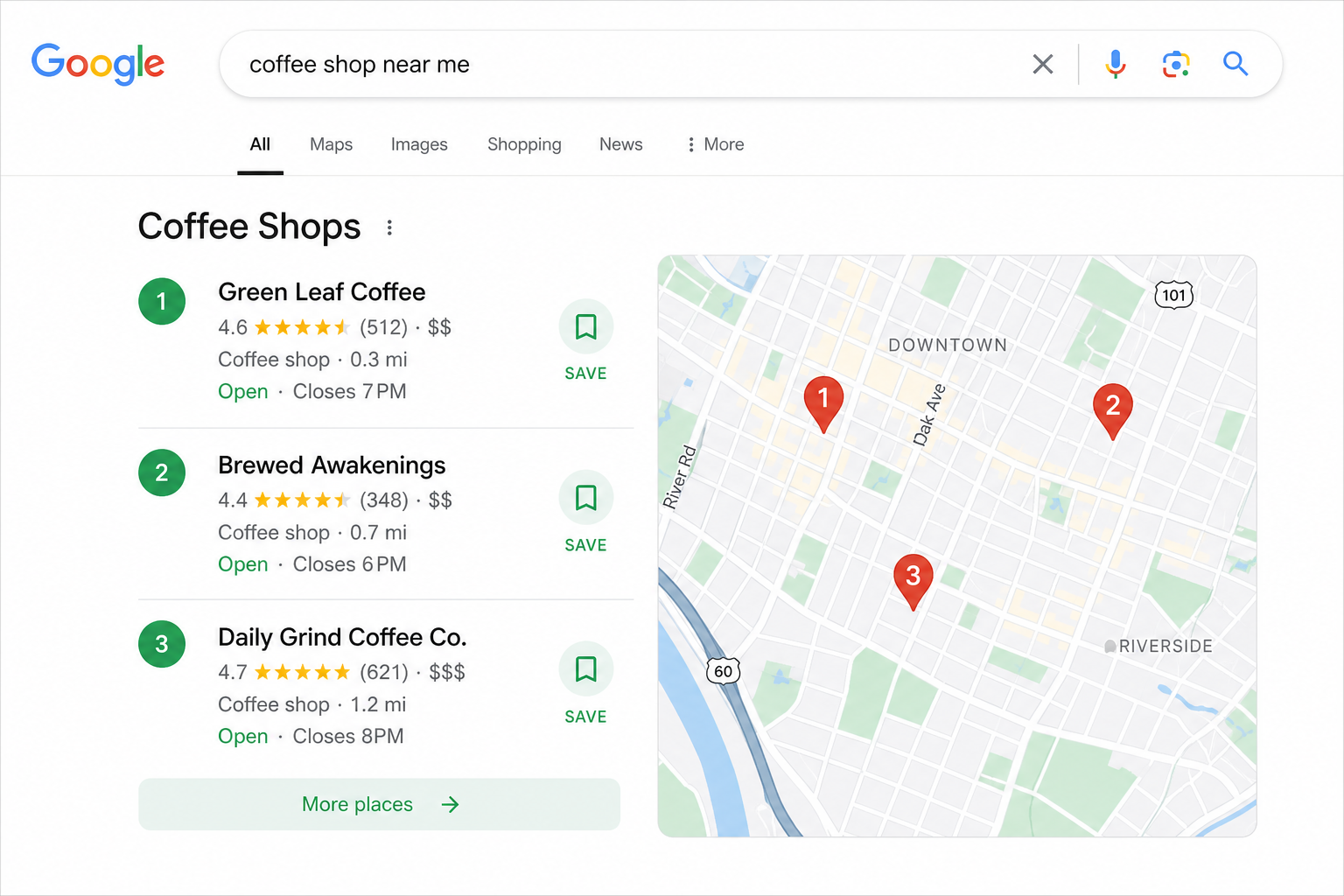
The map pack — three top spots
Google map pack is the three-business map listing at the top of results. It captures the majority of local search clicks.
Three factors drive ranking: relevance (how well you match the search), distance (how close you are to the searcher), and prominence (how well known your business is online).
Getting into the map pack requires a complete Google Business Profile, consistent NAP data, and a strong review profile. These three together determine the ranking.
- Relevance: profile and content match the search
- Distance: location relative to the searcher
- Prominence: reviews, mentions, and links online
Reviews and reputation — trust and ranking
Reviews are both a ranking factor and a strong conversion driver. A high average plus fresh, plentiful reviews lift both trust and visibility.
Ask for reviews systematically from happy customers — for example with a direct link after purchase. Never buy or fake reviews.
Respond to all reviews, including negative ones: a professional reply shows you care. This builds reputation and gives Google an activity signal.
- Ask for reviews systematically (link after purchase)
- Respond to every review, including critical ones
- Aim for freshness and volume, not just the average
- Do not fake or buy reviews — risk of removal and penalties
Review tip
Local content and links
Local content strengthens relevance. Write area-specific pages and blogs that cover local topics, events, and customer questions.
Include the city name naturally in headings, content, and images. Add a map, directions, and local contact details to every area page.
Local citations and links build authority. Aim for mentions from local media, associations, and industry catalogs.
Partnering with local players brings natural links and visibility. Sponsorships, events, and partnerships are effective local link sources.
Connect local content with paid advertising following our local business digital marketing guide.
- Area-specific pages with the city name
- Map, directions, and contact details on area pages
- Local citations and catalogs
- Links from local media and partners
- Sponsorships and events as link sources
Local SEO in numbers
Measuring results
Local SEO results are tracked with different metrics than general SEO. Google Business Profile insights show searches, profile views, calls, and directions.
Pay special attention to actions: how many called, requested directions, or visited the website via the profile. These are closest to real business value.
Watch your map pack ranking for key terms and from different locations. Local ranking varies with the searcher location.
Measure the development of review volume and average rating. A steady stream of reviews is both a ranking and a conversion signal.
Connect local metrics to conversion tracking so you see which searches bring customers to your business.
- GBP insights: searches, views, calls, directions
- Actions (calls, directions) = closest to business value
- Map pack ranking from different locations
- Review volume and average rating over time
Local SEO checklist
Run through this list when building or improving local visibility. It covers the critical factors in order.
Once the foundation is solid, connect SEO with paid advertising — read local business digital marketing and explore our SEO service.
- Google Business Profile completed and verified
- NAP data consistent everywhere
- Local keywords and dedicated area pages
- LocalBusiness structured data on the website
- Systematic review collection and responses
- Active GBP posts and fresh photos
Frequently asked questions
What does local SEO mean?
Local SEO means optimization that helps a business appear in nearby searches and Google map results. Key factors include Google Business Profile, NAP data, local keywords, and reviews.
What is Google Business Profile?
Google Business Profile (formerly Google My Business) is a free business listing shown in Google Search and on the Maps map. It is the most important local SEO tool — fill it out fully and verify the business.
What is the map pack?
The map pack is the three-business map listing at the top of search results. Getting in requires a complete profile, consistent NAP data, and a strong review profile.
Why is NAP consistency important?
NAP (name, address, phone) must be exactly the same everywhere online. Conflicting data confuses Google and weakens both your local ranking and customer trust.
How important are reviews for local SEO?
Reviews are both a ranking factor and a strong conversion driver. Ask for them systematically from happy customers and respond to every one — including critical ones. Never buy or fake reviews.