Why does local digital marketing differ from national?
Local business is built on proximity, trust, and fast response. A customer searches for "plumber Helsinki" or "dentist Tampere", not "best plumber in Finland". Search intent is concrete and close to a purchase decision — but only if advertising and visibility hit the right geography.
A national campaign for a local business is the most common waste: budget burns in cities you do not serve, and cost per conversion rises. A local strategy starts with defining the service area: which city, which radius, and which schedule you are available. That defines everything else — keywords, geo targeting, message, and measurement.
In local marketing, conversion is not always an e-commerce purchase. It is a phone call, form, booking, store visit, or WhatsApp message. Measurement and optimization must be built around these, not only web store events. Without proper conversion tracking, the algorithm optimizes the wrong way — for page clicks instead of calls.
Competition is different too: locally, competitors are the same businesses the customer recognizes from the street. Brand search, reviews, and Maps visibility matter as much as paid ads. That is why local digital marketing always combines paid, organic, and profile visibility — not a single channel.
The good news: local marketing scales with a smaller budget than national, because the audience is bounded. When the strategy is right, every euro produces more — as long as you do not copy national logic at local scale.
Google Search locally: capturing ready demand
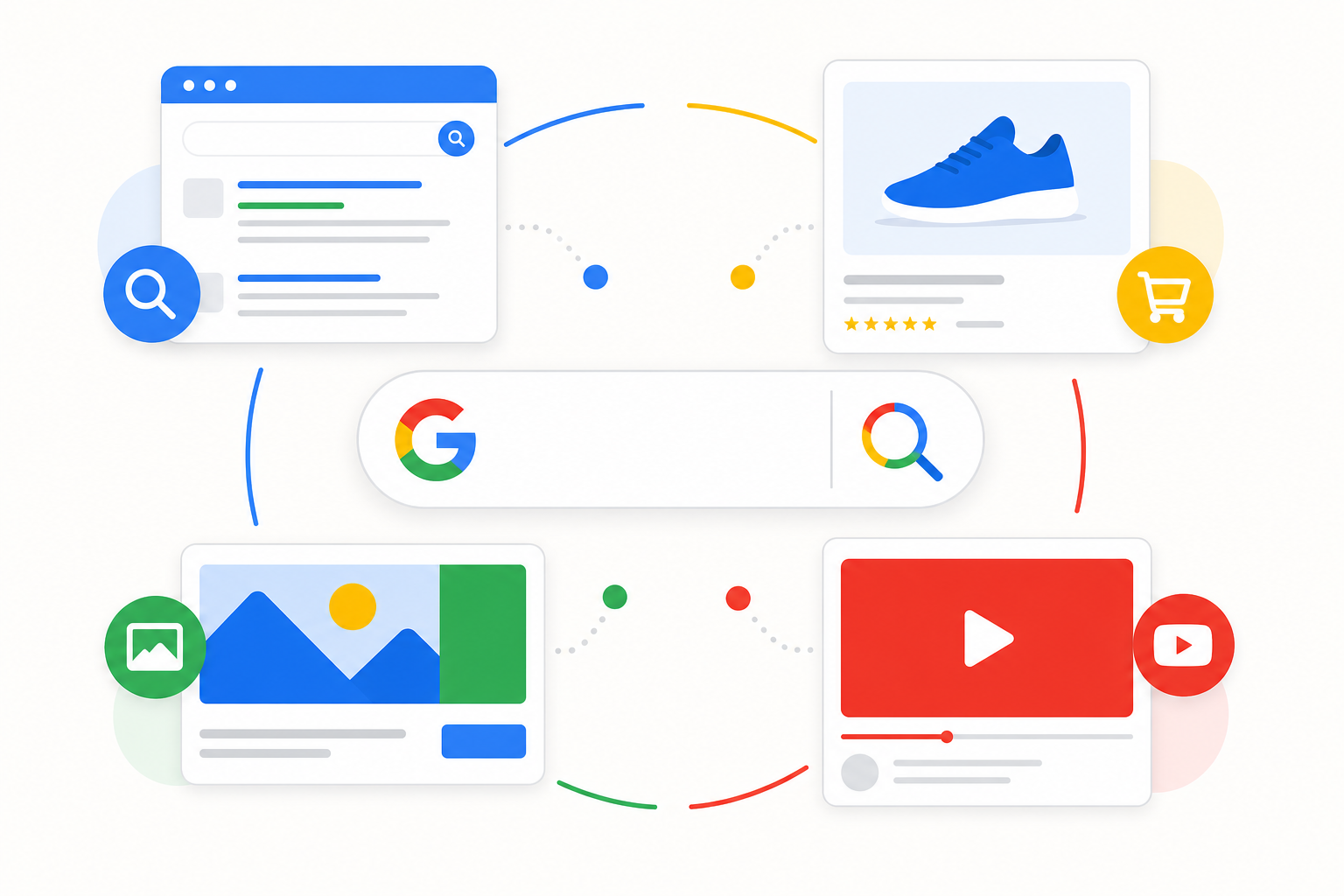
Google Search is the most effective channel for local businesses because it reaches the customer exactly when need is acute. "Locksmith now", "cleaning service weekend", or "auto repair near me" are high-intent queries where conversion happens in minutes.
Build the Search campaign on three layers: brand queries (company name), service + location queries ("renovation contractor Espoo"), and urgent/fast-need queries ("emergency plumber"). Brand queries are cheapest and convert best — make sure you are always visible on your own name. Local service queries bring new customers; urgent queries need a fast-response message in the ad.
Use location targeting settings precisely: "Presence" (people in the area) vs. "Interest" (interest in the area). For local service, "Presence" is almost always correct — you do not want to pay for a searcher in Turku if you only serve Helsinki. Add negative location terms and queries if the service area is limited.
Ad copy and extensions are decisive in local Search: phone number, address, opening hours, reviews, and callout extensions ("Fast arrival", "Free estimate"). In responsive search ads, test local headlines: city name, service area, response time.
Broad match works locally only with a tight negative list — otherwise budget leaks to wrong locations and topics. Start with phrase/exact match on local combinations and expand only when conversion data is solid. A Google Ads partner helps build the negative list and conversion tracking correctly from the start.
- Brand queries: always on, low CPA
- Service + city: core of new customer acquisition
- Urgent/fast need: high intent, needs fast response message
- Presence targeting: only people in the area
- Phone and location extensions mandatory
Google Maps and Business Profile: local trust
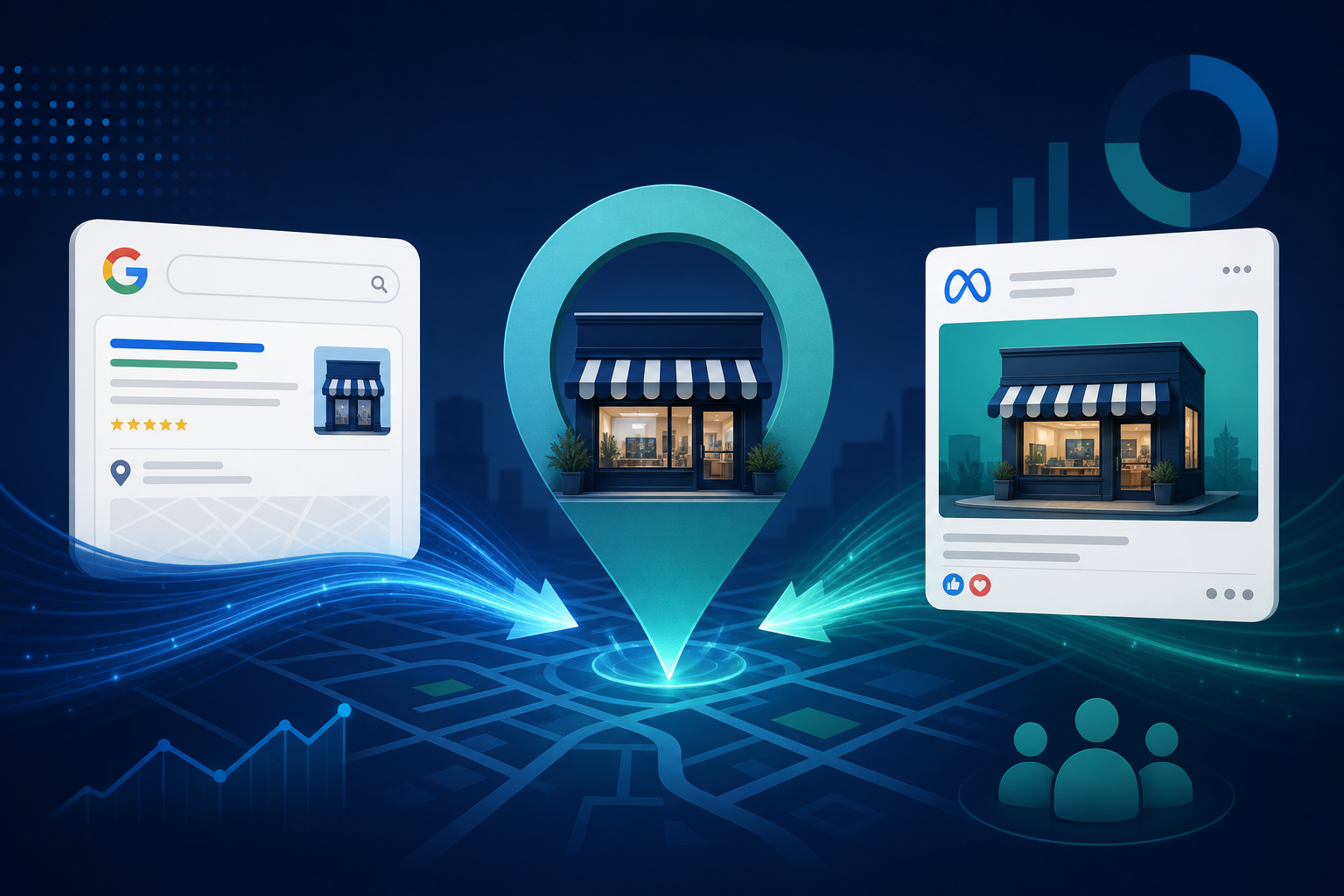
Maps visibility is often more important for a local business than any banner ad. The customer searches for a service, sees three Maps results, reads reviews, and calls — without visiting the website. Google Business Profile (GBP) is the foundation of that visibility.
Optimize GBP before scaling paid budget: correct category, service area, hours, photos, services, and fresh reviews. An incomplete profile weakens both organic Maps ranking and Local Campaign ad quality. Google uses profile data when assessing ad relevance.
Reviews are local social proof: respond to all reviews, ask satisfied customers to review, and handle negative ones quickly. A profile below 4.5 stars loses to a competitor even with a larger ad budget. Build review requests into the service process — email or SMS a week later.
Maps advertising (Local campaigns or Performance Max location assets) puts the profile at the top of results. It works best when GBP is solid and conversion tracking measures calls, messages, and directions. Without conversion data, Maps ads optimize for impressions, not business outcomes.
Organic Maps optimization (local SEO) supports paid: NAP consistency (name, address, phone) across platforms, local landing pages by city, and LocalBusiness schema. Paid and organic Maps visibility reinforce each other — they do not replace each other.
Local Services Ads: pay for leads
Local Services Ads (LSA) is Google's lead-based ad format for certain service industries (e.g. plumbing, electrical, cleaning, legal). The customer sees a "Google Guaranteed" badge, contacts you, and you pay per lead — not per click. LSA fits especially businesses where the phone is the primary conversion.
LSA requires background checks and Google approval — the process takes weeks. Once active, budget management is simpler than Search: set a weekly budget and pay for qualified leads. Quality depends on profile, reviews, and response speed.
Combine LSA with Search campaigns; do not replace them: LSA covers its slice of results, Search ensures visibility in other queries. Measure lead quality in CRM — not all leads are equally valuable. If LSA leads convert worse than Search leads, check profile quality and response process before cutting budget.
LSA is not available for all industries in every market. If your industry is not supported, focus on Search + Maps + Meta. Without LSA, Local Campaign or Pmax location assets are the closest alternative.
Meta Ads locally: reach the neighborhood
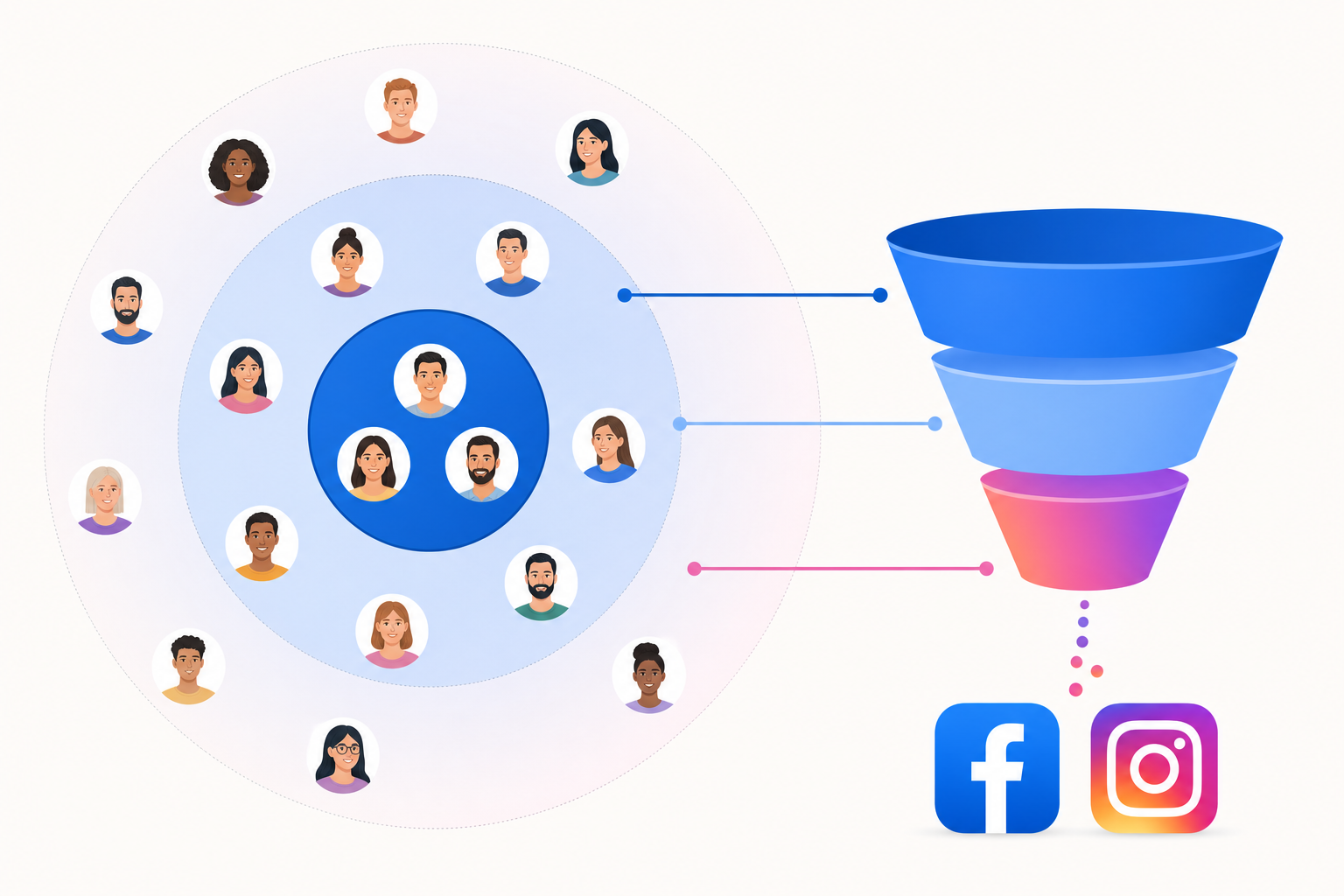
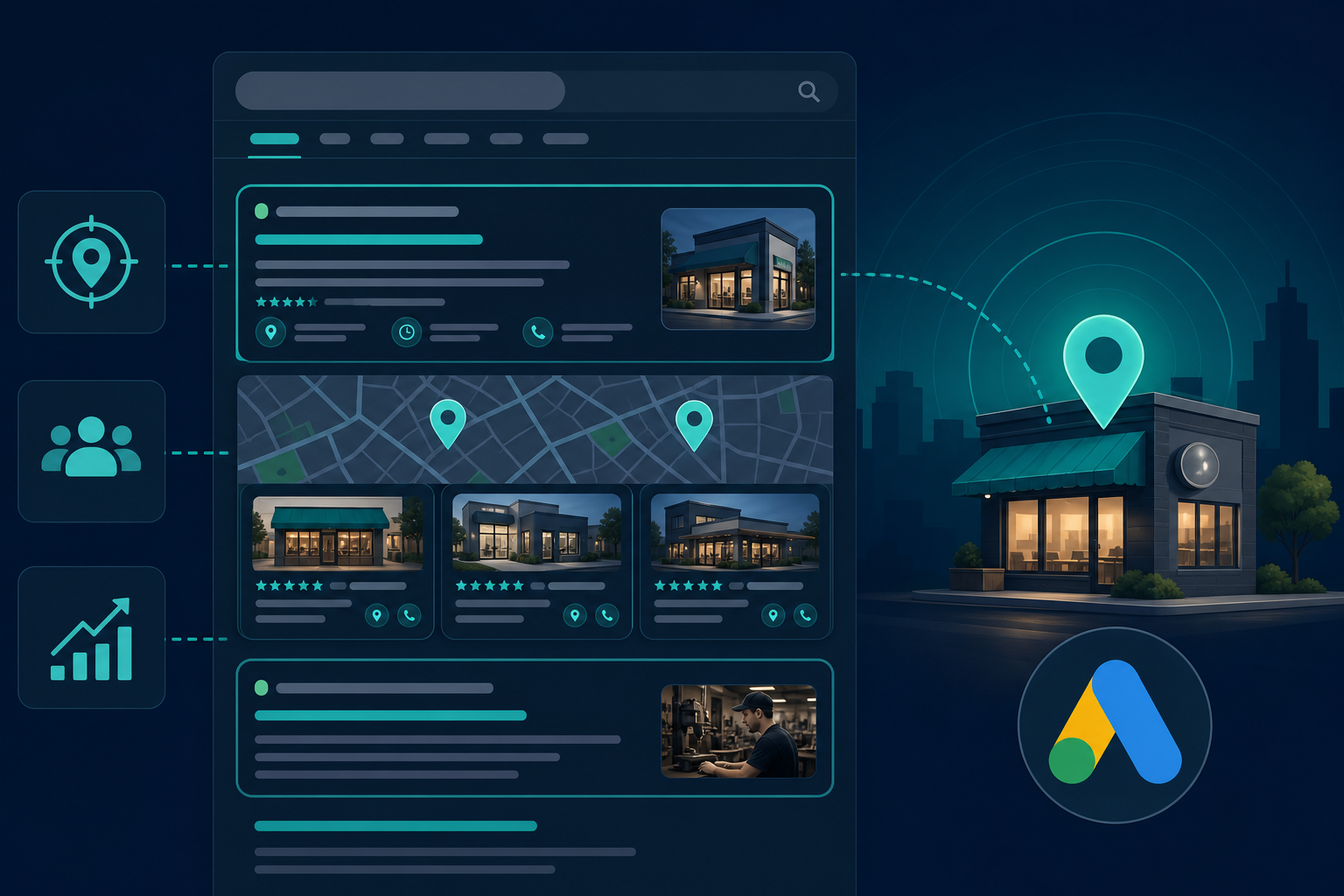
Meta does not capture the same ready demand as Google Search — but it reaches a local audience efficiently when need arises or the brand is being built. Local Meta advertising is built on geo targeting, local messaging, and retargeting.
Set geo targeting by service area: city + radius (e.g. 10 km) or postal codes. Avoid targeting that is too wide at regional level if you only serve one neighborhood. Meta Advantage+ Audience works locally when conversion data is solid — read more in our Meta audiences guide.
Local messaging differs from national: use familiar place names, local references ("Over 200 renovations in Espoo"), and team faces in images. Generic stock photos and national taglines do not resonate — local trust is built on familiarity.
Meta fits especially: local brand awareness (new store, renovation, opening), retargeting (site visitors, video viewers), and lookalike expansion from best customers. Local prospecting needs more budget than Google Search — start with retargeting and expand prospecting when data shows what works.
Lead Ads and Messenger/WhatsApp ads fit local services where the customer wants fast contact. Make sure leads flow to CRM and are answered quickly — Meta penalizes slow responders with lower quality scores. In Meta Ads execution, conversion tracking (pixel + CAPI) is mandatory for local optimization.
Budget allocation for local businesses
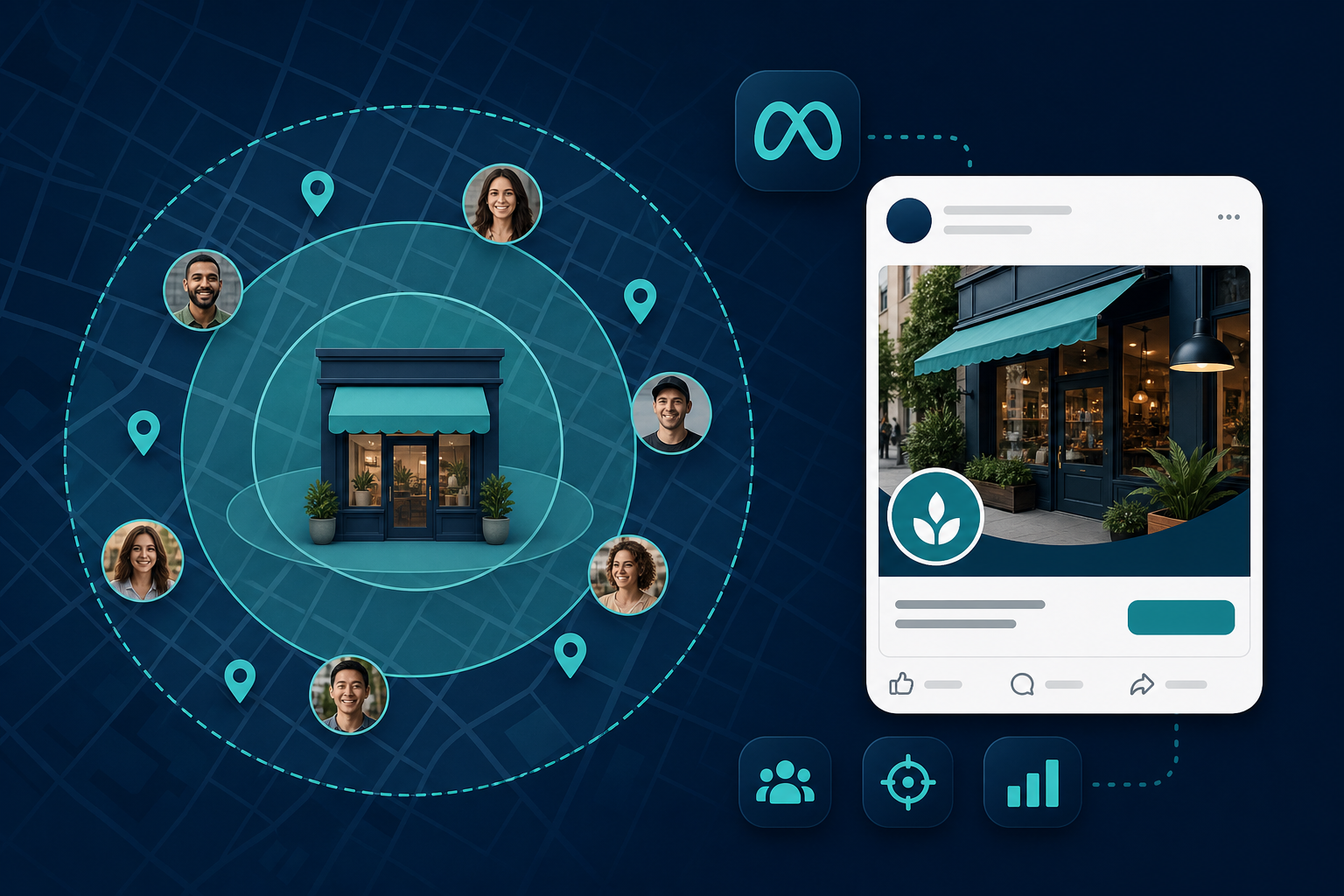
A local business budget is limited — so prioritization decides. A practical starting model: 60–70% Google (Search + Maps/GBP), 20–30% Meta (retargeting + prospecting), 10% testing and organic support (GBP, reviews, local content).
On Google: secure brand and local service queries in Search first. Then Maps/Local visibility. Meta only when Search delivers and conversion tracking works — otherwise you optimize without data.
Scaling budget locally: when CPA is acceptable in Search, raise budget 15–20% at a time and watch for 2 weeks. In local markets, a small budget increase can shift competition quickly — monitor impression share data.
Seasonality hits local business hard: renovation in summer, heating in winter, cleaning before holidays. Plan budget peaks in advance — do not cut budget exactly when demand is highest.
Compare channel output for the business, not ROAS alone: a phone lead that books a €2,000 renovation is worth more than a hundred cheap clicks. Set channel-specific CPA targets and allocate budget accordingly.
Measurement: calls, leads, and visits
Local marketing measurement usually fails for one reason: conversions are not tracked correctly. Google Ads call tracking, GA4 call events, forms, and GBP interactions (call, directions, message) must be combined into one view.
Set primary conversions: call over 60 seconds, form, booking, chat message. Mark page clicks and page views as secondary — they should not drive Smart Bidding optimization in local service businesses.
Offline conversion import: if sales happen on the phone or in store, import CRM data back into Google Ads and Meta. Without offline data, the algorithm does not learn which leads actually bought — optimization stops halfway.
Local reporting for leadership: leads per week, CPA, response time, lead-to-sale conversion (if data available). The dashboard must answer "how many new customers marketing brought" — not just "how many clicks".
Attribution locally is often simpler than e-commerce: customer searched, called, booked. Still, Meta may deliver the first touch and Google the last — track assisted conversions and do not cut Meta on last-click ROAS alone.
Campaign structure: simple and scalable
A local Google Ads account stays efficient when structure is clear. Recommendation: separate Search campaign for brand, separate for local service queries, Maps/Local separate or as Pmax location asset groups. Do not mix national and local queries in one campaign.
On Meta: one retargeting campaign (site visitors 7–30 days, video viewers), one prospecting (Advantage+ or lookalike from best customers). Local geo targeting on both. Add campaigns only when data supports separation — too many small campaigns fragment budget.
Landing page locally: dedicated page or section per city ("Plumber Espoo") with fast phone number, reviews, and clear CTA. Do not send all queries to the homepage — local relevance lowers Quality Score and conversion.
Automation locally: Smart Bidding works when there are at least 15–30 conversions per month per campaign. Below that, use manual or Maximize Clicks to gather data. Rush to Smart Bidding too early without conversion data — it burns budget.
Common mistakes in local digital marketing
We see these mistakes repeatedly on local business accounts — often when a national strategy was copied verbatim into a local context.
- Geo targeting too wide → budget burns in wrong areas
- Missing conversion tracking or tracking clicks → algorithm optimizes wrong
- GBP neglected → Maps and LSA weaken
- No brand queries in Search → competitor captures your name
- Meta prospecting before Google Search foundation → expensive awareness without leads
- Homepage for all queries → weak relevance and conversion
- Reviews ignored → trust lost to competitor
- Budget cut at seasonal peak → lost demand
30-day action plan for local businesses
This framework helps you start or fix local digital marketing systematically. Adjust timing to your resources — order matters more than speed.
Week 1 — foundation: define service area, optimize Google Business Profile, install call and form conversion tracking, create local landing pages. Week 2 — Google: launch brand and local Search campaigns, negative locations and topics, Maps/Local visibility.
Week 3 — Meta: retarget site visitors, local geo targeting, 2–3 local creatives. Week 4 — optimization: evaluate CPA by channel, scale winners, cut waste, request reviews, and document lead quality in CRM.
Compare results to the local case study: realistic CPA, response time, and lead-to-sale conversion tell more than click volume alone. When the foundation works, scale budget in a controlled way and expand Meta prospecting.
Local digital marketing is a marathon, not a sprint: reviews, profile, and advertising reinforce each other over months. Invest in the foundation first, then scale — and always measure business outcomes, not just the ad dashboard.
Frequently asked questions
How much budget does local digital marketing need?
For a small local business, €500–2,000/month split between Google Search + Maps and Meta retargeting is often enough. The exact amount depends on competition, service area, and conversion goals. Start with Google brand and local service queries, expand when CPA is acceptable.
Which matters more for a local business — Google or Meta?
Google is usually primary because it captures ready demand (search + Maps). Meta complements with awareness and retargeting. If budget is limited, invest in Google first and Meta only when conversion tracking works.
How do I track phone leads from advertising?
Use Google Ads call tracking numbers, GA4 call events, and GBP call/message stats. Mark calls over 60 seconds as primary conversions for Smart Bidding. Import offline sales from CRM back to ad accounts when possible.
Do I need a separate page for each city?
At minimum, one local landing page for cities in your service area, or one strong page with a clear service area, phone number, and reviews. A generic homepage weakens both Quality Score and conversion in local queries.
Does Performance Max work for local businesses?
Pmax can work locally with location assets and good conversion data, but it does not replace a separate Search campaign for brand and local service queries. Recommendation: Search first, Pmax/Local as expansion when the foundation is solid.