Why is measurement the foundation of all marketing?
Marketing measurement is infrastructure that is easily overlooked — until it fails. Every optimization decision, budget allocation, and report relies on measurement data. If the data is inaccurate or incomplete, the decisions are just as inaccurate, no matter how well you analyze them.
Privacy changes have made measurement harder: third-party cookie restrictions, iOS ATT, ad blockers, and consent requirements leak data at every point. Browser-based tracking alone is no longer enough — more modern infrastructure is needed.
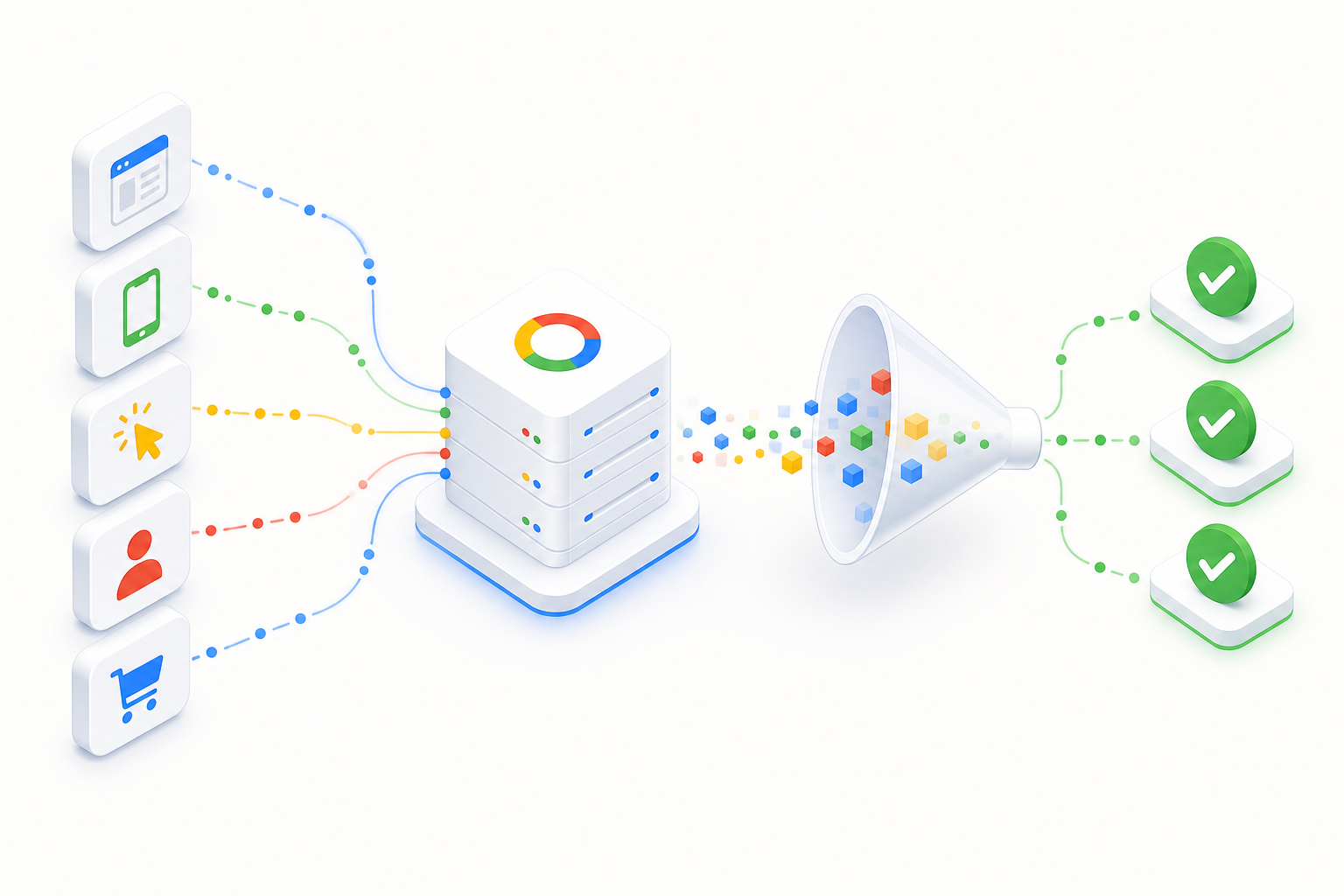
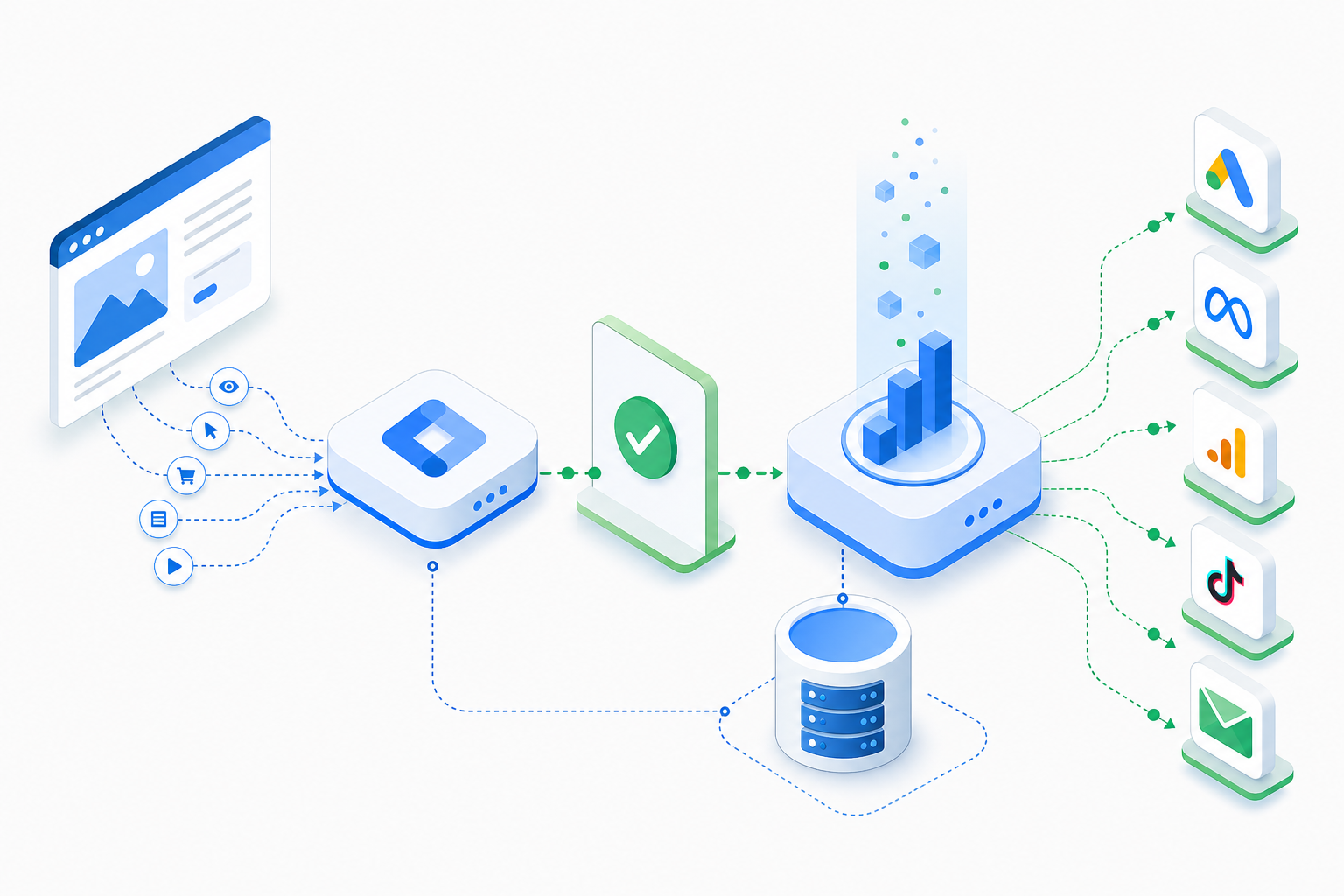
A measurement stack is a system that collects, processes, and distributes data reliably: GTM manages tags, GA4 analyzes, server-side improves coverage, and Consent Mode ensures compliance. When this is in order, all other marketing works better.
Google Tag Manager: centralized management
Google Tag Manager (GTM) is a centralized tag management system. Instead of embedding each tracking code (GA4, Meta pixel, conversion tags) directly in the site code, you manage them in one place in the GTM interface. This separates measurement from the site code and speeds up changes.
GTM's advantage is flexibility: you can add, edit, and remove tags without code changes, define triggers precisely, and manage all measurement tools from one place. This is especially valuable in a full-stack environment with multiple channels and tags.
Inside GTM you define the dataLayer — a structure into which the site pushes events (page load, conversion, cart event) and from which tags read them. A well-designed dataLayer is the backbone of all measurement: it ensures all tags receive the same, consistent data.
GA4 and the event-based model
Google Analytics 4 (GA4) is an event-based analytics system — everything is an event, unlike the old Universal Analytics, which was based on sessions and pageviews. This model fits the modern, multi-device, multichannel buying journey better.
The core of GA4 is to define meaningful events and mark the most important ones as conversions (key events). Typical conversions: form submission, purchase, phone click, download. These are metrics that connect marketing to business results — and feed data to ad-platform optimization.
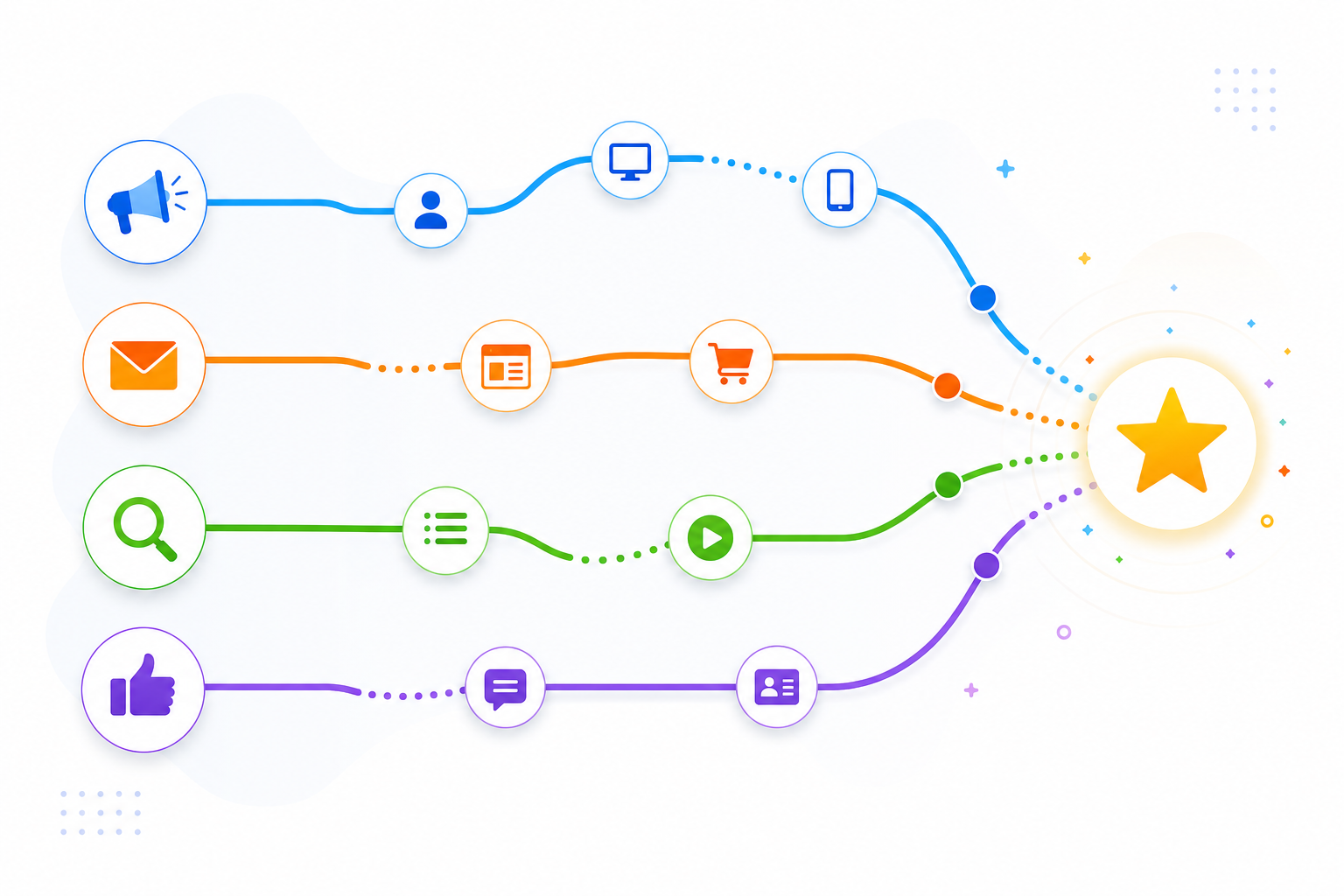
GA4 also unifies channels into one view: organic, paid, social, and direct traffic report into the same system. This is a prerequisite for full-stack — without unified analytics you do not see the combined effect of channels, only isolated platform reports.
Server-side tracking: a more durable data flow
Server-side tracking moves tracking from the browser to the server. Events are first sent to your own server-side container (server-side GTM), which forwards them to GA4, Google Ads, Meta, and other platforms. This significantly improves data reliability.
The benefits are concrete: less data lost to ad blockers and browser restrictions, more control over the data sent, and a faster page (fewer client-side scripts, better Core Web Vitals). Especially in iOS and Safari traffic, server-side recovers otherwise-lost data.
Server-side does not replace consent or bypass privacy rules — Consent Mode still applies. It is a technical improvement to data quality and resilience that benefits all channels simultaneously.
Consent Mode v2: compliance and data retention
Consent Mode v2 is Google's mechanism that adapts tag behavior to the user's cookie consent. In the EU it is effectively mandatory for personalized Google Ads and GA4 features — without it you lose data and remarketing audiences.
Implementation combines a cookie banner and Consent Mode: the banner default is "denied" (everything blocked), and once the user accepts, the signals update to "granted". When consent is not given, Google does not set cookies but can send anonymous, cookieless pings, from which it models the lost conversions.
Consent Mode v2 added two signals: ad_user_data and ad_personalization. Their correct implementation is a prerequisite for both compliance and the full functioning of ad platforms. This is where many measurement stacks are deficient — make sure it is in order.
Unified conversion tracking across all channels
A basic requirement of full-stack is that all channels measure the same truth. If Google Ads, Meta, and GA4 define a conversion differently or count it with different logic, the same events are counted multiple times and the big picture disappears.
Unification is built through GTM and the dataLayer: define conversions once, consistently, and distribute them to all platforms from the same source. Use deduplication (event_id) so the same event is not recorded twice between the browser pixel and server-side.
This unified data is the foundation of both measurement and optimization: GA4 reports the big picture, and ad platforms (Smart Bidding, Advantage+) get accurate, deduplicated conversion signals for optimization. One truth, many consumers.
Common mistakes in the measurement stack
We see these mistakes repeatedly in measurement audits — often on accounts whose reports look clean but whose data is fundamentally unreliable.
- Unplanned dataLayer → inconsistent events and endless rework
- Client-side tracking only → ad blockers and iOS erode coverage
- Missing Consent Mode v2 in the EU → you lose data and remarketing audiences
- Double counting → the same conversion is recorded via pixel and server-side
- Per-channel, conflicting conversion definitions → no single truth
- Scaling budget before verifying measurement → optimizing on distorted data
Frequently asked questions
What does a marketing measurement stack consist of?
A modern stack has four basic pieces: Google Tag Manager (centralized tag management), GA4 (event-based analytics), server-side tracking (a more durable data flow), and Consent Mode v2 (compliance). Together they ensure reliable, unified data.
What is the dataLayer and why is it important?
The dataLayer is a structure into which the site pushes events (conversions, purchases) and from which GTM tags read them. It is the backbone of measurement — a well-designed dataLayer ensures all tags receive the same consistent data.
Do I need server-side tracking?
It is not mandatory, but it significantly improves data reliability and coverage — especially in iOS/Safari traffic and against ad blockers. It also lightens the browser and improves page speed. Consent Mode still applies.
Is Consent Mode v2 mandatory?
In the EU it is effectively mandatory for personalized Google Ads and GA4 features. Without it you lose data and remarketing audiences. It is implemented with a cookie banner: default "denied", "granted" after consent.
Why must measurement be fixed before optimization?
Because all optimization and every decision relies on measurement data. If the data is broken, algorithms optimize on incomplete signals and reports mislead. The measurement stack is the foundation everything else is built on.