What is Meta Advantage+ and why is it the default in 2026?
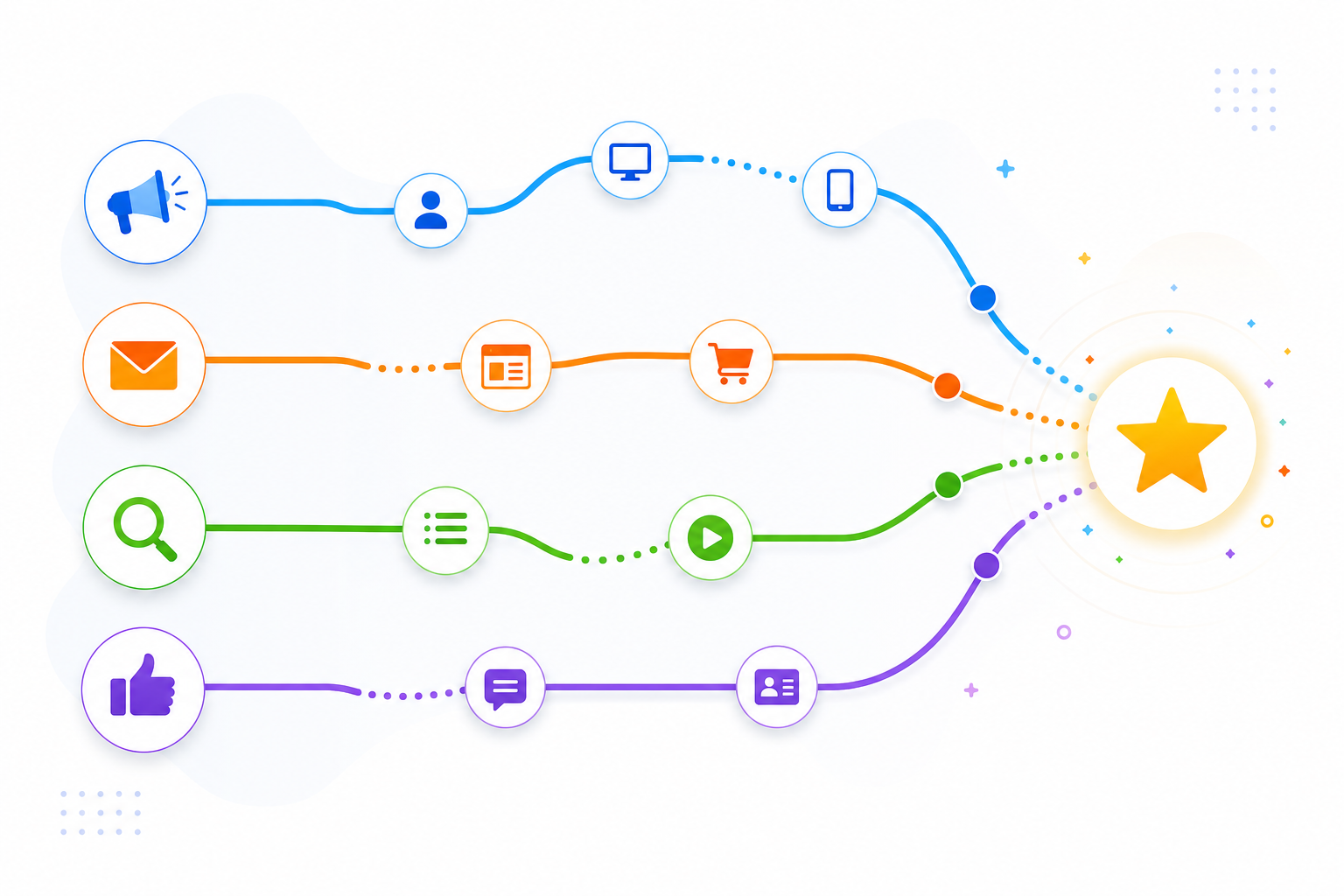
Advantage+ is Meta's automation layer combining audience targeting, placements, budget, and creative optimization into one machine learning engine. It's no longer a separate campaign type — it's the default setting in nearly all Meta campaigns.
Meta has invested heavily in Advantage+ infrastructure: the Andromeda update improved creative diversification algorithms, and the new Advantage+ Shopping Campaign (ASC) 2.0 combines prospecting and retargeting in one campaign.
For e-commerce, Advantage+ is often the most efficient way to scale Meta advertising — especially when the product feed is solid and conversion tracking is reliable. For B2B, the picture is more complex: long sales cycles and low conversion volumes make algorithm learning harder.
Advantage+ campaign types in 2026
Meta offers several Advantage+ campaign types. The most important in 2026:
- Advantage+ Shopping Campaign (ASC): e-commerce prospecting + retargeting in one campaign — requires product feed
- Advantage+ App Campaign: app installs and in-app events automated
- Advantage+ Lead Campaign: lead generation with forms or landing page conversions
- Advantage+ Catalog Sales: product catalog advertising without ASC structure — older model, still in use
- Manual campaign + Advantage+ toggles: traditional campaign with Advantage+ audience, placement, and budget optimization
Audience signals: guide the algorithm, don't restrict it
In Advantage+ campaigns, audience targeting works as a signal, not a restriction. Meta expands audiences automatically to find the best buyers — signals tell the algorithm where to start.
Best audience signals: customer list (Custom Audience), website visitors (30–180 days), purchasers (180 days), and 1–3% Lookalike from customer list. Don't use overly narrow audiences as signals — they limit the algorithm's scaling ability.
Advantage+ audience setting (formerly "Broad targeting") is the default. Meta selects the audience automatically. Manual interest targeting is still possible, but Meta strongly recommends broad + signals combination.
- Feed customer list as Custom Audience signal — minimum 1,000 emails
- Add website visitors with 30–180 day window
- 1–3% Lookalike from customer list as prospecting signal
- Remove overlapping audiences between campaigns (audience overlap)
- Use Advantage+ audience setting for broad targeting
Creative strategy in Advantage+ campaigns
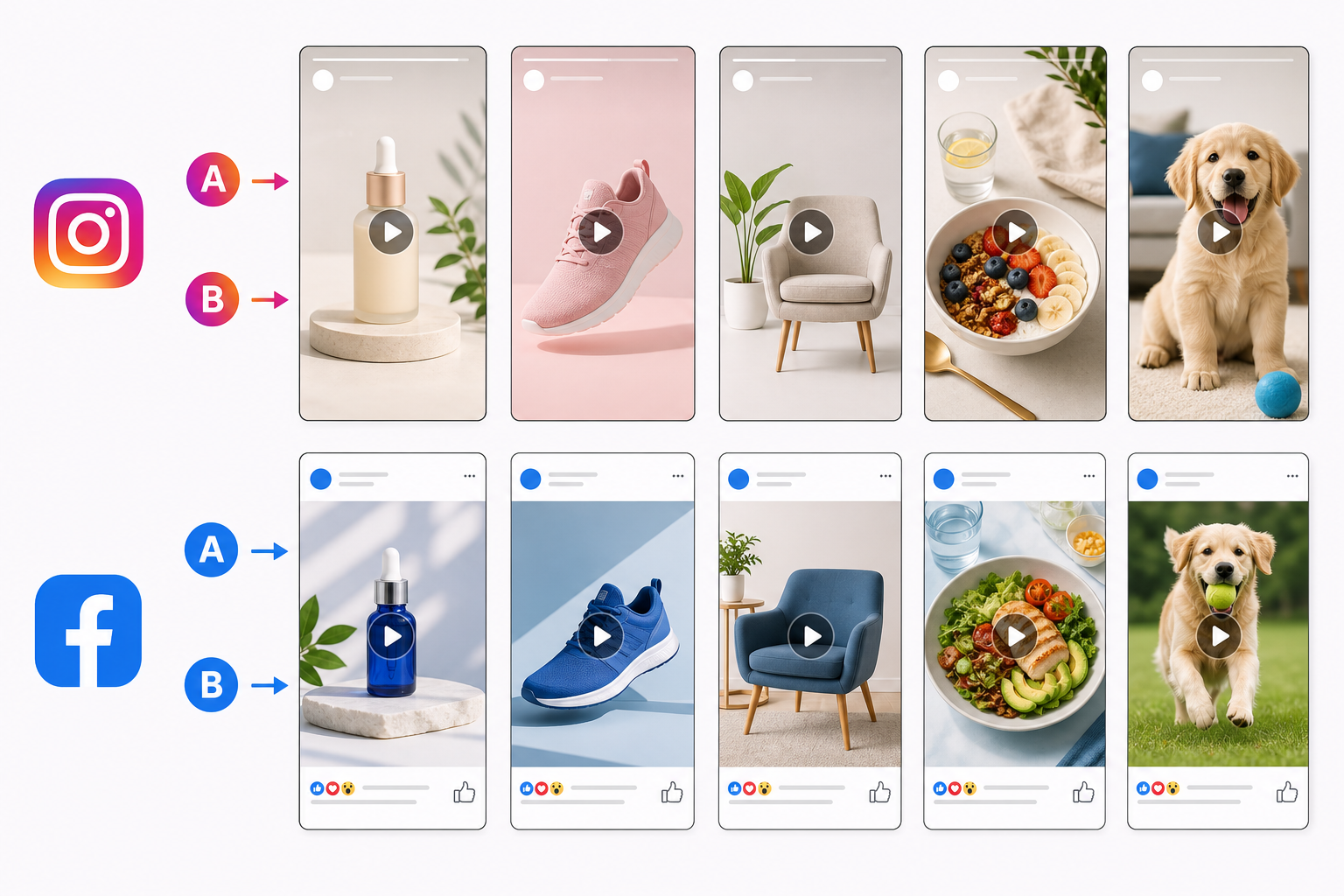
Creative is the most important lever in Advantage+ campaigns. Meta tests images, videos, headlines, and CTAs automatically — the more quality variations you feed, the better the algorithm optimizes.
After the Andromeda update, Meta recommends at least 6–8 creative variations per ad set. Variations can be different images, videos, UGC content, or product feed items. Diversity matters — don't test 8 nearly identical ads.
Dynamic Creative Optimization (DCO) remains an effective way to test combinations automatically. Feed 3–5 images, 2–3 videos, 3–5 headlines, and 2–3 descriptions — Meta combines the best permutations.
Bidding and budgeting in Advantage+ campaigns
In Advantage+ campaigns, bidding strategy is chosen by campaign objective. For e-commerce, Lowest Cost or Cost Cap are most common. Cost Cap gives more CPA control; Lowest Cost maximizes conversion volume.
Budget scaling: increase max 20% at a time and wait at least 5–7 days before the next change. Advantage+ reacts to budget changes faster than manual campaigns, but overly aggressive scaling disrupts the learning phase.
Campaign Budget Optimization (CBO) is default in Advantage+ campaigns. Meta distributes budget between ad sets automatically — don't set ad set-level budgets unless you have a specific reason (e.g., different markets).
Reporting and attribution in Advantage+ campaigns
Advantage+ campaign reporting is harder than manual campaigns because Meta combines prospecting and retargeting in the same campaign. Breakdown reports (Age, Gender, Placement, Device) help understand where budget goes.
Aggregated Event Measurement (AEM) and Conversions API (CAPI) are mandatory for reliable tracking. Server-side tracking significantly improves attribution accuracy — especially after iOS 14.5+ restrictions.
Compare Meta Ads data with GA4 and CRM. Meta over-reports conversions vs. last-click attribution — this is normal. Use 7-day click + 1-day view attribution in reporting, but compare 1-day click data for decision-making.
Five most common Advantage+ mistakes
We see these mistakes repeatedly in Meta Ads audits — often in Advantage+ campaigns.
- Too few creative variations → Feed at least 6–8 different ads per ad set
- Incomplete conversion tracking → Enable CAPI and ensure event match quality > 8/10
- Audience overlap between campaigns → Separate prospecting and retargeting or use ASC
- Too aggressive Cost Cap too early → Start Lowest Cost, move to Cost Cap after data
- Incomplete product feed → Optimize title, description, image, and price before ASC launch
Frequently asked questions
Do I need to move all campaigns to Advantage+?
Meta recommends Advantage+ structure for all campaigns. In practice, ASC is most effective for e-commerce and Advantage+ Lead for B2B leads. Manual campaigns + Advantage+ toggles still work well for testing.
Why does my Advantage+ campaign show high CPA?
The most common reason is learning phase (2–4 weeks) or too little conversion data. Ensure CAPI tracking, sufficient creative diversity, and at least 50 conversions/week before evaluating performance.
How do I separate prospecting and retargeting in Advantage+?
ASC combines them automatically. If you need separate control, use two campaigns: one broad prospecting and one retargeting with Custom Audience signal. Ensure audience overlap stays under 20%.
Do I need a product feed for Advantage+ campaigns?
Advantage+ Shopping Campaign requires a product feed. Lead and App campaigns work without a feed. For e-commerce, a product feed significantly improves algorithm performance — optimize it before launching.