Why does raising the budget crash results?
Meta's ad algorithm optimizes based on conversion data. When you raise the budget significantly at once, you change conditions so much that the algorithm returns to the learning phase: it has to re-find the most effective audiences and placements with a larger budget. During this, performance is unstable and the cost per acquisition often rises.
A larger budget also means the algorithm must find more converting users. If you raise too fast, it has to expand the audience to less precise users, which raises the cost per acquisition. Efficiency and volume are often in tension — scaling is balancing them.
Controlled scaling respects these constraints: you grow the budget at a pace the algorithm can absorb, and build volume in ways that do not force constant relearning. The goal is to grow results, not just spend.
The learning phase: what happens and how to protect it
The learning phase is a period during which Meta's algorithm gathers data and optimizes an ad set's performance. During this, results are unstable. An ad set typically exits the learning phase when it gathers about 50 conversions per week — then the algorithm has enough data for stable optimization.
Significant changes (a big budget increase, a targeting change, a new creative, a bid change) return the ad set to the learning phase. That is why scaling aims to avoid unnecessary restarts: make changes deliberately, not constantly.
Protect the learning phase: give ad sets enough budget to reach ~50 conversions per week (too small a budget stays stuck in learning), avoid constant tweaking, and consolidate rather than fragment — many small ad sets stay in the learning phase, fewer larger ones reach stability.
Vertical scaling: growing the budget
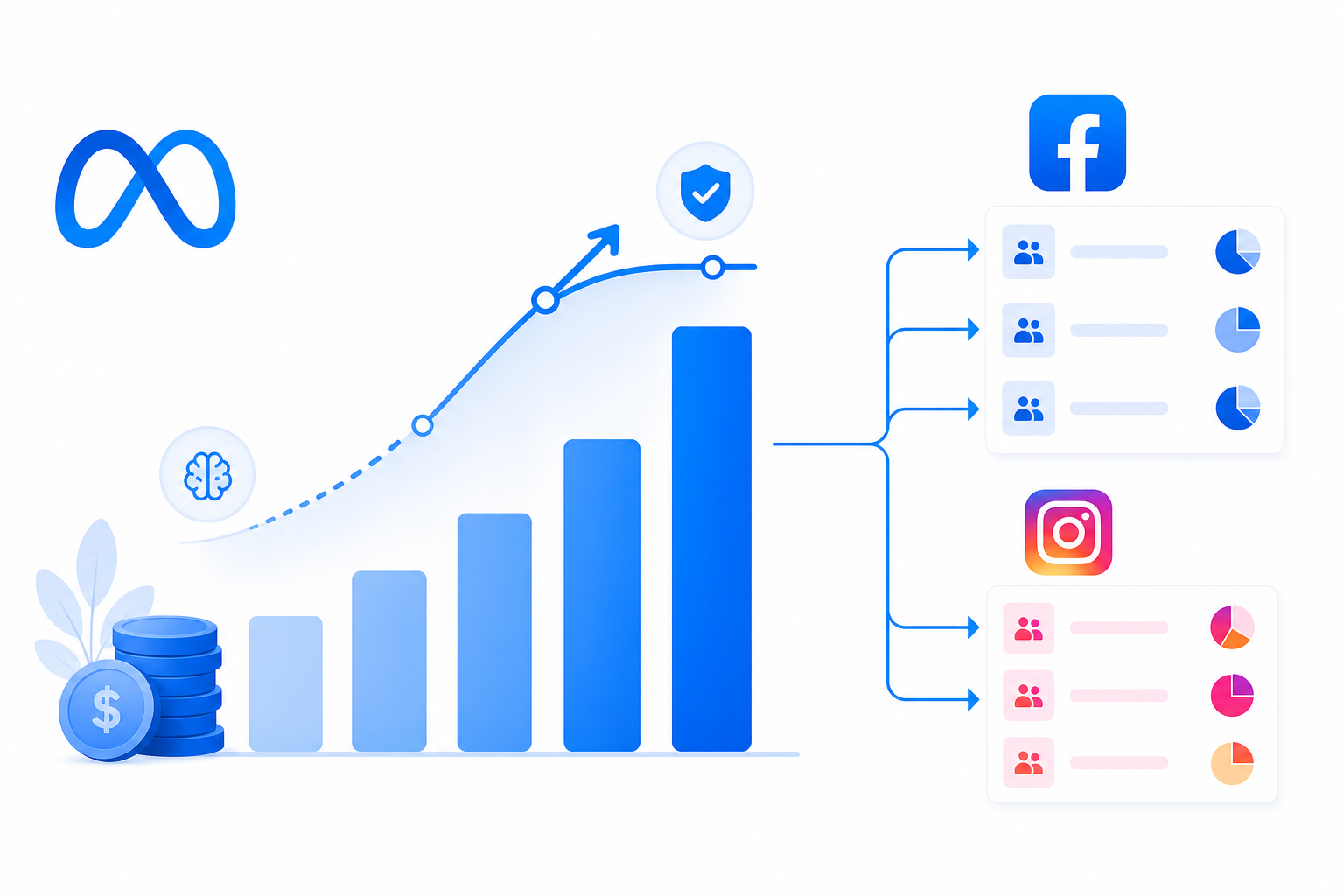
Vertical scaling means growing the budget in existing, working campaigns. This is the simplest way to scale, but it requires patience: too fast an increase triggers the learning phase and instability.
The rule of thumb is to raise the budget moderately at a time (often around 20% every few days) and let the algorithm adapt before the next increase. This keeps the ad set stable and does not force a full relearning. Monitor the cost per acquisition after a raise — if it stays on target, continue; if it runs away, slow down.
The limit of vertical scaling appears when the audience tires or the algorithm cannot profitably find more converting users. Rising frequency and a higher cost per acquisition at the same budget are signs that budget increases alone are no longer enough — horizontal scaling is needed.
Horizontal scaling: growing breadth
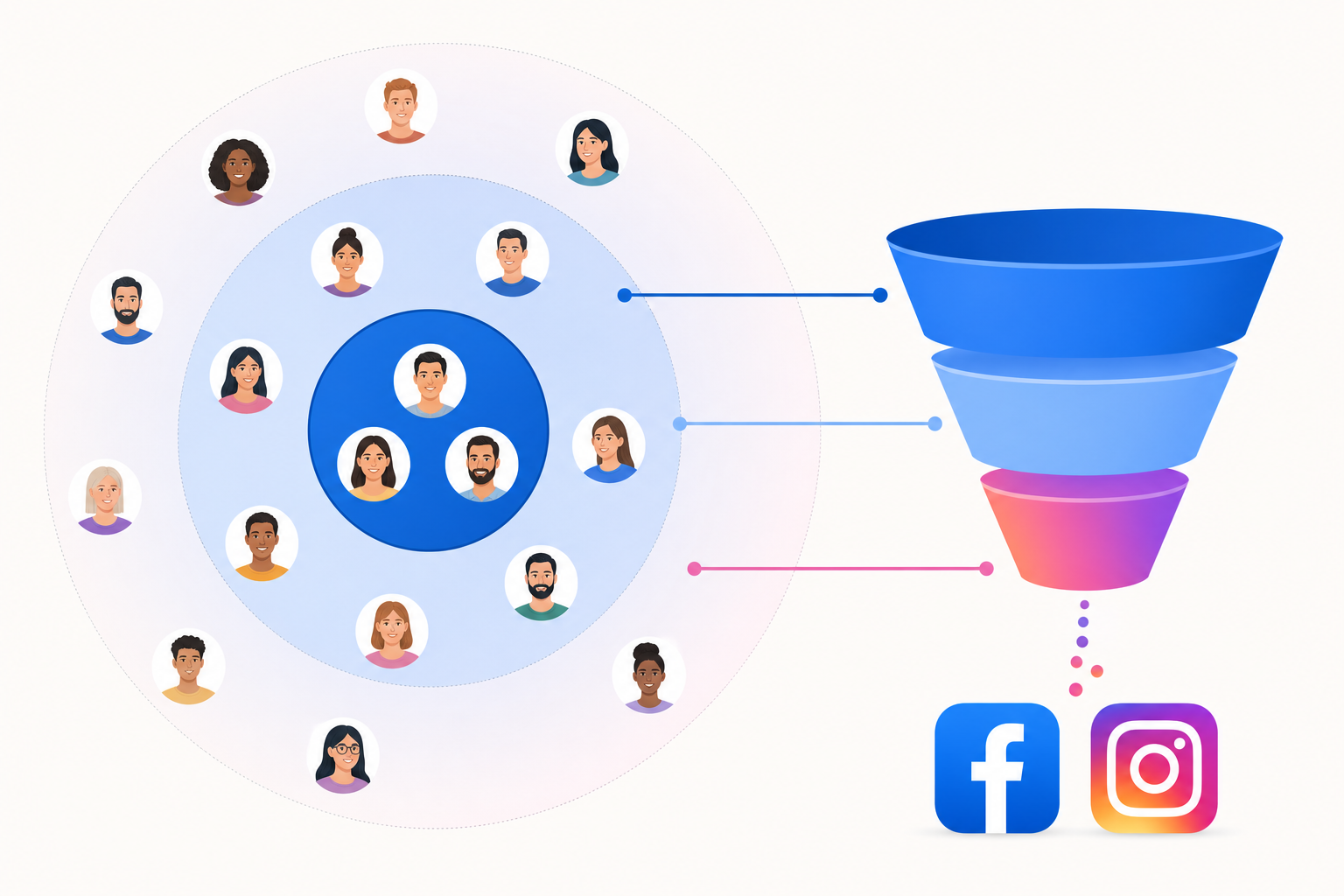
Horizontal scaling means seeking growth by expanding, not just raising the budget: new audiences, new creatives, new placements, new markets, or new campaign types. This opens more converting potential as the current setup starts to tire.
The most important lever of horizontal scaling is creative: new creatives reach new audience segments and counter creative fatigue. A constant stream of fresh creatives is the most durable way to scale, because it expands reach without forcing the algorithm onto the same tiring audience.
Other ways to scale horizontally: new lookalike audiences and audience suggestions, new placements (e.g. Reels if you do not use them yet), geographic expansion, and new campaign objectives. Expand in a controlled way, one variable at a time, so you can see what works.
- New creatives — the most important lever, counters fatigue
- New lookalike audiences and audience suggestions
- New placements (Reels, Stories) and formats
- Geographic or language-area expansion
- New campaign objectives and types
CBO and Advantage+ budgeting
Campaign Budget Optimization (CBO, now Advantage+ Campaign Budget) automatically distributes budget across a campaign's ad sets to where it performs best. This is an effective scaling tool because the algorithm dynamically moves money to winning ad sets.
CBO works best when you give it room: several ad sets in the same campaign for it to optimize between, and enough campaign budget for each to gather data. Too-tight per-ad-set limits (bid caps, minimums) prevent CBO from doing its job.
In scaling, CBO simplifies budget management: you raise the campaign-level budget (moderately) and let the algorithm distribute it most effectively, instead of adjusting each ad set separately. Combine this with Advantage+ Audience and quality conversion data (CAPI) so the algorithm has the best conditions to scale.
When to scale?
Do not scale too early. A prerequisite for scaling is a stable, profitable foundation: the campaign has passed the learning phase, the cost per acquisition is on target, and results have been stable long enough (not just one good day). Scaling an unstable setup only multiplies the problems.
Also make sure the foundation can withstand scaling: conversion tracking and CAPI are in order (the algorithm needs data), there are enough creatives (fatigue does not hit immediately), and the offer/landing page converts. Scaling ruthlessly exposes weaknesses in the foundation.
Scale on data, not emotion: raise when the metrics allow (stable CPA on target, healthy frequency), slow down when they warn (CPA rises, frequency runs away). Scaling is not a one-off decision but a continuous, data-driven process.
Common mistakes in Meta scaling
These mistakes crash scaling — often on accounts that work well at a smaller budget but collapse as they grow.
- Too-fast budget increase → the learning phase restarts, CPA runs away
- Constant tweaking → ad sets cannot exit the learning phase
- Too many fragmented ad sets → they stay stuck in the learning phase
- Scaling before stability → the problems of an unstable setup multiply
- Vertical scaling only → the audience tires, frequency rises
- Too few creatives → creative fatigue hits immediately as budget grows
Frequently asked questions
Why does raising the budget crash my Meta results?
Too fast a budget increase returns the ad set to the learning phase, where the algorithm re-finds the most effective audiences with a larger budget. During this, results are unstable and the cost per acquisition often rises. Raise moderately and let the algorithm adapt.
What is the learning phase?
The learning phase is a period during which the algorithm gathers data and optimizes an ad set. Results are unstable then. An ad set typically stabilizes when it gathers about 50 conversions per week.
How much can I raise the budget at once?
As a rule of thumb, moderately — often around 20% every few days, letting the algorithm adapt before the next increase. Monitor the cost per acquisition after a raise; if it stays on target, continue; if it runs away, slow down.
What is the difference between vertical and horizontal scaling?
Vertical = growing the budget in existing campaigns. Horizontal = growing breadth (new creatives, audiences, placements, markets). When budget increases alone start raising frequency and CPA, horizontal scaling is needed.
When is a campaign ready to scale?
When it has passed the learning phase, the cost per acquisition is on target, and results have been stable long enough. Also ensure conversion tracking (CAPI), the creative stream, and the landing page can withstand scaling — it exposes weaknesses in the foundation.