Why B2B GEO is fundamentally different
B2B buying differs from consumer purchases in a foundational way. The decision is typically made by a 5–7 person buying group including end users, technical experts, procurement, and finance. Each of them researches options with AI — usually using different questions.
Over 70 % of B2B research happens before a sales rep is contacted. That research increasingly happens in ChatGPT, Perplexity, and Google AI Overviews — not just classic search. If you are absent from AI answers, you do not exist to the buying group.
The biggest difference is that B2B GEO centers on demonstrating expertise, not brand visibility. AI prefers sources with experience, data, measurable results, and named authority. Marketing copy alone does not cut it.
- 5–7 decision-makers per B2B purchase, each researching via AI
- 70 % of research happens before sales contact
- AI prefers expertise, not marketing language
- Being a research-stage source is what wins
Expertise — the core of B2B GEO
Expertise in AI’s eyes is built from three things: consistent publishing (on core industry topics, not just your product), named content (real people, not a brand voice), and external validation (speaking invitations, podcast appearances, media citations).
In practice a B2B company picks 3–5 core themes where it wants to be AI’s authoritative source. Then it systematically produces in-depth content on them — guides, comparisons, original data, studies, and views on trends.
Critical is elevating named experts in front of the brand. AI models link an expert entity both to the company entity and to industry topics. One strong LinkedIn presence may be worth more than ten blog articles in an anonymous corporate voice.
- 3–5 core themes where you are AI’s authoritative source
- Named content with face and bio, not a brand voice
- Original data, studies, and viewpoints
- External validation: speaking, podcasts, media
Case studies — measurable results get cited
AI loves case studies with concrete numbers: "Customer X grew revenue by 34 % in 9 months." This is exactly the structured, verifiable information AI looks for when a user asks whether a solution works.
A good case study from a B2B GEO standpoint includes: customer name and industry (if shareable), baseline numbers, actions taken, outcomes in numbers, and timeline. Without numbers it is a reference, not a case study.
Use Article schema on case pages, and where possible Review or rating markup on customer feedback. Link case pages from service pages and reference them in blog articles. More guidance is in our AI-citable content article.
- Concrete numbers: %, €, or a measured KPI
- Customer name and industry where possible
- Baseline, actions, results, timeline
- Article schema and Review/rating where applicable
Comparison pages — the most underrated B2B GEO content type
One of the biggest B2B GEO opportunities is the comparison page: "Product A vs Product B", "Best X for use case Y", "X alternatives for category Z". These are exactly the questions buying group members ask in the research stage — and the questions AI actively seeks answers for.
A good comparison page is honest: surface the competitor’s strengths too. AI recognizes biased content and prefers sources that present balanced analysis. Paradoxically, praising the competitor makes you a more credible source.
Build a clear table (feature as row, options as columns), a "who is it for" summary, and concrete usage examples. Do not write a comparison where your product wins on every metric — that is an immediate trust signal downward.
- "A vs B", "Best X for Y", "X alternatives for Z"
- Honest analysis — show the competitor’s strengths too
- Clear comparison table + "who is it for" summary
- Updatable — competitor products change
E-E-A-T in practice in B2B
LinkedIn, PR, and trade media — external validation
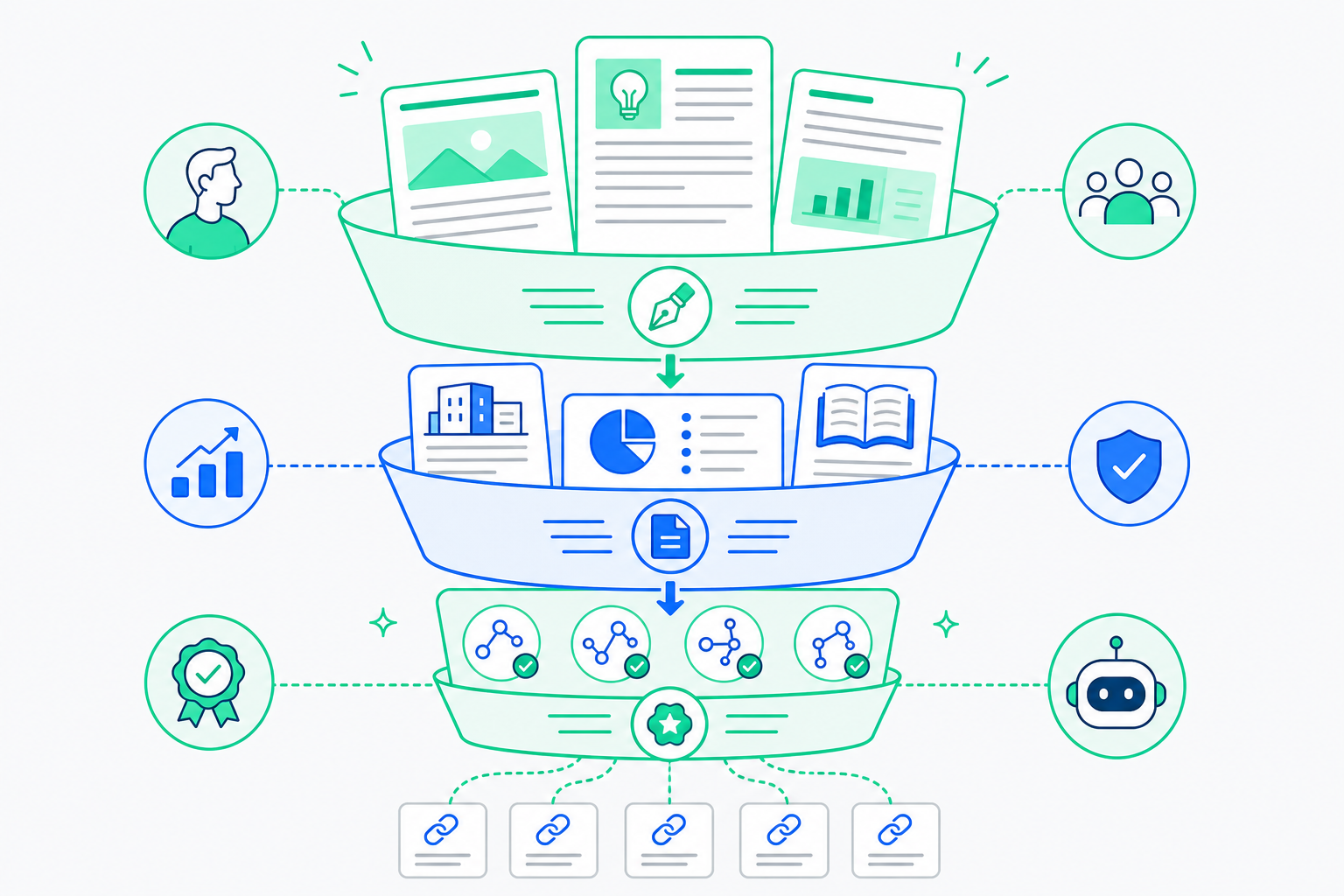
A B2B company’s LinkedIn strategy is not marketing — it is entity work. Regular expert updates on industry themes build personal entities that AI links back to the company. One expert’s strong LinkedIn presence may be worth more than the entire company feed.
Trade media and guest articles are an effective way to build credibility chains for AI. When the same person’s name appears on the company site, on LinkedIn, in trade media, and in a podcast — all on the same topic — AI forms a strong expert entity.
PR should pivot toward expert interviews and data drops. Journalists and AI both value original data and concrete viewpoints — not product announcements. One well-placed comment in a leading paper can keep citing into GPT for months.
- Expert LinkedIn = entity work, not just marketing
- Trade-media guest posts build credibility chains
- PR: offer data and viewpoints, not product announcements
- Same person, same topic across multiple sources → strong entity
B2B GEO impact in numbers
Most common B2B GEO mistakes
The biggest mistake is writing content only about your product. B2B buyers research the problem first, the solution second — and AI cites sources that explain the problem best. If 90 % of your content talks about what you sell, you appear in only a fraction of relevant AI answers.
A second mistake is an anonymous corporate voice. "AlgoTerra recommends…" style content does not build an expert entity. AI prefers content with a real author, photo, and visible work history.
A third is case studies without numbers. "We achieved excellent results" is not a case study to AI. Without measurable outcomes it is a reference ad, which AI will not cite for numbers-driven questions.
- Product-only content → invisible in problem-stage questions
- Anonymous brand voice → no expert entity
- Case studies without numbers → no AI value
- No comparison pages → losing the research-stage buyer
B2B GEO checklist
This checklist focuses on B2B-specific actions. The general GEO foundation (entity, FAQ, schema) is of course required — this builds on top of it.
Once the B2B foundation is in place, measure results with the GEO audit playbook. Need help with B2B GEO? See our GEO service.
- Picked 3–5 core themes where you are AI’s authoritative source
- Experts surfaced by name: name, photo, bio, LinkedIn
- 6–12 case studies with concrete numbers
- 5–10 comparison pages against competitors and alternatives
- E-E-A-T visible: experience, expertise, media references, trust
- LinkedIn strategy for 2–5 experts, 2–3 posts per week
- Trade media goal: one guest article every 6–8 weeks
- Article, Person, Organization, and Review schemas in use
Frequently asked questions
How does a B2B company get its expertise into AI answers?
Three pillars: named thought leadership (real person and face), measurable case studies (concrete numbers, not "excellent results"), and external validation (LinkedIn, guest articles, media citations). AI ties these together into an expert entity.
What is E-E-A-T in B2B GEO?
E-E-A-T stands for Experience, Expertise, Authoritativeness, and Trustworthiness. In B2B it means case studies (experience), expert articles under real names (expertise), speaking invitations and media citations (authoritativeness), and transparency in contact info and pricing (trust).
Why are comparison pages the most important content type in B2B GEO?
B2B buyers explore options through comparisons — "A vs B", "Best X for use case Y". These are exactly the questions AI actively searches for. An honest comparison (where competitor strengths are also shown) earns higher trust from AI than a one-sided ad.
Do B2B case studies need numbers?
In practice, yes. Without measurable outcomes (%, €, KPI) a case study is a reference, not citable for numbers-driven questions. Aim for at least 2–3 concrete numbers in each case: baseline, action, outcome, timeline.
How important is LinkedIn for B2B GEO?
Very. LinkedIn is widely present in AI model indexes and builds personal expert entities that AI links back to the company. One strong expert presence can be more valuable than an entire company blog in an anonymous voice.