What is brand entity identity in GEO context?
Brand entity identity means how search engines and AI models recognize and understand your company as a unified, trustworthy whole — not just a website. An entity is a concept with a name, attributes (industry, location, founding year), relationships to other entities, and external references that confirm its existence.
In traditional SEO you optimize pages and keywords. In GEO you optimize the entity: ensure "AlgoTerra" or your company name connects to the right organization, right industry, and right experts — in Google, ChatGPT, and Perplexity alike.
Missing entity identity is one of the most common GEO problems. A company can produce excellent content, but if AI doesn't recognize the brand as a trusted source in a topic, content easily stays in competitors' shadow. This differs from SEO issues: Google may index your pages, but AI may still omit your brand.
Brand entity builds in layers: consistent naming, structured data (schema), external mentions and links (PR, industry publications), expert profiles (Person entities), and Knowledge Graph connections. These layers work together — a single schema markup isn't enough without content and external authority. Read SEO vs GEO for how entities connect both strategies.
Entity identity differs from visual brand identity (logo, colors, fonts). Digital entity is machine-readable: the same legal name in schema markup, LinkedIn profile, and Wikidata entry. Inconsistency — e.g. "AlgoTerra Ltd" vs. "AlgoTerra" — splits the signal.
In GEO audits, entity problems are often hidden: the site ranks well, but AI answers omit the brand or confuse it with another same-named company. The fix starts with clarifying the entity, not adding keywords.
E-E-A-T and entity trust
E-E-A-T (Experience, Expertise, Authoritativeness, Trustworthiness) is Google's quality criterion that has moved directly into GEO's core. AI search engines favor sources with strong E-E-A-T signals — they don't cite unknown or untrustworthy entities in risky topics.
Experience means content creators have real experience in the topic. Named authors, case studies from your own client projects, and concrete examples build this signal. Person schema linked to LinkedIn profiles and author pages strengthens experience in machine-readable form.
Expertise builds from deep, consistent content portfolios in a specific topic. A company publishing hundreds of articles across unrelated topics without depth doesn't build expertise entity. Topic cluster strategy in one or two core areas strengthens the entity instead.
Authoritativeness comes externally: industry publication mentions, conference appearances, interviews, backlinks, and brand mentions even without links. Trustworthiness rests on transparency: contact info, privacy policy, HTTPS, clear ownership, and fact-checkable content. These four pillars form the entity trust profile both Google and AI evaluate.
E-E-A-T isn't a separate SEO checklist but ongoing brand building. Every published article, interview, and customer story strengthens or weakens the profile. GEO requires E-E-A-T visible machine-readably too: Person schema, author pages, and source references.
In regulated industries (health, finance, legal), E-E-A-T gaps block AI citations more effectively than in other sectors. Verify expert credentials, disclaimers, and fact-checking before GEO optimization.
- Experience: named author, own case studies, Person schema
- Expertise: deep topic cluster in one or two core areas
- Authoritativeness: external mentions, PR, industry publications, backlinks
- Trustworthiness: transparency, contact info, HTTPS, fact-checkable content
- Combined: E-E-A-T without entity structure is incomplete for GEO
Organization and Person schema for entities
Schema.org is the structured data standard for defining entities in machine-readable form. Organization schema is the technical foundation of brand entity: it tells search engines and AI your company name, URL, logo, contact info, founding year, and industry.
Person schema defines experts and authors as separate entities. Connect Person to Organization schema with worksFor or affiliation relationships. This builds E-E-A-T signal: "Maria Virtanen, AlgoTerra GEO expert" is a recognizable entity, not anonymous "Admin".
Article schema connects content to author and publisher. FAQPage schema makes Q&A pairs extractable. WebSite schema and SearchAction enable site recognition. Connect all with @id references: e.g. "https://example.com/#organization" links consistently across pages.
JSON-LD is the recommended format — easy to maintain and separate from HTML. Add Organization and Person globally (e.g. in layout) and Article/FAQPage per page. Validate markup with Google Rich Results Test and fix errors before publishing. See the AI-citable content guide for how schema supports citability.
LocalBusiness or ProfessionalService schema suits service companies operating in a specific area. Connect them to Organization schema with parentOrganization relationship. This helps in local AI queries ("GEO agency Helsinki").
Schema errors are common: missing publisher in Article markup, conflicting logo URL, or duplicate Organization blocks on different pages. Audit schema quarterly — outdated markup weakens entity signals.
sameAs links and Knowledge Graph connections
sameAs is a schema.org property connecting an entity to other profiles and identifiers: LinkedIn, Wikipedia, Wikidata, Crunchbase, Google Business Profile, Twitter/X, and other official profiles. It tells search engines: "this Organization is the same as that LinkedIn page".
Knowledge Graph is Google's (and others') entity database connecting known world entities with relationships and attributes. If your brand is in the Knowledge Graph — or connectable via Wikidata — it's a strong signal for Google and AI engines using similar data.
Wikidata is often the first step for B2B brands without Wikipedia articles. Create a Wikidata entry for the company (Q-number), link website, founding year, industry, and sameAs profiles. Add the Wikidata URL to Organization schema's sameAs list.
Consistency is critical: use the same official name across all profiles, same logos, same contact info. Conflicting data (different name on LinkedIn vs. website) weakens entity trust. Audit profiles annually and update schema to match.
Google Business Profile is often the first sameAs link for B2C companies; for B2B, LinkedIn and Wikidata matter more. Prioritize profiles your audience and industry media actually use — empty profiles hurt more than they help.
Claiming your Google Knowledge Panel is possible if your brand already has a panel with incorrect data. Fix entity data before GEO campaigns so AI signals stay consistent.
How Google and AI recognize your company
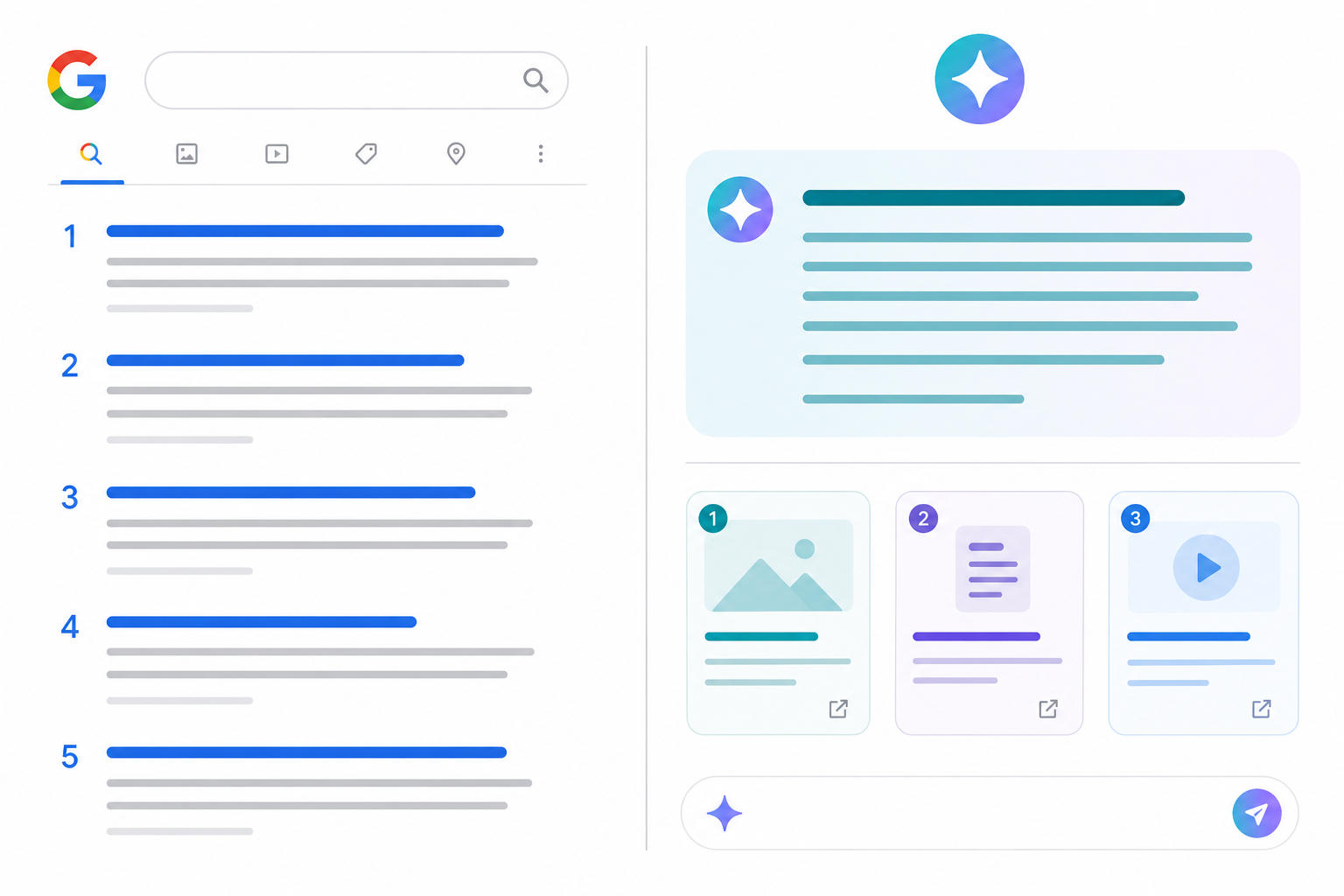
Google recognizes entities largely with the same signals as AI search engines, but mechanisms differ. Google Knowledge Graph builds from decades of indexing, link graphs, structured data, and user signals. Google AI Overviews uses this same foundation in generative answers.
ChatGPT and Perplexity don't use Google Knowledge Graph directly, but they use similar signals: brand mentions on the web, structured data, authoritative sources, and consistent entity profiles. Strong Google entity often correlates with strong AI visibility — but doesn't guarantee it.
The gap shows for unknown brands: Google may rank your pages on keywords without strong entity if content is relevant. AI engines favor known entities especially in general or comparison queries ("best GEO agencies in Finland"). Without entity you're left out even with good content.
Build entity for both: strengthen Knowledge Graph signals (schema, sameAs, Wikidata) and produce content supporting ChatGPT visibility and Perplexity citations. These reinforce each other — entity without citable content is empty; content without entity is easily anonymized.
Google Search Console offers entity health signals: brand queries, rich result reports, and manual actions. Combine GSC data with AI visibility tracking — weak brand search on Google often predicts weak AI mentions.
Generative search engines don't show Knowledge Panels, but they use similar background data. Investment in Google entity is investment in the whole GEO ecosystem.
Practical test: search your brand name in ChatGPT, Perplexity, and Google AI Overviews. If answers mention competitors but not you, the problem is likely entity — not just content quality. Fix profiles and schema before new content volume.
In multi-brand and group companies, define parentOrganization and subOrganization relationships clearly in schema. AI easily confuses group subsidiaries if entity structure is unclear.
- Google: Knowledge Graph, link graph, structured data, user signals
- AI Overviews: uses Google index and entity data
- ChatGPT/Perplexity: web mentions, schema, authority, citability
- Common thread: consistent brand, E-E-A-T, structured data
- Risk: strong SEO without entity → AI omits brand mentions
Brand entity technical implementation step by step
Start with an entity audit: list all official brand profiles (website, LinkedIn, Google Business, Wikidata, industry directories) and check name, logo, and contact consistency. Fix conflicts before schema implementation.
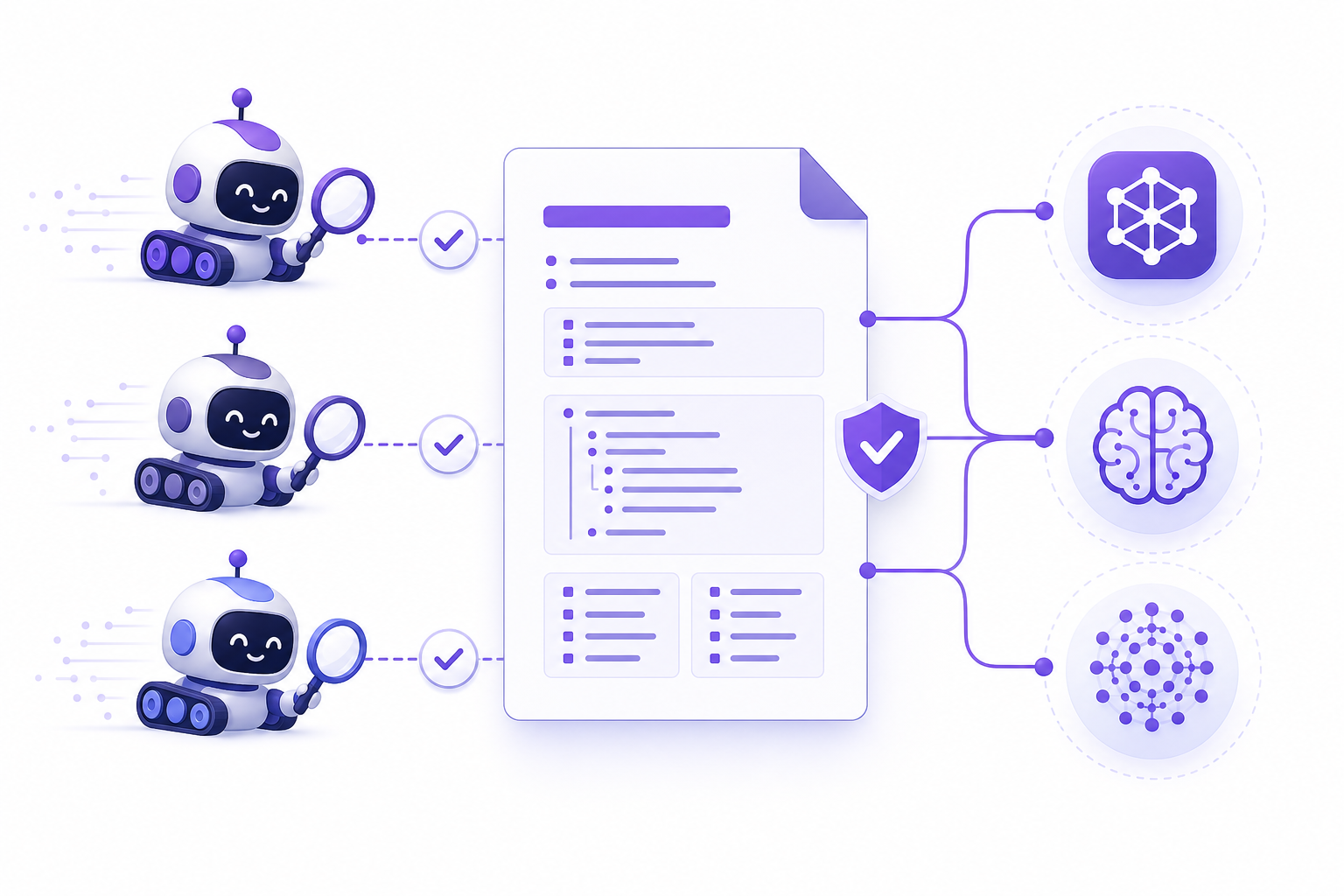
Implement Organization schema as JSON-LD globally. Include name, url, logo, description, foundingDate, address (or areaServed), sameAs (LinkedIn, Wikidata, other profiles), and @id. Add Person schema for each public expert on author pages and blogs.
Create or update Wikidata entry. Link it in Organization schema sameAs list. Publish author pages with Person schema, bio, sameAs (LinkedIn), and link to Organization entity. Mark articles with Article schema with author and publisher references.
Add llms.txt to root and guide AI engines to key entity pages: about, team, services. This complements schema for crawl guidance. See the llms.txt guide and consider the GEO service for audit and implementation if resources are limited.
Implement author pages for each public expert: photo, bio, Person schema, sameAs, and links to articles. These pages strengthen E-E-A-T and give AI a clear person entity to cite.
Document entity structure internally: @id URLs, sameAs list, Wikidata Q-number, and owners. Without documentation, schema degrades as the organization grows and people change roles.
Test entity with rich result tools and site: operator searches: site:company.com "Organization" reveals whether markup is actually live on pages. Staging schema doesn't help production.
Connect entity work to CRM and sales materials: same official name and description everywhere — website, proposals, email signatures. Human-visible consistency also strengthens machine recognition.

Measuring entity strength
Entity strength isn't measured by one number, but several signals can be tracked. Knowledge Graph presence: search your brand on Google — does a Knowledge Panel show with correct data? Wikidata: does a Q-entry exist and link correctly? Schema: does Rich Results Test pass without critical errors?
AI visibility is the practical entity test. Ask ChatGPT and Perplexity 20–30 questions where your brand should be mentioned (industry, services, comparisons). Document mentions monthly. Improving mention count indicates strengthening entity.
External signals: track brand mentions (linked and unlinked), new backlinks from authoritative sources, and PR results. Entity strengthens externally — on-page schema alone isn't enough long-term.
Compare competitors: who gets mentioned in AI answers for the same queries? Analyze their entity profiles (Wikidata, schema, profiles) and identify gaps in yours. Entity competition is GEO's hidden competition.
Knowledge Panel quality (completeness, correct links, images) is a good proxy metric. If the panel is missing or wrong, fix it before scaling content — otherwise AI signals stay fragmented.
Brand mention sentiment in AI answers reflects entity reputation. Track not just mention count but context: recommended, neutral, or omitted.
90-day brand entity plan
Month 1: entity audit — profiles, names, schema, robots.txt, llms.txt. Implement Organization schema and fix conflicts. Create or update Wikidata entry and link in sameAs list. Publish about page with clear company description.
Month 2: Person entities — author pages for each public expert, Person schema, LinkedIn sameAs. Mark existing articles with Article schema with author and publisher references. Start PR: one expert column or interview in industry publication.
Month 3: content + monitoring — publish topic cluster articles where brand and experts are mentioned consistently. Test AI visibility with 25 queries. Compare Knowledge Panel status and AI mentions — document improvements and next priorities.
Ongoing maintenance: quarterly schema audit, profile sync, Wikidata updates, and AI monitoring. Entity degrades without maintenance — personnel changes, new services, and rebrands require schema and profile updates.
Successful B2B brands combine entity work with PR: every interview, podcast, and industry award strengthens external signals AI uses in trust evaluation. Internal schema without external visibility is only half the solution.
Five most common brand entity mistakes in GEO
These mistakes weaken entity and block AI visibility — often in companies with otherwise strong offline brand recognition.
The most common mistake is schema implementation without profile sync: Organization schema says one name, LinkedIn another, footer a third. AI doesn't connect these — the entity stays weak.
Another mistake is neglecting external authority: schema is fine, but the brand isn't mentioned in industry publications or conferences. Without external signals, entity remains internal belief, not proven authority.
- Inconsistent names across profiles → entity splits into multiples
- Organization schema without sameAs links → isolated entity without KG connection
- Anonymous authors without Person schema → E-E-A-T signal missing
- Schema without external mentions → empty entity without authority
- Wikipedia/Wikidata neglect in B2B → Knowledge Graph bridge missing
- Entity work separate from content strategy → schema without citable content
Frequently asked questions
What's the difference between brand and entity in GEO?
Brand is a marketing concept; entity is a machine-recognizable whole (name, attributes, relationships, external references). GEO requires your brand defined as an entity with schema markup, sameAs links, and consistent profiles — otherwise AI won't connect content to the right organization. Visual brand (logo, colors) isn't enough without digital entity structure.
Do I need a Wikipedia article for Knowledge Graph?
No. Wikipedia helps, but Wikidata entry suffices for many B2B brands. Link Wikidata in Organization schema sameAs list. Strengthen entity further with LinkedIn profile, Google Business Profile, and authoritative mentions. Wikipedia is a bonus, not a requirement.
How does Person schema relate to E-E-A-T?
Person schema defines authors and experts as named entities with worksFor or affiliation relationship to the organization. This makes experience and expertise signals machine-readable — anonymous "Admin" doesn't build E-E-A-T. Author pages and LinkedIn sameAs strengthen the profile.
Does entity work help Perplexity and ChatGPT the same way?
Core signals (consistent brand, external mentions, schema) serve both. Perplexity emphasizes fresh citable web content; ChatGPT also uses historical mention data. Strong entity improves both, but content and citability still decide.
How long does entity strengthening take?
Technical schema implementation is fast (weeks). Knowledge Graph connections and AI recognition typically strengthen over 3–12 months of consistent work: profiles, content, external mentions, and monitoring. GEO is long-term entity building — a 90-day plan provides a solid launch rhythm.