Why B2B SEO is different
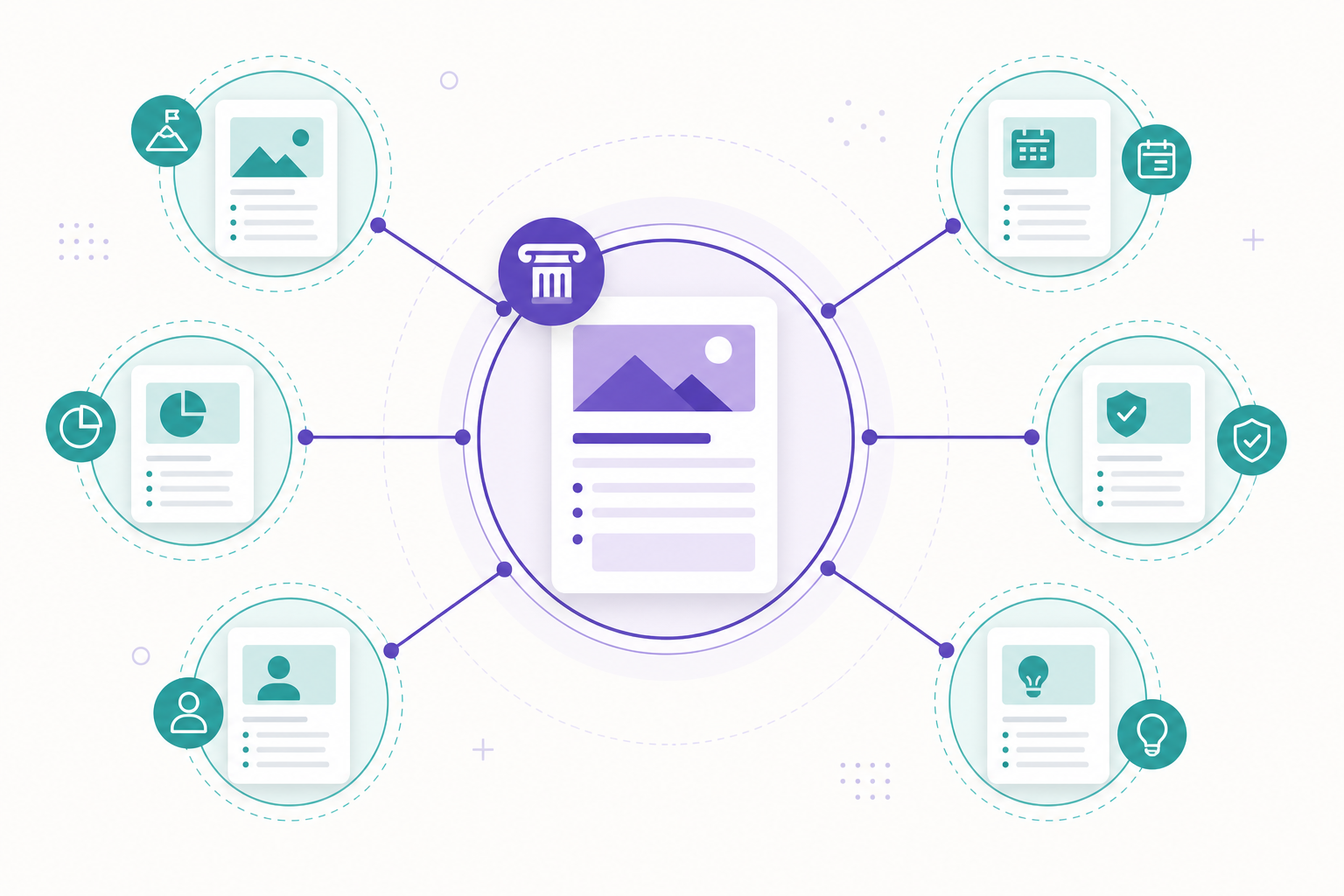
B2B SEO targets organizations, not impulse purchases. Searchers are often in roles: procurement, CTO, CEO, or specialist. Content must answer their questions and risk management needs.
The sales cycle is long: the first organic visit may precede a months-long process. SEO value is measured in leads and pipeline impact, not just sessions.
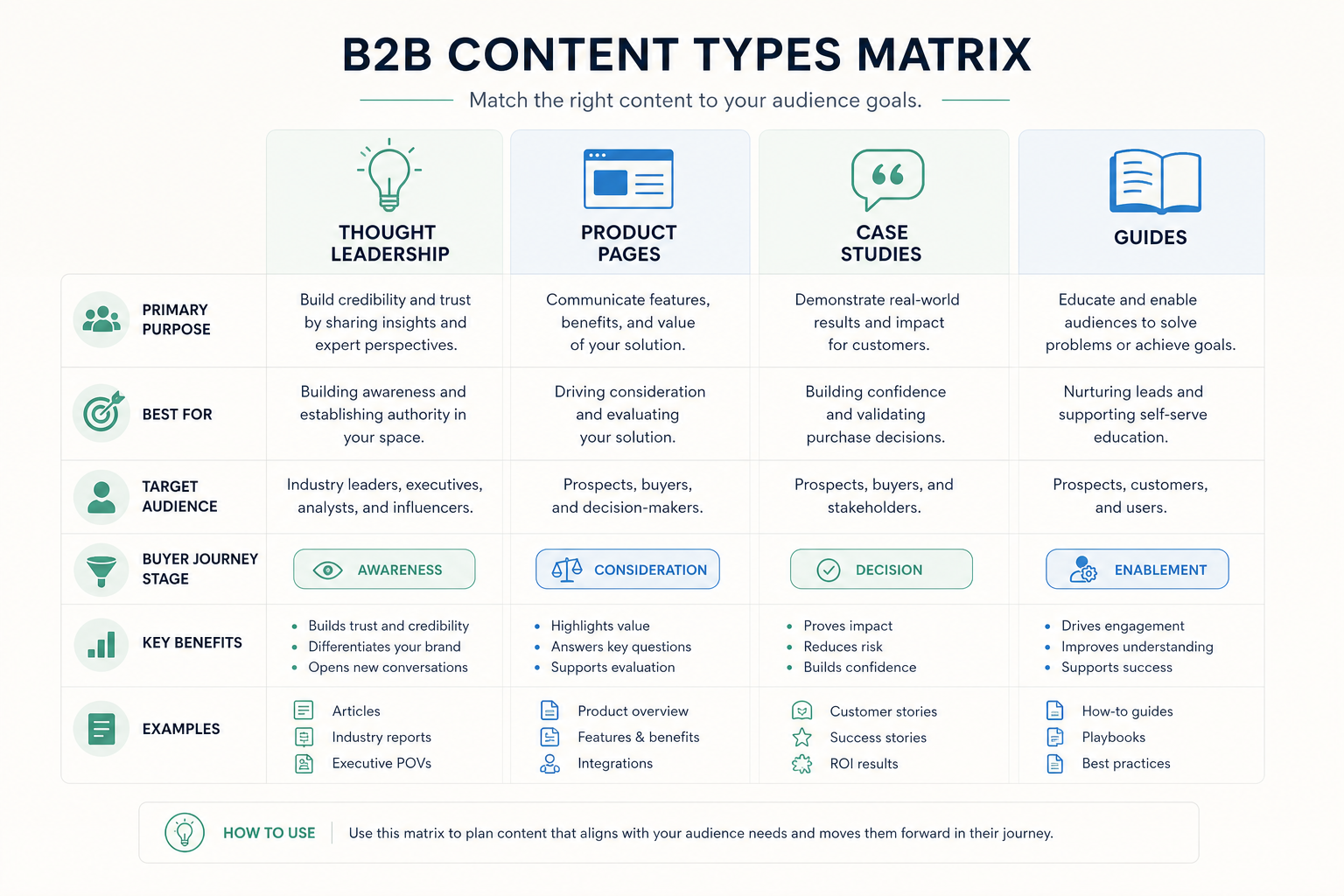
Competition is often in expert content and comparison queries ("X vs Y", "best solution for Z"). Beyond product pages you need guides, case studies, and tools.
Strategy starts with keyword research and content strategy — not random blog posts.
ICP first
ICP and buyer personas
ICP describes company type (size, industry, tech). Buyer persona describes the role (pains, goals, objections). Both guide keywords and content.
Map the buying committee: who researches, who compares, who signs. Different content types for different roles.
Document the language your audience searches with — in B2B often professional terms and problem-based queries.
- ICP: company profile
- Persona: role and pains
- Buying committee: multiple searchers
- Language and terms documented
Funnel and search intent
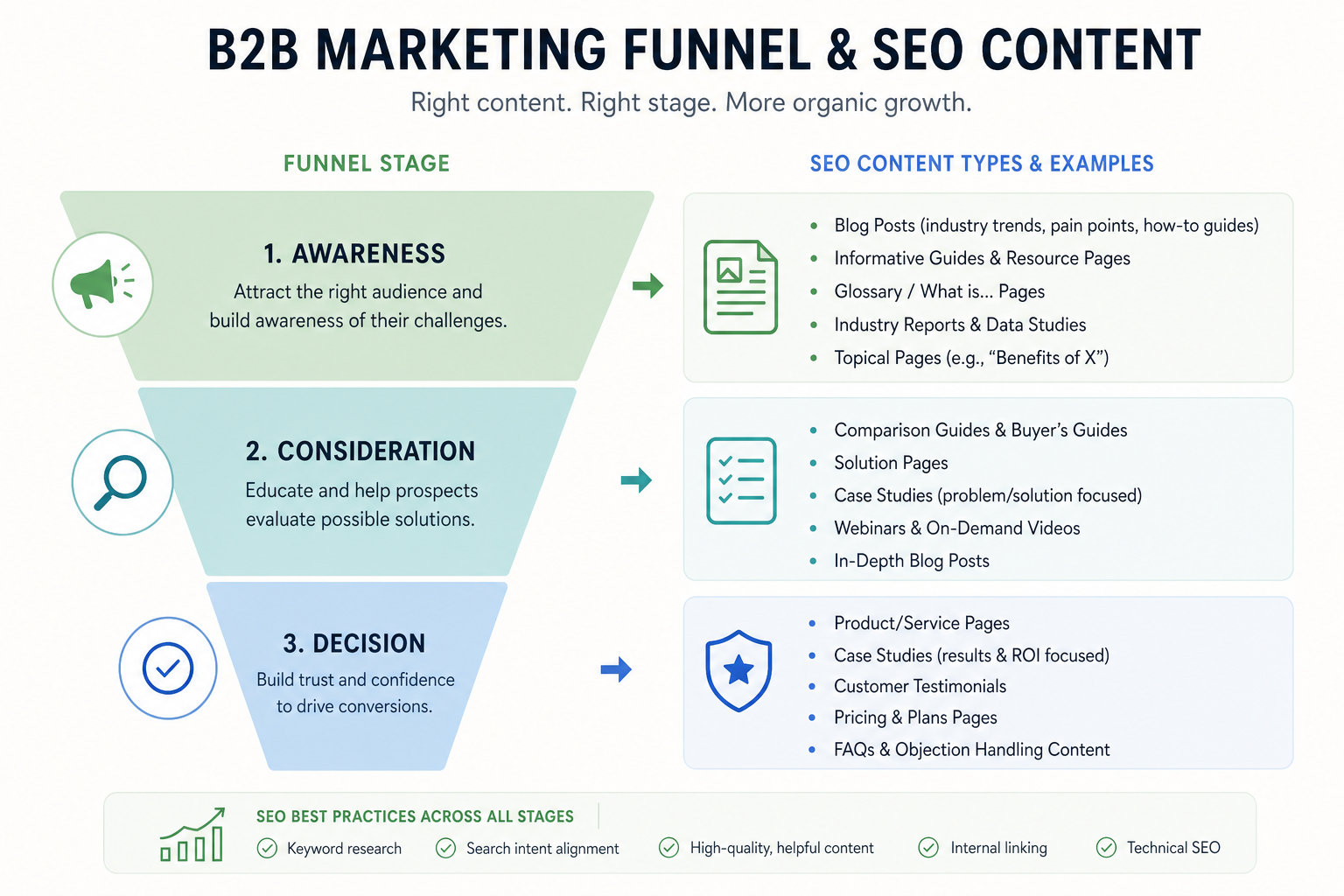
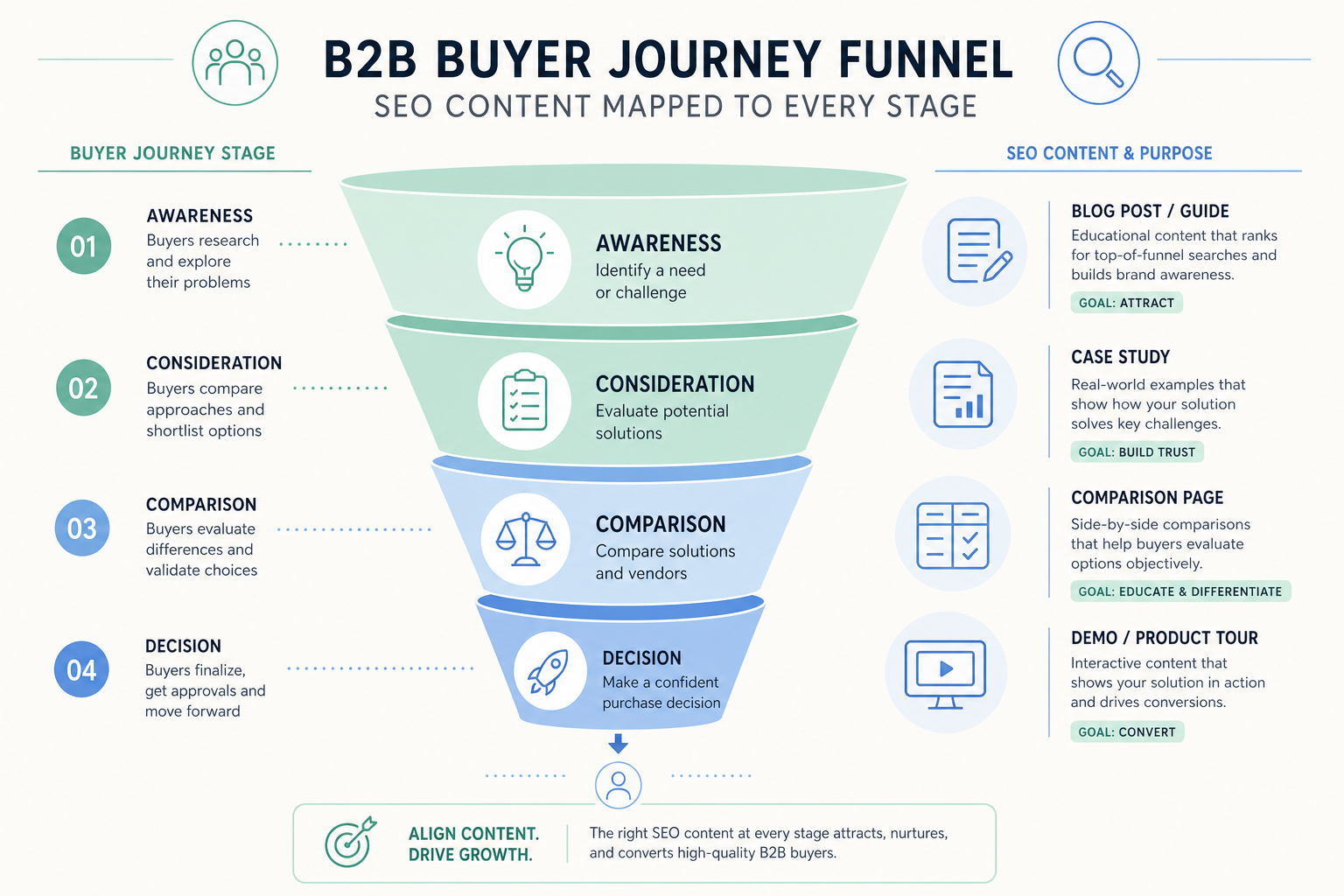
TOFU: problem awareness ("how to automate X"). MOFU: solution types and comparison. BOFU: vendor queries, pricing, demo.
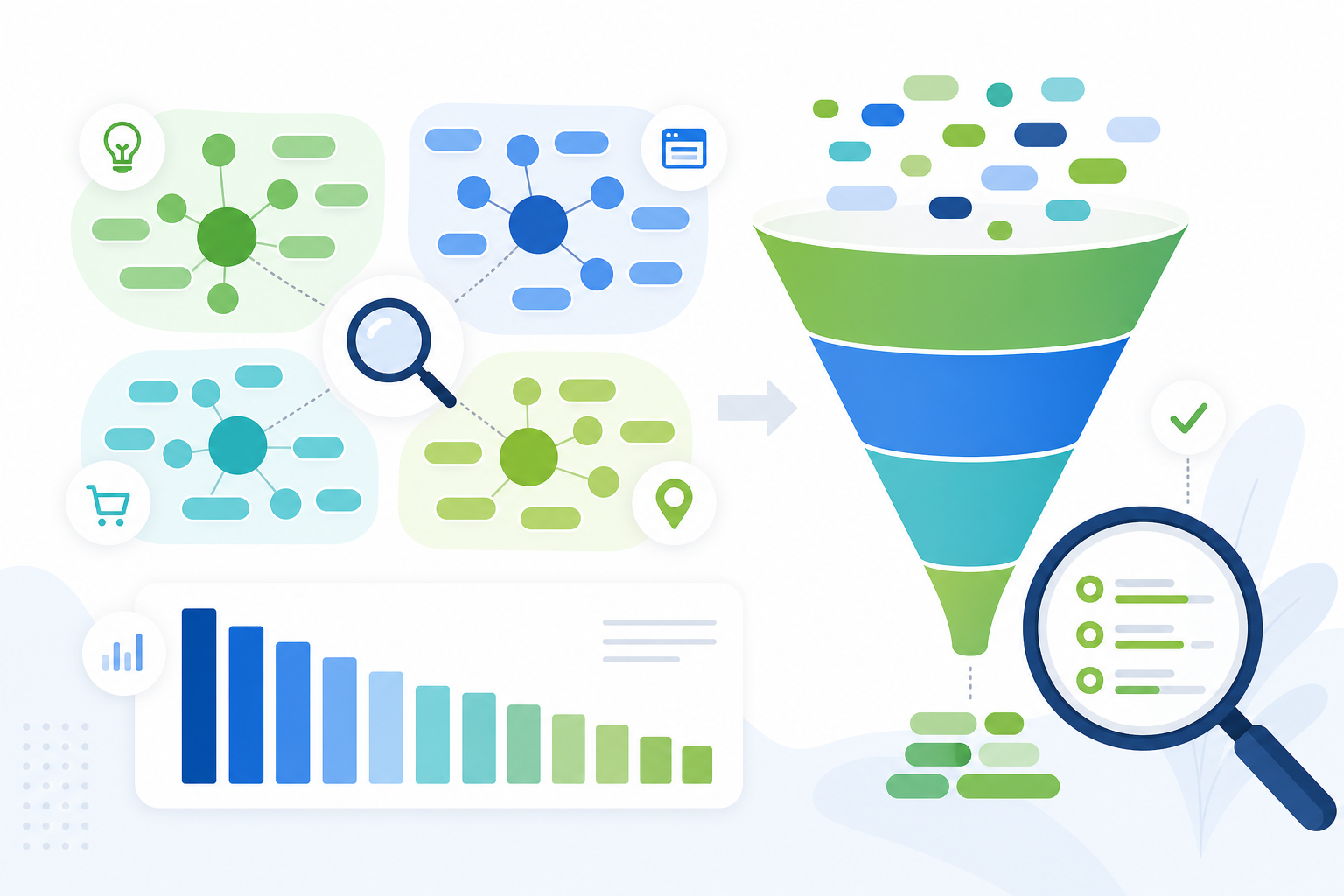
Map keywords by intent — do not force transactional pages on informational queries. Read keyword research and search intent.
Content type shifts: guide → comparison → case → product/demo page.
Keywords and topic clusters
Build topic clusters: pillar page (broad guide) + cluster articles (sub-questions). Internal linking connects the branch.
Prioritize queries where you are the expert and there is business potential — not just high volume.
Content pillars in B2B
Typical pillars: problem guide, comparison, case study, ROI calculator, whitepaper, webinar. Each supports leads and trust.
E-E-A-T: show expertise, authors, sources, and update dates. B2B buyers evaluate risk.
Update content when product or market changes — outdated guides hurt trust.
Landing pages and conversion
Clear CTA on BOFU pages: demo, contact, trial. Short form — in B2B quality over quantity.
Connect organic traffic to CRM and attribution. SEO delivers value only when leads are tracked.
On-page basics: on-page SEO 2026.
Links and authority in B2B
B2B links often come from research, tools, and industry publications. Digital PR and expert content work.
Avoid bought links — brand and trust are critical in B2B. Read link building.
Metrics and reporting
Track: organic leads, MQL/SQL, pipeline value, page-level conversion — not just rankings and traffic.
Search Console + Analytics + CRM. Report monthly by funnel stage.
B2B SEO in numbers
B2B SEO checklist
Run at strategy kickoff and update quarterly.
Our SEO service helps with B2B strategy.
- ICP and personas documented
- Keywords by funnel stage
- Pillar + cluster plan
- BOFU pages and CTAs
- CRM attribution
- Monthly lead reporting
Frequently asked questions
How does B2B SEO differ from B2C?
Longer cycles, more decision-makers, and informational vs. transactional queries weighted differently. Measure leads.
What is ICP in SEO?
Ideal Customer Profile — defines who content and keywords target before production.
How long does B2B SEO take?
Often 6–18 months for meaningful leads. Pillar content and links compound over time.
What content does B2B need?
Guides, comparisons, case studies, tools, and BOFU pages (demo, pricing) — by funnel stage.
How do you measure B2B SEO success?
Organic MQL/SQL, pipeline, and page-level conversion — not traffic alone.