What link building means
Link building is the process of earning links from other websites that point to your own. These external links (backlinks) are part of off-page SEO — all the optimization that happens outside your own site.
Google interprets a link as a kind of vote of trust: when a respected site links to you, it signals that your content is useful and trustworthy. This is one of the search engine’s original and still strongest ranking signals.
In 2026, however, link building has changed. Google is increasingly good at detecting artificial and bought links. A durable strategy is based on earned, relevant links — not mass-produced or manipulated ones.
In this guide we cover what makes a link quality, which tactics work (digital PR, outreach, content), and which methods to avoid so you do not become a target of Google penalties.
Why links still matter
Links have been Google’s core mechanism from the start: the original PageRank algorithm was based specifically on link analysis. While the algorithm has evolved enormously, links remain one of the three most important ranking factors.
Quality links do two things: they pass authority (the page rises in search) and bring direct referral traffic (real people click the link). A good link is valuable even if you ignore the SEO impact.
Links are also an important trust signal for AI search engines: when several respected sources reference you, your chance of being cited in AI answers grows. A link profile builds the site’s overall authority.
- Links are one of the three most important ranking factors
- They pass authority and bring referral traffic
- They build trust for AI search engines too
- A good link is valuable regardless of SEO impact
Quality beats quantity — every time
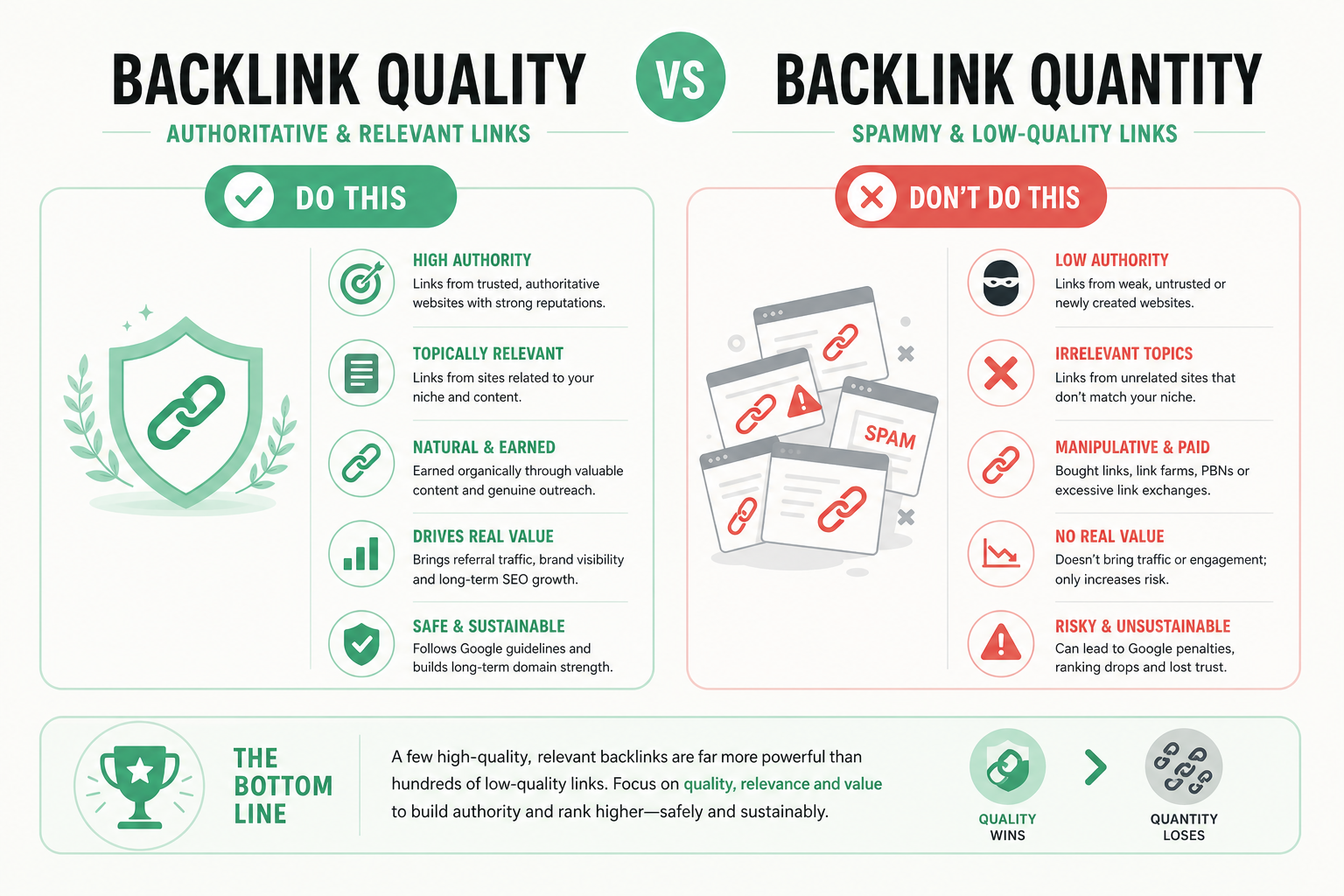
The old thinking of "the more links, the better" is dead. One link from a respected site relevant to your topic is more valuable than a hundred links from irrelevant or spam sites.
Google evaluates the quality of each link: the authority of the linking site, topical relevance, the link’s placement in the content, and whether the link looks earned or manipulated. A large number of weak links can even hurt.
So focus on earning links that would be valuable even if Google did not exist: genuine references from good content on relevant sites. This strategy survives algorithm updates.
- One quality link > a hundred weak links
- Google evaluates authority, relevance, and authenticity
- Mass links can hurt, not help
- Aim for links that would be valuable even without SEO
A key principle
Link building tactics that work
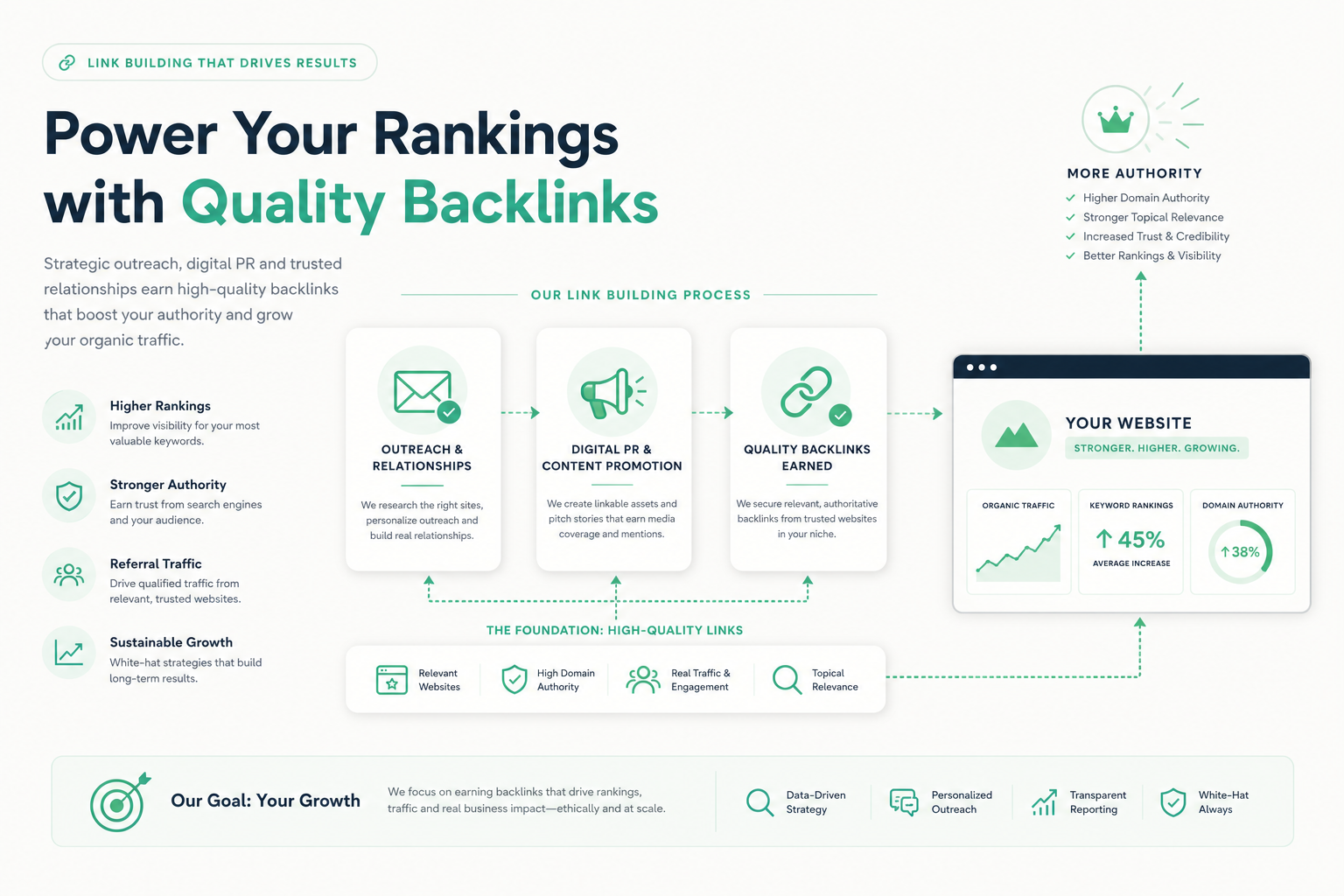
Durable tactics are based on offering value. Linkable assets — research, guides, tools, statistics — attract links naturally because others want to reference them.
Guest posting on relevant, high-quality sites offers both a link and visibility. The key is that the content is genuinely useful and the site is topically relevant — not just any "guest post farm".
Broken link building is effective: find broken links in your industry, create equivalent content, and propose it as a replacement. Unlinked mentions are also worth converting into links.
- Linkable assets: research, guides, tools, data
- Guest posts on relevant, high-quality sites
- Broken link building with your own content
- Unlinked mentions → request a link
Digital PR — a scalable link source
Digital PR combines traditional PR and link building: you create newsworthy content (research, a survey, data analysis, a take) that media and industry publications want to cover — earning quality links in the process.
It is one of the most effective and durable tactics because links come from high-authority media sources and are genuinely earned. One good digital PR campaign can produce dozens of quality links.
The key is newsworthiness: offer journalists something new, surprising, or useful — your own data, a timely angle, or an expert comment. Combine it with targeted outreach to the right journalists.
- Combines PR and link building
- Newsworthy content: research, survey, data, a take
- Links from high-authority media
- One campaign can produce dozens of links
Outreach in practice — contact that works
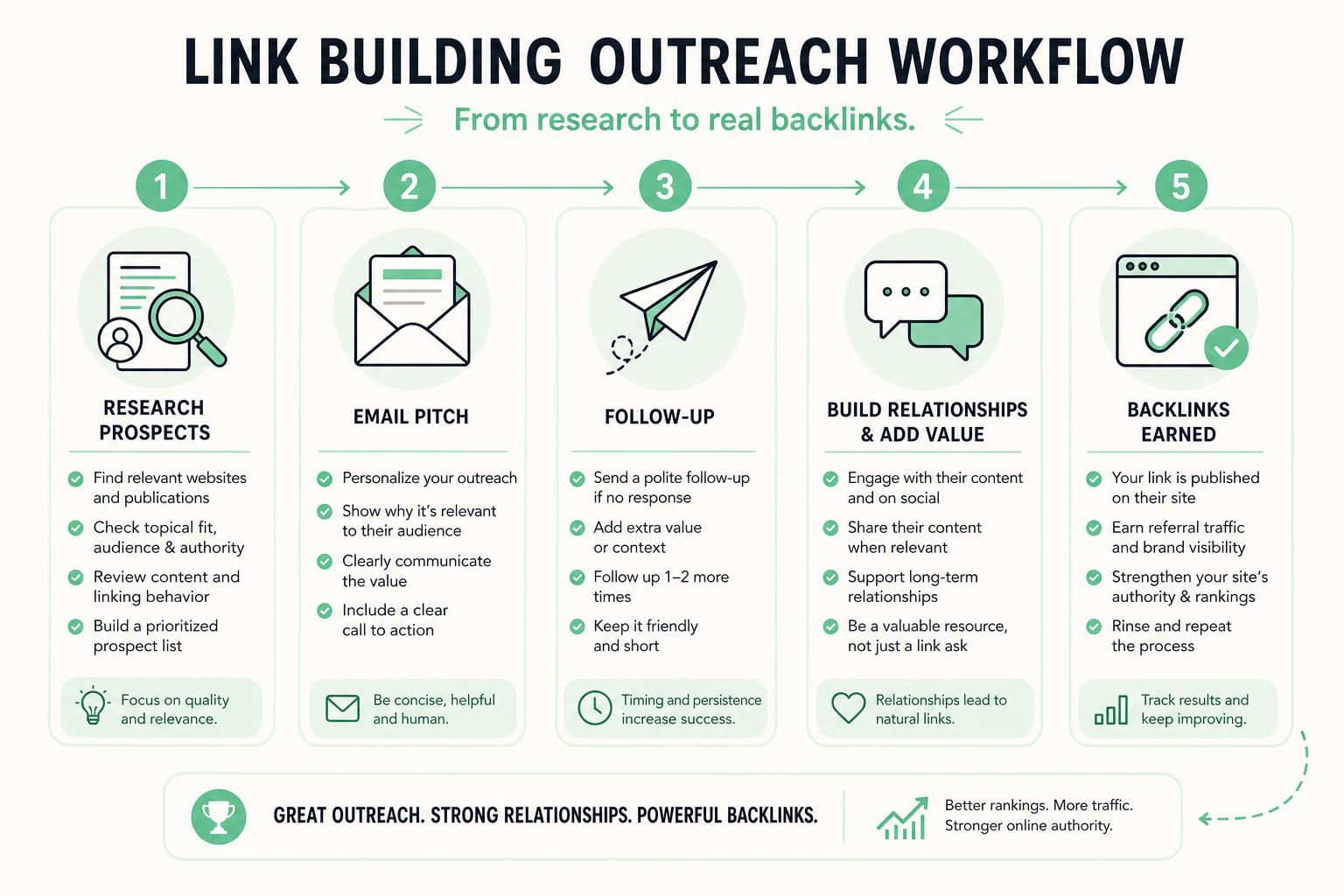
Outreach is the process of contacting site owners, journalists, and industry influencers to earn a link. The biggest mistake is a generic mass email that ends up in the trash.
Personalize every message: reference the recipient’s actual content, clearly state what you offer and why it is valuable to their audience. Keep the message short and focus on the recipient’s benefit, not yours.
Build a relationship first: comment on, share, and reference the recipient’s content before asking for anything. Outreach is relationship building, not cold sales. Following up politely once is enough.
- Personalize: reference the recipient’s actual content
- Offer value to their audience, do not ask for a favor
- Keep the message short and clear
- Build a relationship before asking, follow up politely
Methods to avoid — do not risk your site
Risky "black hat" tactics can produce quick results, but they lead sooner or later to Google penalties — a manual action or an algorithmic drop.
Avoid buying links, link farms, automated link tools, excessive link exchanges, and low-quality directories. Exact-match keyword anchor text at scale also looks manipulated and is a risk.
Google’s guidelines are clear: links intended to manipulate rankings should be marked nofollow or sponsored. If your link profile has harmful links, use the disavow tool carefully.
- Do not buy links or use link farms
- Avoid automated link tools and mass directories
- Do not overuse exact-match keyword anchors
- Mark paid links sponsored/nofollow
Measuring success
Link building success is not measured by link count alone. More important are the quality and number of referring domains, the topical relevance of the links, and the referral traffic they bring.
Track the growth of new referring domains, their authority, and how links affect target page rankings and organic traffic. Use the Search Console Links report and link tools.
The most important metric in the end is the development of organic traffic and rankings. A good link profile shows up with a delay — give it time and focus on continuous, quality earning.
- Quality and number of referring domains, not just link count
- Topical relevance and referral traffic
- Impact on target page rankings and traffic
- Monitor the Search Console Links report
Link building in numbers
Link building checklist
Run this list when you build a link strategy. It prioritizes quality, relevance, and durable tactics.
Combine link building with strong content and internal linking: read about content strategy and internal linking. Need help? Explore our SEO service.
- Build linkable assets first (research, guide, tool)
- Aim for relevant, high-authority links
- Use digital PR as a scalable, quality source
- Personalize outreach and offer value to the recipient
- Avoid bought links, farms, and mass directories
- Track referring domains, not just link count
- Let the profile build over time — quality before speed
Frequently asked questions
What does link building mean?
Link building is the process of earning links from other sites to your own. These backlinks are off-page SEO and one of Google’s strongest ranking signals — when quality and relevance are in order.
Are links still important for SEO in 2026?
Yes. Links remain one of the three most important ranking factors. The difference from before is that quality and relevance decide, not quantity. One quality, earned link is more valuable than a hundred weak ones.
What is the best way to build links?
The most durable ways are linkable assets (research, guides, tools), digital PR (newsworthy content for media), and personalized outreach to relevant sites. Build something link-worthy first.
Can you buy links?
It is not worth it. Buying links violates Google’s guidelines and can lead to a manual action or an algorithmic drop. Paid links should be marked with a sponsored or nofollow attribute. Focus on earned links.
How do I measure link building success?
Do not measure link count alone. Track the quality and number of referring domains, topical relevance, referral traffic, and above all the impact on organic rankings and traffic. Use the Search Console Links report.