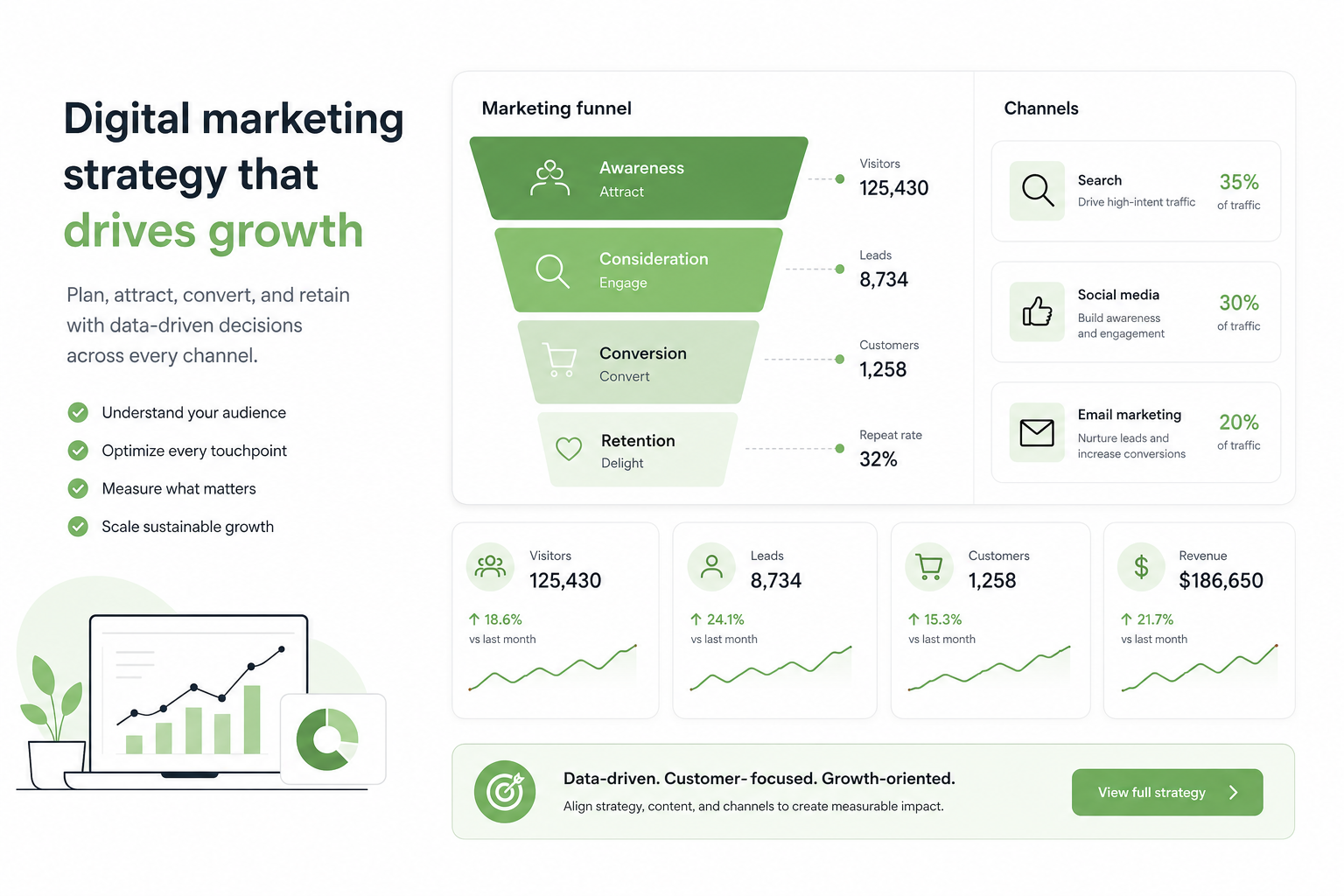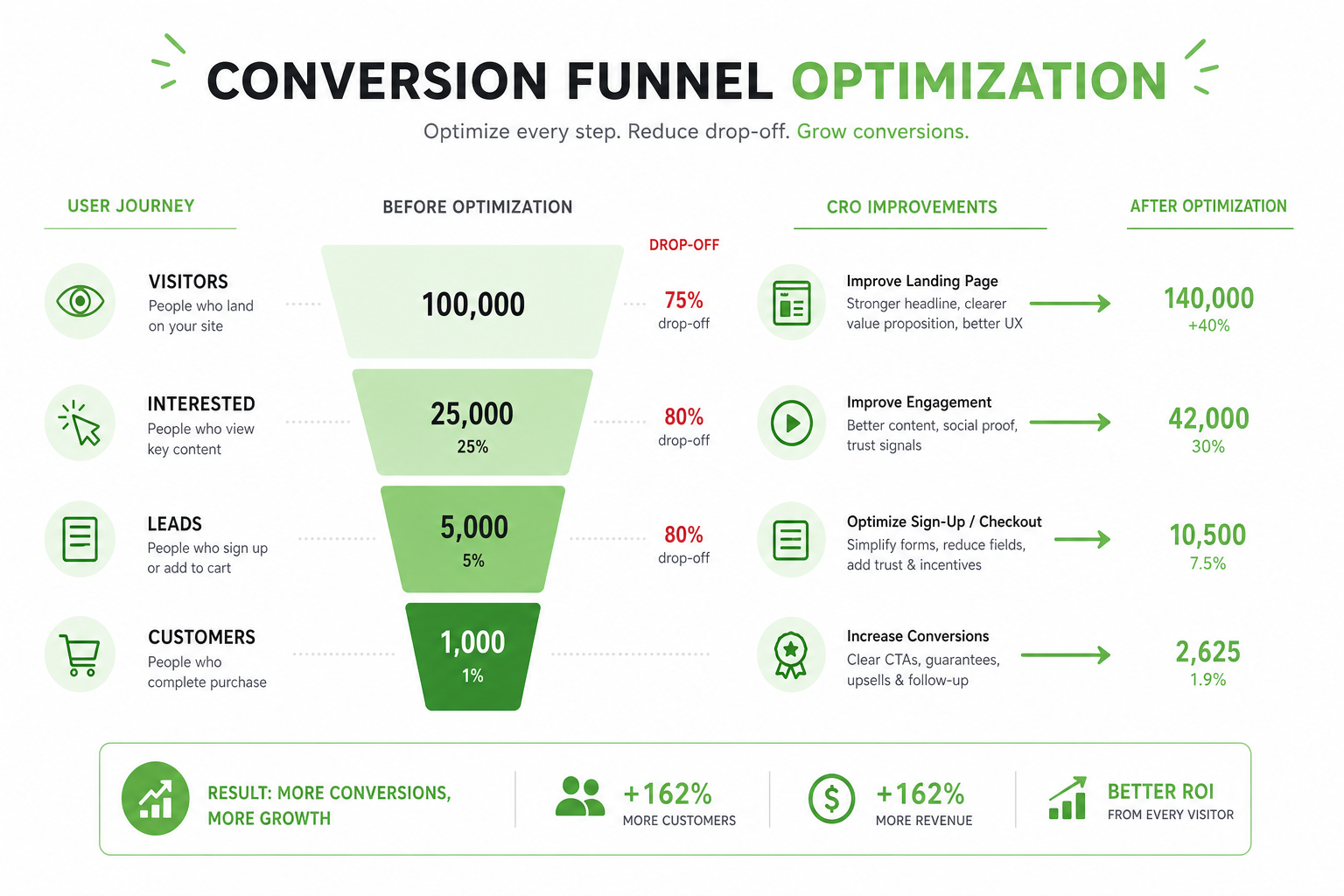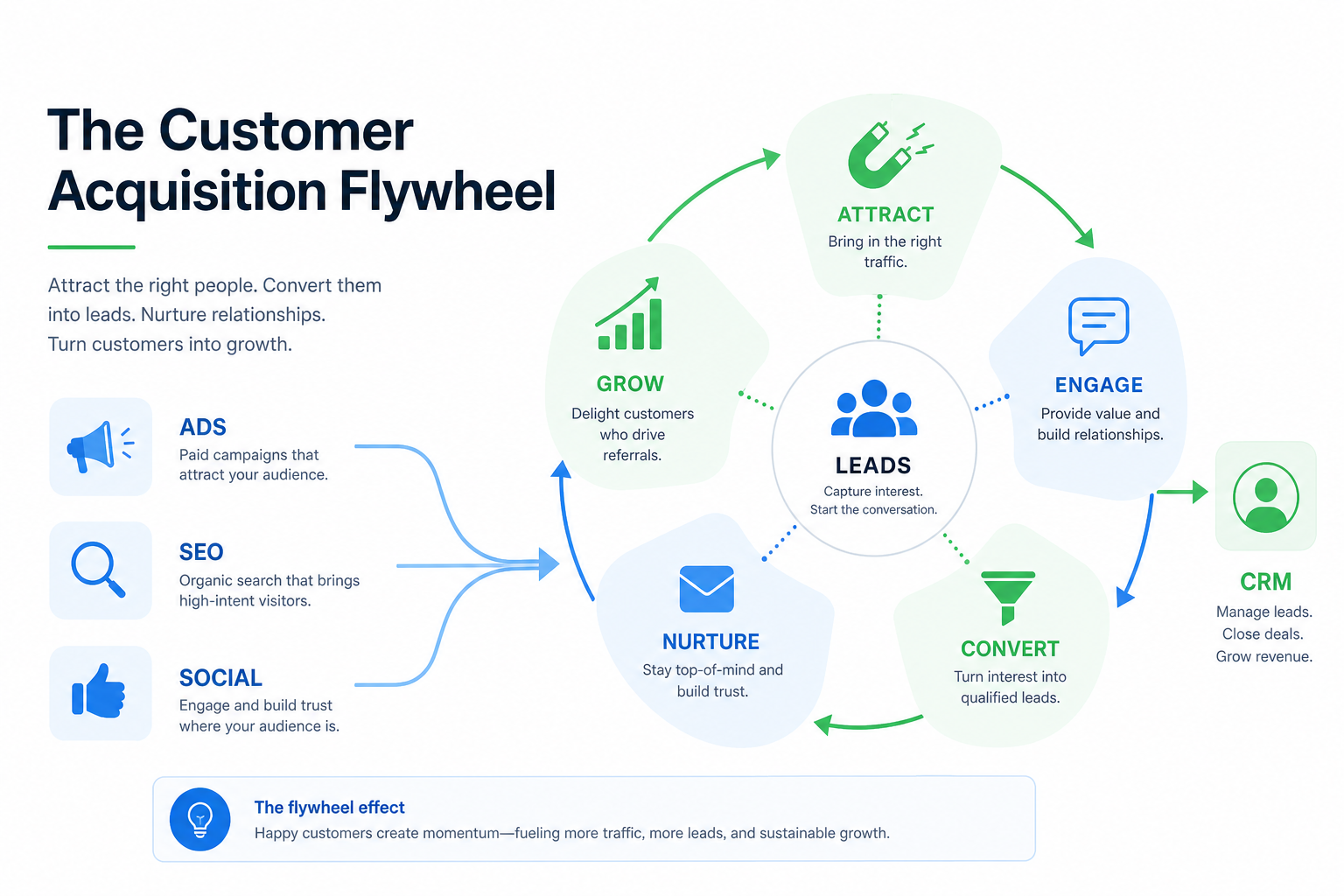
Paid vs organic acquisition
Digital customer acquisition splits into two paths: paid (Google Ads, Meta, LinkedIn) delivers traffic immediately, organic (SEO, GEO, content, social) builds long-term demand. You need both — paid scales, organic lowers CAC over time.
Paid acquisition suits ready demand (Search, Shopping) and awareness building (Meta, Display). Organic produces trust before purchase: blog, comparison pages, GEO visibility, and brand search. Without organic you pay for every customer again; without paid growth is slow.
The optimal mix depends on ICP and funnel stage. E-commerce needs Shopping + Meta catalog + SEO; B2B SaaS Search + LinkedIn + content + retarget. See strategy article for channel mix.
Paid and organic are not competitors — they compound. Brand search volume from SEO lowers Search CPC; retarget audiences from paid traffic convert on organic landing pages. Map both paths in one acquisition model so budget decisions reflect total CAC, not channel ROAS alone.
Timing matters: launch paid when you need pipeline this quarter; invest in SEO and GEO when you can wait 6–12 months for compounding returns. Most mature companies run both in parallel with different success metrics per path.
CAC calculation and targets
Customer Acquisition Cost (CAC) = marketing spend ÷ new customers in a period. Calculate per channel and overall — channel CAC reveals where acquisition is profitable and where it is not.
A healthy LTV:CAC ratio is typically 3:1 or better in B2B; e-commerce depends on margin. If CAC rises but LTV holds, the problem is targeting or conversion — not just budget. Measure ROI and attribution before scaling.
CAC targets tie to business: monthly budget, customers needed, and acceptable payback period. Without targets you optimize clicks, not customers.
Blended CAC hides channel problems: overall CAC may look healthy while one channel subsidizes another. Split by channel, campaign, and ICP segment — then compare to LTV by the same dimensions. Sales feedback on lead quality completes the picture paid dashboards miss.
Payback period is as important as LTV:CAC: a 3:1 ratio with 18-month payback may be worse than 2.5:1 with 6-month payback for cash-constrained businesses. Model CAC against gross margin and sales cycle length before setting acquisition targets.
- CAC = marketing spend ÷ new customers
- Calculate per channel and overall
- Compare to LTV — target 3:1 in B2B
- Tie payback period to business goals
Channel selection by ICP and funnel
Channel selection starts with ICP: where your audience is, how they buy, and which funnel stage is the bottleneck. Google Ads captures ready demand, Meta builds demand and retargets, SEO and GEO produce organic traffic, LinkedIn reaches B2B decision-makers.
Do not choose channels by trend — choose by where ICP is in purchase readiness. TikTok may work for B2C, but B2B SaaS Search + LinkedIn + content is often more effective. Three to five channels is enough — depth beats sprawl.
Channel roles in the funnel: awareness (Meta, Display), consideration (SEO, content, retarget), decision (Search, Shopping, landing). The same customer passes through multiple channels — attribution shows which opened and which converted.
Test channels in sequence, not all at once: prove Search or Shopping converts with tracking live, then add Meta for demand building, then SEO for long-term CAC reduction. Staggered rollout makes it clear which channel moved CAC — not a blended mystery.
Creative and landing quality affect channel choice: Meta and Display need strong creative velocity; Search needs message-matched landing pages. A channel that "failed" often failed on execution, not fit — audit creative, feed, and landing before killing the channel.
Scaling and marginal return
Scaling means raising budget only when marginal return is positive: the last euro produces more than it costs. Channel scaling: Search often scales first, Meta requires creative and targeting tests, organic scales with content.
Before scaling verify tracking: conversions, CAC, and LTV per channel. Without data scaling doubles spend without customers. Google Ads and Meta Ads audits reveal quick improvements.
In Full Stack model budget moves between channels based on data — not locked to channels showing good ROAS but high CAC.
Scaling rules: increase budget 15–25% per week on a winning channel while CAC stays within target — not 2× overnight. Watch frequency and impression share on Meta; watch impression share and CPC on Search. Diminishing returns appear before dashboards turn red.
New customer vs returning customer acquisition need separate metrics. Retarget and email convert cheaply but do not grow the base — allocate "new customer CAC" budget explicitly so retention success does not mask acquisition weakness.
Full Stack acquisition: one CAC truth
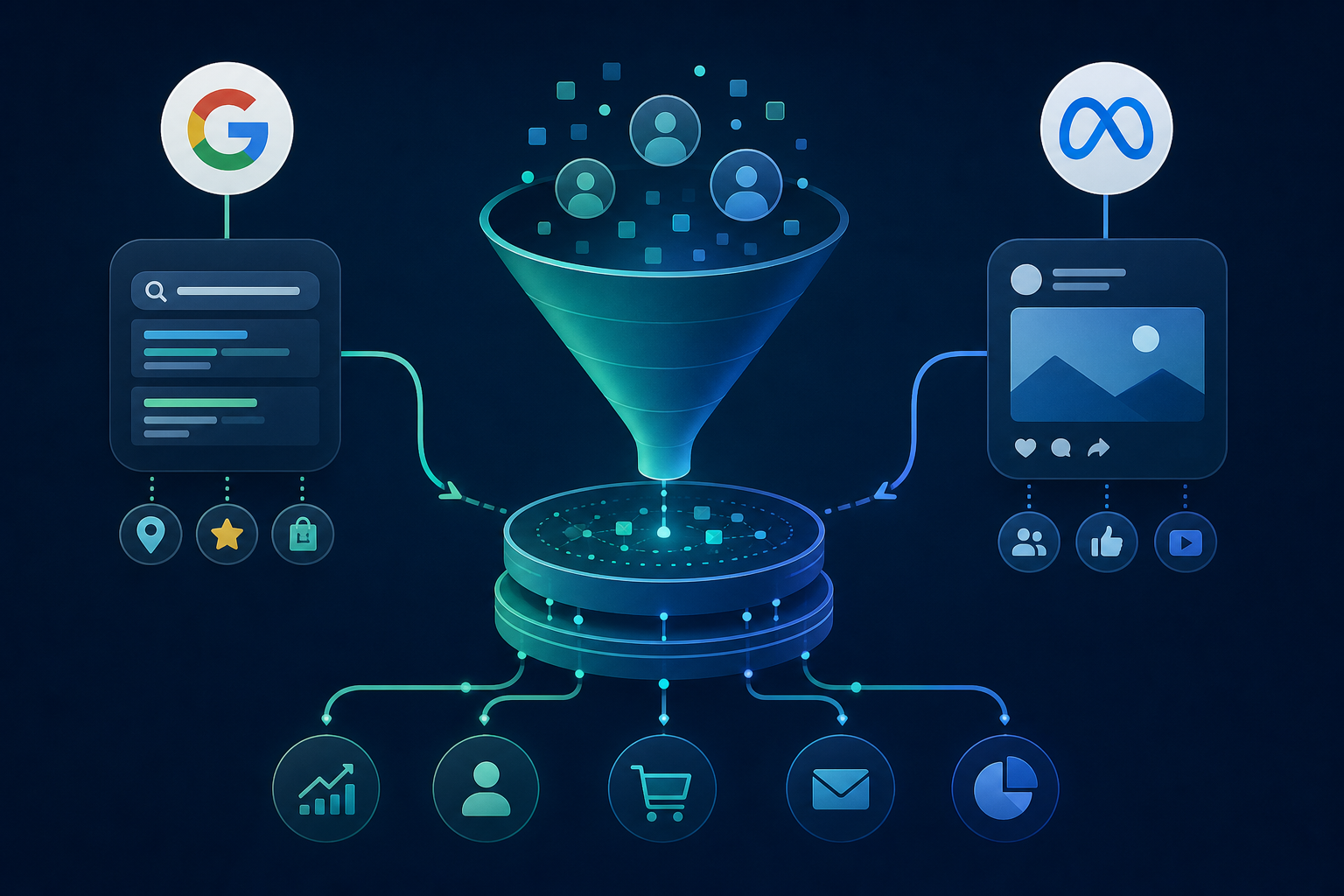
Separate agencies report their channel ROAS — nobody owns total CAC. AlgoTerra Full Stack combines Google Ads, Meta, SEO, and GEO into one acquisition model: one dashboard, one CAC calculation, one owner.
Execution: channel optimization weekly, cross-channel attribution monthly, budget reallocation quarterly. Acquisition improves when channels complement rather than compete.
Start with a free audit: we map current CAC, channel efficiency, and tracking. Then we build a 90-day acquisition plan.
Unified acquisition reporting connects ad platforms, GA4, and CRM: same customer definition, same date range, same attribution model. Without that spine, each channel claims credit and total CAC stays unknown.
Request a free audit — we show where new customers actually come from and which channels deserve the next euro of budget.
Common acquisition mistakes
We see these in audits — and they raise CAC for months. Fixing tracking and ICP definition often drops CAC before any budget increase.
- No CAC calculation → optimize clicks, not customers
- Paid only → high CAC, no organic growth
- Channels siloed → double-counting, wrong attribution
- Scale before tracking → budget burns without data
- Missing ICP → wrong audiences, high CAC
Frequently asked questions
What is the difference between paid and organic acquisition?
Paid (Ads) delivers traffic immediately; organic (SEO, GEO, content) builds long-term demand and lowers CAC. The optimal mix combines both.
How do I calculate CAC?
CAC = marketing spend ÷ new customers in the period. Calculate per channel and overall. Compare to LTV — target 3:1 in B2B.
Which channels should I choose first?
By ICP and funnel: Search for ready demand, Meta for demand building, SEO/GEO for long-term growth. 3–5 channels is enough for most.
When should I scale budget?
When marginal return is positive and tracking works per channel. Audit before scaling reveals bottlenecks.
How does AlgoTerra help with acquisition?
A free audit maps CAC and channels. Full Stack combines Google Ads, Meta, SEO, and GEO into one acquisition model.