Why strategy before channels
Most marketing problems are not "Google Ads doesn't work" but "we don't know who we sell to and why." Strategy answers three questions: who (ICP), what promise (message), and what path (funnel + channels). Without answers, optimization is guesswork.
A good strategy is short and actionable: 2–3 pages is enough when it includes ICP, channel mix, budget split, metrics, and quarterly rhythm. A long deck does not become action — a short framework does.
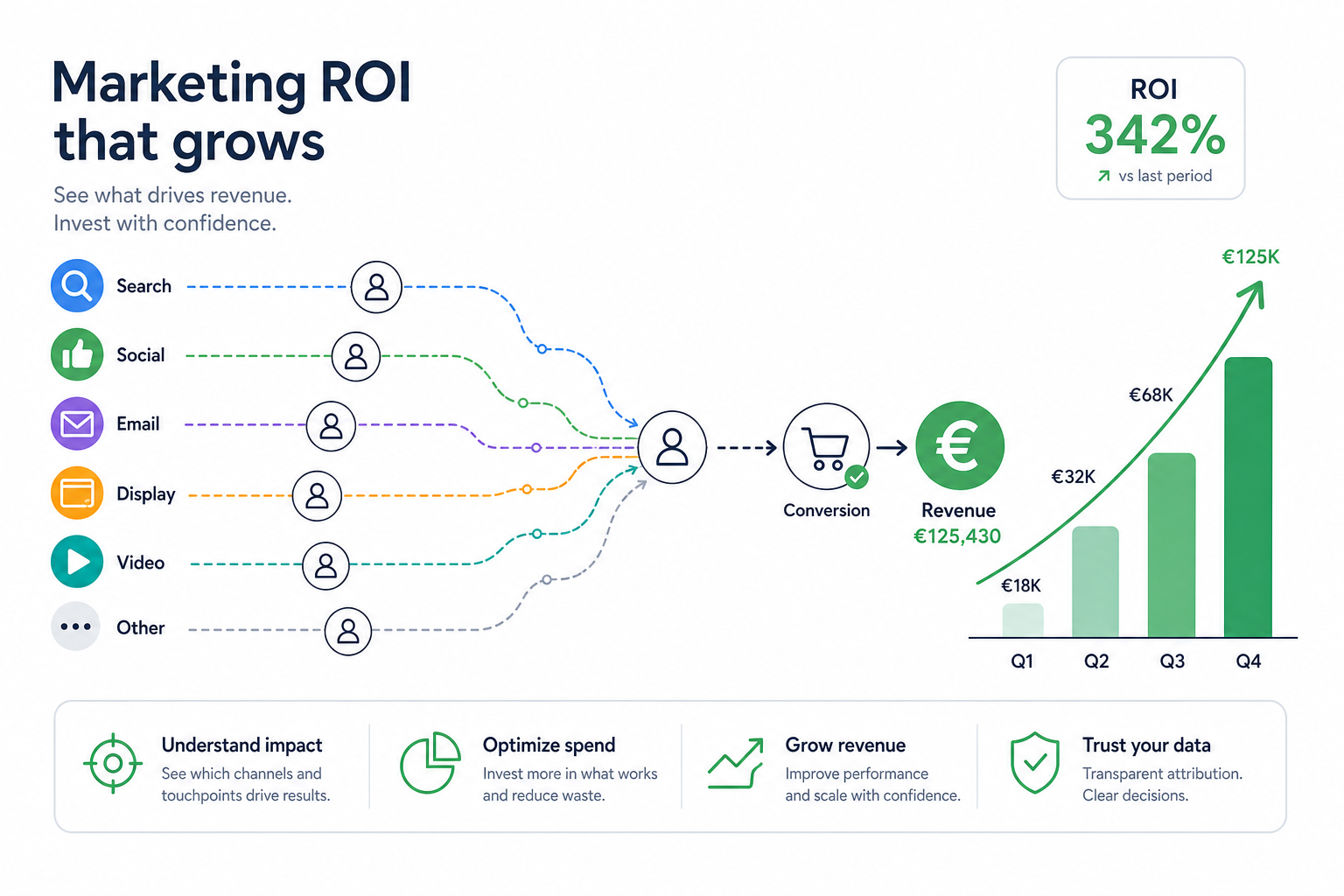
Strategy links to business: the goal may be lead volume, pipeline, e-commerce revenue, or brand search. Channels are chosen for the goal, not the other way around. When the goal is clear, ROI measurement shows whether you deliver.
A practical first step is documenting current state: which channels run today, what they cost, and what business outcomes they produce. Many teams fund channels that worked two years ago but no longer match the ICP or buying journey. Strategy closes that gap before you add another platform.
Leadership alignment matters: when the CEO and sales agree on the north star metric, budget debates shrink and quarterly reviews focus on what to scale. AlgoTerra audits often start here — aligning business goals with marketing metrics before touching campaign settings.
ICP and message framework: who you target
Ideal Customer Profile (ICP) defines your best customers: role, company size, industry, buying behavior, and pain points. In B2B, buying process and decision-makers; in B2C, motivation and purchase stage. Without ICP, ads reach the wrong people and CAC rises.
The message framework turns ICP into a promise: one core message, 2–3 pillars (e.g. speed, value, expertise), and proof (cases, reviews, certifications). Same message on every channel — Meta, Search, and SEO must not promise different things.
Test the message with small budget before scaling: landing page conversion, lead quality, and sales feedback. A weak message scales into losses — a strong one scales profitably.
In B2B, ICP often includes firmographics (company size, industry, tech stack) and buying triggers (budget cycle, compliance deadlines). In B2C, demographics plus purchase motivation sharpen targeting. Write the ICP as a one-page brief sales can validate — if sales disagrees, fix it before spending on ads.
Positioning against competitors belongs in the message framework: what do you do differently, and why should the ICP choose you? A specific promise — "we cut onboarding from 90 days to 30" — converts better than a vague "best partner" claim across Meta, Search, and landing pages.
- ICP: role, size, industry, pain, buying process
- Core message + 2–3 pillars
- Proof: cases, reviews, data
- Consistent message across channels
Channel mix: who does what
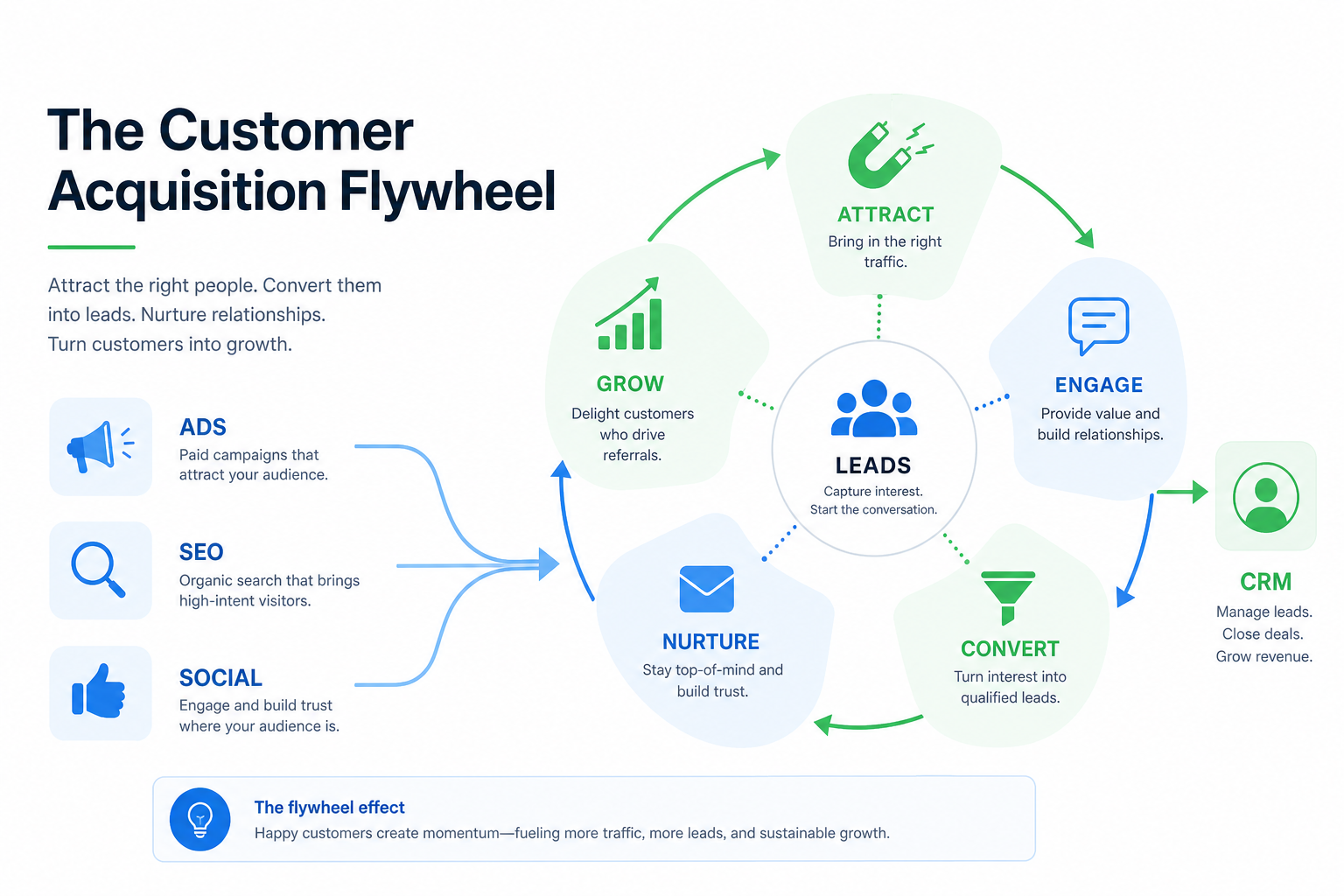
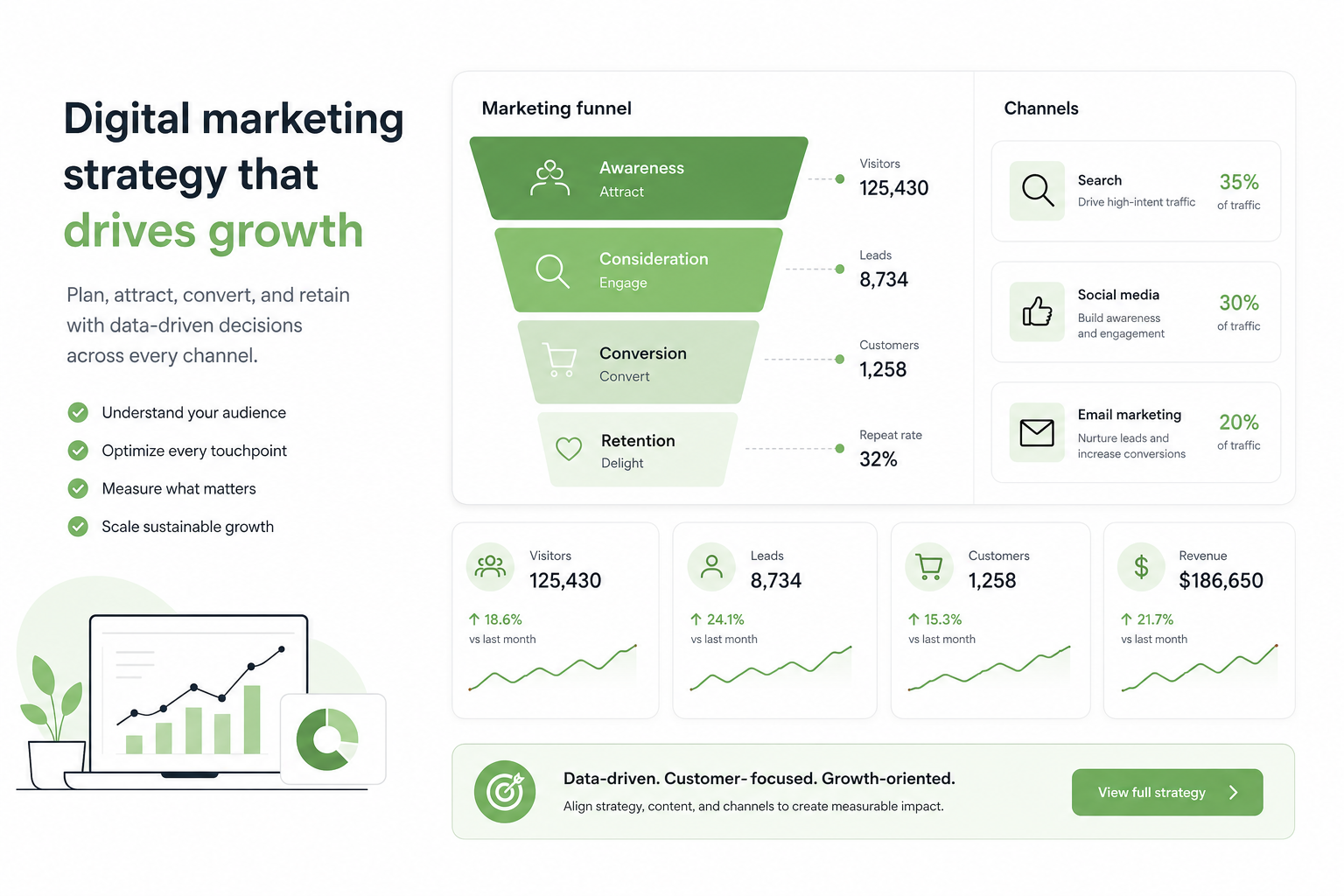
Channel mix assigns roles by funnel stage: Google Ads and Shopping capture ready demand, Meta builds demand and retargets, SEO and GEO produce organic traffic and trust, LinkedIn reaches B2B decision-makers. Three to five channels is enough for most — more spreads resources thin.
Channel choice depends on ICP: e-commerce needs Shopping + Meta catalog; B2B SaaS Search + LinkedIn + content; local service Local SEO + Search + Meta. See channel synergy for the big picture.
Strategy also defines what you do not do: e.g. TikTok if ICP is not there, or Display if conversion data is missing. "Not now" is a strategic choice.
Synergy beats silos: Meta introduces problem-aware audiences, SEO captures research queries weeks later, and Search closes when intent peaks. Shared UTM discipline and a common message make attribution clearer and budget moves to highest marginal return.
Review channel mix quarterly, not annually. A channel that was experimental last quarter may become proven; one that consumed budget with flat pipeline should shrink. Full Stack ownership means one team adjusts the mix — not three vendors defending their line items.
Budgeting and prioritization
Budget typically splits 70/20/10: 70% to proven channels, 20% to growth (new segments, scaling), 10% to experiments. The ratio shifts with maturity — startups may invest more in experiments, mature companies in capture.
Budget ties to the north star metric: e.g. new customers, MRR, or ROAS target. Monthly tracking + quarterly reallocation keeps budget aligned with business. Read budget allocation.
In AlgoTerra's Full Stack model, one team moves budget between channels based on data — not three separate agencies with their own ROAS targets.
Include media spend, tools, labour, and creative in budget planning — not ads alone. Underfunding landing pages or tracking while scaling media burns budget without learning. Tie line items to funnel stages so leadership sees why SEO gets steady investment while experiments get a capped slot.
Scenario planning helps: model a 20% budget cut and a 30% increase. Which channels survive? Which experiments pause? A framework with clear priorities survives downturns — not only growth years.
Full Stack execution: from strategy to practice
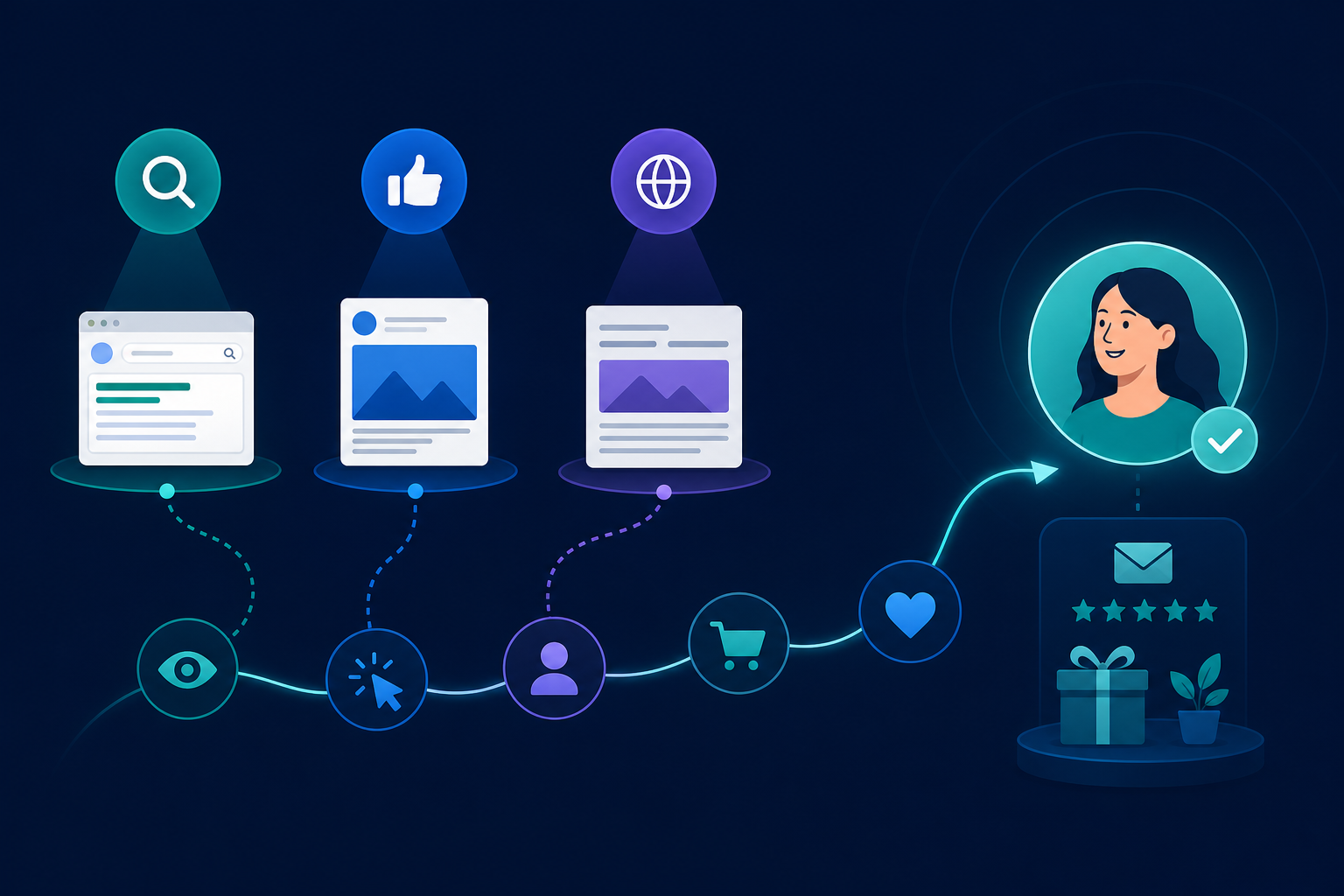
Strategy stays on paper without execution: tracking, content, campaigns, and reporting need resources. AlgoTerra Full Stack combines Google Ads, Meta, SEO, GEO, and strategic leadership — one owner, one dashboard, one truth.
Execution rhythm: weekly operational optimization, monthly channel coordination, quarterly strategic review (OKR/QBR). Strategy updates from data — not once a year on a shelf.
Start with a free audit: we map ICP, channel status, tracking, and quick wins. Then we build a 90-day roadmap to execute the strategy.
Handoffs kill execution: when SEO, paid, and creative live in separate vendors, message drift and duplicated work follow. Full Stack puts one strategist with channel specialists so landing copy matches ad promise and blog content supports retarget audiences.
We run weekly ad optimisations, monthly cross-channel reviews, and quarterly QBRs with leadership. That rhythm keeps the 2026 strategy alive — not a January deck forgotten by March.
Common strategy mistakes
We see these repeatedly in audits — and they slow growth for months. Most stem from skipping ICP and measurement before scaling spend.
- Channels before ICP → wrong audiences, high CAC
- Too many channels at once → resources scatter
- No north star metric → optimize ROAS, not revenue
- Strategy disconnected from sales → MQLs do not convert
- Budget locked to channels → marginal return unused
Frequently asked questions
What does a digital marketing strategy include?
ICP, message framework, channel mix, budget split, north star metric, funnel roles, measurement stack, and quarterly review rhythm. A 2–3 page actionable framework is enough for most companies.
How many channels do I need?
For most, 3–5 is enough: typically Search (+ Shopping for e-commerce), Meta, SEO/GEO, and for B2B LinkedIn or content. Depth and synergy beat channel count.
How do I tie budget to strategy?
Through the north star metric: budget serves the goal (customers, pipeline, revenue). 70/20/10 split to proven, growth, and experiments — reallocate quarterly based on data.
What is Full Stack marketing's role in strategy?
Full Stack means one team and owner for Google Ads, Meta, SEO, and GEO — budget moves between channels by marginal return, not separate agency reports.
Where do I start if I have no strategy?
Start with ICP and a current-state audit. AlgoTerra offers a free audit mapping channels, tracking, and quick improvements — then a 90-day roadmap.