New customer acquisition in e-commerce
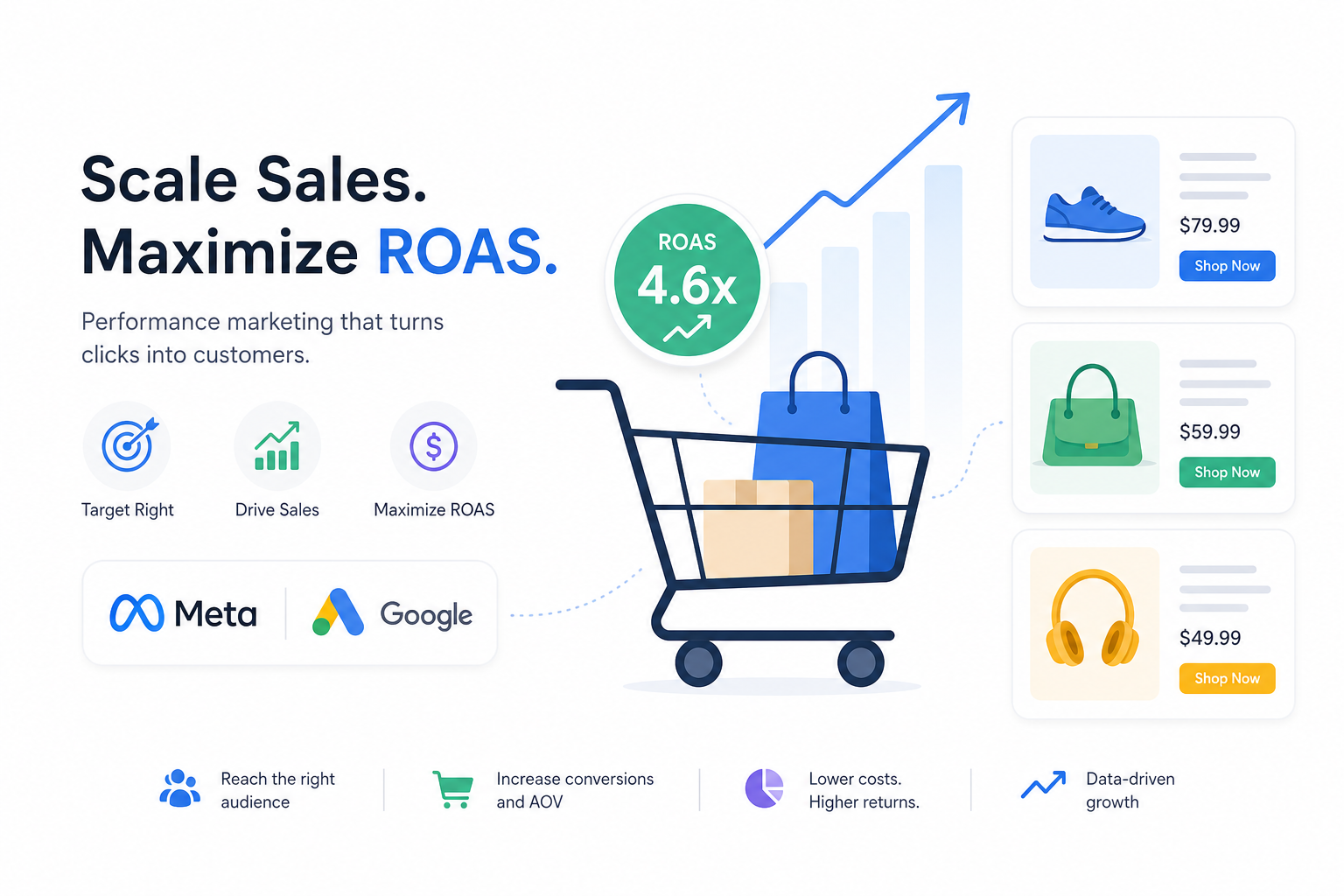
E-commerce acquisition focuses on product search and visual discovery: Google Shopping captures purchase intent, Meta catalog shows products to audiences and retargets. Search ads + social + retarget form the core.
Merchandising and marketing must align: promoting out-of-stock heroes in ads destroys ROAS and trust. Sync inventory flags to ad pauses or swap creative to in-stock alternatives automatically where platforms allow.
Feed quality is critical: titles, images, prices, and availability in sync. Bad feed = bad ROAS. Merchant Center and Meta Catalog need ongoing maintenance.
Promotional calendar integration: sync sale prices and custom labels before campaigns go live so ads never show stale discounts or full price during a sale event.
Conversion tracking: purchase event, value, product data. Without tracking you optimize clicks, not sales. See e-commerce Google Ads.
Product-level profitability drives growth: not every SKU should receive the same ROAS target. Hero products acquire customers; accessories and repeat purchases grow LTV. Split acquisition campaigns by margin tier before scaling spend.
Marketplace and comparison shopping extend reach but need margin discipline — track blended ROAS including fees and returns. Own-site growth marketing should still own brand search and retarget even when marketplaces sell volume.
Google Shopping and Performance Max
Google Shopping shows products in search and Display — high purchase intent. Performance Max (PMax) combines Shopping, Search, Display, and YouTube in one campaign.
PMax needs strong feed, conversion data, and assets (images, videos, copy). Start with standard Shopping if data is limited — move to PMax when conversions are sufficient.
Google Ads optimization: product groups by margin, negative keywords, quality score. ROAS target tied to product margin — not one ROAS for all products.
Supplemental feeds and custom labels unlock bidding strategy: label bestsellers, high-margin, clearance, and new arrivals separately. PMax asset groups should mirror those labels — not one bucket for the entire catalog.
Search query reports still matter inside PMax: export search terms, add negatives for irrelevant queries, and promote winners to dedicated Search campaigns when you need more control.
- Feed: titles, images, prices, GTIN
- PMax when conversion data sufficient
- Product groups by margin
- ROAS target per product
Meta catalog and Dynamic Ads
Meta catalog feeds products to Facebook and Instagram ads — Dynamic Product Ads show recently viewed products. Retarget is often e-commerce's most efficient channel.
Catalog + Lookalike for acquisition: lookalike from purchasers, catalog for cold traffic. Creative (images, videos) decides — same product, different ad can double ROAS.
Combine catalog with retarget segments: cart abandoners, product viewers, past purchasers. Meta Ads audit reveals segment potential.
Advantage+ catalog campaigns scale when pixel data is rich — purchase, add-to-cart, and view-content events feed the algorithm. Cold prospecting with catalog needs strong creative overlays; do not rely on product thumbnails alone.
Seasonal catalog pushes need refreshed creative: same SKU with holiday angle, bundle offer, or urgency copy outperforms year-round static ads during peaks.
Retention and customer value growth
New customer acquisition is expensive — retention (email, SMS, retarget, loyalty) grows LTV. Repeat customers are often 3x more valuable than first purchase.
Email automation: welcome, post-purchase, win-back, abandoned cart. Segmentation by purchase history. Retarget past purchasers with new products.
Budget split in mature store: roughly 70% acquisition, 30% retention — ratio shifts with growth stage. Measure LTV:CAC, not ROAS alone.
Post-purchase flows drive second orders: cross-sell related products, ask for review, then win-back at 60–90 days. SMS works for time-sensitive offers where email open rates fall.
Loyalty and subscription models change the math: acceptable new-customer CAC rises when repeat rate and subscription revenue are strong. Model 12-month LTV before setting acquisition ROAS floors.
Free shipping thresholds and bundle offers change AOV and ROAS together — test merchandising and ads as one hypothesis. A 10% AOV lift can fund higher CPC while keeping contribution margin stable.
Scaling and marginal return
Scale when marginal return is positive: last euro produces more than it costs. By product group: high-margin products tolerate aggressive ROAS target.
Cross-channel: Shopping + Meta + retarget — attribution shows which channel opened and which converted. Do not scale one channel before feed and tracking work.
AlgoTerra Full Stack combines Google Ads, Meta, and reporting — one ROAS view, one owner. Free audit maps feed, tracking, and scaling potential.
Growth reviews weekly: feed errors, disapproved products, top-SKU stockouts, and creative fatigue. Monthly: reallocate budget between Shopping, Meta, and retention based on marginal ROAS and new-customer count.
International expansion adds feed complexity — hreflang, currency, shipping, and local returns policy must be correct before scaling ads to new markets.
Creative testing cadence: refresh Meta catalog overlays and Shopping image tests every 4–6 weeks — fatigue hits e-commerce faster than B2B because audiences see product ads repeatedly.
Common e-commerce mistakes
We see these in e-commerce audits — often while ROAS looks acceptable on hero SKUs but overall profit is flat. Feed and margin fixes usually come before budget increases.
- Bad feed → Shopping and catalog fail
- Acquisition only → high CAC, low LTV
- One ROAS for all products → low-margin products lose
- No retarget → lost conversion potential
- Scale before tracking → budget burns
Frequently asked questions
Which channels for e-commerce?
Google Shopping (+ PMax), Meta catalog, retarget. Feed quality and conversion tracking first.
How do I scale ROAS?
When marginal return is positive, feed solid, and tracking works. ROAS target by product group based on margin.
Why is retention important?
New acquisition is expensive — repeat customers 3x more valuable. Email, retarget, loyalty grow LTV.
Shopping or PMax?
Standard Shopping if data limited. PMax when conversions sufficient for optimization.
How does AlgoTerra help e-commerce?
A free audit covers feed, tracking, Shopping, and Meta. Full Stack combines channels and ROAS reporting.