What E-E-A-T means and why it matters
E-E-A-T isn't a ranking signal on its own — it's a quality framework Google's Quality Raters and algorithms use to assess whether content is trustworthy and useful. In 2022 Google added Experience — the first E — emphasizing that authors must have lived experience in the topic, not just read about it.
E-E-A-T matters especially for YMYL sites (Your Money Your Life): health, finance, legal, safety. But B2B services, SaaS, and expert content benefit from the same principles: Google and AI search engines favor sources with demonstrable expertise.
E-E-A-T builds over time — it doesn't come from one article. Consistent content, external mentions, clear author profiles, and technical trust (HTTPS, contact info, privacy policy) form the whole.
Experience — first-hand knowledge
Experience means the content creator has real-world experience in the topic — not just research. In product reviews, that means you tested the product. In service guides, that you've worked with clients in the same situation.
Show experience concretely: case studies, your own metrics, before/after examples, process descriptions you couldn't write without work experience. "We've audited 50+ Google Ads accounts" beats "Google Ads is important."
Author profiles support experience: photo, role, LinkedIn link, publications, and certifications. A person page (About the author) on every article is minimum for YMYL and expert content.
Expertise — depth in the subject
Expertise measures deep knowledge in a specific topic area. One broad "marketing" article isn't enough — you need in-depth articles on subtopics (Google Ads RSA, E-E-A-T schema, link building outreach).
Expertise shows in terminology, structure, and depth: you explain why, not just what. You cite primary sources (Google documentation, research). You avoid generalizations anyone could write with ChatGPT.
Content strategy supports expertise: topic clusters prove you cover the whole subject, not a single keyword. See the content strategy guide for building the full picture.
- In-depth articles on subtopics (not just surface overviews)
- Primary sources and citations
- Consistent terminology and updated content
- Topic clusters (hub + spoke structure)
- Mixed formats: guides, checklists, case studies
Authoritativeness — external recognition
Authoritativeness means others recognize you as an authority in the topic — backlinks, brand mentions, citations, and media appearances. It differs from Expertise: you can be an expert without the industry recognizing you.
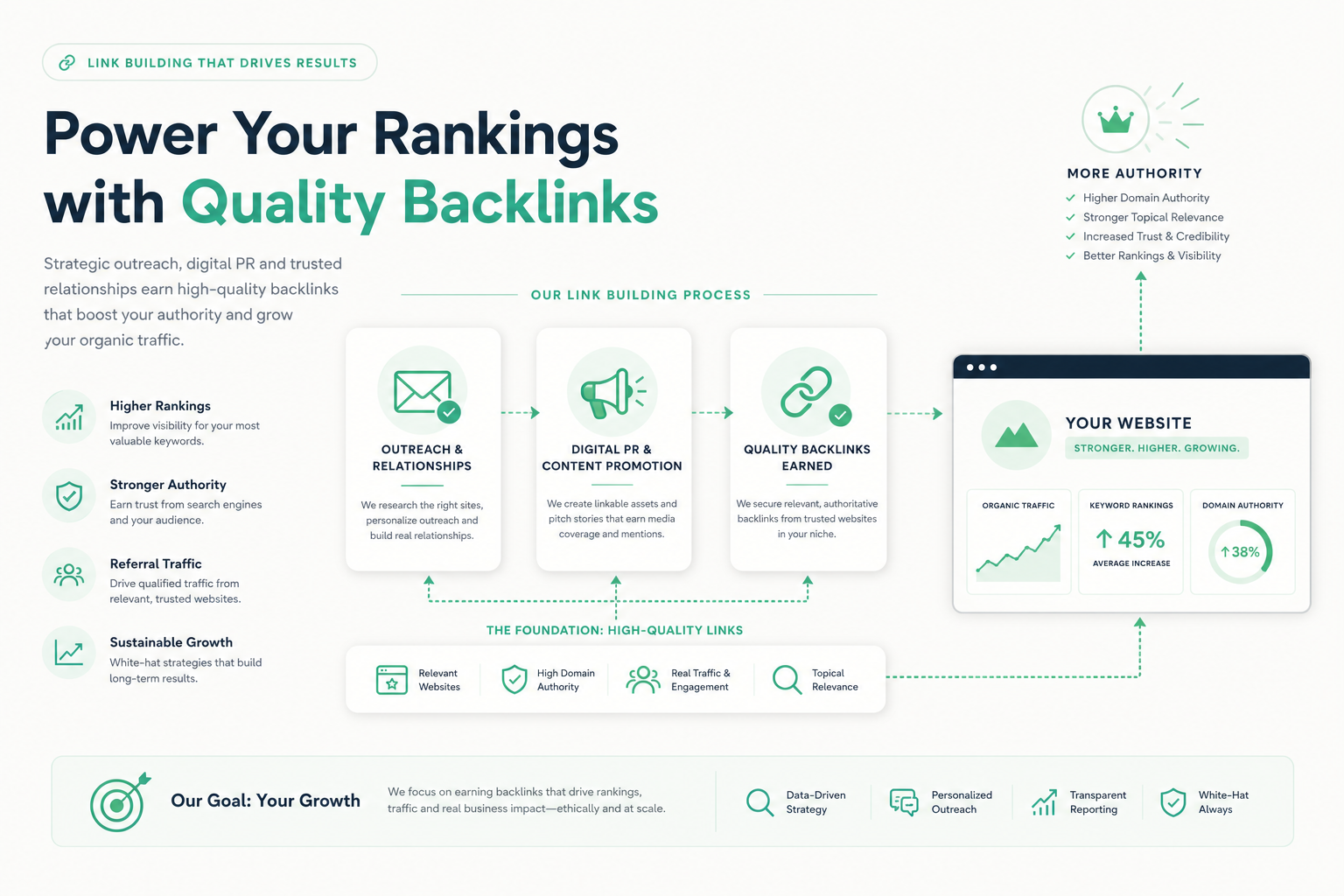
Link building is the core of Authoritativeness. Quality backlinks from relevant sites, guest posts in industry publications, and unlinked brand mentions strengthen your position. See the link building SEO guide.
Brand entity supports authority: clear organization page, Organization/Person schema, consistent NAP (name, address, phone), and activity on industry forums and LinkedIn.
Trustworthiness — safety and transparency
Trustworthiness is the foundation of E-E-A-T: without trust, other pillars don't help. Users and Google assess: is the site safe, honest, and transparent?
Technical trust: HTTPS, fast load, no malware, mobile-friendly. Content trust: clear contact info, privacy policy, cookie policy, support channels. Commercial trust: honest pricing, return policies, reviews.
In YMYL content, trust is critical: health and finance advice needs physician/financial professional review, source lists, and update dates. Stale content weakens the Trustworthiness signal.
E-E-A-T in practice: checklist and common mistakes
E-E-A-T is an ongoing process, not a one-time task. Here's a practical checklist and mistakes we see in audits.
- Add author profile to every article (photo, bio, credentials)
- Update stale content — show dateModified in schema
- Build topic clusters, not isolated keyword articles
- Earn quality backlinks — don't buy links
- Show concrete experience with case studies and your own data
- Ensure technical SEO: HTTPS, speed, schema — see technical SEO guide
Frequently asked questions
Is E-E-A-T a direct ranking signal?
E-E-A-T isn't a single ranking signal but a quality framework. Its elements (trust, expertise, backlinks) do affect rankings and AI citations.
What does YMYL mean?
Your Money Your Life — sites that affect user health, finances, safety, or wellbeing. These sites face the highest E-E-A-T requirements.
How does Experience differ from Expertise?
Experience = first-hand knowledge (you've done/tested it). Expertise = deep subject knowledge (you may have studied without direct experience). Both matter.
Does E-E-A-T help AI search visibility?
Yes. AI search engines cite sources with strong authority and trust — the same principles as E-E-A-T. Brand entity and structured data support GEO.
Do I need a doctor/financial professional for YMYL content?
Recommended for health and finance content. At minimum: clear disclaimer, professional review, and primary sources. Generic content without an expert is a risk.