Local pack vs. organic results vs. ads
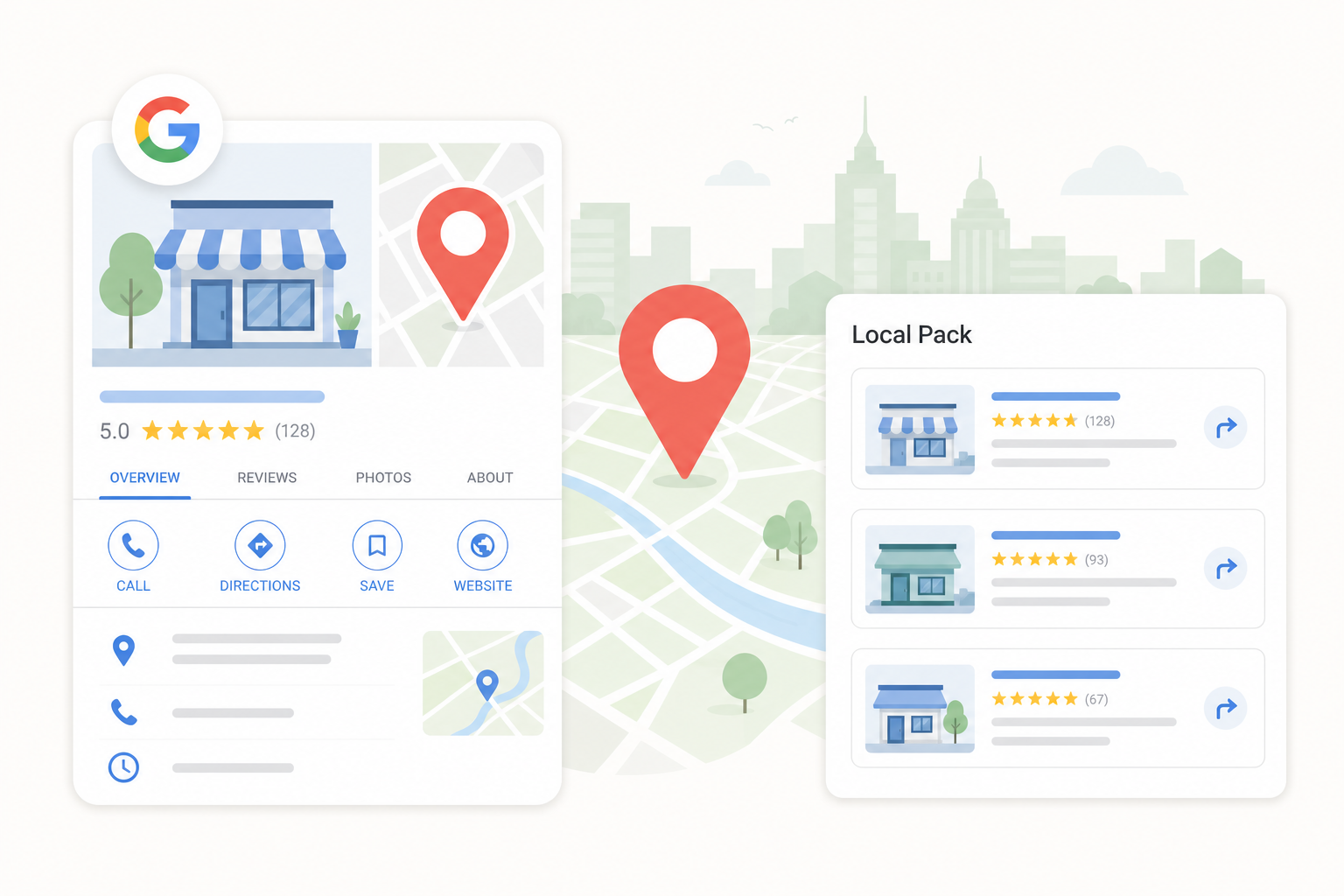
Local search produces three visibility layers: local pack (map + three businesses), organic results, and paid ads. The local pack is often the first thing users see — so GBP optimization is critical.
Organic results show websites with strong local relevance: city pages, service areas, and content that matches local intent. Ads (Local Services Ads, Search) complement, but organic local pack doesn't require ad budget.
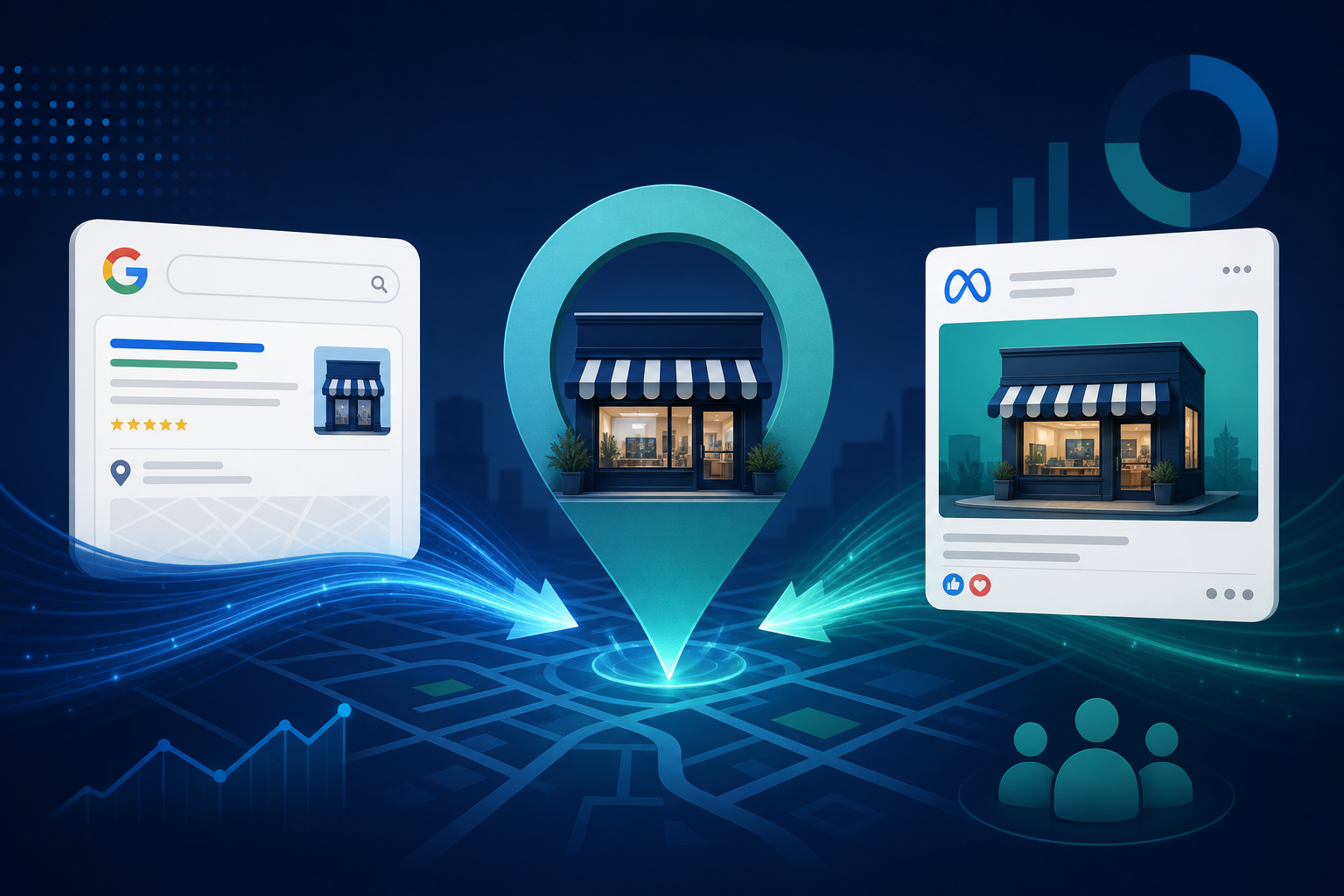
Local SEO and local advertising work best together: GBP builds trust and visibility, the site converts traffic, ads capture demand when organic isn't enough. Don't leave GBP to ads alone.
Google Business Profile optimization
GBP is Google's free business listing: address, hours, phone, photos, services, and reviews. A complete profile improves local pack ranking and customer trust before the click.
Choose the most specific primary category and add relevant secondary categories. Fill the services list with concrete offerings (not just "services"). Add quality photos: exterior, interior, team, work samples — profiles with photos get more actions.
Publish GBP updates regularly: offers, new services, seasonal messages. An active profile signals to Google that the business is live and relevant. Ensure website link, phone, and address match the site.
NAP, schema, and local pages
NAP (Name, Address, Phone) must be identical everywhere: site footer, contact page, GBP, directories, and social. Inconsistency weakens Google's trust in your location.
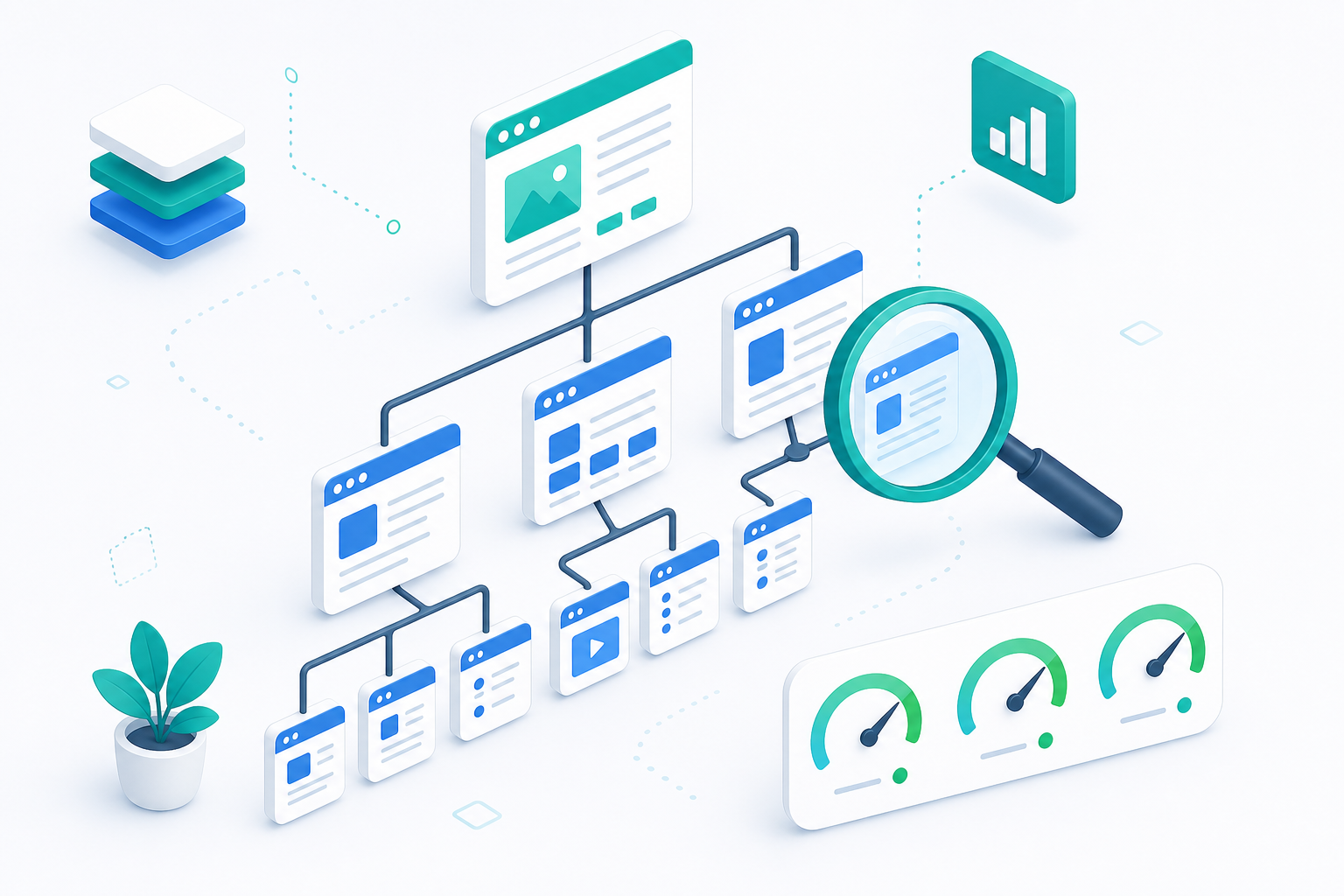
Build local landing pages by service area: "/service/helsinki", "/location/tampere" — unique title, local content, clear CTA. Don't copy the same text for every city; Google penalizes thin content.
LocalBusiness schema (JSON-LD) reinforces local identity. Align schema with GBP: same address, phone, hours. See also schema markup for GEO for broader structured data.
- Identical NAP on site, GBP, and directories
- Local pages by service area — unique content
- LocalBusiness schema on contact pages
- Internal links from local pages to services
Reviews and responses
Review count and average rating affect local pack ranking and customer decisions. Ask satisfied customers systematically — email, SMS, or QR after visits. Don't buy fake reviews; Google penalizes them.
Reply to all reviews: thank positive ones, handle negative professionally and offer resolution. Responses are public and build trust. A well-handled negative review beats silence.
Track review trends monthly. A falling average is a warning before it hits revenue. Integrate review requests into CRM or billing workflows.
Local content and keyword research
Local keyword research focuses on "service + city" combinations: "dentist Helsinki", "plumber Tampere". Use Google Search Console to see which local queries you already rank for.
Blog and FAQ on local topics build expertise: "When to replace a heat pump in [city]?" — not keyword stuffing, but real local value. Pair with search intent research.
Brand searches ("company name") are a local SEO health check. If brand search doesn't return GBP and site at the top, fix fundamentals before chasing generic local terms.
Metrics and tracking
GBP Insights provides direct metrics: profile views, website clicks, calls, direction requests. Track monthly and compare seasonality.
Search Console plus local keywords show organic visibility trends. Combine with advertising data (local digital marketing) for the full picture.
Frequently asked questions
What is the difference between local SEO and Google Business Profile?
GBP is Google's listing and the foundation of the local pack. Local SEO extends optimization to your website (local pages, NAP, schema, content) and other signals. Both are needed for best visibility.
How many reviews do I need for the local pack?
No fixed minimum — it depends on local competition. Aim for more and better average than nearby competitors. A quality review request process matters more than a single number.
Do I need a separate page for each city?
Yes, if you actively serve multiple areas. Each page needs a unique title, local content, and clear CTA. Thin duplicated content doesn't work.
Does local SEO matter for ecommerce?
Yes, if you have a physical location or pickup point. Pure online stores without local presence benefit less from the local pack but can still optimize regional content by delivery area.
How does local SEO relate to GEO?
AI search often cites local sources ("best [service] in [city]"). Strong GBP, reviews, and clear local content improve citation chances in generative search engines.