Why schema helps Google and AI engines
Schema.org vocabulary describes entities in machine-readable form: company, person, article, FAQ, product, service. Google uses it for rich results and understanding; AI search engines benefit from clear structure when identifying citable blocks.
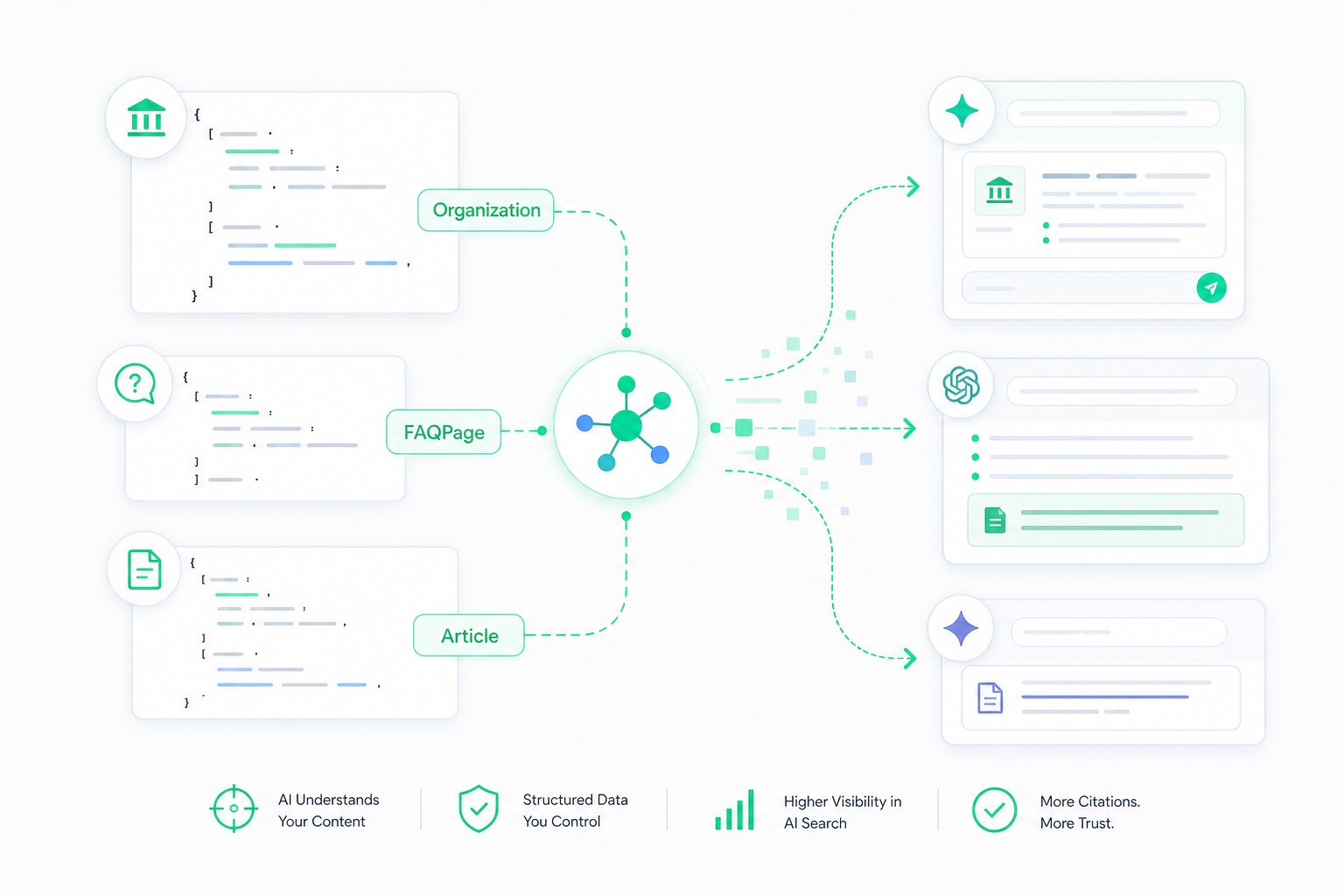
GEO doesn't replace schema — it extends it. When content is structured as FAQ and marked with FAQPage schema, AI engines more easily extract Q&A pairs as sources. The same applies to brand reinforced with Organization schema: clear entity = better mention.
Schema doesn't guarantee citation, but without it you leave advantage on the table. Pair schema with citable content and technical foundations.
Organization, Person, and brand entity
Organization schema defines your brand: name, logo, URL, social profiles, contact. It strengthens brand identity in GEO and helps AI engines attribute content to the right company.
Person schema fits expert articles and thought leadership: author, jobTitle, sameAs (LinkedIn). Link to Article schema via author — an E-E-A-T signal for Google and GEO.
Keep data consistent everywhere: schema, site, GBP, social. Conflicting names or URLs weaken trust.
FAQPage and HowTo — citation potential
FAQPage schema marks question-answer pairs. It directly supports FAQ page GEO strategy: accordions and clear Q&A blocks + schema = easy-to-cite source.
HowTo schema fits process guides: step-by-step instructions AI can cite for "how" queries. Ensure visible content matches schema — Google penalizes inconsistency.
Don't mark non-Q&A content as FAQ schema (e.g. marketing copy styled as questions). Quality over quantity.
Article, Service, and B2B pages
Article schema (or BlogPosting) specifies title, author, datePublished, dateModified — important for freshness and authority. On blog posts, schema aligns with BlogPosting structure in your site schema layer.
Service schema describes offerings: serviceType, provider, areaServed. For B2B service companies it clarifies what you offer to search engines and AI. Combine with LocalBusiness on local pages.
Product schema for ecommerce; SoftwareApplication may fit B2B SaaS product pages. Choose the most specific type — generic WebPage is weakest.
- BlogPosting / Article — guides and posts
- Service + Provider — service pages
- LocalBusiness — local presence
- SoftwareApplication — SaaS product pages
Validation, errors, and maintenance
Test schema with Google Rich Results Test and Search Console (Enhancements). Fix critical errors: missing required fields, wrong type, conflicting data.
Common mistakes: duplicate schema on one page, stale dateModified, FAQ schema without visible FAQ content, Organization without logo or url.
Schema is a living layer: update dateModified on article changes, add new services to Service schema, remove deleted pages from sitemap and schema.
Schema + llms.txt + content strategy
Schema says what a page is; llms.txt guides AI crawlers to priority URLs; content strategy produces citable material. Three layers together strengthen GEO visibility.
Prioritize pages: services, FAQ, methodology, case results (with permission). Mark them with schema and list in llms.txt. Track with Share of Voice audits.
Technical SEO (technical SEO) ensures crawlers reach content — schema and content don't help if the page doesn't index.
Frequently asked questions
Does schema help GEO visibility?
It improves citation potential by structuring content in machine-readable form. It doesn't guarantee mentions, but without schema and clear structure, competition is harder.
JSON-LD or microdata?
JSON-LD is Google's recommendation: separate script block, easier to maintain and validate. Inline microdata in HTML is less common in new implementations.
Does every page need schema?
On key pages yes: homepage (Organization), services (Service), articles (Article/BlogPosting), FAQ (FAQPage). Thin utility pages often need only WebPage.
How does FAQ schema relate to FAQ pages in GEO?
Visible Q&A on the FAQ page must match FAQPage schema. The combination is one of the strongest GEO formats for "how" and "what" questions.
Can schema hurt?
Misleading or spammy schema can lead to rich result penalties. Mark only truthful, visible content and keep data up to date.