OKR vs. KPI — different roles
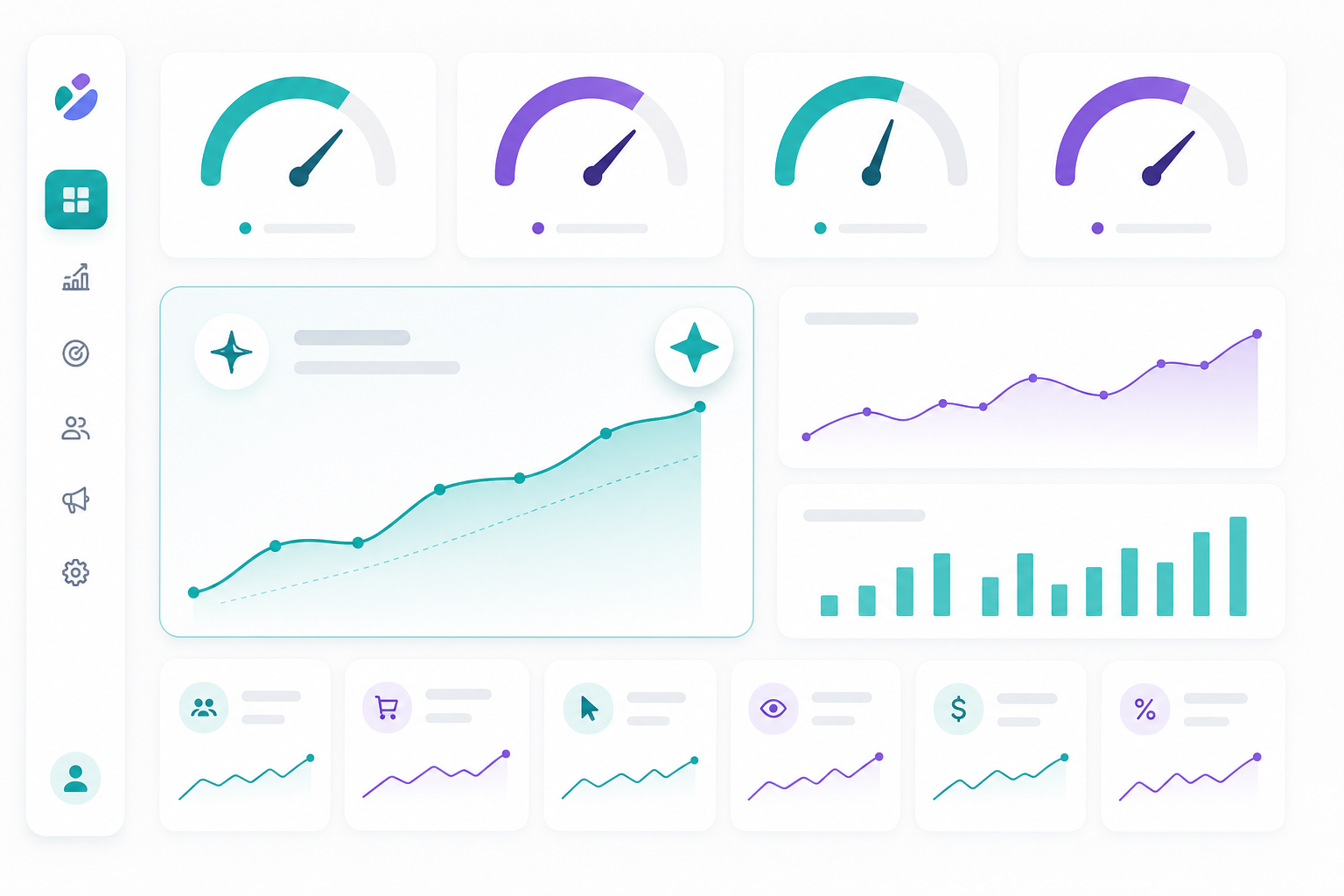
KPIs are ongoing health metrics: CAC, ROAS, organic traffic, lead volume. They show if the engine is healthy. OKRs are quarterly focus: what we change or achieve in the next 90 days — an ambitious objective and 2–4 measurable key results.
KPIs without OKRs optimize without direction. OKRs without KPIs set goals you don't track operationally. Best combo: OKRs set quarterly priorities, KPIs monitor daily health.
Example: KPI = monthly ROAS 4:1. OKR = Objective "Grow B2B pipeline in Q3", Key Results: +40% qualified leads, 3 new case pages, CAC stays below €X.
Strong vs. weak marketing OKRs
A strong OKR is ambitious but measurable, team-owned, and tied to business — not "improve SEO" but "grow organic lead volume 30% in Q2" with three concrete key results.
A weak OKR is a task list ("publish 12 blogs"), too easy (100% in week one), or a KPI renamed ("ROAS 5:1" without context).
- Strong: O = Grow brand search share of voice in GEO | KR = +25% mentions, 5 FAQ pages, top-3 in Perplexity in 2 categories
- Strong: O = Scale profitable Meta lead gen | KR = CPL -15%, SQL rate +10 pp, CAPI qualified events live
- Weak: O = Do marketing | KR = post on social, keep channels active
- Weak: O = Improve ROAS | KR = ROAS goes up (KPI only, no change)
Channel vs. business objectives
Business OKRs (pipeline, revenue, market entry) connect marketing to sales and leadership language. Channel OKRs (Google, Meta, SEO) fit execution teams — but must link to higher-level objectives.
Example chain: Business O = "Reach €2M pipeline Q4" → Marketing O = "Deliver 200 SQLs" → Channel KR = "Google Search CPA -20%", "Meta qualified leads +50".
Avoid conflicting channel OKRs without a shared objective. Budget allocation follows OKR priorities.
QBR → OKR → weekly rhythm
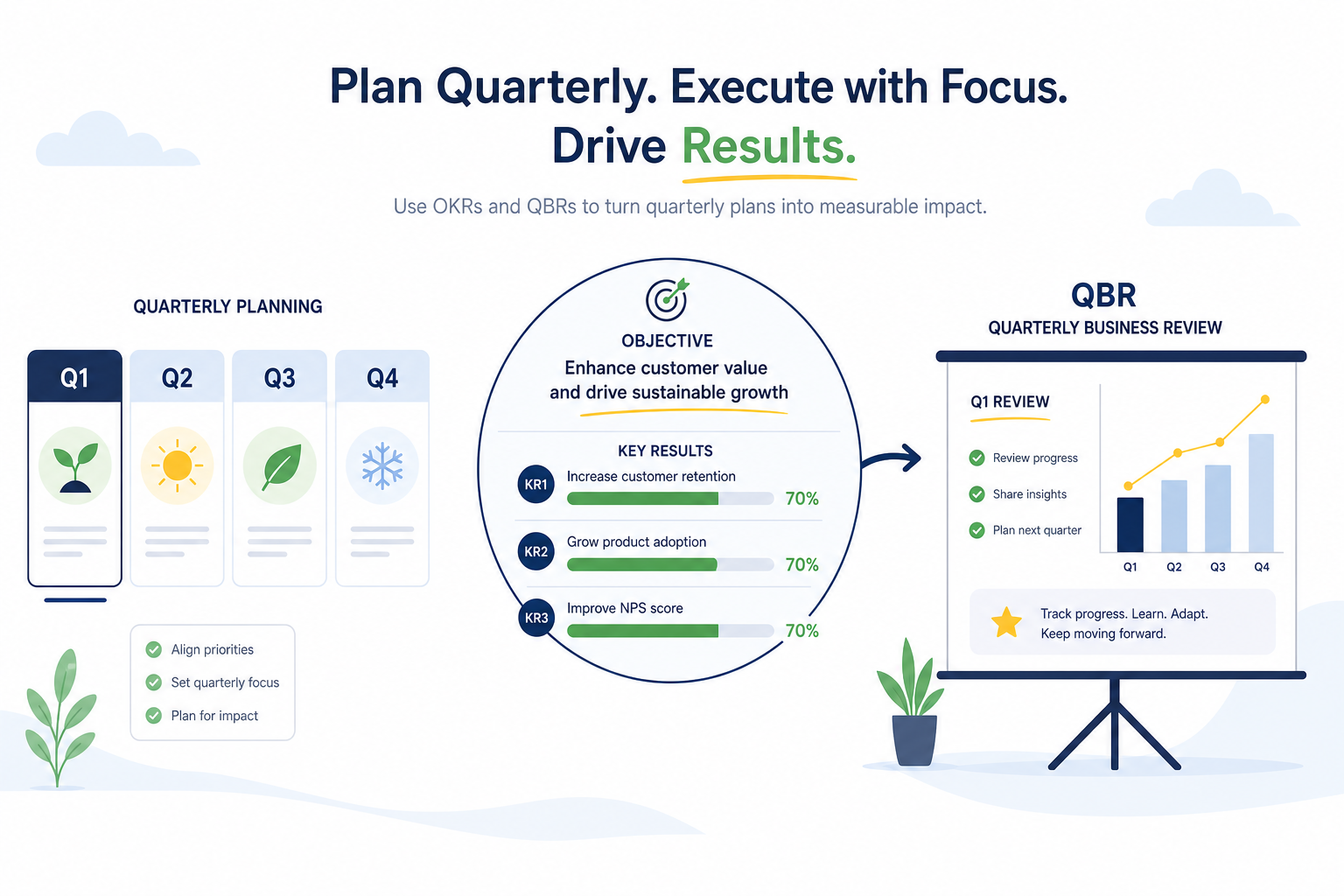
The quarter starts with OKR planning: business target from leadership, marketing proposes OKRs and resources. Weekly, track key result progress — not just the KPI dashboard.
QBR at quarter end reviews OKR achievement (0–100%), learnings, and next quarter OKRs. The QBR deck builds around OKRs, not hundreds of KPI slides. See the QBR guide.
A fractional CMO or marketing director owns the OKR process: facilitates planning, ensures metric quality, and reports in QBR.
When OKRs are enough vs. when you need a CMO
In a small team, OKRs plus weekly rhythm can suffice if someone owns the process (founder or fractional CMO). In growth phase without an owner, OKRs stay on paper.
In scale-ups, OKRs align a growing team and multiple channels. Often you need a fractional CMO or hired leader to maintain OKR discipline.
OKRs don't replace strategy — they operationalize it. Without clear positioning and ICP, OKRs optimize efficiently in the wrong direction.
Common marketing OKR mistakes
These repeat in marketing team OKR processes.
- Too many OKRs → no focus
- OKR = task list → no measurable change
- No link to business → CEO doesn't understand
- 100% achievement every quarter → goals too easy
- No process owner → OKRs forgotten by February
- Only channel KPIs as OKRs → no big picture
Frequently asked questions
How many OKRs should marketing have?
3–5 per quarter. Less is more — each objective with 2–4 key results.
What is the difference between OKR and KPI?
KPIs track ongoing health (ROAS, traffic). OKRs define quarterly change goals and measurable key results to achieve them.
How do OKRs relate to QBR?
QBR reports quarterly OKR achievement, learnings, and next quarter plan. OKRs are the QBR backbone — not a detached KPI list.
Do OKRs work for small companies?
Yes, simplified. Even one business OKR and 2–3 KRs is enough to start with weekly tracking.
Who owns marketing OKRs?
CMO, fractional CMO, or marketing director facilitates. Leadership approves objectives — marketing proposes key results and reports achievement.