Why product page SEO is critical
The product page is often the first touch from search — and the last before purchase. It competes with marketplaces, competitors, and your own category pages for the same product queries.
Product page SEO is not separate from conversion optimization: a clear title, trustworthy schema, and quality reviews improve both CTR in results and trust on the page.
Every product page is its own landing page. In a scalable store, templates and automation are mandatory, but strategic products need manual fine-tuning.
Start from the ecommerce SEO guide and go deeper into product-level details here.
The title sells the click
Title, H1, and meta description
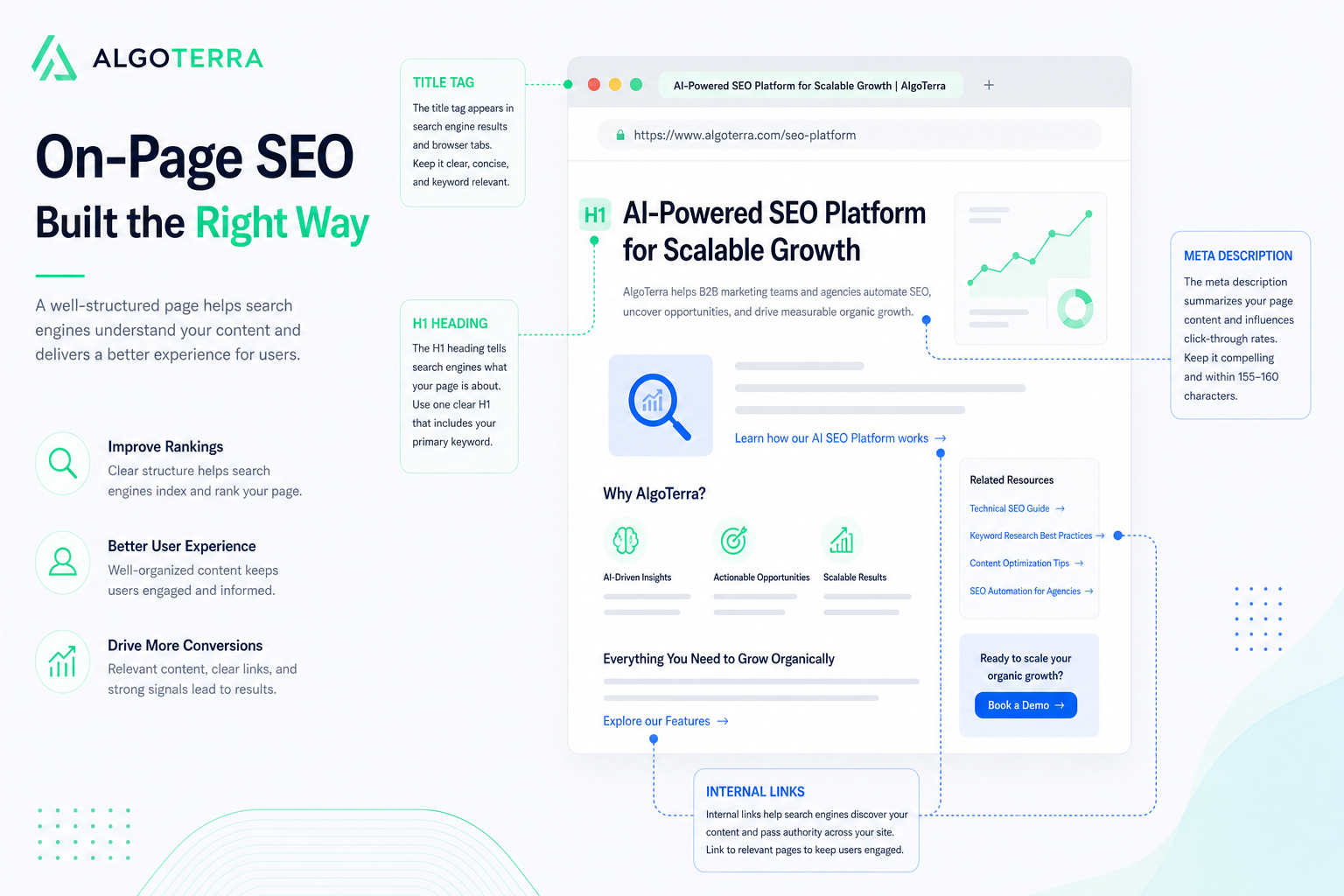
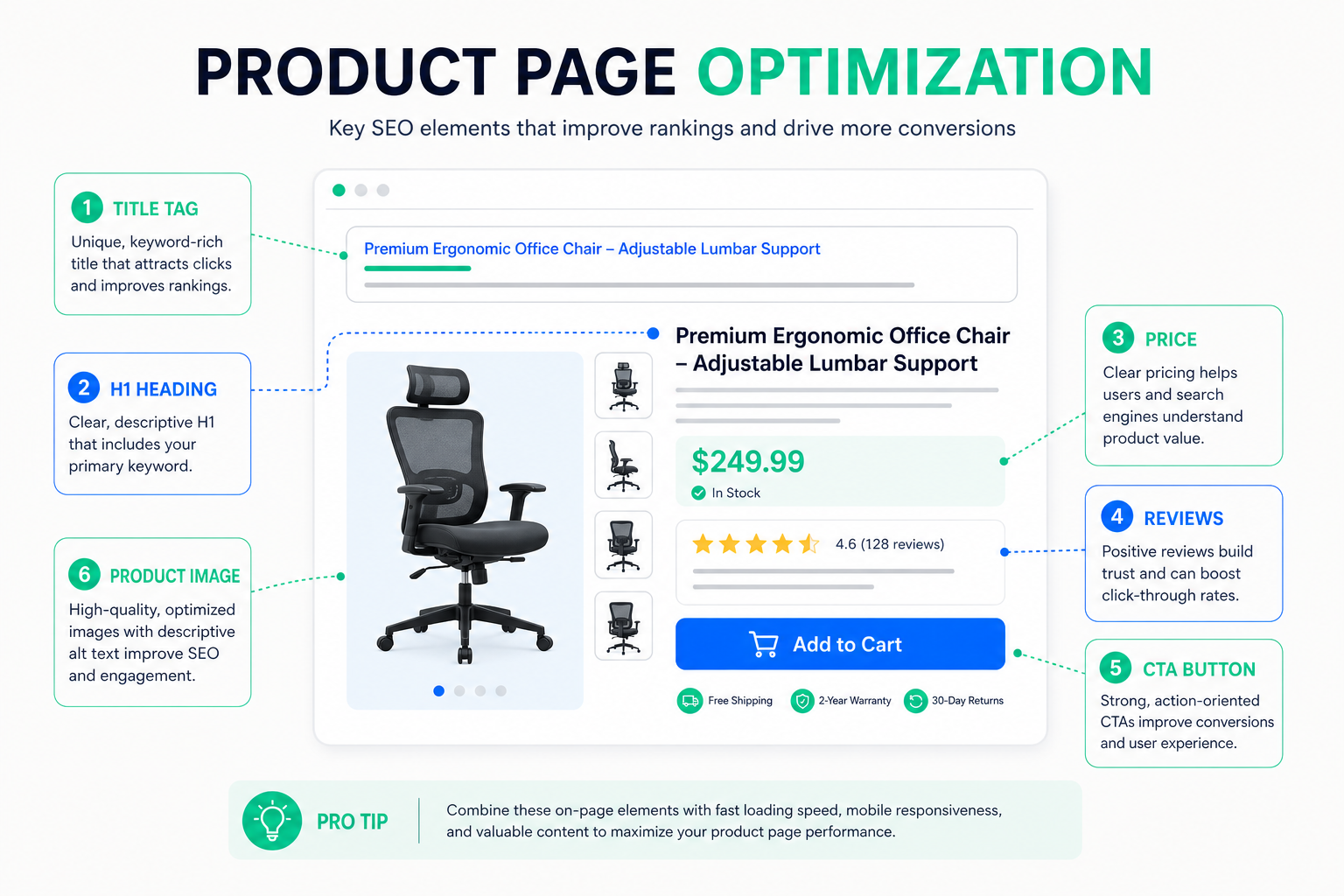
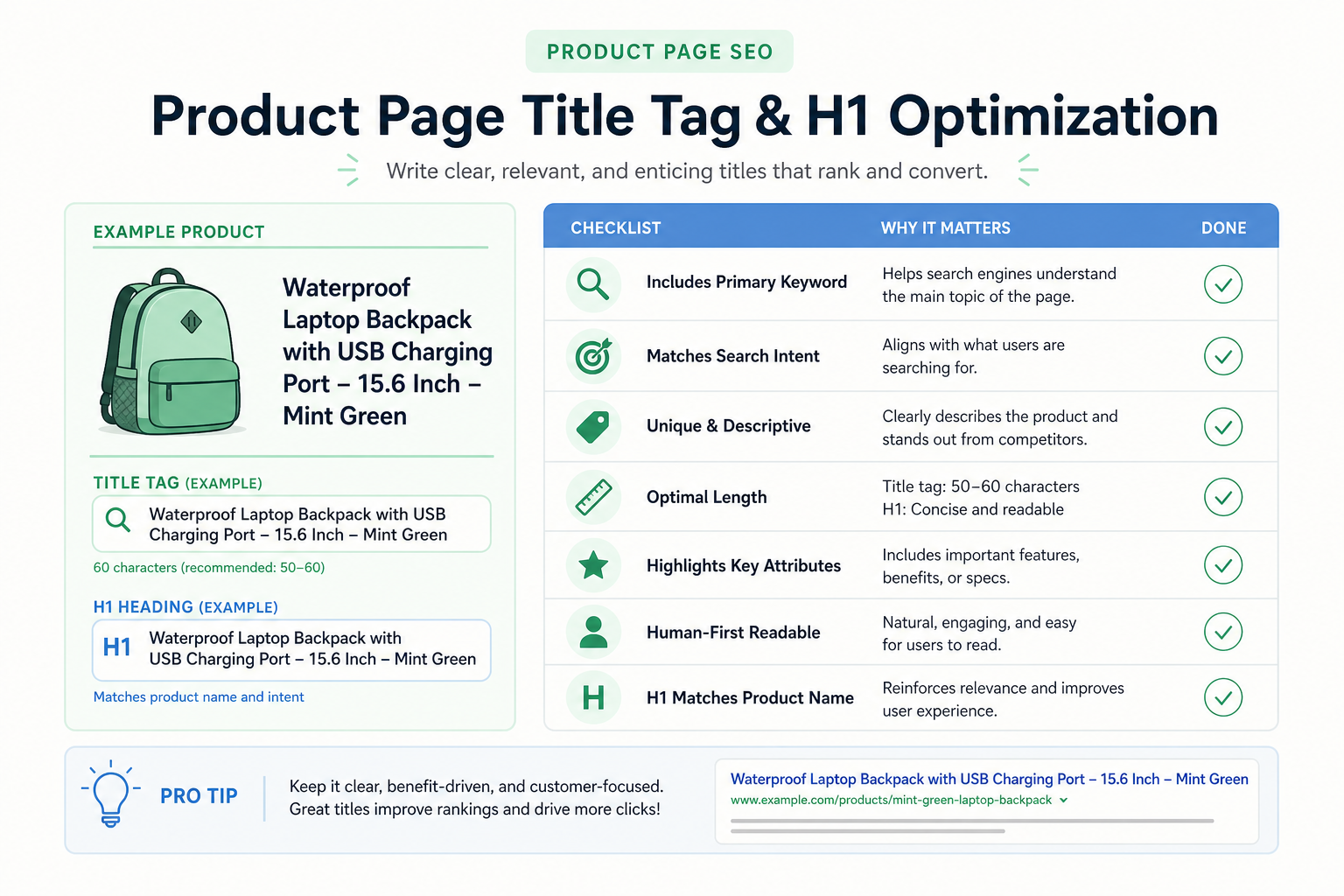
Build the title: Brand + product name + key attribute (e.g. size, color, or use case). Keep under 60 characters so it does not truncate on mobile.
The meta description does not directly affect ranking but improves CTR. Include price, delivery, or warranty if they differentiate you from competitors.
H1 is usually the commercial product name. Avoid keyword stuffing — one main keyword naturally is enough. Read on-page SEO 2026 for heading principles.
Test different title formats in Search Console: high impressions and low CTR point to a weak title.
- Title: brand + product + attribute, max ~60 chars
- Meta: USP and CTA, not a duplicate of title
- H1: clear product name, one H1 per page
- Monitor CTR in Search Console
Content and uniqueness
Manufacturer copy alone is not enough. Add your own intro: who the product is for, how it differs, and what problem it solves. Aim for 100–200 words on strategic products.
Use subheadings (H2/H3) for specs, dimensions, and usage. Lists and tables improve scannability and can earn featured snippets.
An FAQ section on the product page answers long-tail questions and supports FAQ schema. Copy questions from customer support FAQs.
Thin content weakens the whole domain — expand or merge near-identical products. The ecommerce SEO guide covers duplicate control.
Images, alt text, and LCP
Product images are often the LCP element. Optimize the first image (WebP/AVIF, correct size), lazy-load the rest of the gallery.
Alt text describes the product accurately: "Blue women's party dress, long hem" — not "image1.jpg". Helps image search and accessibility.
Name files descriptively (product-color-angle.webp). Structured data can reference multiple Image objects.
Product schema in practice
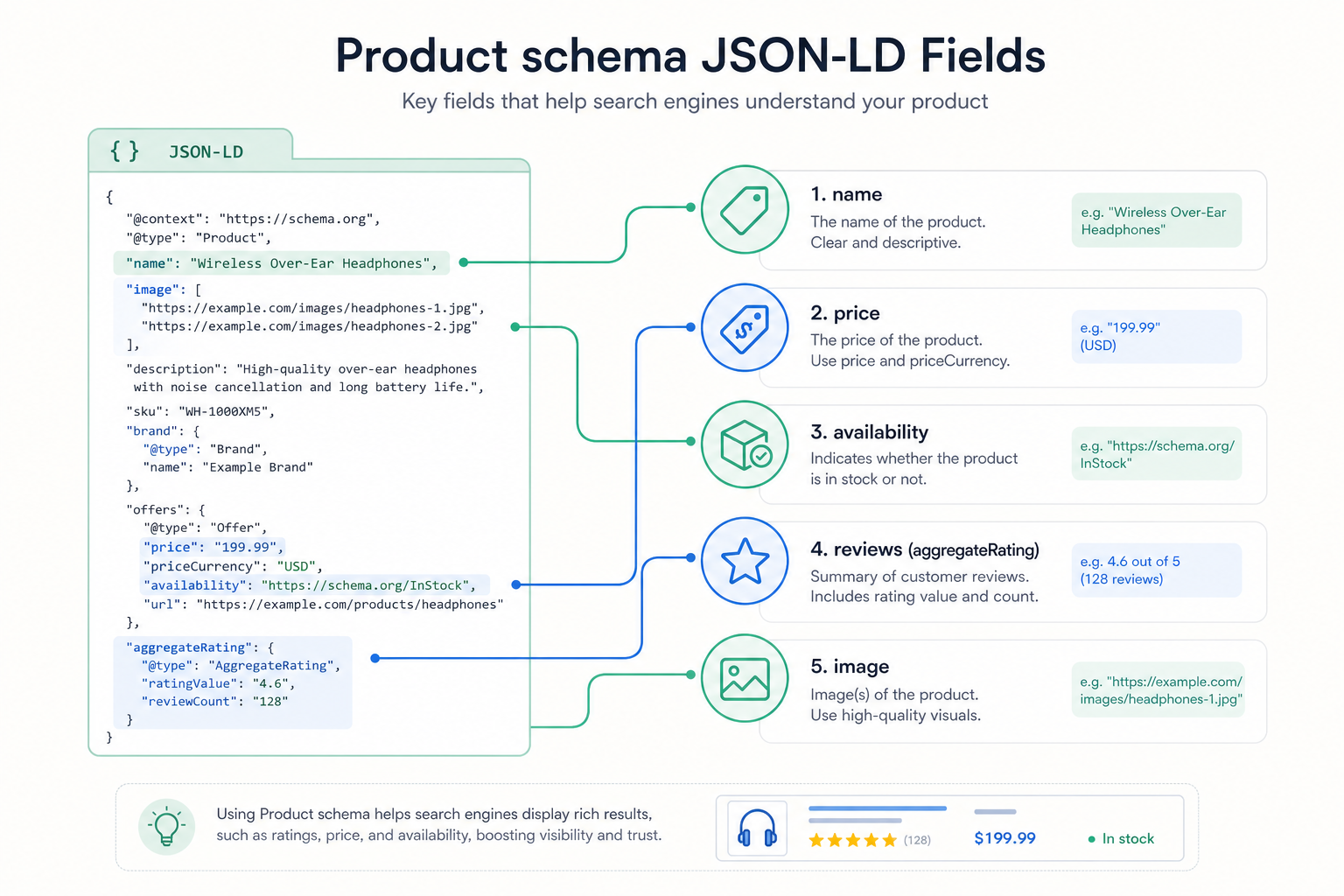
Mark up Product + Offer: name, image, description, sku, brand, price, priceCurrency, availability. Keep in sync with inventory.
AggregateRating when you have enough reviews. Review schema for individual reviews strengthens trust.
Validate with the Rich Results Test and monitor errors in Search Console. Wrong price can cost you rich results.
Deeper background: schema markup guide.
Reviews and user-generated content
Reviews are both a conversion and SEO signal. Show them on the page and mark them in schema — do not hide them only behind a widget without HTML.
User photos and videos enrich content and increase time on page. Moderation prevents spam indexing.
Respond to negative reviews professionally — it is also a trust signal for searchers.
Internal linking and related products
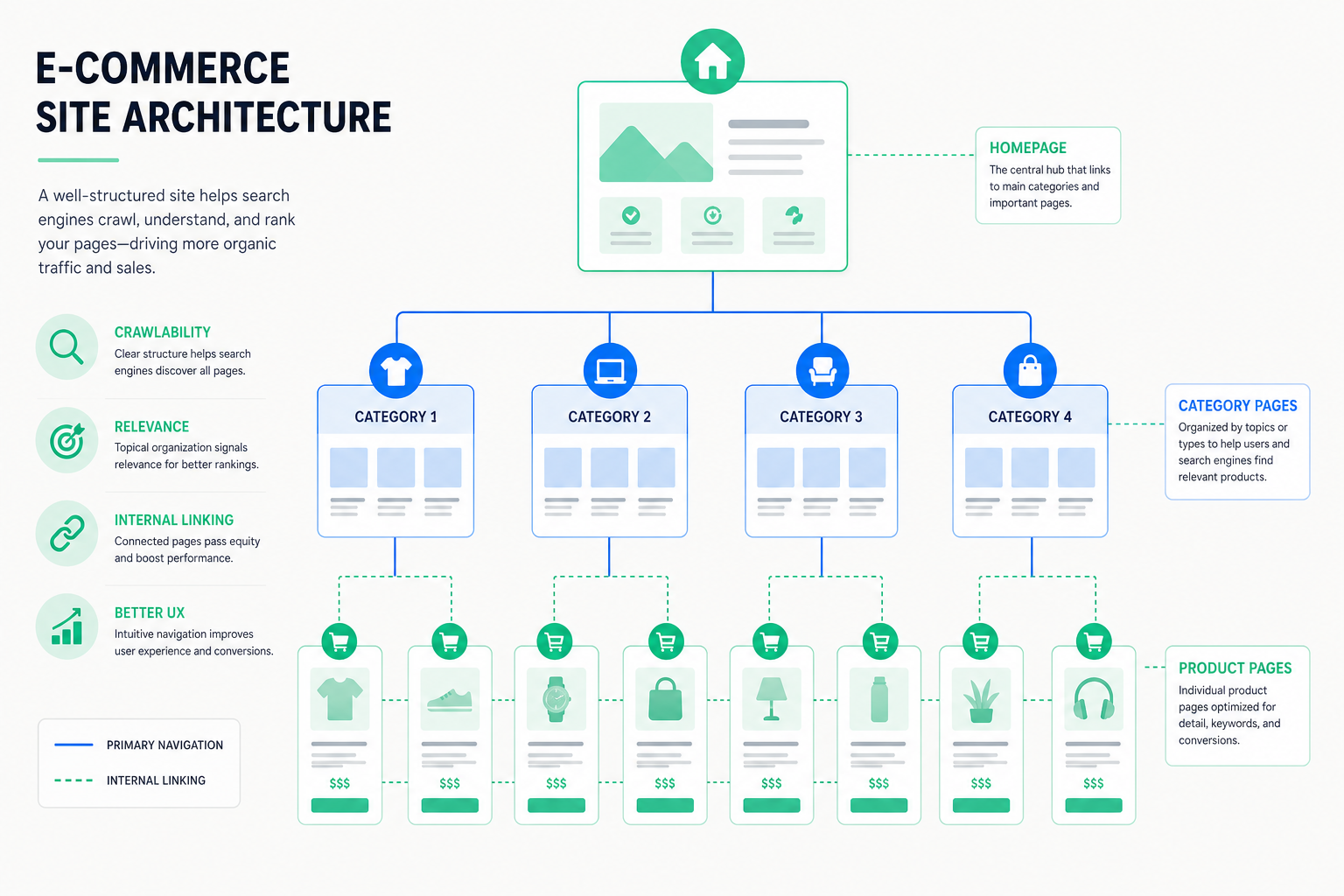
Link from the product page back to the main category and related products. Breadcrumb + related-products block distributes link equity.
Anchor text describes the target: "women's party dresses" not "click here".
Cross-sell and up-sell products are natural internal links — ensure they are crawlable HTML links.
Variants, URLs, and canonical
Color and size variants: either one URL with options (recommended) or separate URLs only if there is search demand and unique content.
Set canonical to the main version if parameters create duplicates. Avoid session IDs in URLs.
hreflang for multilingual product versions. Same logic as in the ecommerce SEO guide.
Product page SEO in numbers
Conversion and SEO together
Product page SEO must not mean keyword stuffing at the expense of the buy button. Search engines and users reward clear hierarchy: title, price, CTA, details.
A/B test title and meta based on Search Console data — high impressions and low CTR mean the result promise is not met. A title change can lift traffic without rank improvement.
Product page speed is a conversion factor: every second of delay lowers add-to-cart. Optimize the first image and critical CSS before adding new widgets.
Track organic traffic conversion separately from paid — product page value is measured in sales, not just sessions.
Bulk production vs. manual optimization
In large stores you cannot optimize every product manually. Build a template: dynamic title (brand + product + category), automatic schema, and minimum word count.
Identify top 20% of products by revenue or margin — manual intro, FAQ, and linking for these. Pareto applies in SEO.
Use CSV or PIM integration for meta fields. Avoid identical titles that differ only by number — Google may filter them as thin content.
Audit monthly: which product pages get impressions but do not convert? The issue may be content, price, or trust — not just rank.
Behavioral signals on product pages
High bounce rate indirectly hurts visibility if the page does not match search intent. Ensure the product page answers the query the user came with.
On-site search and filters help users but do not replace clear navigation — INP suffers from heavy filter JS.
Trust signals: shipping terms, returns, payment methods, and reviews visible. They are not a direct ranking factor but affect CTR and conversion.
Product page SEO checklist
Run this list for every strategic product and ensure your template produces these automatically for the rest.
Need help? Our SEO service supports scalable ecommerce.
- Unique title, meta, and H1 — not just SKU
- Own intro + manufacturer description
- Optimized images, alt text, LCP in good shape
- Product + Offer + AggregateRating schema
- Reviews visible and marked up
- Breadcrumb and links to category
- Canonical and variants under control
- FAQ for product questions
Frequently asked questions
How do I write a good product page title tag?
Combine brand + product name + key attribute. Keep under 60 characters and test CTR in Search Console.
Is manufacturer product copy enough?
Not for SEO. Add a unique intro and FAQ — the same text across hundreds of stores is duplicate content.
What belongs in Product schema?
Product + Offer: name, image, price, currency, availability, SKU/brand. Use AggregateRating for reviews.
Should every color/size variant have its own URL?
Only if there is search demand and separate content. Otherwise one URL with options and canonical for duplicates.
How do reviews affect SEO?
Reviews improve CTR in rich results and trust. Mark them in schema and show them as HTML on the page.