Why YouTube Ads still matter in 2026
YouTube is the world's second-largest search engine and largest video platform — but its role in marketing has shifted. Pure awareness is no longer enough; businesses expect measurable impact in consideration and conversion stages. YouTube Ads deliver through skippable in-stream, bumper, and in-feed formats, plus as the video component of Demand Gen campaigns.
YouTube works especially well for B2B (product demos, case videos, webinars), ecommerce (product demos, UGC), and service businesses (trust and expertise). Unlike Search, intent is lower — but reach and brand recall are higher.
YouTube performs best as part of a funnel — not as a standalone channel. Combine video advertising with Search campaigns (brand and product queries), remarketing, and Demand Gen so messaging stays consistent across the journey.
Ad formats: in-stream, bumper, and in-feed
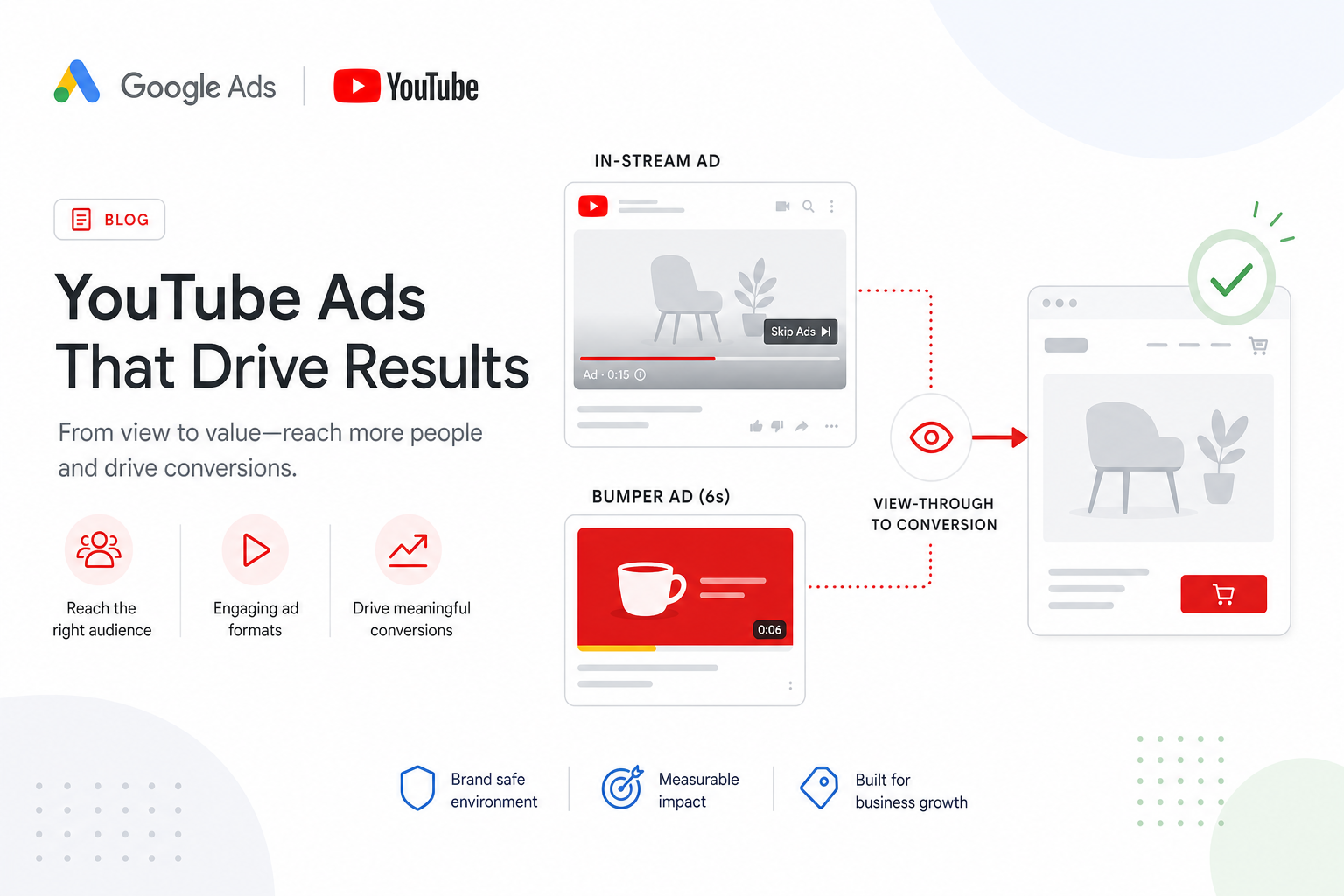
Skippable in-stream is YouTube's core format: the ad runs before, during, or after a video, and users can skip after five seconds. You pay only if the user watches 30+ seconds, clicks the ad, or converts. Best for consideration and conversion goals when you have a strong hook in the first seconds.
Non-skippable in-stream (15 s max) and bumper (6 s max) are short, mandatory formats for awareness. Bumper compresses a brand message — one clear line, logo, CTA. Non-skippable fits sparingly when budget and message support forced viewing.
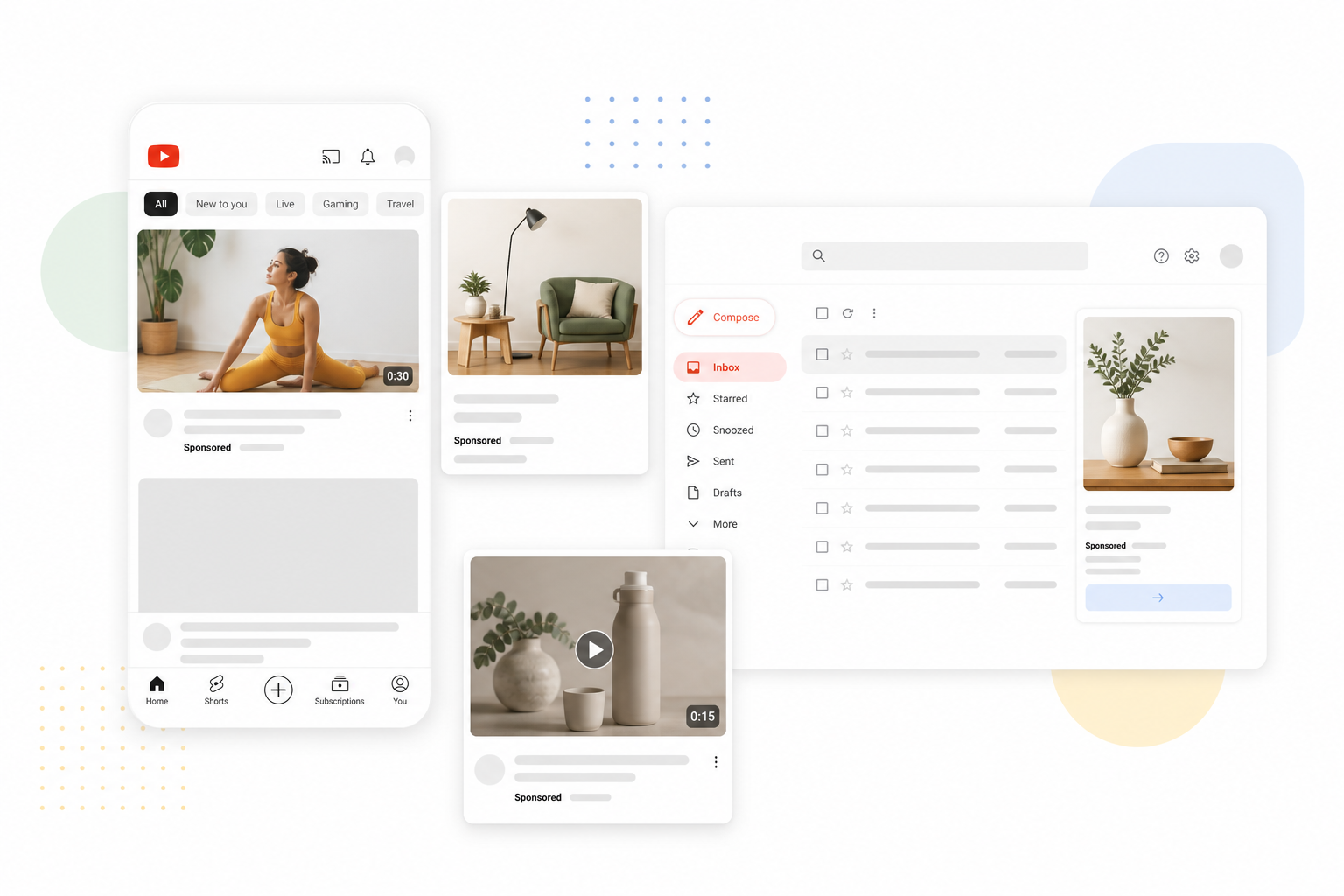
In-feed ads appear in YouTube search results, home feed, and recommended videos as thumbnails. They work for discovery and consideration when thumbnail and title drive clicks. Demand Gen combines YouTube video with Discover and Gmail placements — see the Demand Gen guide for full-funnel structure.
Audiences, placements, and bidding
YouTube audiences use the same Google Ads signals as other campaign types: custom segments (keywords, URLs, apps), in-market, affinity, remarketing, and Customer Match. Custom intent segments (keywords + competitors) are effective for B2B and ecommerce.
Placement targeting (specific channel, video, topic) gives control but limits scale. Topic and keyword targeting expand reach. In most cases, start with broader audiences and narrow placements based on data — not the other way around.
Bidding strategies: CPV for awareness, Target CPA or Maximize Conversions when conversion tracking is solid. Smart Bidding needs enough conversion volume — below ~30 conversions per month, Target CPA can swing wildly.
- Custom intent: keywords and competitor URLs
- Remarketing: site visitors, video viewers, purchasers
- Customer Match: CRM lists (email, phone)
- Similar audiences: expansion from remarketing base
- Exclude: converters and existing customers as needed
Creative specs, hook, and A/B testing
The first five seconds of a YouTube ad decide everything: weak hook means immediate skip. Hooks can be a question, provocative claim, visual surprise, or direct benefit promise. Test different hooks on the same body — Google Ads Asset Report shows which version retains viewers.
Technical specs: 16:9 or 1:1 (Shorts compatibility), minimum 720p, clear audio without background music drowning speech. Captions are mandatory — most viewers watch muted. CTA visible at end and as overlay text.
Build 3–5 creative variants per ad group: different hook, same core message. Remove underperforming assets monthly. Video Action Campaigns (VAC) combine YouTube and Display inventory — good when you want to extend video reach.
View-through conversions and measurement
A view-through conversion (VTC) happens when a user sees a YouTube ad (doesn't click) but converts later within the attribution window — typically 1–30 days. VTC is YouTube's most important metric because most viewers don't click directly.
Conversion tracking requires the Google Ads tag or GA4 linking. Define conversions (purchase, lead, call) and ensure view-through is enabled on the conversion action. Without VTC, YouTube looks weak even when it drives sales.
Attribution is complex: YouTube often assists Search or Direct. Use conversion tracking and cross-channel reporting for the full picture. Data-driven attribution (DDA) distributes credit across touchpoints.
Common YouTube Ads mistakes
These mistakes show up repeatedly in YouTube account audits.
- Overlong ad with no hook → skip at five seconds
- View-through conversions disabled → YouTube looks unprofitable
- Audience too narrow → insufficient data for Smart Bidding
- No remarketing to video viewers → lost consideration stage
- Same video for all funnel stages → wrong message for wrong audience
- YouTube isolated from Search and Demand Gen → fragmented messaging
Frequently asked questions
Which YouTube ad format works best for B2B?
Skippable in-stream at 30–60 seconds: product demo, case study, or expert interview. Target with custom intent segments (keywords, competitors) and remarketing to site visitors.
What is a view-through conversion?
A conversion that happens when a user saw a video ad but didn't click it. The attribution window is typically 1–30 days. VTC is YouTube advertising's key performance metric.
Should I use bumper ads?
Yes for awareness and remarketing. Six seconds is enough for one clear brand message. Combine with skippable in-stream in the funnel.
How does YouTube relate to Demand Gen campaigns?
Demand Gen combines YouTube, Discover, and Gmail placements in one campaign. YouTube videos serve as Demand Gen's video component — see the Demand Gen guide for full-funnel structure.
How much conversion data does Smart Bidding need on YouTube?
Recommend at least 30 conversions per month per audience before Target CPA. Below that, use Maximize Conversions or manual CPV in the awareness stage.