What blog SEO strategy means
Blog SEO covers everything search-related for the blog: URL structure, categories, on-page for posts, schema, pagination, internal linking, and hub pages — not just writing individual posts.
The blog is typically a TOFU/MOFU channel: it drives traffic, builds trust, and links to BOFU service pages. Without strategy, articles compete with each other and service pages miss link equity.
Strong blog SEO supports content strategy and topic clusters — the blog is how clusters are executed.
Strategy before calendar
Strategy vs random blogging
A strategic blog serves ICP, funnel stages, and the keyword map. Every article has a role in the cluster: pillar, cluster, or supporting content.
Random blogging produces cannibalization, thin content, and dead-end articles with no links to service pages.
Define 3–5 pillars (e.g. SEO, Google Ads, content marketing) and build articles under them.
- Pillar / hub per topic
- Cluster articles for sub-questions
- Every article links to pillar + service page
- No overlapping intent
Topic clusters in the blog
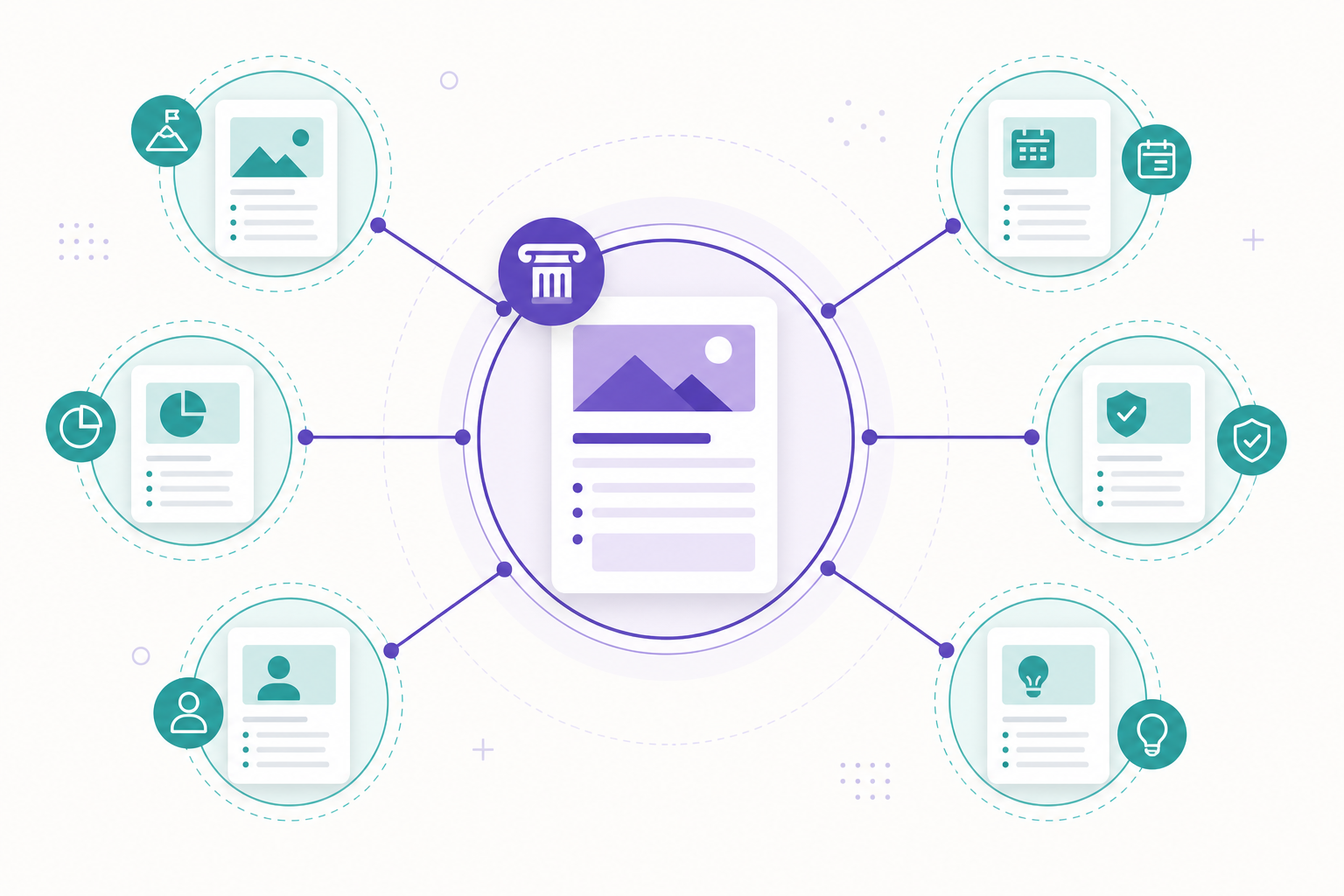
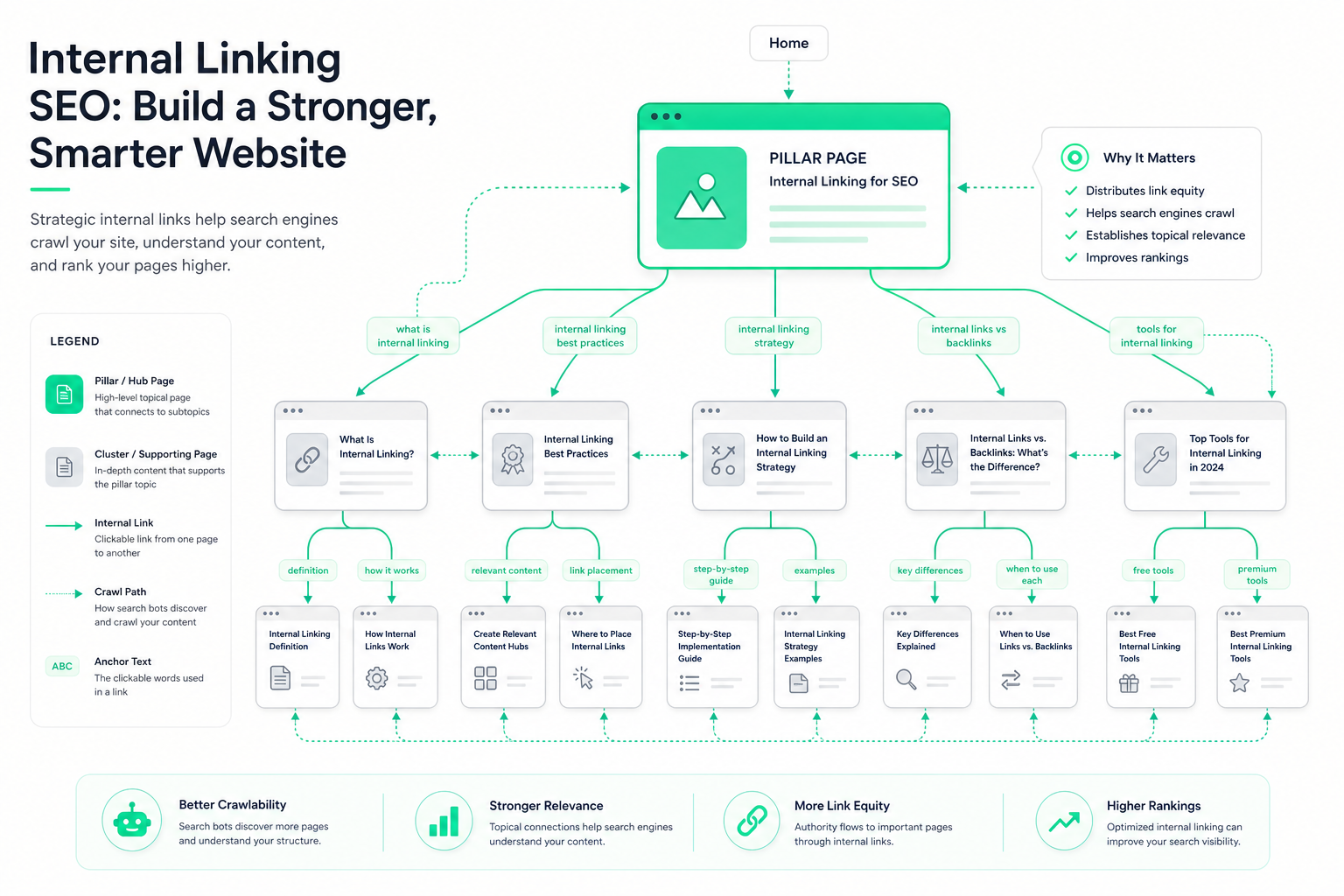
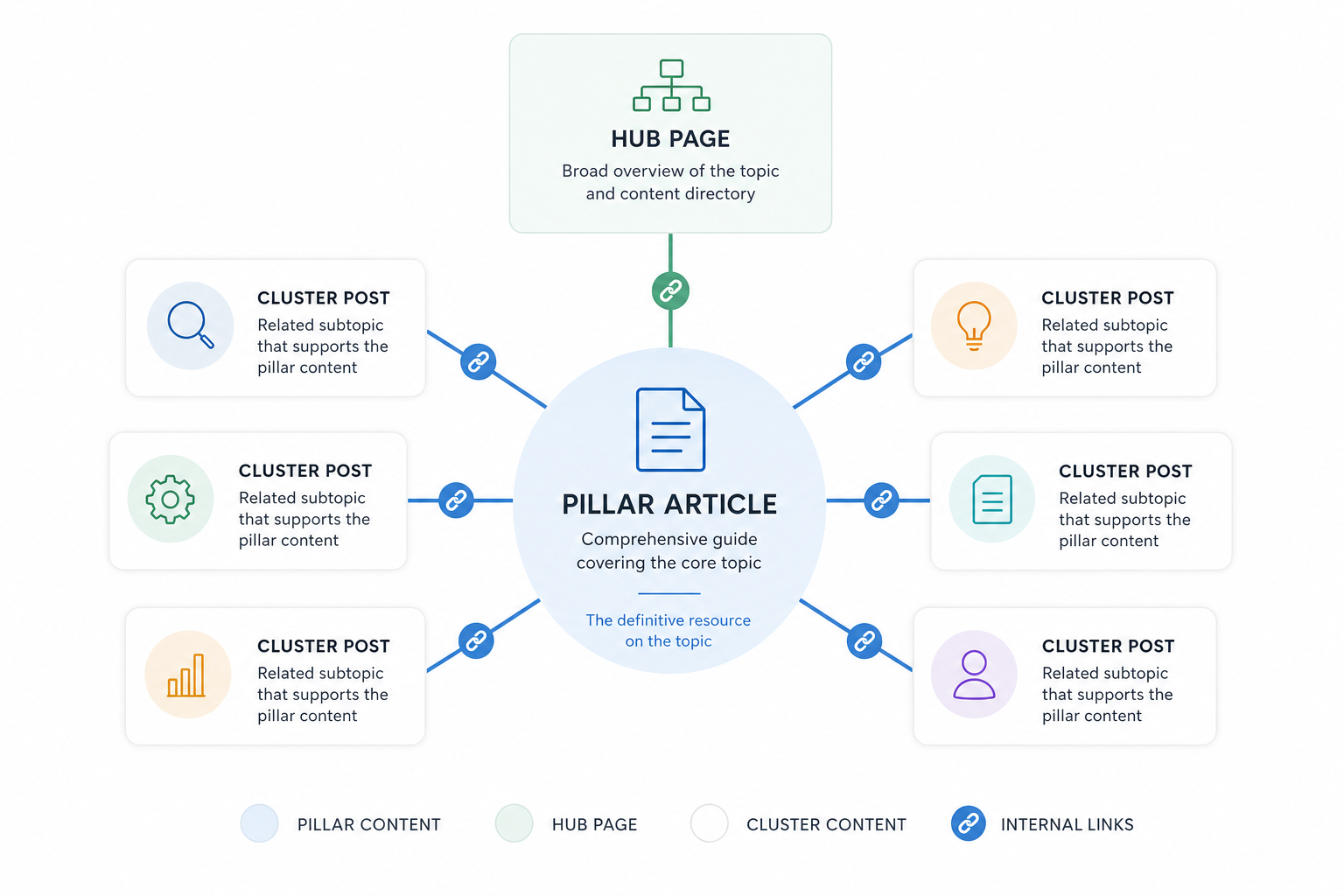
The pillar is a comprehensive guide (or hub page). Cluster articles cover sub-questions and link back to the pillar.
Internal linking forms a network: pillar → cluster → pillar, cluster ↔ cluster. Read our internal linking guide.
Every new article links to the relevant pillar and at least one service page when intent fits.
Categories, tags, and URL structure
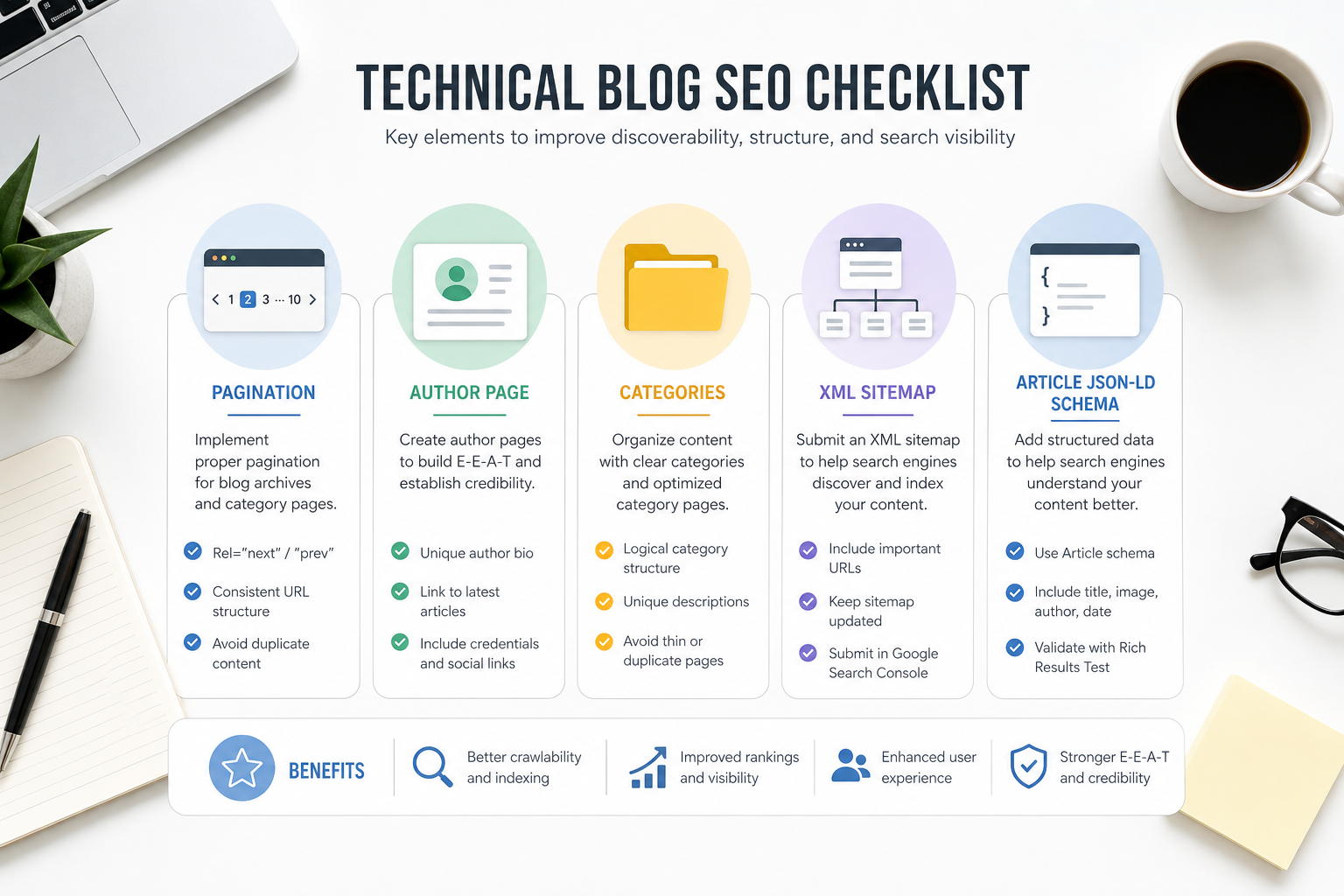
Categories (/blog/category/seo) act as hub pages: unique intro, article listing, internal links. Avoid dozens of empty categories — 3–7 is enough.
Tags are weaker for SEO than categories — use them for navigation, do not rely on tag page traffic.
Article URL: short slug without dates (/blog/hreflang-international-seo) — dates in URLs age quickly.
Author pages and E-E-A-T
An author page strengthens E-E-A-T: bio, role, links, article listing. Schema: Person + link from Article author.
In B2B, a named expert on the article + author page is a stronger signal than "Admin".
Do not create author pages for empty pseudonyms — quality over quantity.
Pagination and archives
Paginated blog archive (/blog/page/2): page 1 self-canonical, pages 2+ canonical to page 1 or independently indexable — depends on CMS.
Do not index empty category or tag pages. Pagination links crawl-friendly (HTML links, not JS only).
RSS and sitemap: published articles only, lastmod updated correctly.
Schema tip
Article schema and rich results
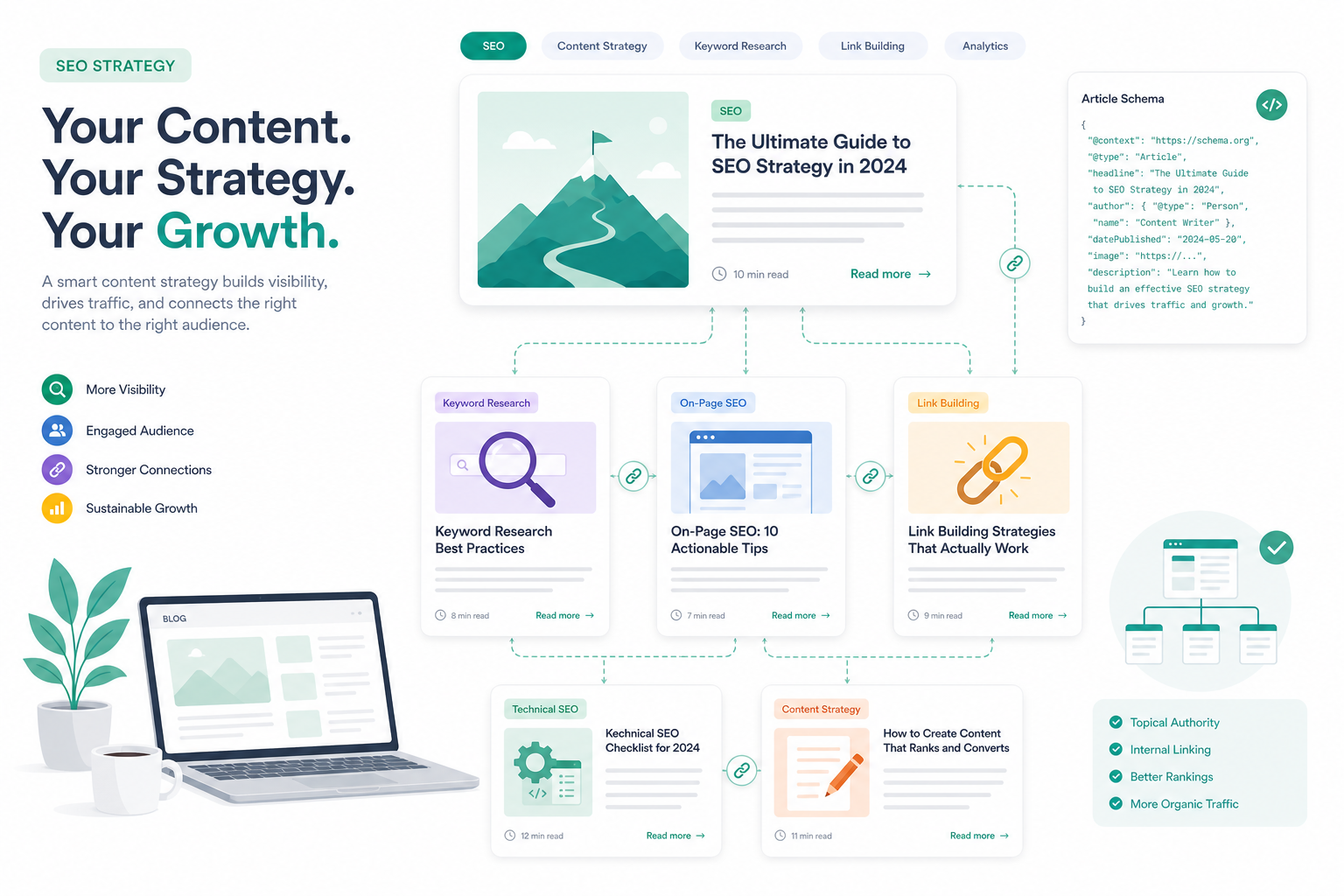
Article schema supports rich results visibility and AI citations: clear title, lead, dates, and author.
Update dateModified on refresh — honestly. image field: hero image with absolute URL.
BreadcrumbList: home → blog → category → article.
Hub pages and category optimization
A hub page is a category or pillar that gathers topic articles: 200–400 word intro, manual favorites, links to service page.
Hub ranks for broad queries ("SEO guide", "marketing blog") — articles for long-tail.
Update the hub when new cluster articles publish — a stale hub weakens the whole branch.
Internal linking from the blog
In every article: link to pillar/hub, 2–3 links to related articles, link to relevant service page (BOFU).
Related posts section at bottom: automatic + manual curation for key articles.
Refresh old articles: add links to new posts — the blog is a living network.
Blog SEO in numbers
Summary and next steps
Blog SEO is architecture: clusters, hub pages, schema, pagination, and linking to service pages. Build strategy before the publishing calendar and maintain the network with refreshes.
Integrate the blog with content strategy. Need help? Our SEO service.
Blog SEO checklist
Run this list on every new post and in quarterly audits.
- Article part of topic cluster
- Link to pillar/hub + service page
- Article schema + breadcrumb
- Short slug without date
- Category/hub intro updated
- Pagination and canonical correct
- Author page for E-E-A-T
- Related links + refresh old posts
Frequently asked questions
How does blog SEO differ from article SEO?
Blog SEO is whole-blog architecture (categories, pagination, schema, hubs). Article SEO is single-post optimization — you need both.
Do blogs need categories?
Yes — categories act as hub pages that gather topic articles and rank for broader queries.
Should URLs include dates?
No — dates in URLs age poorly and complicate refresh. Use a short slug and update dateModified in schema.
Which schema for blog posts?
Article or BlogPosting + author (Person) + BreadcrumbList. Hero image in the image field.
How does the blog support service pages?
The blog drives TOFU/MOFU traffic and links to relevant service pages in context — not the same CTA on every post, but intent-matched links.