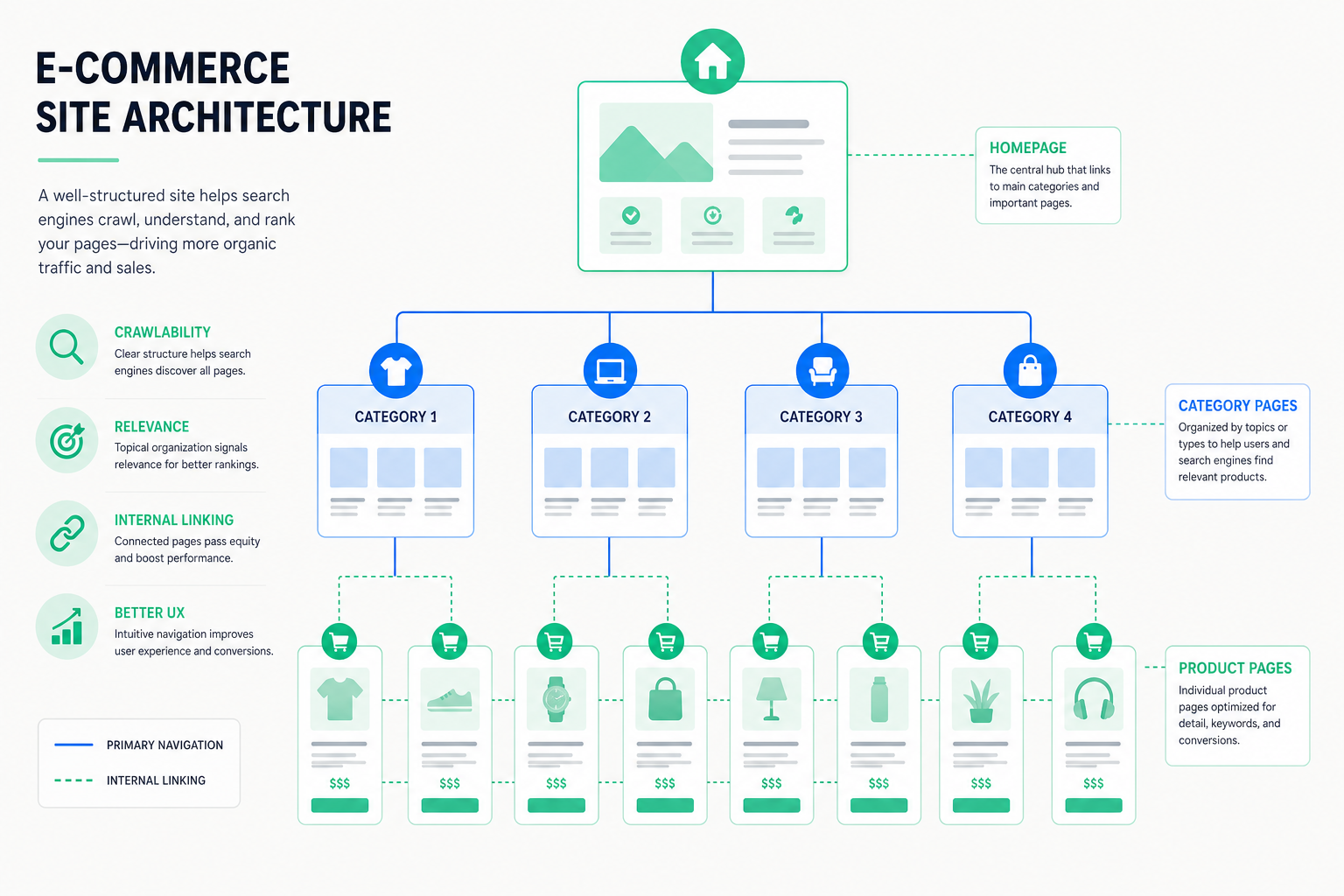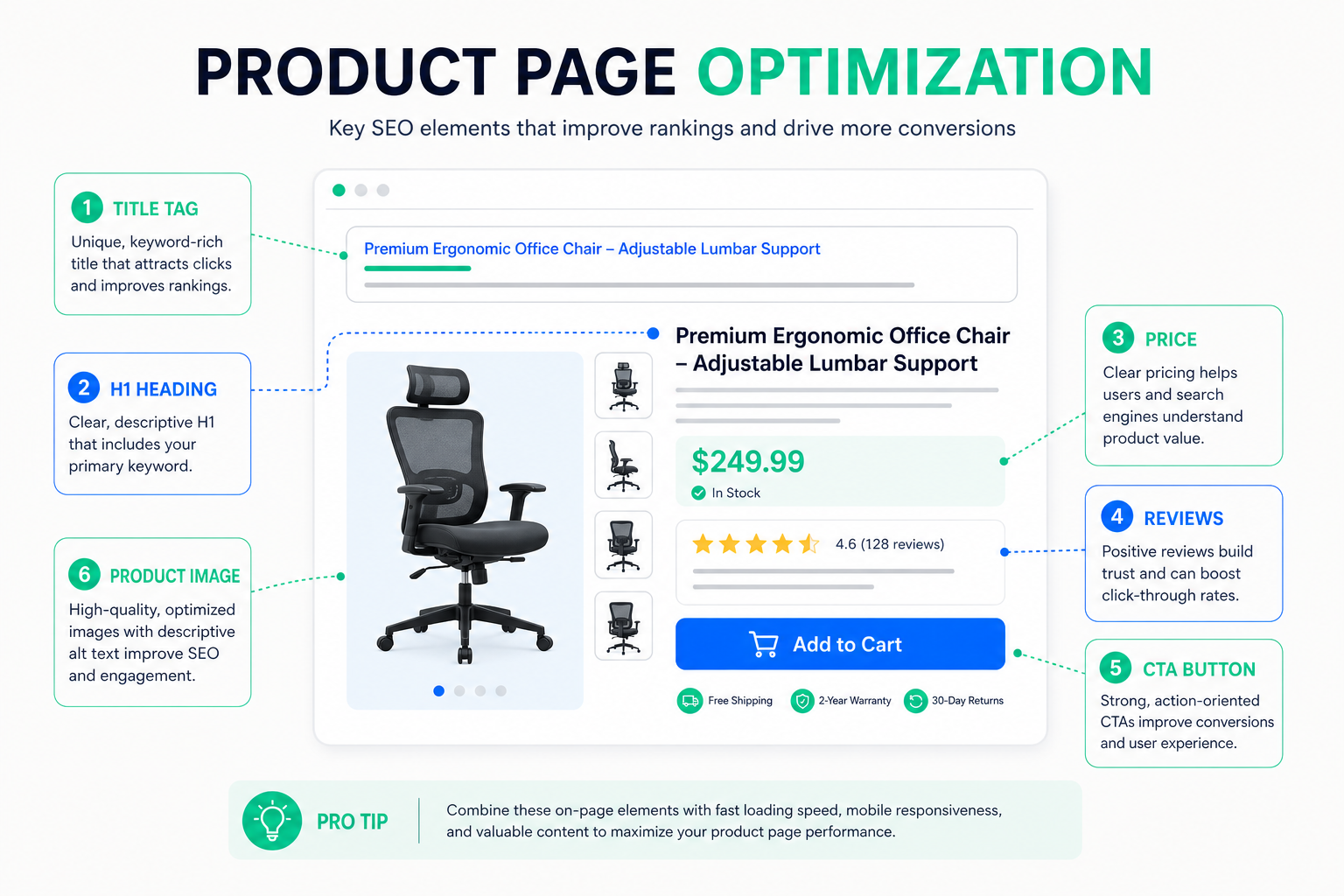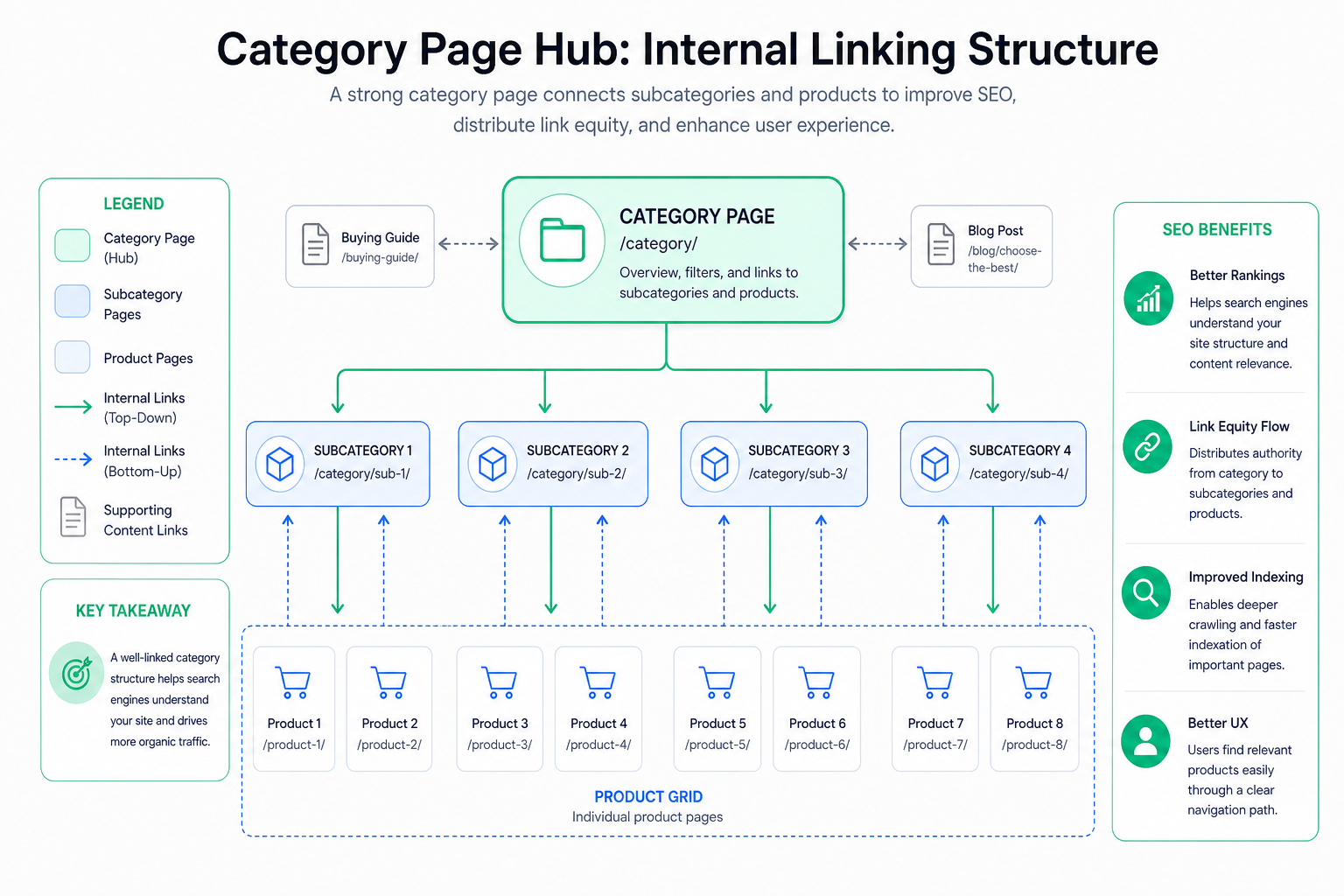
Why the category page is an SEO hub
Category pages target broader queries than a single product: "tools", "running shoes", or "gifts for men". They distribute link equity to product pages.
Without unique content, Google sees the page as a thin listing and does not rank it. Intro copy, subcategories, and FAQ differentiate you from competitors.
The category page is also a user navigation point — clear structure improves conversion and reduces bounce.
Combine this guide with the ecommerce SEO guide and internal linking.
Hub before products
Intro copy, title, and H1
Title: Category + brand/store or category + qualifier ("Women's dresses | Brand"). H1 matches the main category clearly.
Write 150–300 words of unique intro at the top: who it is for, what is available, how to choose. Do not hide critical indexable copy behind "read more" only.
Use H2 headings for subcategories and buying guide blocks. Read on-page SEO 2026.
- Intro 150–300 words for strategic categories
- H1 = main category
- H2 for subcategories and guide
- Title max ~60 chars
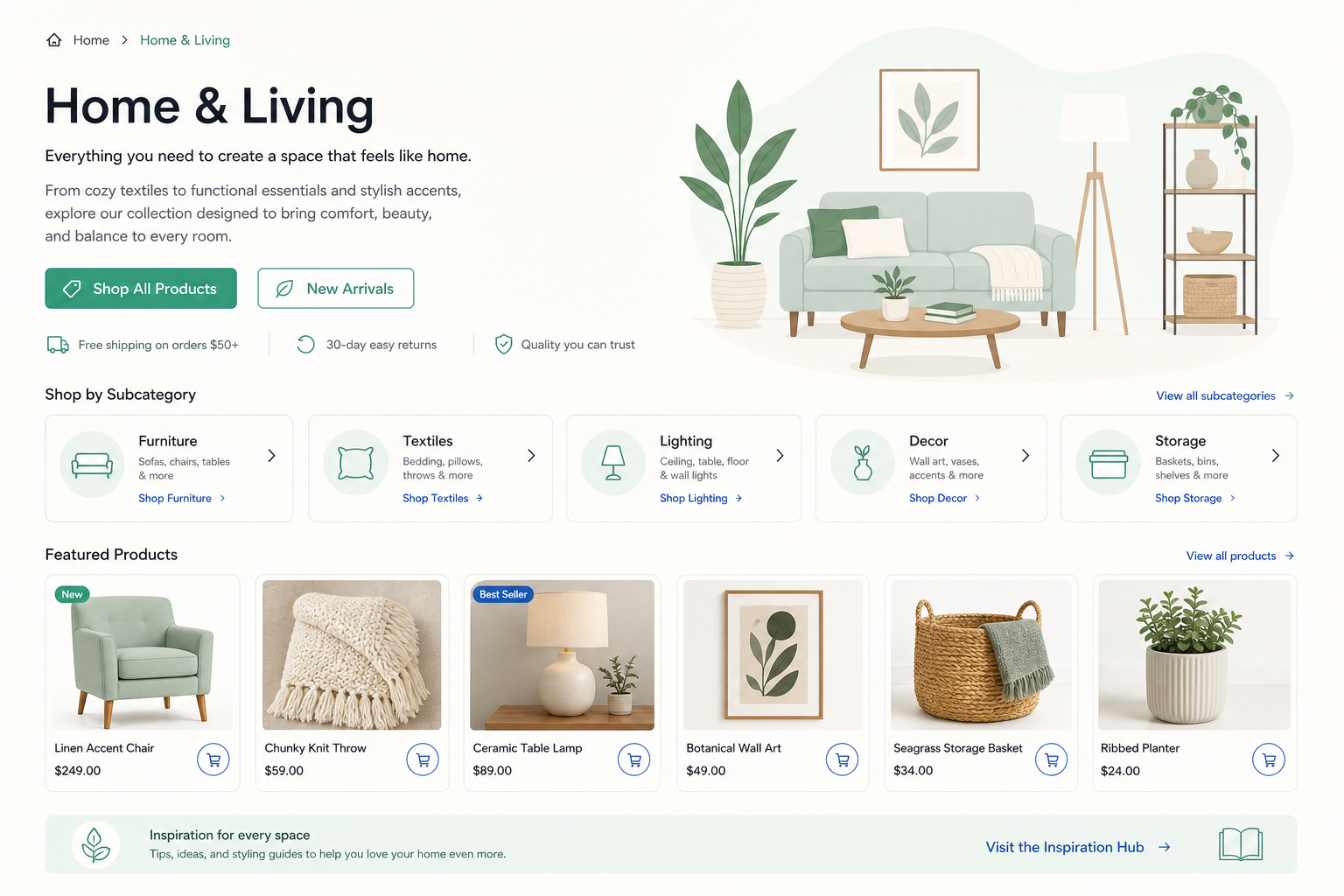
Facets and indexing
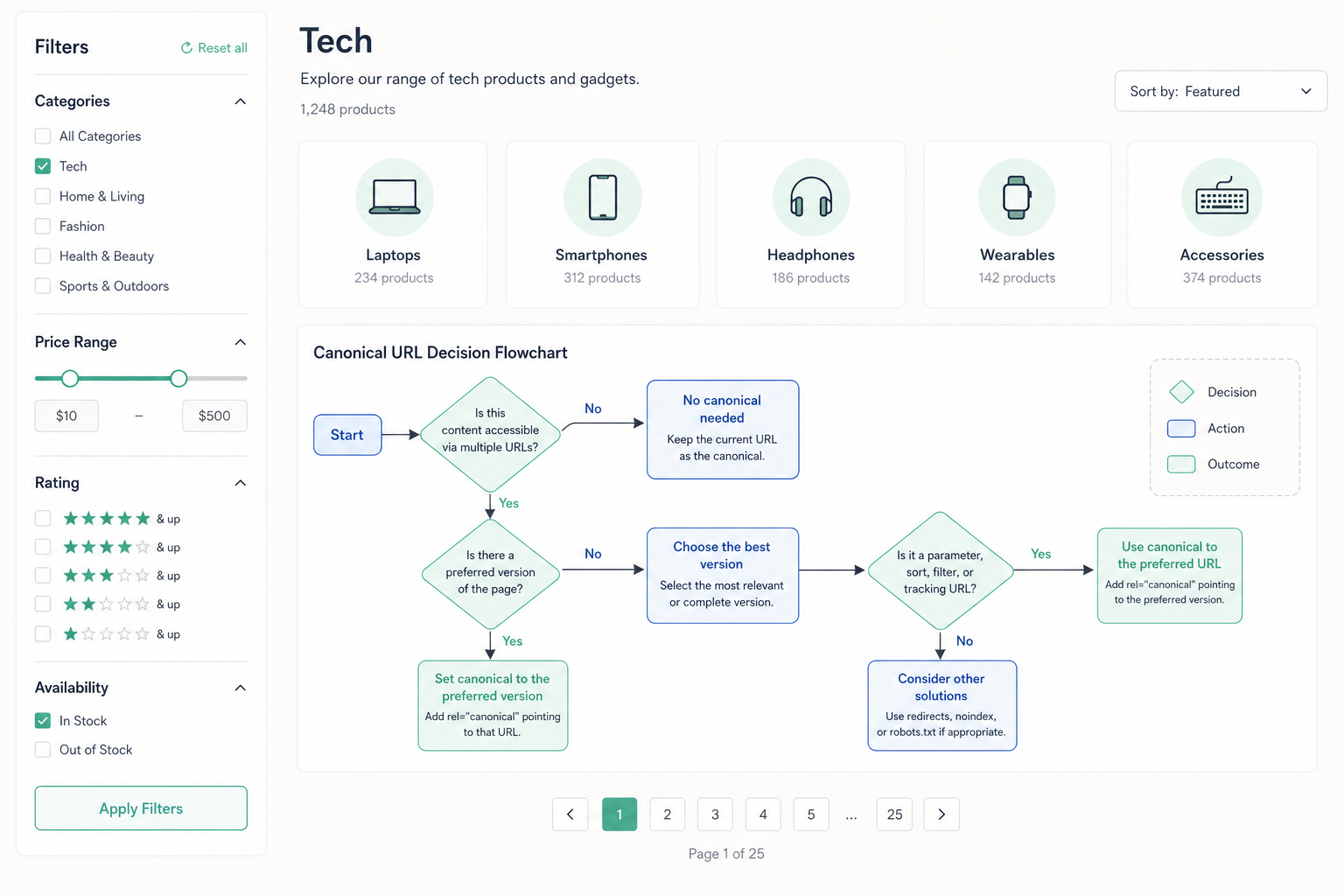
Filters create duplicate URLs. Default: noindex on parametric filter URLs. Index only curated landing pages.
Canonical points to the clean category URL. Same logic as in the ecommerce SEO guide.
Internal linking from category pages
Link to subcategories, bestsellers, and buying guide articles. Use descriptive anchors.
Up: breadcrumb and link to parent category. Sideways: related categories. Read our internal linking guide.
Pagination tip
Pagination and crawl budget
Deep pagination (page 47) rarely brings traffic. Prioritize page one and strongest products with internal links.
Avoid endless parameter chains. Monitor crawled pages in Search Console.
Breadcrumb and CollectionPage
BreadcrumbList is mandatory. CollectionPage or ItemList can describe the product list — ensure markup matches visible content.
Product page schema complements the category — product page SEO.
Thin content risk
Two categories with the same intro template unchanged is a risk. Personalize copy per category or merge weak categories.
Add FAQ, buying guide, or comparison table to differentiate.
Subcategories and hierarchy
Split categories that are too broad into subcategories — each gets its own URL and intro. Cross-link to related categories.
Do not create empty indexable categories; redirect or merge.
Category page in numbers
Category page checklist
Prioritize top 20 categories manually, automate the rest with templates.
Help? Our SEO service.
- Unique intro and title/H1
- Facet URLs under control
- Links to subcategories and bestsellers
- Breadcrumb + schema
- No empty categories
- Crawl-friendly pagination
Frequently asked questions
How long should category intro copy be?
Aim for 150–300 words on strategic categories. Uniqueness matters more than length.
Should filter URLs be indexed?
Only if they have search demand and unique content. Otherwise noindex or canonical.
What separates a category page from a product page?
Categories target broad queries and distribute link equity; product pages target transactional queries.
Does a category page need schema?
At minimum BreadcrumbList. ItemList/CollectionPage if it matches listed content.
How does internal linking work on categories?
Hub links down to products and sideways to related categories — read our internal linking guide.