What service page SEO means
Service page SEO optimizes your company’s service or product pages (e.g. /services/seo) in search so they match commercial search intent and guide visitors toward purchase.
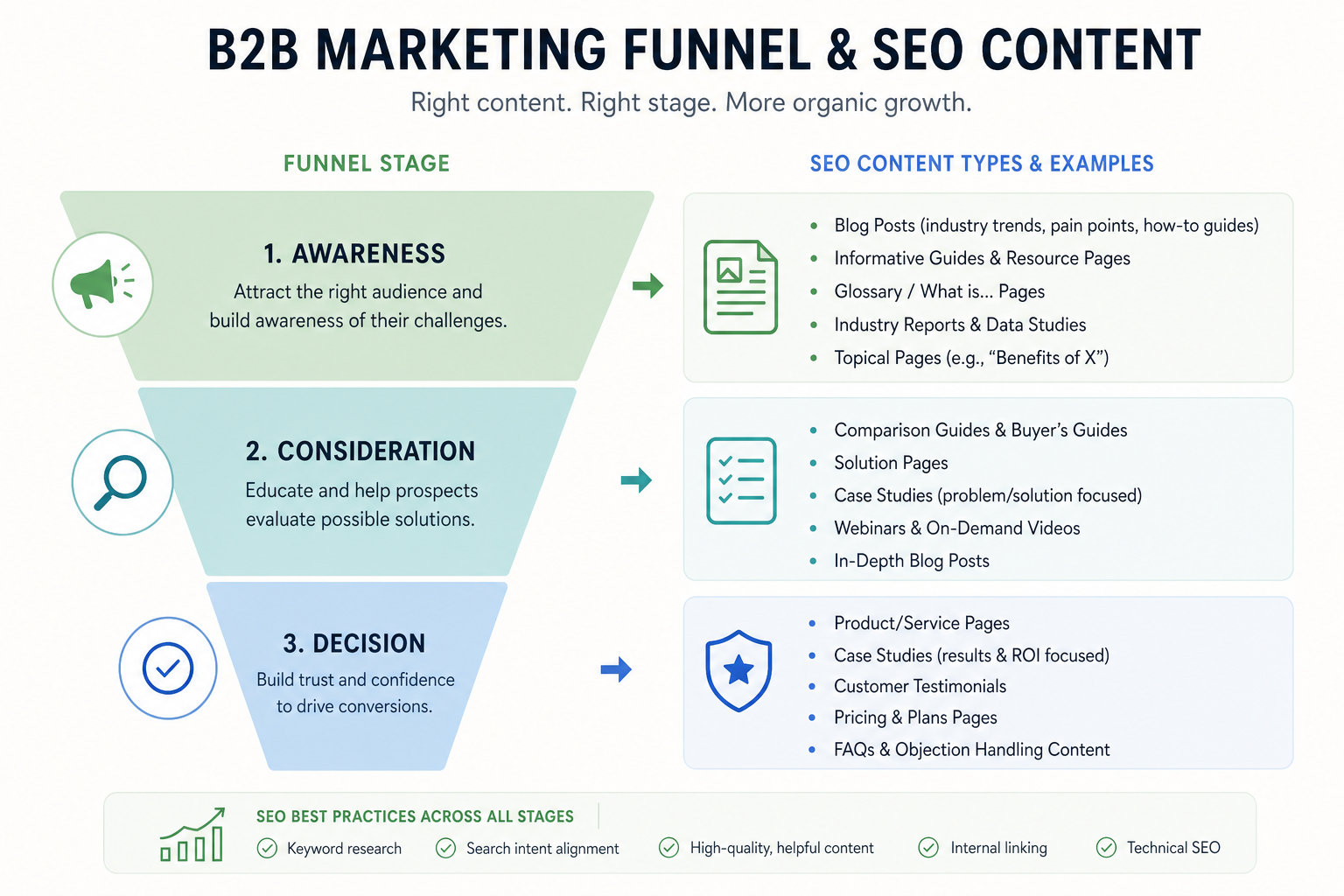
Difference from blog: a service page does not target informational queries ("what is SEO") but transactional and comparison queries ("SEO agency Helsinki", "Google Ads pricing").
A strong service page combines on-page optimization, trust signals, clear structure, and a strong CTA — read our B2B SEO strategy for broader context.
Intent first
Commercial intent and keywords
Commercial intent: the searcher compares providers or is ready to contact. Keywords often include "service", "agency", "pricing", "quote", or a local modifier.
One service page = one primary intent. Do not combine SEO, Ads, and social on one page — create separate service pages and link them.
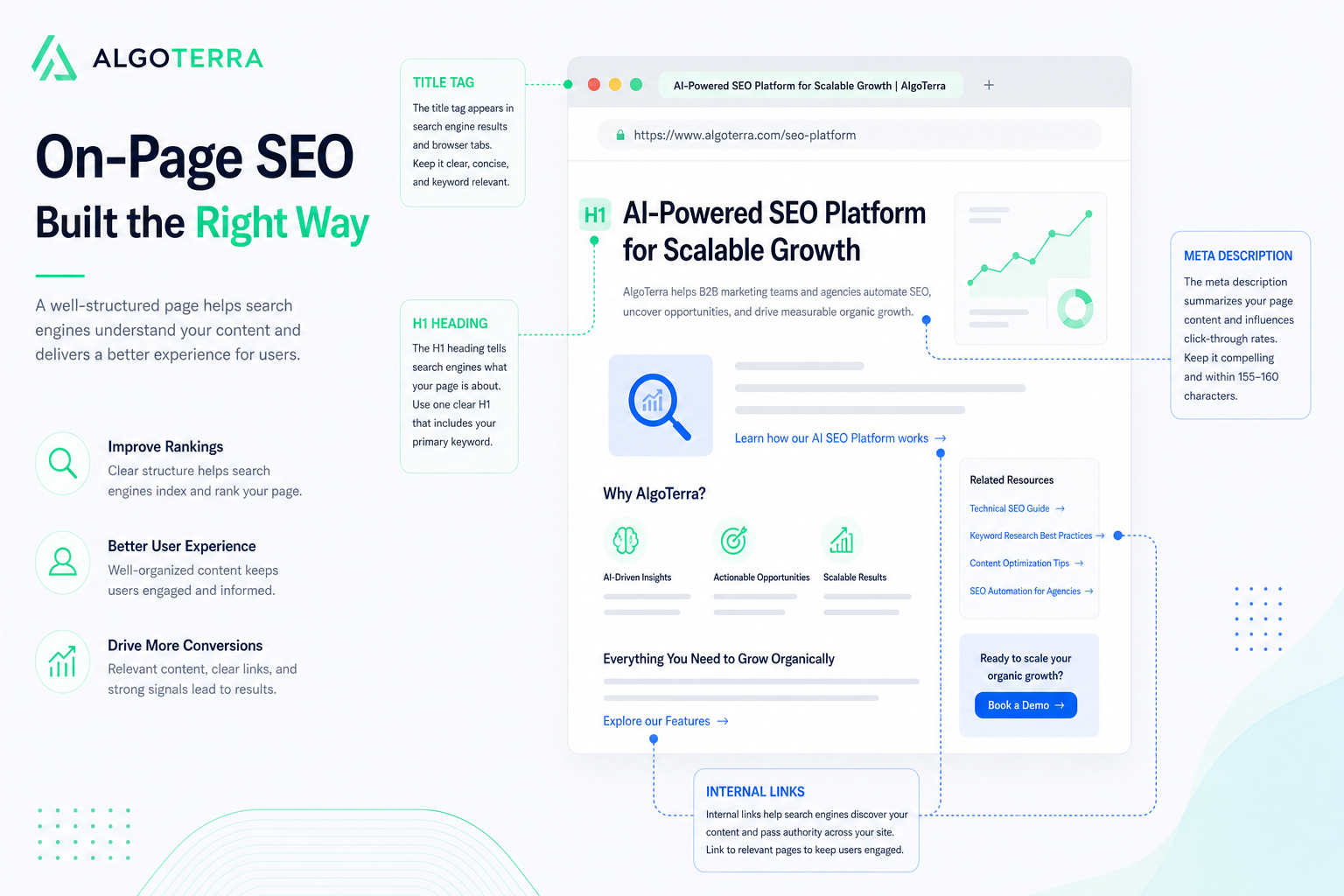
Title and H1 reflect intent: "SEO Services — Organic Growth and Leads | Company" — not generic "Our Services".
- One primary intent per page
- Commercial keywords in title/H1
- Separate pages per service
- Local intent on dedicated landings
Service page structure
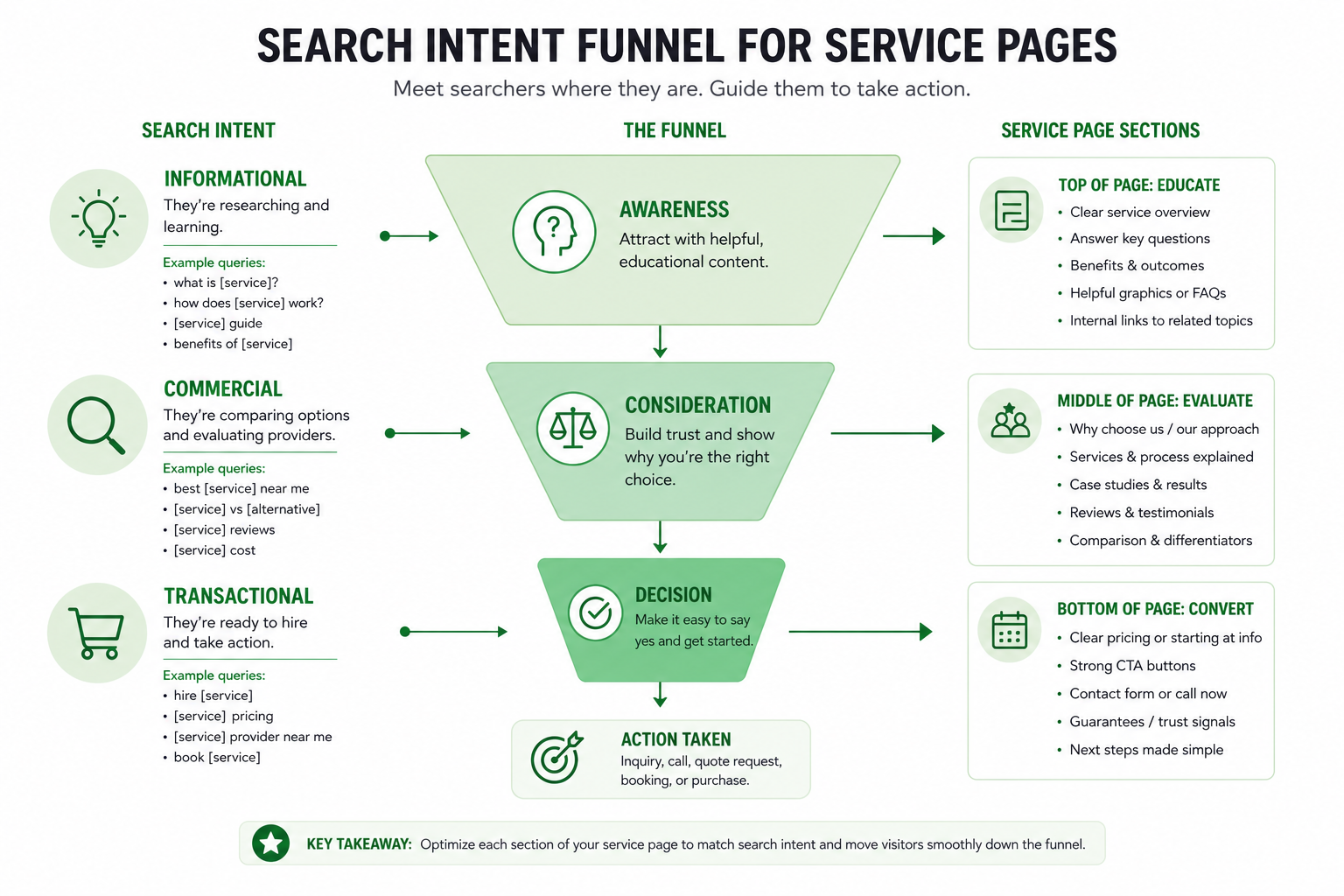
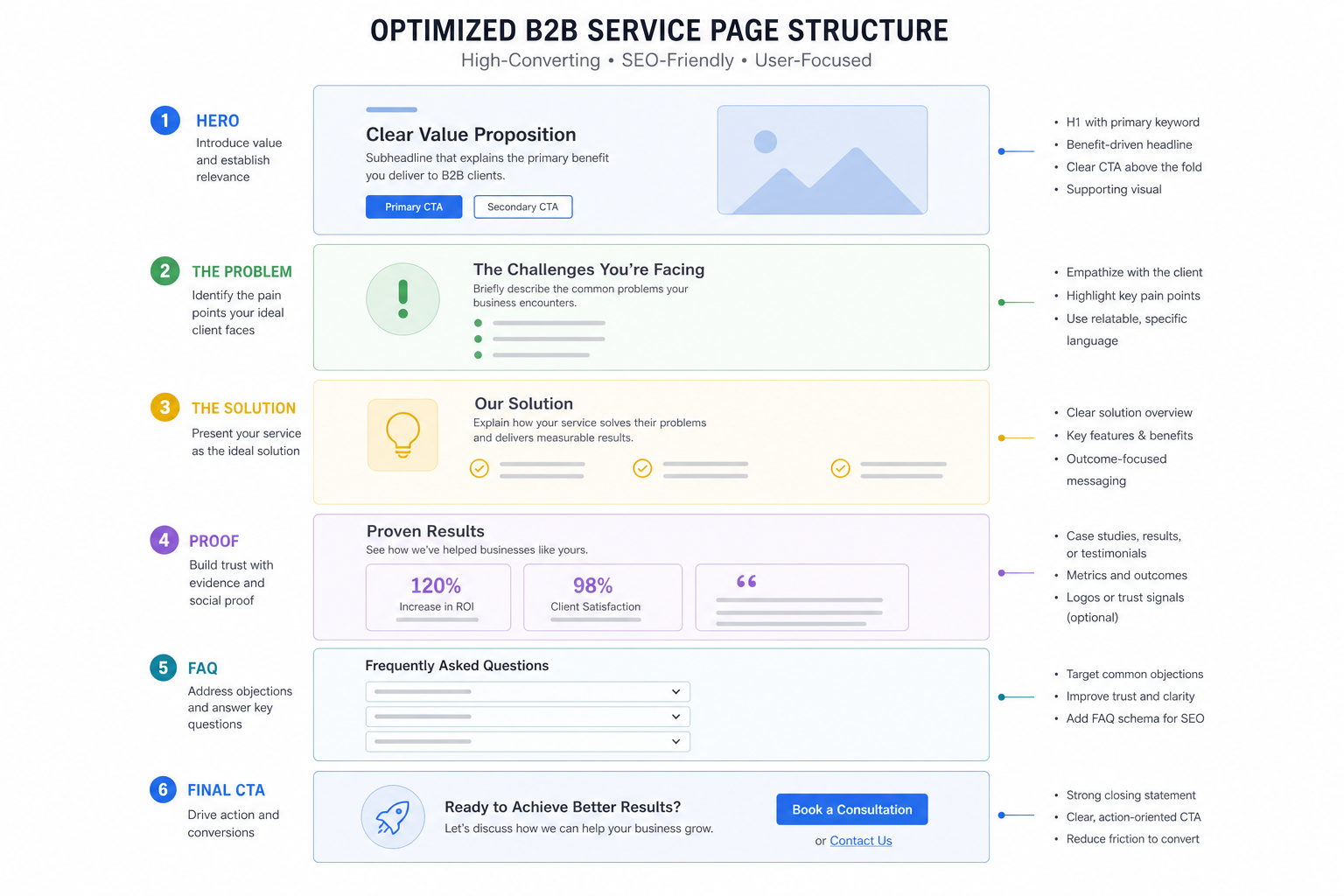
Typical structure: hero (value prop + CTA) → problem → solution → what’s included → process → social proof (case, reviews) → FAQ → CTA.
H2 headings answer searcher questions: "Who is it for?", "What do you get?", "How do we proceed?", "How much?" (pricing guide or "quote on request").
Table of contents on long pages improves UX and may earn sitelinks. On mobile, CTA visible at top and bottom.
Content, depth, and E-E-A-T
A service page must not be thin — Google often ranks 800–1500 word pages that match intent deeply. Too short looks generic.
E-E-A-T in B2B: who does the work, case studies, certifications, transparent process. Show faces and expertise — not stock photos without context.
Avoid copy-paste across all service pages — each needs a unique angle and keywords.
Schema markup on service pages
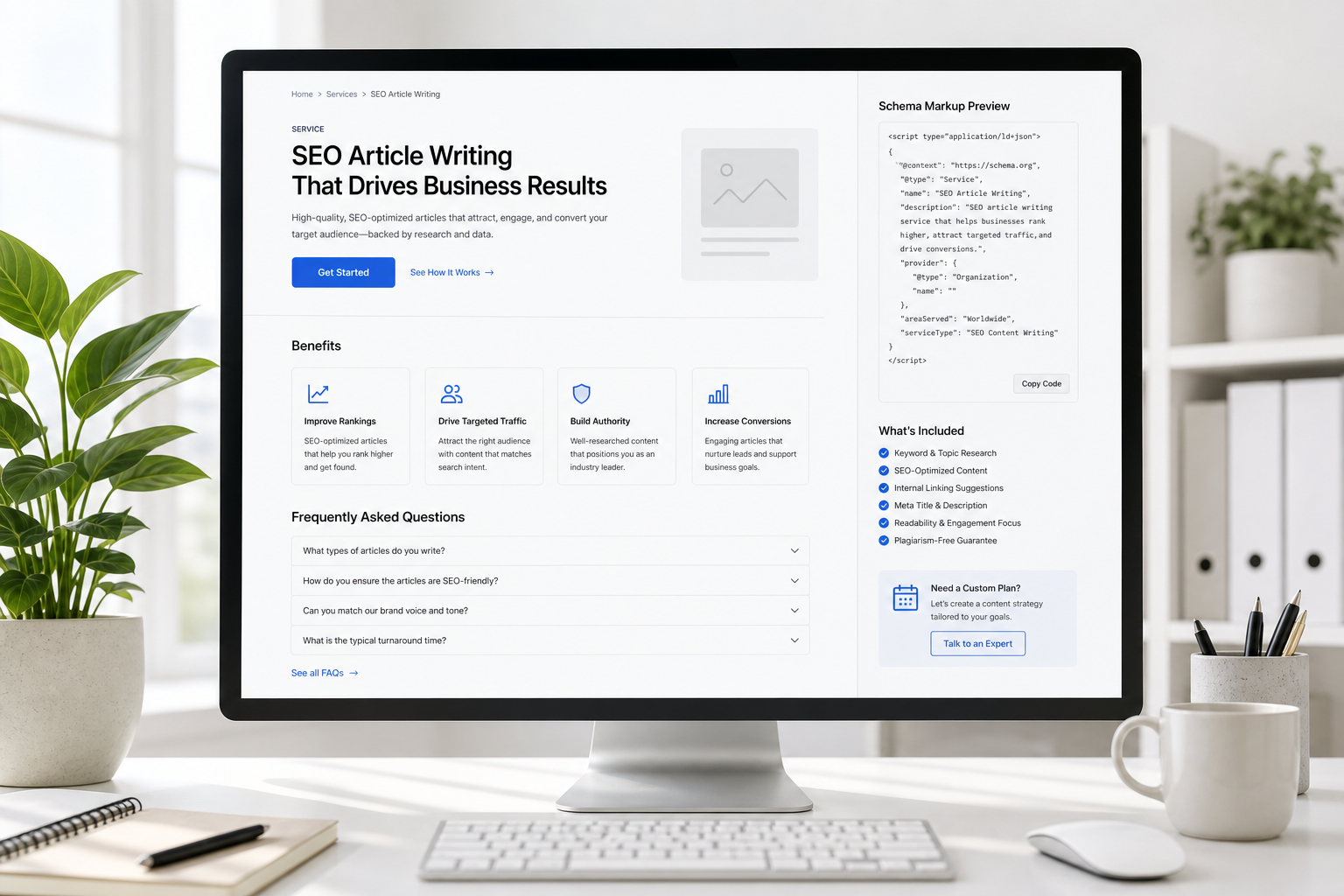
Use Service or ProfessionalService schema: service name, description, provider (Organization), areaServed.
FAQPage schema for the FAQ section — rich results in the SERP. BreadcrumbList for navigation.
Validate with Rich Results Test. Read our schema markup guide for more depth.
Linking tip
Internal linking to service pages
Homepage, navigation, and footer link to service pages — they are the most important crawl and authority sources.
From blog to service page: contextual in-content links, not just a "read more" box.
Service page to service page: "Related services" section drives cross-sell and shares link equity.
CTA and conversion optimization
Clear primary CTA: "Request a quote", "Book a discovery call", "Contact us". Secondary: download a guide (lead magnet).
Keep forms short in B2B — name, email, company is enough to start. Long forms lower conversion.
Page speed and mobile UX directly affect conversion — technical SEO is not separate. Read on-page SEO 2026.
Cannibalization and overlap
If a blog post and service page target the same keyword, Google may pick a "winner" randomly. Fix: blog for information, service page for commercial intent — different keywords and clear internal linking.
Multiple service pages for the same query (e.g. city-specific) need unique content or one main page + local landings.
Service page metrics
Track: organic rankings for commercial keywords, traffic to the service page, conversion (form, call), leads in CRM.
Search Console: queries with impressions but low CTR — improve title/meta.
Service page SEO in numbers
Summary and next steps
Service page SEO is B2B’s key conversion page in organic search: commercial intent, clear structure, schema, internal links, and a strong CTA. Optimize service pages before producing more blog content on the same topic.
Review your service pages: do they match intent? Need help? Our SEO service and B2B SEO strategy.
Service page checklist
Run this list for every service page before launch and quarterly.
- One commercial intent per page
- Title, H1, and meta match intent
- Hero + CTA above the fold
- Problem → solution → process → FAQ
- Service + FAQ schema
- Internal links from blog and nav
- Case / social proof included
- Conversion tracked in Analytics + CRM
Frequently asked questions
How does a service page differ from a blog in SEO?
Blog targets informational queries (TOFU/MOFU). Service page targets commercial intent (BOFU): the searcher is considering purchase or contact.
How long should a service page be?
Typically 800–1500 words, depending on competition. Too thin fails intent; too long without structure confuses.
Which schema for a service page?
Service or ProfessionalService + FAQPage for the FAQ section. Organization and BreadcrumbList complete the set.
Can the same keyword be on blog and service page?
Risky — can cause cannibalization. Separate: blog educates, service page sells. Link from blog to service page.
How do I measure service page SEO success?
Commercial keyword rankings, organic traffic, conversion, and leads — not traffic alone. GSC + Analytics + CRM.