What is thought leadership SEO?
Thought leadership SEO means producing and optimizing expert content so your brand appears in search as an authority on a topic. The goal is not just traffic but trust and links.
Difference from a regular blog: depth, original perspective, data or experience others cite. Google and AI search favor sources with clear expertise.
Works especially in B2B and services where purchase decisions depend on trust. Connect to B2B SEO strategy.
The content model comes from content strategy — thought leadership is a quality bar, not a random publishing cadence.
Trust before volume
E-E-A-T in practice
Experience: show practical experience (case, process). Expertise: author credentials. Authoritativeness: mentions and links. Trustworthiness: sources, update dates, contact info.
Author page for each expert: bio, role, links. Article schema with author field.
Avoid generic "our team" anonymity on YMYL-style topics.
On-page: on-page SEO 2026 supports E-E-A-T with headings and structure.
Pillar and flagship content
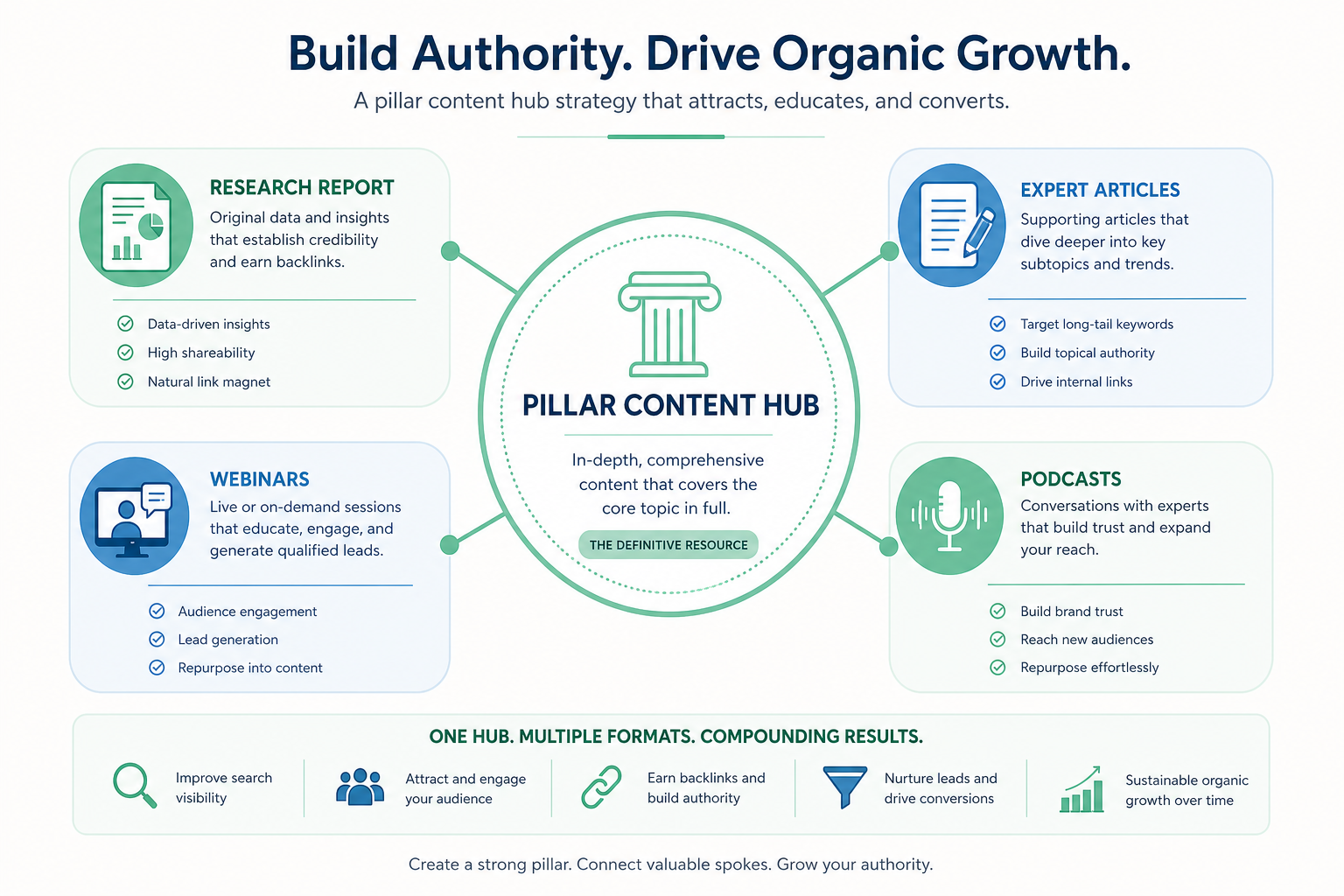
Flagship = 3000+ word (or equivalent depth) definitive guide on a tightly scoped topic. Update annually.
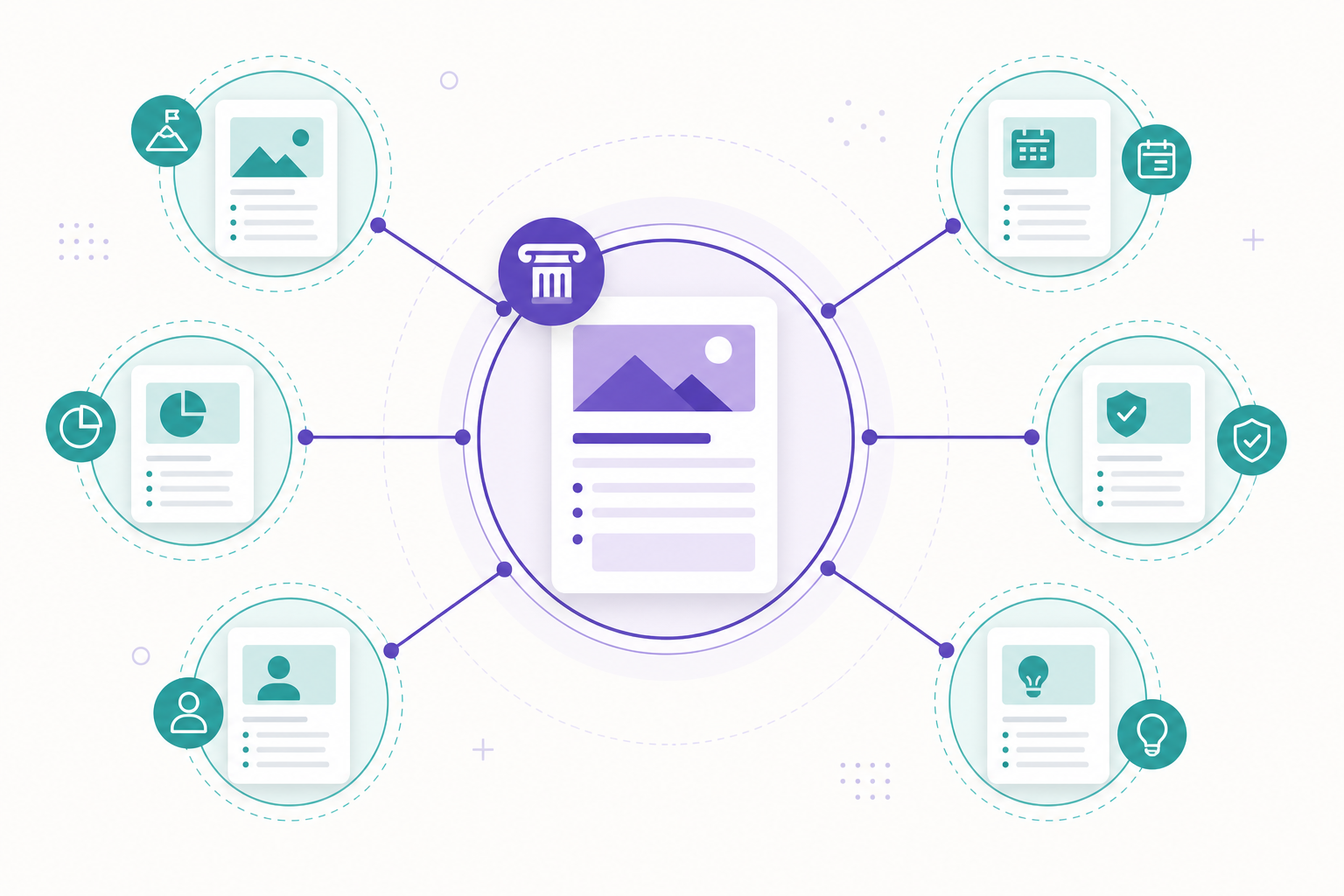
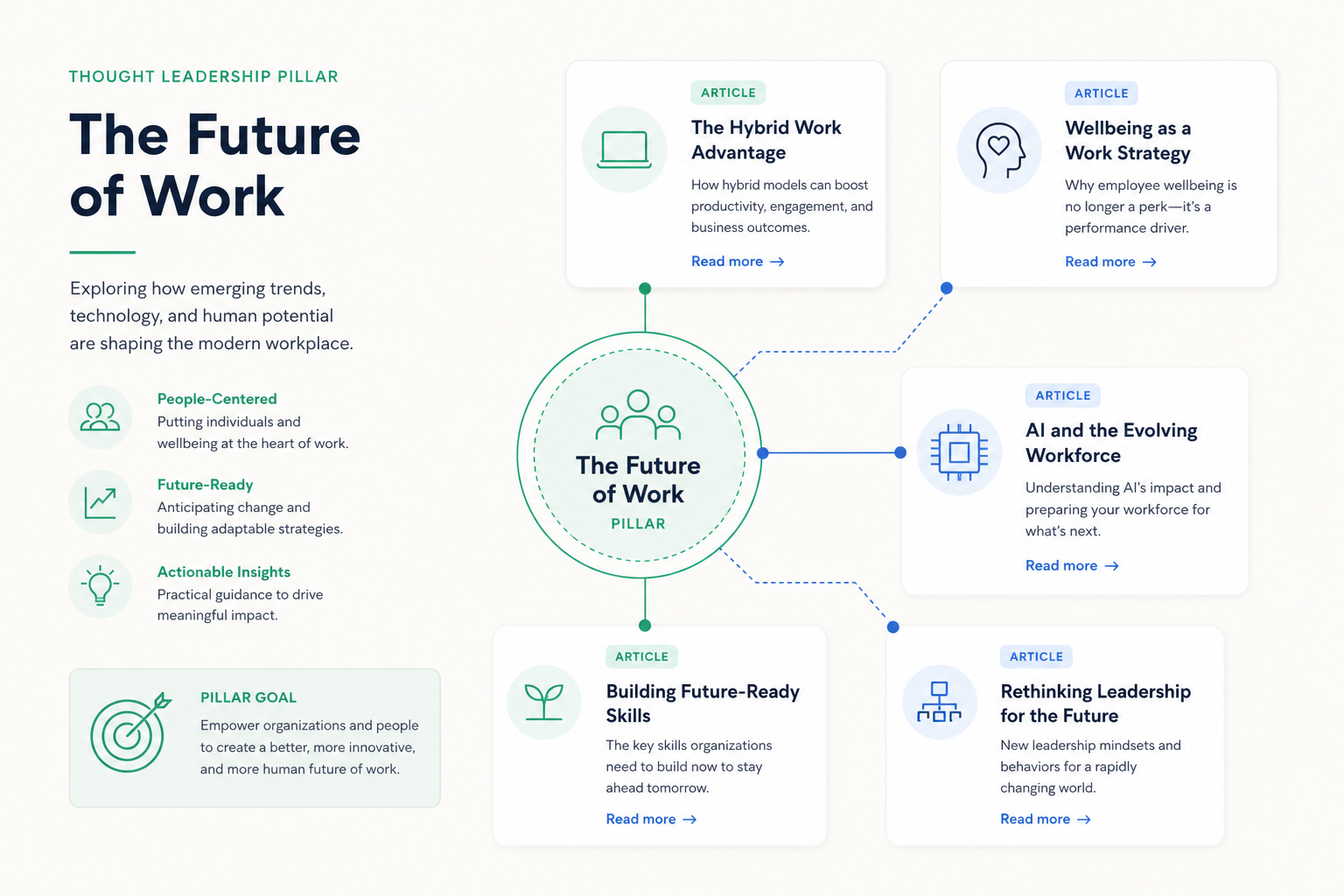
Cluster articles cover sub-questions and link to the pillar. Model: topic clusters.
Include data, diagrams, quotes, and downloadable resources — a link-worthy package.
Topic choice and bold perspective
Choose topics where you have a real view — not just trends. "How we do X" beats "X is important".
Original research, survey, or benchmark differentiates. Publish data visualized.
Bold opinion is fine if backed by facts — avoid clickbait without substance.
Authors, byline, and brand
Show faces: photo, name, role. LinkedIn and author page strengthen the Expertise signal.
A company blog can still be thought leadership if the author is clear and content is deep.
Distribution and amplification
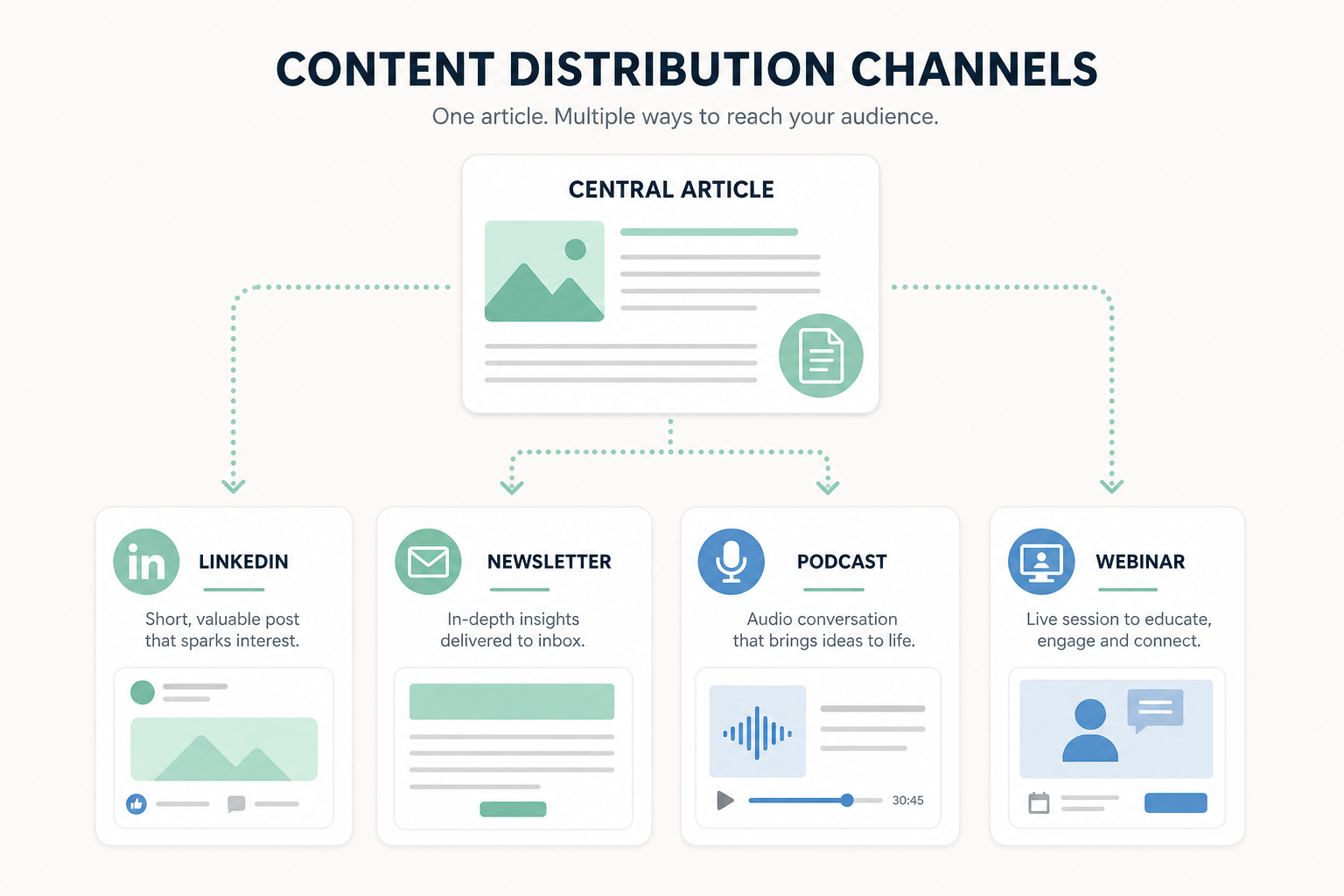
SEO is not enough at launch: LinkedIn, newsletter, webinar, podcast. Distribution brings first signals and links.
Repurpose the pillar in parts — but canonical to the flagship page. Do not create duplicate SEO.
Earning links with expertise
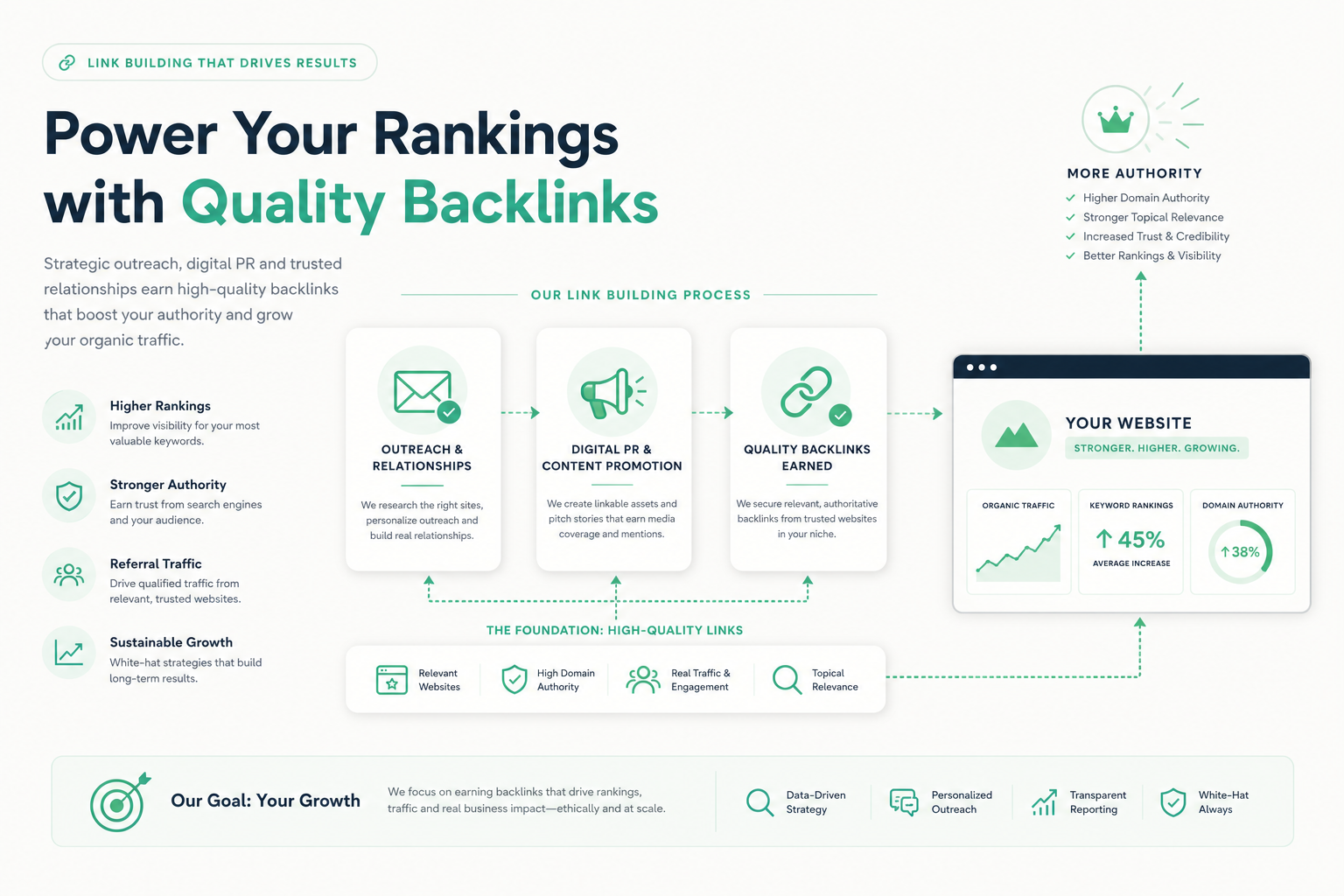
Data and tools earn natural links. Digital PR for research releases.
Avoid artificial guest posts without value. Read link building.
Metrics for thought leadership
Track: referring domains to flagship pages, branded search, engagement (time, scroll), leads from pillar pages.
Rankings on long-tail terms grow slowly — measure year over year.
Thought leadership in numbers
Thought leadership SEO checklist
Prioritize one flagship at a time.
Our SEO service.
- Topic with real expertise
- Author page and schema
- Pillar + cluster structure
- Data or original perspective
- Distribution plan at launch
- Annual flagship update
Frequently asked questions
Difference between thought leadership and a blog?
Depth and originality — pillar content others cite vs. news posts.
How does E-E-A-T show on the page?
Author, bio, sources, update date, and experience-based content.
Must thought leadership be from the CEO?
Not required — demonstrable expertise and visible author matter most.
How do I get links?
Data, research, tools, and digital PR — not bought links.
How long does it take?
Months to years — branded search and links grow before traffic spikes.