Why brand and non-brand are separated
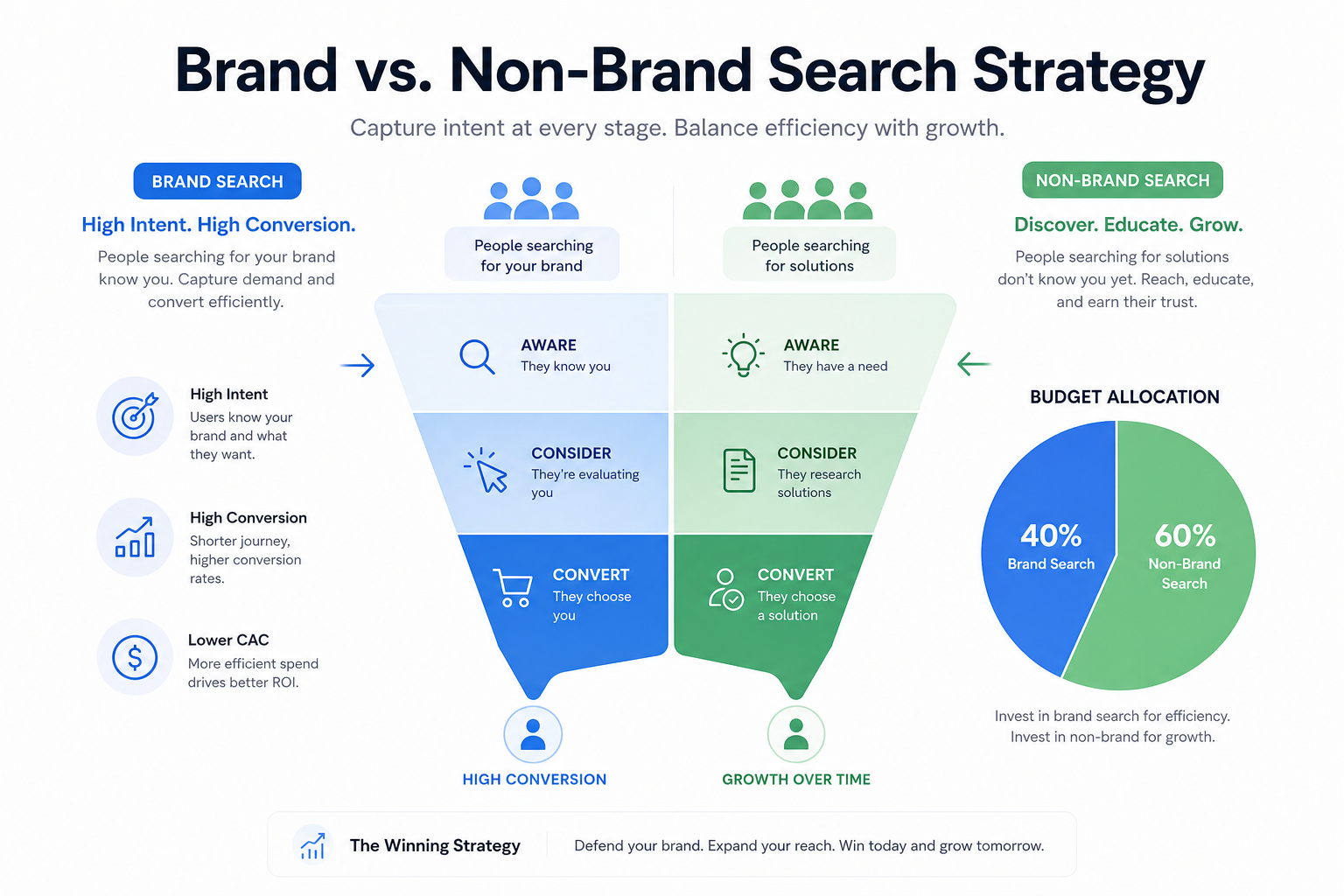
Brand Search targets queries where users already search for your brand (e.g. "AlgoTerra", "AlgoTerra Google Ads"). Non-brand Search reaches generic or category queries (e.g. "google ads agency", "digital marketing").
Brand and non-brand campaigns are separated because they have different goals, CPC dynamics, and metrics. Brand protects and reinforces; non-brand generates new demand.
Without separation, reporting skews: brand inflates ROAS artificially, and non-brand true performance stays hidden.
High brand ROAS can mislead
Brand Search — protection and visibility
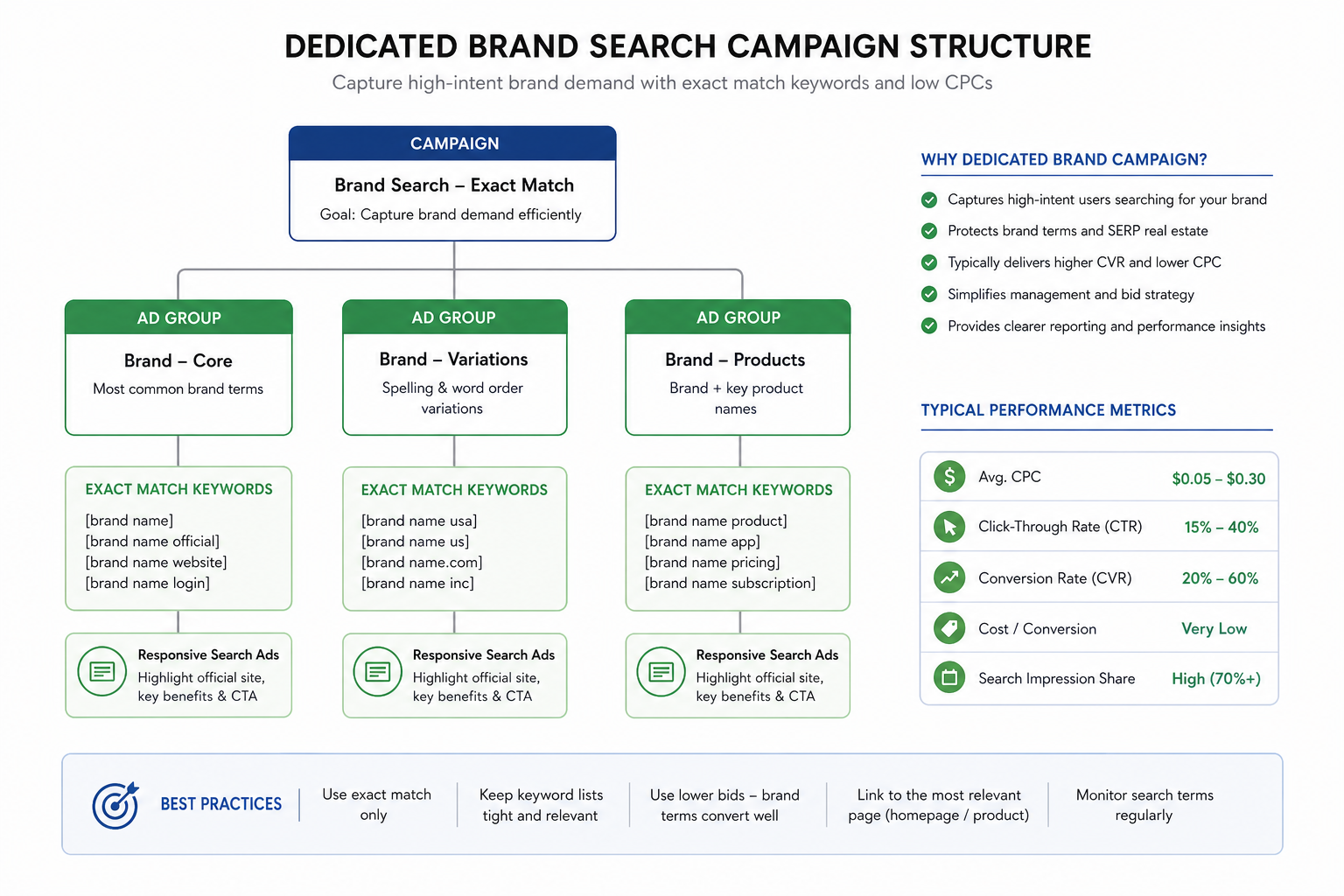
Brand campaign ensures your ad shows on brand queries before competitors. Competitors can bid on your brand name — without your own brand campaign you lose control.
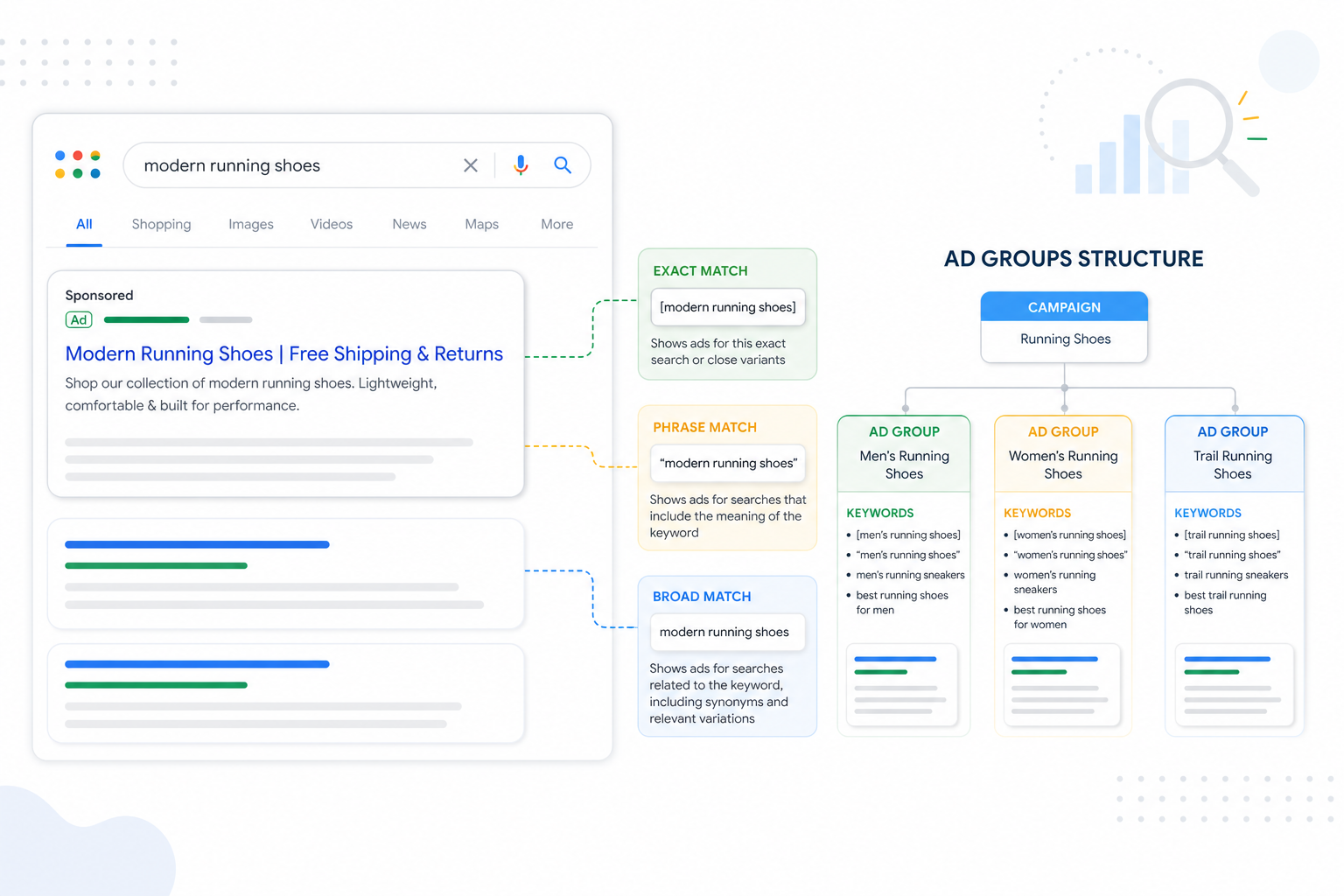
Use exact and phrase match for brand terms. Add competitor negatives to brand campaign (no need to bid on competitor names). Bid strategy: usually Target Impression Share (top of page) or low manual CPC.
Brand budget is typically 10–20% of Search budget — depends on brand awareness and competitor aggressiveness.
Non-brand Search — generating new demand
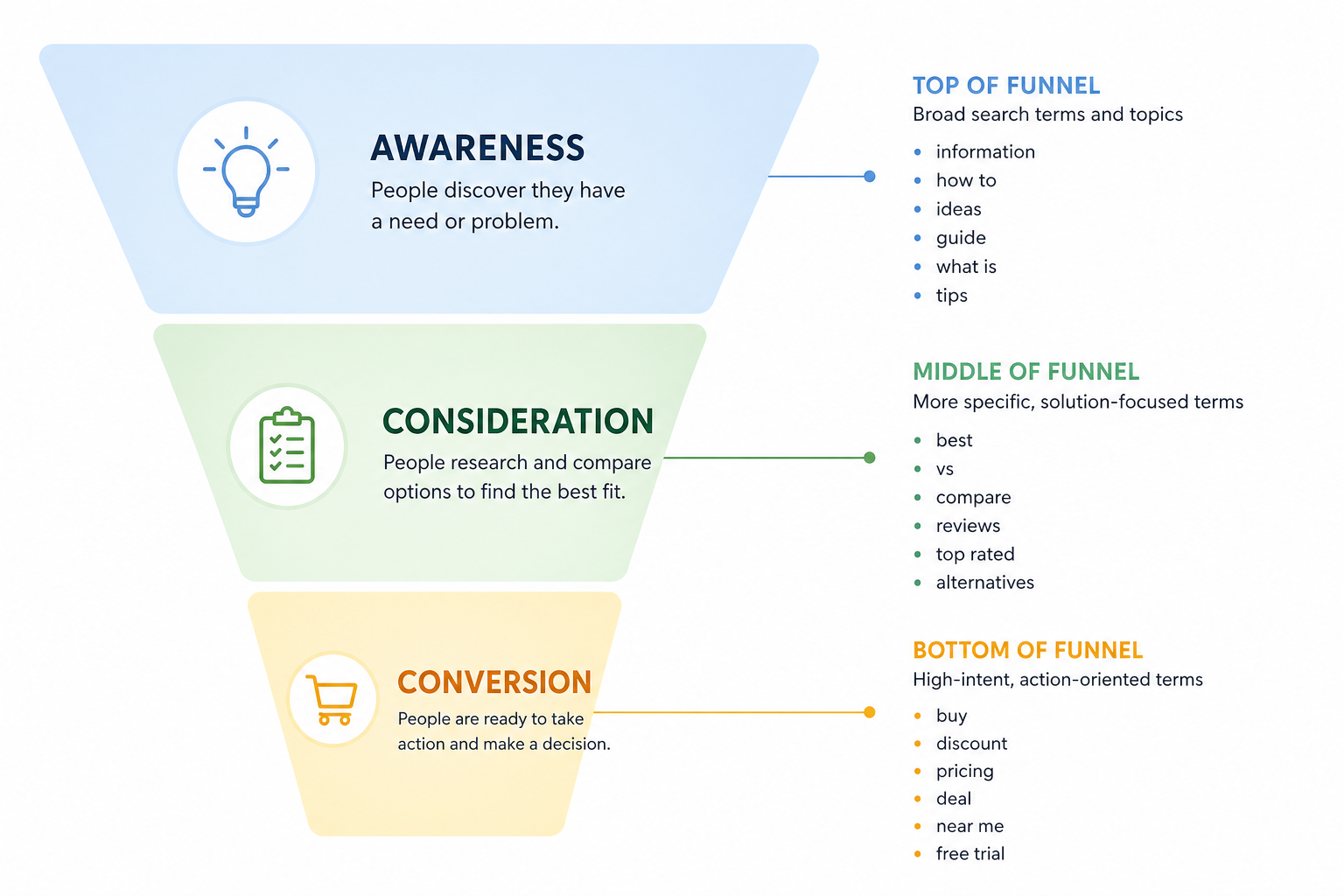
Non-brand is Search growth engine: category, problem, and comparison queries. Here you measure true new customer acquisition — CPA, ROAS, and conv rate matter.
Structure: themed ad groups by intent (see Search keywords). Smart Bidding scales non-brand when conversion data is sufficient.
Non-brand needs more negatives, tighter Search Terms routines, and often more aggressive landing page optimization than brand.
PMax brand exclusions
Performance Max can capture brand queries automatically if brand exclusions are not enabled. This inflates PMax ROAS and hides brand true incrementality.
Enable PMax brand exclusions and keep brand traffic in a separate brand Search campaign. Check Brand Settings regularly.
PMax fits non-brand discovery and remarketing scale — not "free" brand ROAS.
Incrementality — what brand ads actually add
Incrementality measures how many conversions happened because of ads vs organically. On brand queries incrementality is often low — much would have happened anyway.
Test with geo experiments (ads on/off by region), holdout tests, or platform conversion lift tools. Do not scale brand budget on ROAS alone.
Non-brand incrementality is typically higher — budget growth should go there when unit economics support it.
Budget allocation brand vs non-brand
Starting model: brand 10–20%, non-brand 80–90% of Search budget. Increase brand budget only if impression share drops due to competitors.
Scale non-brand when CPA/ROAS targets are met and conversion data is sufficient. Smart Bidding helps non-brand scaling.
Report brand and non-brand separately in QBRs — combined Search ROAS leads to wrong decisions.
Smart Bidding in brand vs non-brand
Brand often needs Target Impression Share or low manual CPC. Non-brand scales better with Target CPA/ROAS.
Do not combine brand and non-brand in the same Smart Bidding portfolio — different conversion dynamics confuse the algorithm.
Competitors on brand queries
If competitors bid on your brand name, brand campaign is mandatory — not optional. Monitor Auction Insights for brand terms.
Legal: using a competitor brand in your own ad copy is limited. Brand protection in your own queries is strategic, not aggressive.
Brand vs non-brand in numbers
Summary
Brand vs non-brand split is the foundation of Search reporting and budgeting. Separate campaigns, PMax brand exclusions, and incrementality measurement prevent misleading ROAS.
Next, go deeper on Google Ads audit and Search Terms routines. Our Google Ads service helps with account structure.
Brand vs non-brand checklist
Run through this list in account structure audits.
- Separate brand Search campaign exists
- Non-brand split by funnel stage
- PMax brand exclusions enabled
- Brand and non-brand reported separately
- Brand impression share monitored
- Incrementality assessed (not ROAS alone)
- Smart Bidding separate for brand/non-brand
- Auction Insights checked for brand terms
Frequently asked questions
Should brand Search be a separate campaign?
Yes. A separate brand campaign enables proper reporting, budgeting, and PMax brand exclusion settings.
Why are PMax brand exclusions important?
Without exclusions, PMax captures brand queries and inflates ROAS. Brand exclusions return brand traffic to brand Search.
What is incrementality on brand?
Incrementality measures conversions that would not have happened without ads. On brand queries it is often low — do not over-invest on ROAS alone.
How much budget for brand?
Typically 10–20% of Search budget. Increase only if impression share drops due to competitors.
Can brand and non-brand share a Smart Bidding portfolio?
Not recommended. Different conversion dynamics confuse the algorithm — keep separate campaigns and strategies.