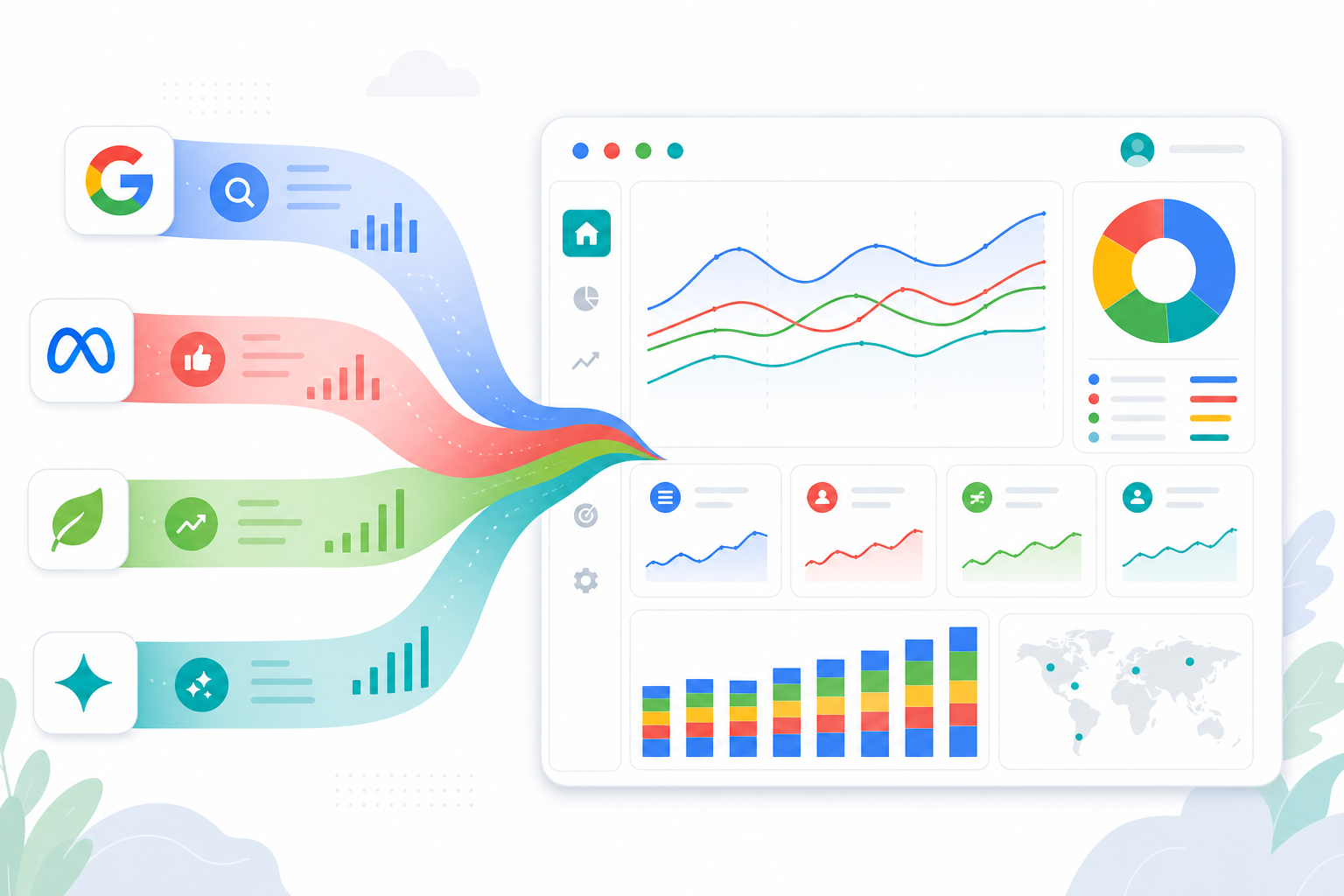
Why is marketing model choice a strategic decision?
Marketing model is not just a cost question — it defines how fast you scale, how data flows, and who owns growth. Wrong model slows months: hiring, agency coordination, channel silos, or strategic gap.
For growth companies (€1–10M revenue) the typical path crosses multiple models. Start may be one agency or coordinator; as growth continues, need for integrated Full Stack partner or in-house team increases.
This article does not sell one model for all — it helps identify your phase and which combination is the next sensible step. Each model links to a deep-dive article.
Starting point: separate three roles — strategic ownership, channel execution, daily coordination. Models split these differently. Full Stack focuses on integrated execution and data; fractional CMO on strategy; internal person on culture.
Five common marketing models for growth companies
Model 1 — Marketing coordinator + agencies: internal coordinator manages schedules, orders work from Search, Meta, SEO agencies. Cheap start, expensive coordination and silos as you grow. Read Full Stack vs. coordinator.
Model 2 — Multiple channel agencies without internal owner: fast launch per channel, weak whole. Agency optimizes its channel. Read Full Stack vs. agency.
Model 3 — In-house marketing team: deep ownership, slow build, high fixed cost. Right over €10M revenue. Read Full Stack vs. in-house.
Model 4 — Hybrid: fractional CMO + agency/team or internal coordinator + Full Stack. Often best at €3–10M phase. Read team vs. agency vs. fractional CMO.
Model 5 — Full Stack partner: integrated Google Ads, Meta, SEO, GEO, shared data and reporting. One accountable partner. Fits €1–10M with multiple channels.
- Coordinator + agencies: cheap start, silo risk
- Multiple agencies: fast channel-specific start
- In-house team: ownership, slow and expensive to build
- Hybrid + fractional CMO: strategy + execution split
- Full Stack: integrated execution and data
Full Stack at the center — what it replaces and what it does not
Full Stack replaces: multiple channel agencies, channel generalist inside company, overlapping reporting, attribution conflicts, and GEO gap.
Full Stack does not replace: marketing director for board (need fractional CMO or hired leader), internal brand and product expertise, daily sales-marketing collaboration inside organization.
Practical recommendation for €3–10M company: Full Stack for channels + fractional CMO for strategy + one internal coordinator for sales and product. Total cost €10,000–20,000/mo — below full in-house team, more than coordinator alone.
Read basics in Full Stack marketing guide and channel synergy article.
Decision matrix: revenue, budget, and channels
Under €1M revenue: one channel + one agency or founder-led marketing. Full Stack rarely justified — volume too small.
€1–3M: one–two channels, budget €30,000–100,000/year. Channel agency or light Full Stack if SEO/GEO important.
€3–10M: multiple channels, budget €100,000–500,000/year. Full Stack + fractional CMO or internal coordinator. Avoid three separate agencies without owner.
€10–20M: in-house team builds, Full Stack or agency supplements. Hired marketing director when budget over €800,000/year.
Over €20M: in-house team + leader; Full Stack for niche channels or international expansion.
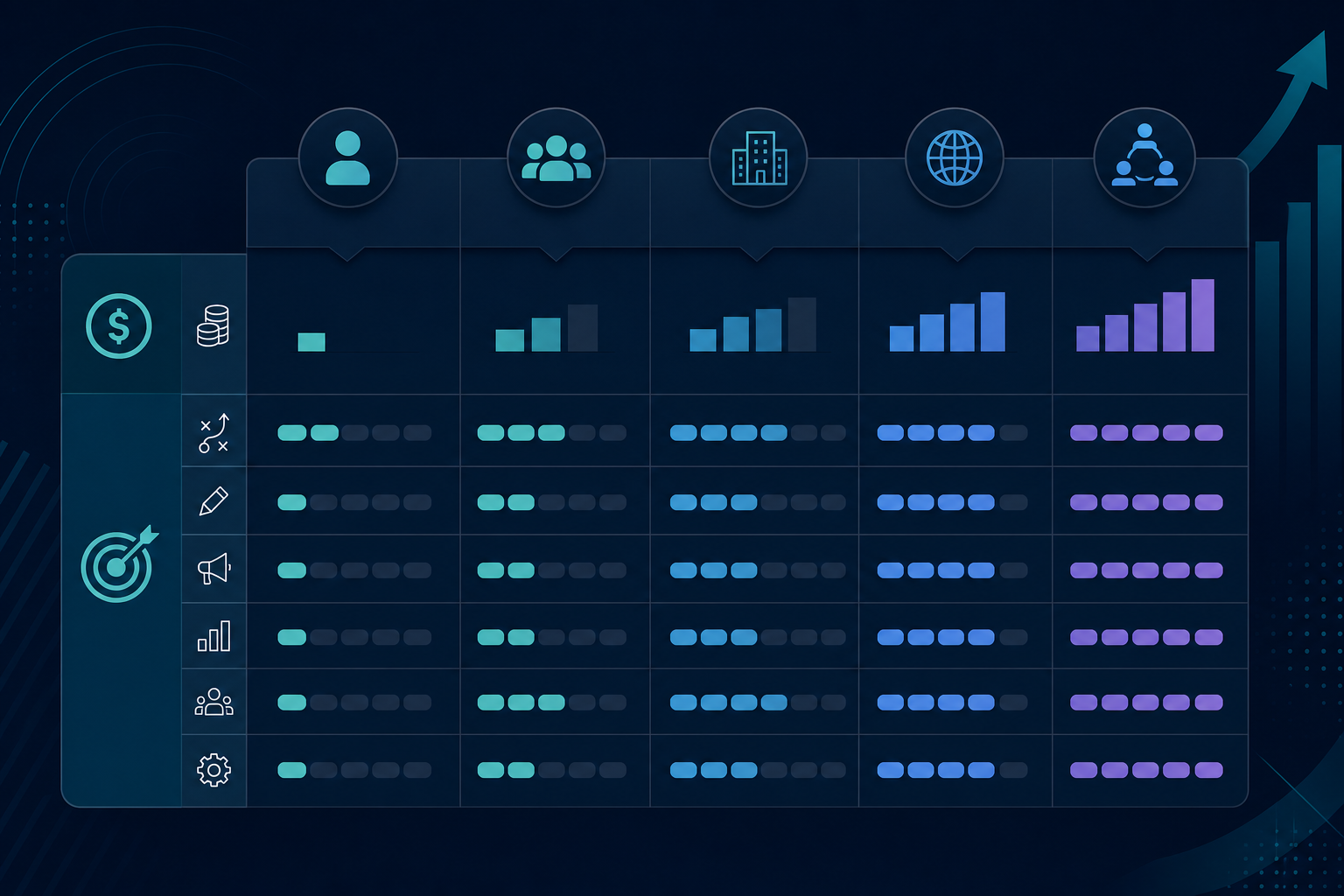
Cost comparison across all models
Coordinator + 2–3 agencies: €7,000–20,000/mo. Hidden costs: coordination, duplicate work.
3 channel agencies without internal: €6,000–18,000/mo + strategy consultant. Hidden costs: silos, slow decisions.
In-house team 3 FTE: €15,000–25,000/mo. Hidden costs: hiring, training, strategic gap.
Hybrid fractional CMO + Full Stack: €7,500–18,000/mo. Often best value at €3–10M.
Full Stack alone: €4,000–12,000/mo. No strategic leader — add fractional if needed.
Compare in detail in budget allocation guide how to split investments after model choice.
SEO and GEO — why model determines visibility
In 2026 organic growth splits between classic SEO and GEO (AI answers). Models where nobody owns organic whole stay invisible in investigating phase.
Coordinator + SEO agency: articles come but GEO missing. Search agency does not monitor ChatGPT visibility. Result: good Google, weak AI.
Multiple agencies: SEO and paid separate — content does not serve ads or vice versa. Full Stack combines SEO and GEO in same strategy.
In-house team: rarely GEO skills. Outsourced Full Stack or GEO specialist supplements.
Audit current visibility: GEO audit and share of voice.
Transition path by phase
Phase A (0–1M): founder + one agency or DIY. Measure basic conversions.
Phase B (1–3M): add channel or hire coordinator. Consider Full Stack if agencies conflict.
Phase C (3–10M): Full Stack + fractional CMO. Shared data and QBR. Read marketing QBR.
Phase D (10–20M): in-house team grows, Full Stack supplements or transitions in-house. Fractional helps recruit leader.
Phase E (20M+): hired leader, in-house team, agencies for niche channels. Full Stack for international expansion.
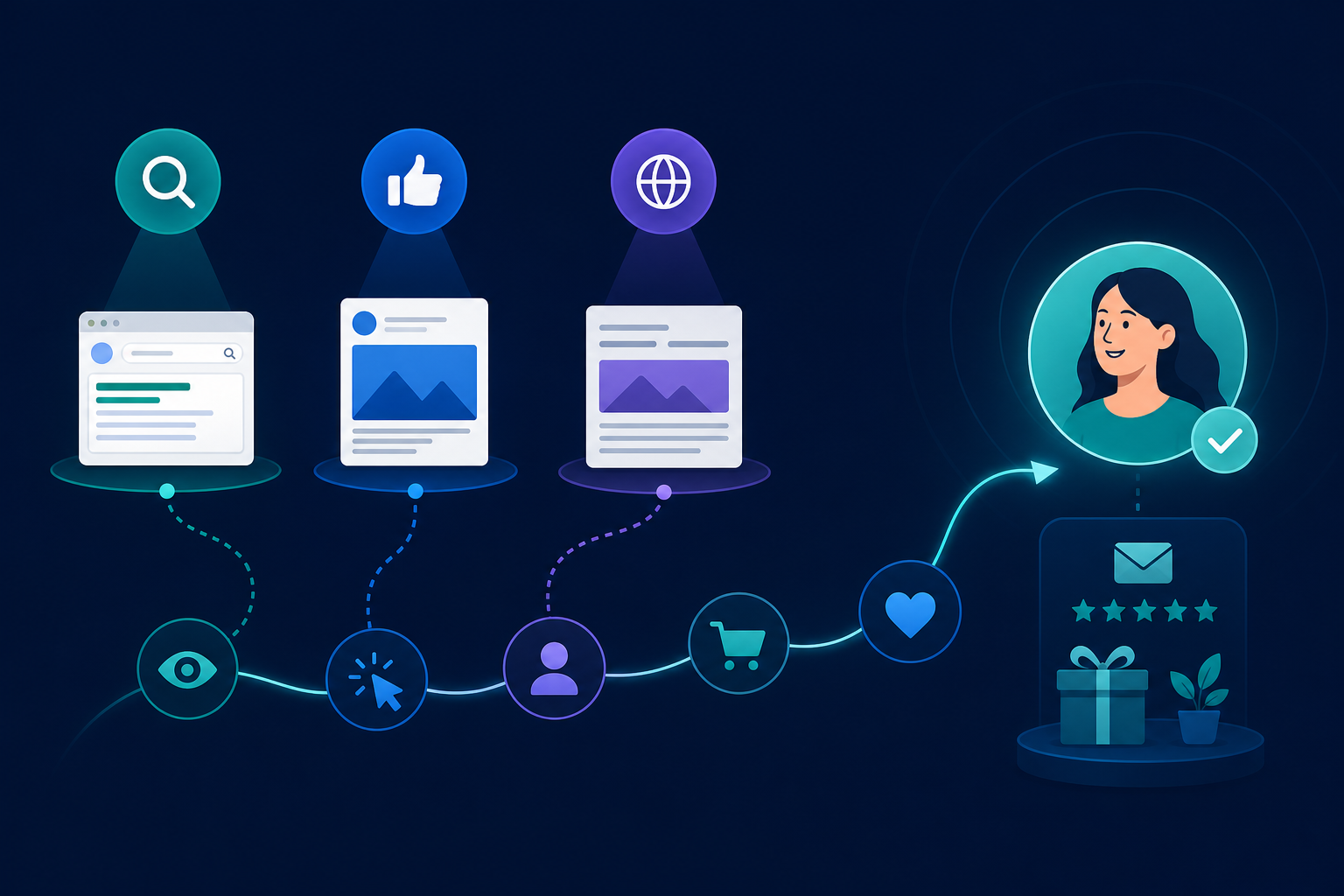
Decision tree: which model now?
Question 1: More than one growth channel (Search, Meta, SEO, GEO)? No → channel agency may suffice. Yes → continue.
Question 2: Shared data and attribution in place? No → Full Stack or measurement project first. Yes → continue.
Question 3: Strategic owner (CMO, fractional)? No → add fractional before scaling channels. Yes → continue.
Question 4: Revenue over €10M and team over 3 FTE? Yes → build in-house, supplement with Full Stack. No → Full Stack + light internal.
Question 5: Is GEO in strategy? No → risk in 2026. Full Stack includes GEO.
- 1 channel → agency OK
- 2+ channels without data → Full Stack
- No strategy → fractional CMO first
- €10M+ and team → in-house + supplement
- GEO missing → Full Stack or GEO partner
Hub
Summary and next steps
There is no one right marketing model — there is the right model for a given phase. Coordinator, agency, in-house team, and Full Stack are tools, not religions.
For growth companies at €3–10M, winning combination is often: Full Stack for channels + fractional CMO for strategy + internal link to sales. Cost-effective, fast, measurable.
Next steps: (1) read deep comparisons from links above, (2) run 15-point audit, (3) request Full Stack mapping if you have multiple channels without shared data.
Update model every 12–18 months in growth phase. What worked at €3M revenue does not work at €10M — plan transition in advance.
Deep comparisons — read next
This hub article is the starting point. Each model is detailed in its own article:
Full Stack vs. marketing coordinator — when considering first marketing hire or coordinator over agencies. Covers cost, channel coverage, hybrid.
Full Stack vs. marketing agency — when you have one or more agencies and channel silos slow growth. Covers data, GEO, transition path.
Full Stack vs. in-house team — when weighing hiring chain vs. outsourced integrated team. Covers speed, skills, 3–5 year cost comparison.
Full Stack marketing — fundamentals: why integration wins, budget split, measurement. Team vs. agency vs. fractional CMO — organization level for strategic leadership.
How to measure if the right model succeeds?
Model choice is a means — metrics tell if it works. Do not measure only "agency-reported ROAS" or "SEO traffic". Measure business: leads, sales, margin, CAC, payback time.
Quarterly: (1) total growth vs. marketing budget, (2) marginal channel return (budget allocation), (3) organic share (SEO + GEO) vs. paid, (4) time to decision (how fast budget moves between channels).
If metrics do not improve in 6 months, model is wrong — not necessarily partner. Change model (e.g. coordinator + agencies → Full Stack) before switching agencies repeatedly within same model.
Successful Full Stack model shows: one report, clear budget allocation, GEO included, channels reinforce each other (e.g. branded search growth after Meta investment). Failed model shows: same data gap as before, just fewer vendors.
Summary table: five models at a glance
Coordinator + agencies: best under €3M and 1–2 channels. Weakest with four channels and no data. Cost medium, integration slow.
Multiple agencies: best when one channel dominates and strategy is documented. Weakest when channels compete. Cost high, launch speed good.
In-house team: best over €10M when brand is core. Weakest under €5M due to hiring cost. Cost high, ownership best.
Hybrid fractional + Full Stack: best at €3–10M growth phase. Cost medium–high, strategy and execution split correctly.
Full Stack alone: best €1–10M with multiple channels without in-house team. Add fractional CMO if board needs strategic partner. Cost reasonable, integration best.
This table does not replace deep articles — it helps choose which article to read next. Start with audit, then one comparison, then mapping.
Frequently asked questions
Which marketing model is best for a growth company?
At €3–10M revenue often hybrid: Full Stack for channels + fractional CMO for strategy. Under €3M one agency may suffice. Over €10M in-house team grows.
Does Full Stack replace all other models?
No. It replaces channel fragmentation and data silos. Strategic leadership and internal brand expertise still need their own roles.
How do I choose between coordinator, agency, and Full Stack?
Coordinator coordinates — does not replace channel experts. Agency in one channel OK. Multiple channels → Full Stack. Read comparisons from links.
When to transition to Full Stack?
When you have 2+ channels, broken data, missing GEO, or agencies optimizing in conflict. Typically €3–10M phase.
Where do I start decision-making?
15-point audit + this article's decision tree. Then deep-dive comparison for your model.