Why Full Stack and traditional agency are not synonyms
Marketing agency is a broad term. It can mean a channel specialist (Google Ads agency), creative social agency, SEO partner, or strategy consultant. Each can be excellent in its role — and weak if you expect full marketing ownership.
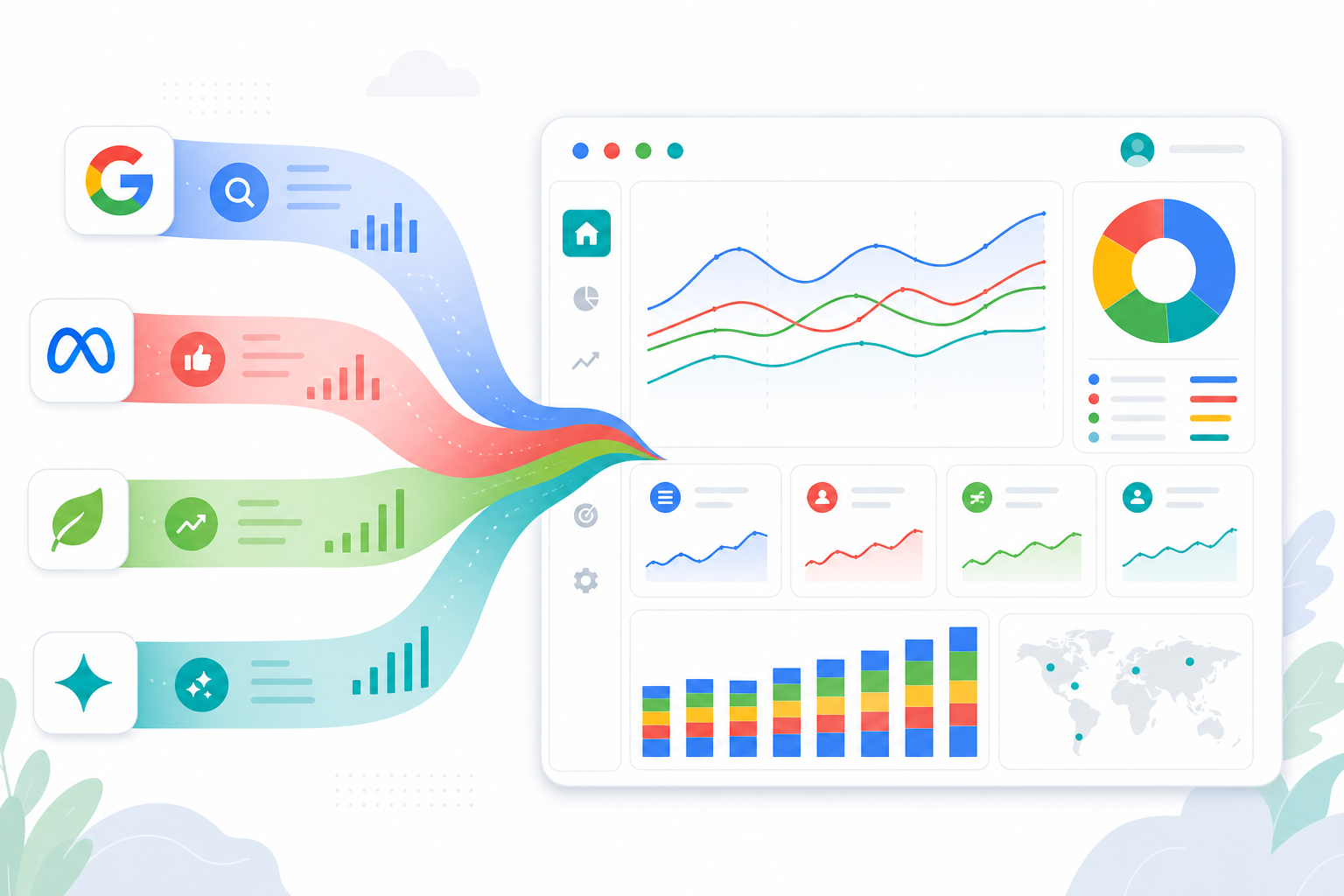
The growth company problem is not "agency vs. no agency" but "one integrated partner vs. multiple separate vendors". When the Search agency optimizes last click, the Meta agency scales reach, and the SEO agency produces blogs without shared strategy, budget flows where the report looks best — not where the whole grows.
Full Stack marketing means an agency model where channels are led as one portfolio. The same team (or part of it) sees Search data, Meta signals, organic traffic, and GEO visibility in one view. Decisions are based on attribution, not vendor invoices.
This article does not claim all traditional agencies are bad. It claims the multi-vendor model creates structural costs and risks that Full Stack partners are designed to remove. Also compare Full Stack vs. coordinator.
To assess your current agency network, use the 15-point marketing audit — especially data, attribution, and channel synergy.
Traditional marketing agency — strengths and structural limits
Traditional model: hire a specialized agency per channel or task. Search agency runs Google Ads and Performance Max. Social agency handles Meta and Instagram. SEO partner produces content and technical optimization. Strategy consultant visits quarterly — if budget allows.
Strengths: deep channel expertise, fast launch in one channel, clear KPIs per channel, scalability without hiring. With small budget and one main channel this is often the smartest choice.
Limits: nobody owns the whole. Search optimizes ROAS — even if Meta built branded search that Search captures cheaply. SEO produces articles — even if paid media needs the same landing pages. GEO is often completely outside scope because no agency owns AI visibility.
Reporting is channel-specific: four PDFs per quarter. Leadership gets four different growth stories. Without a strategic owner or Full Stack partner, decisions follow the loudest report.
Coordinating multiple agencies consumes time: an internal person (or CEO on the side) attends meetings, translates messages, and tries to merge conflicting recommendations. Hidden cost not shown on agency invoices.
Agency incentives can conflict with your business: agencies often optimize contract metrics (clicks, reach, rankings) not revenue or margin. Good agencies connect these — but only in their channel, not at portfolio level.
- Strength: deep expertise in one channel
- Strength: fast launch without hiring
- Weakness: channel silos and conflicting priorities
- Weakness: GEO and cross-channel attribution often missing
- Weakness: strategic ownership needs separate leader
Full Stack agency model — integrated partner
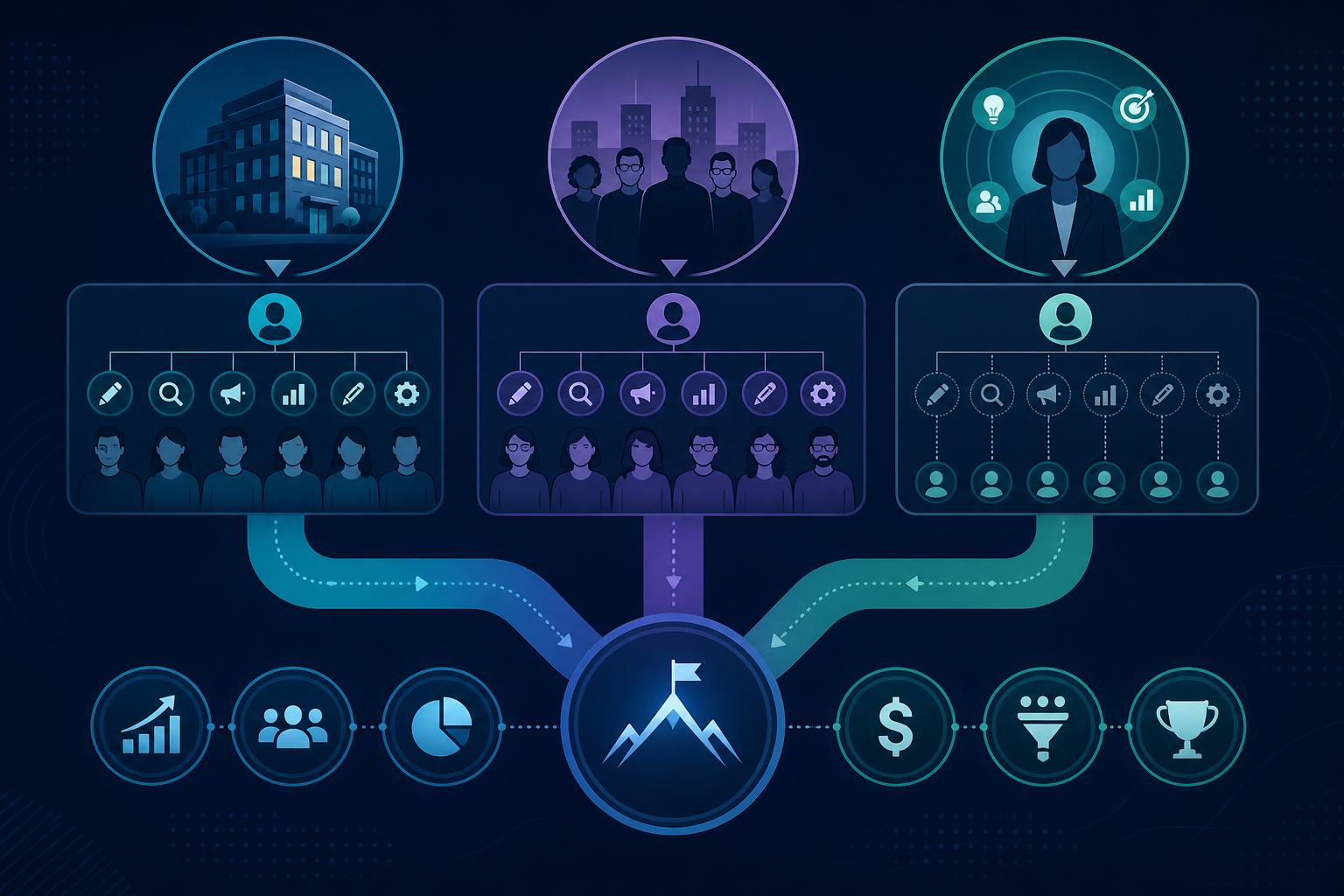
A Full Stack partner is not "an agency that does everything superficially" — but an organization where channel experts report to the same leadership and share the same data. Google Ads specialist and SEO strategist sit at the same table — literally or through process.
Practical difference: when a Meta campaign lifts branded search volume, the Search team sees it the same week and adjusts budget. When a new SEO article publishes, paid media uses it as a landing page. When a GEO audit reveals a competitor mention in ChatGPT, content team reacts — not at the next quarterly meeting.
Full Stack typically includes: strategy and prioritization, channel execution, shared measurement (measurement stack), quarterly business reporting, and continuous optimization. One contract, one accountable partner, one truth.
AlgoTerra Full Stack combines paid media, organic search, and GEO — we do not separate "SEO agency" and "Ads agency" from the client view. The client gets growth, not four invoices.
Full Stack does not replace a marketing director in large organizations — but for €1–10M revenue companies it often replaces both multiple agencies and the strategic gap. Read organization model comparison.
Head-to-head: traditional agency vs. Full Stack
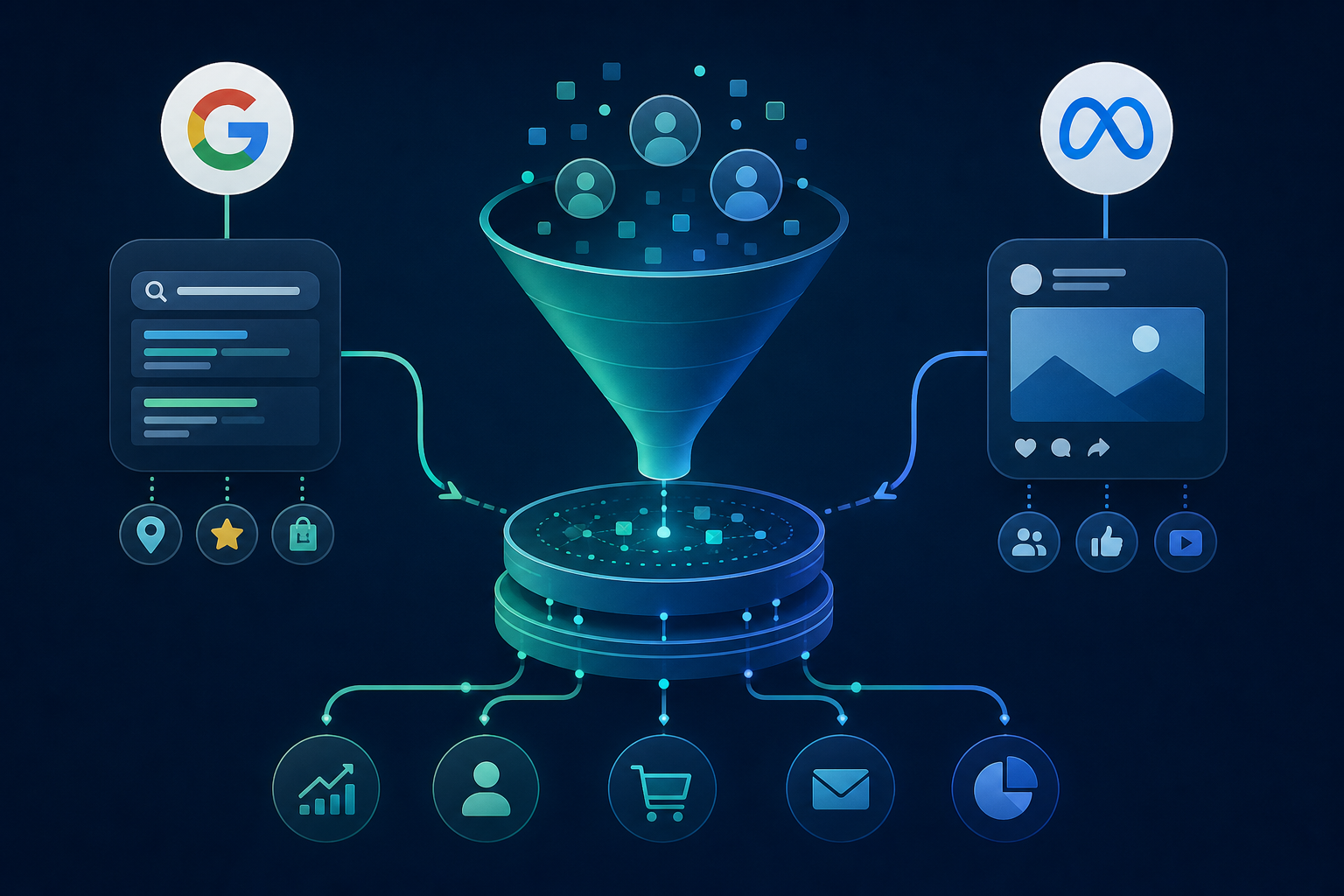
Strategic ownership: traditional agency executes given strategy; rarely builds it. Full Stack participates in strategy and prioritizes channels at portfolio level.
Channel coverage: traditional model needs multiple contracts. Full Stack covers Google Ads, Meta, SEO, and GEO together.
Data: traditional = separate reports. Full Stack = shared measurement stack and attribution.
Launch speed: one channel 2–4 weeks per agency; four channels with four agencies 2–4 months with coordination. Full Stack 2–4 weeks for full package.
Cost: three agencies €6,000–18,000/mo + coordination. Full Stack €4,000–12,000/mo integrated — often lower total cost.
Scalability: traditional model gets complex as channels grow. Full Stack scales by expanding the same team.
GEO: often missing in traditional model. Full Stack includes GEO strategically — not as add-on project.
Cost comparison and hidden expenses
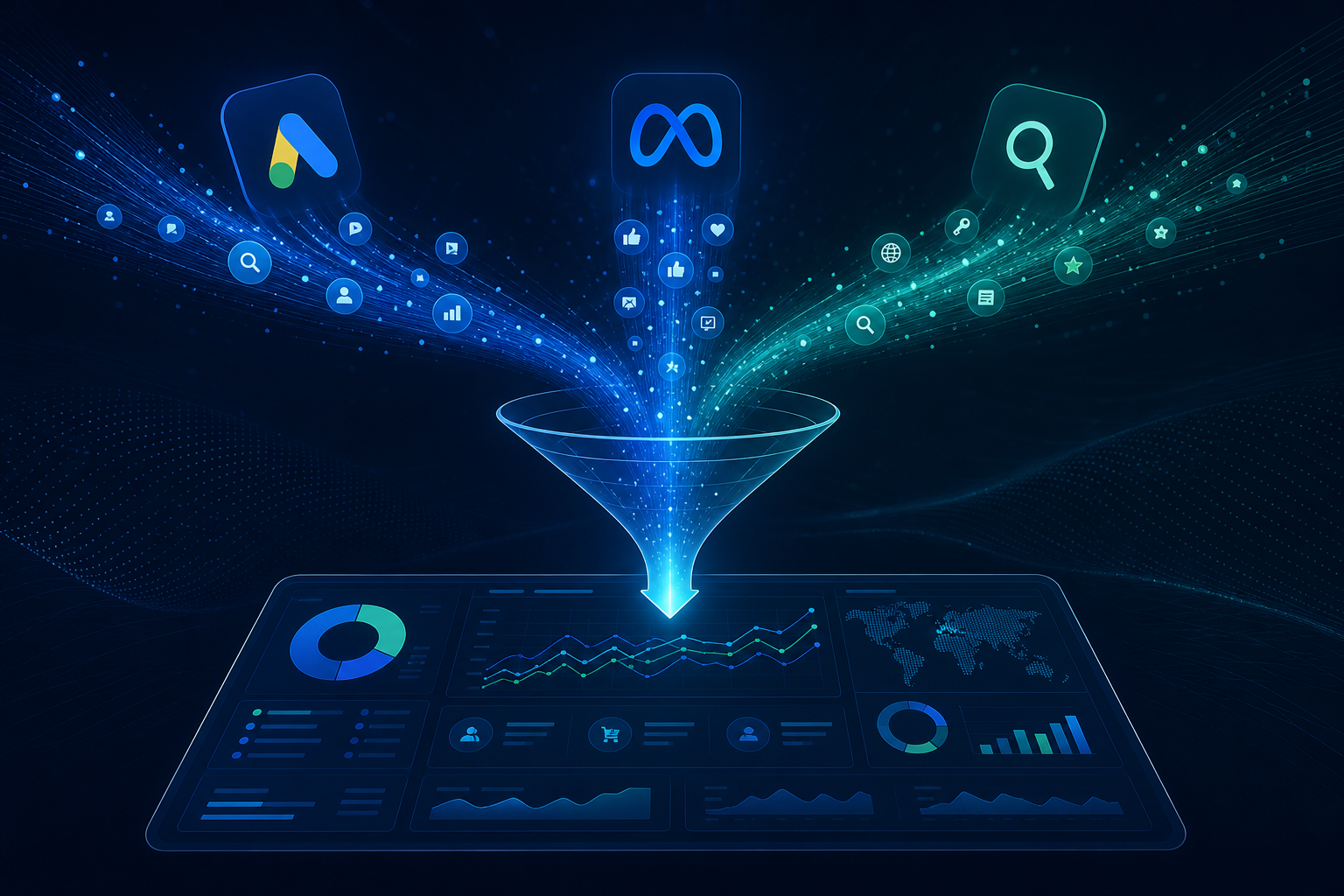
Three channel agencies: typically €2,000–6,000/mo each = €6,000–18,000/mo. Plus strategy consultant €1,500–4,000/mo. Internal coordinator €4,000–5,500/mo. Total €11,500–27,500/mo — without shared data.
Full Stack partner: €4,000–12,000/mo depending on media budget and scope. Includes strategy, execution, reporting, and integration. No separate coordination layer.
Hidden costs in traditional model: overlapping meetings, conflicting recommendations, slow decisions, attribution conflicts, content duplication (SEO and Meta produce separate assets), GEO gap.
ROI: the question is not "which is cheaper" but "which produces more growth per euro". Channel synergy typically brings 20–40% efficiency gain — realized only in integrated model.
Why SEO and GEO separate Full Stack from traditional agency
Traditional SEO agency produces articles and technical audits — well. But GEO (visibility in ChatGPT, Perplexity, Google AI Overviews) requires a different approach: citable content, entity structure, FAQ architecture, and ongoing monitoring.
Many Search agencies do not offer GEO at all. Social agencies do not master organic search. Result: visible in ads but not in AI answers — competitors take investigating demand.
Full Stack partner combines SEO and GEO in the same content strategy: article ranks on Google and serves as source in AI answers. Paid media tests messages, organic scales winners.
Read GEO and ChatGPT visibility and AI-citable content — they explain why GEO is not "SEO add-on" but a separate channel belonging in Full Stack.
SEO + GEO
When is traditional agency enough — and when Full Stack?
Traditional channel agency is enough: one clear growth channel (e.g. Google Ads only), budget under €100,000/year, strategy already documented and agency only executes, no need for SEO/GEO.
Full Stack makes sense: multiple channels simultaneously, budget €50,000–500,000/year, SEO and GEO strategically important, previous agencies created silos, board wants one business report.
Hybrid: keep specialist agency in one niche channel (e.g. LinkedIn Ads), Full Stack runs core portfolio. Important: Full Stack owns the whole and coordinates.
Compare Full Stack vs. in-house team if considering insourcing instead of agencies.
- 1 channel, small budget → channel agency OK
- 2+ channels + SEO/GEO → Full Stack justified
- Multiple agencies without data → move to Full Stack
- Over €500k budget → Full Stack + fractional CMO
Transition path: from multiple agencies to Full Stack
Step 1: Audit current agencies — data, attribution, content, GEO. Identify silos and overlap.
Step 2: Choose one accountable partner (Full Stack). Move channels in phases — first unify measurement and reporting, then strategy, then replace agencies.
Step 3: Run 90-day pilot on one product line or market. Measure total leads/conversions, not channel wins.
Step 4: Scale or revert — but do not stay forever between three agencies without an owner. That is the most expensive state.
Common mistakes in agency selection
These mistakes cost growth companies months and tens of thousands of euros.
- Choosing agency on price without integration requirements
- Multiple agencies without strategic owner
- SEO and GEO to different vendors without shared content strategy
- Accepting channel reports without business connection
- Expecting Full Stack results from channel-specific agency
- Leaving measurement stack for "later"
Selection checklist: Full Stack or traditional agency?
If you answered "yes" to three or more, Full Stack is likely better than multiple separate agencies.
- More than one agency without shared data?
- Is GEO reporting completely missing?
- Are channels reported as separate wins?
- Does decision-making take weeks between agencies?
- Is marketing budget over €50,000/year?
- Do you want one accountable partner for growth?
Practical example: from three agencies to Full Stack
E-commerce, €4.2M revenue, €280,000/year marketing budget. Three agencies: Search (€2,800/mo), Meta (€2,200/mo), SEO (€1,800/mo). Internal marketing manager coordinates 50% of time with agencies.
Problem: Search reported 520% ROAS, Meta €34 CPA, SEO +40% traffic. Total sales grew only 4% year-over-year. Meta had cut prospecting, Search captured branded search, SEO drove traffic to low-converting products.
Transition: one Full Stack partner, shared GA4 + Enhanced Conversions, quarterly budget allocation. After first quarter total sales +18%, same media budget.
Lesson: three good agencies do not produce triple results without integration. Full Stack is not "another agency" — it is a replacing layer that removes intermediaries and unifies signals.
Compare e-commerce Google Ads guide and B2B SaaS marketing if your business model differs — the principle (one truth, one owner) is the same.
Reporting: four PDFs vs. one business view
In the traditional model leadership gets four different reports quarterly. Each uses different metrics, timeframes, and definitions of "good results". Merging requires CFO or CEO time — which does not exist.
Full Stack reporting starts from business: revenue, margin, leads, CAC, LTV — then channel contribution. Channels are levers, not the goal. Same logic as marketing KPIs article.
Quarterly report should answer three questions: where we invest next 90 days, which channel produced best marginal return, what we stop. Traditional agency report often answers only one: what we did in our channel.
If the board asks "why did growth slow", traditional model produces four explanations. Full Stack produces one data-backed story — and a fix plan.
Contracts, commitment, and switching cost
Multi-agency model has multiple contracts: different notice periods, SLAs, owners. Replacing one agency does not fix the system — remaining agencies may not share data with the new one.
Full Stack contract is one whole: clear scope (which channels, reporting, GEO monitoring), shared measurement, one decision point. Switching cost is higher than replacing one channel agency — but you switch less often because the model works as a whole.
In pricing compare total cost: three agencies + coordinator + tools vs. one Full Stack package. Do not compare only "Search agency monthly fee" — compare cost per lead or sale across channels.
Pilot before full commitment makes sense: 90 days, one market or product line, shared KPIs. Full Stack mapping can serve as audit before contract — same logic as 15-point audit.
Remember: cheapest agency per channel is often most expensive overall if it leaves integration and GEO for you to handle. Total cost includes your time, coordination, and lost growth.
Frequently asked questions
Is a Full Stack agency the same as a digital agency?
Not always. Digital agency can mean anything digital. Full Stack specifically means integrated Google Ads, Meta, SEO, and GEO with one data and strategy.
Can Full Stack replace all agencies?
Usually yes for core portfolio. Niche channels (e.g. TikTok, LinkedIn) can stay with specialist agencies if Full Stack coordinates the whole.
How much does Full Stack cost vs. three agencies?
Three agencies €6,000–18,000/mo. Full Stack €4,000–12,000/mo. Integrated model is often cheaper and produces better data through synergy.
When is channel-specific agency better?
When you have only one channel, clear strategy, and budget under €100,000/year. Channel depth is then sensible.
How do I evaluate my current agency?
Use the 15-point marketing audit. If more than five items fail, consider Full Stack transition.