
Why Full Stack and a coordinator are not the same thing
When marketing budget grows and channels multiply, the natural reflex is to hire a marketing coordinator: someone who keeps threads together, orders ads from agencies, and compiles reports. That solves organizational chaos — but not necessarily the growth bottleneck.
A coordinator is often a generalist who understands marketing basics and project management. They typically do not optimize Google Ads campaigns daily, write technical SEO, or build GEO visibility in AI search engines. They coordinate — and outsource deep expertise to multiple vendors.
In the Full Stack model, accountability and expertise sit in one system: paid media, organic search, content, and AI visibility are led as a single whole. Data flows to one place; budget is allocated across channels based on data, not vendor invoices.
This comparison is not "coordinator is bad" — but "which role fits which job". With a small budget and one main channel, coordinator + one agency can be enough. With four channels and the board expecting growth, an integrated Full Stack partner is often more effective than coordinator + three separate vendors.
Read more about integrated strategy in our Full Stack marketing article and cross-channel attribution guide — they explain why shared data is the core of this comparison.
Coordinator role
Marketing coordinator — what does the role actually cover?
A marketing coordinator is typically the first marketing hire in a growth phase. Salary in Finland €3,500–5,500 per month. Tasks often include: social content scheduling, newsletters, event marketing, coordinating agency orders, compiling reports, and managing brand assets.
A coordinator is valuable when you need someone to keep marketing running day to day. They support sales with materials, ensure campaigns launch on time, and act as a link between leadership and external partners.
The limitation is depth: one person does not master Performance Max optimization, Meta CAPI integration, technical SEO, and GEO content strategy simultaneously. The coordinator orders these from separate agencies — and becomes a middle layer without strategic ownership across channels.
Three separate vendors (Search agency, social agency, SEO partner) mean three reports, three goals, and three "wins". Who prioritizes? Often nobody — or a coordinator without enough experience. Channels end up competing for the same budget.
Coordinator + fractional CMO is a better combo than coordinator alone: a strategic leader prioritizes, the coordinator executes daily. Channel expertise is still missing without a separate Full Stack partner.
- Strength: daily operational coordination and internal ownership
- Strength: fast response to internal needs (events, news)
- Weakness: rarely deep expertise in all paid and organic channels
- Weakness: dependency on multiple vendors without integrated data
- Weakness: strategic gap without a marketing director or Full Stack partner
Full Stack marketing — integrated execution
Full Stack marketing means Google Ads, Meta, SEO, and GEO are led as one whole — not separate projects. One partner (or in-house team with the same skills) owns cross-channel prioritization, shared measurement, and content that serves both search engines and AI answers.
In practice this shows up as: shared conversion tracking (Google Ads + Meta + CRM), unified reporting (measurement stack), content that supports organic and paid, and quarterly budget allocation based on data.
Full Stack does not mean "one person does everything" — but one accountable partner and an integrated team with channel depth. In AlgoTerra's model, strategy, execution, and reporting are in the same chain; no intermediaries passing messages between agencies.
Difference from coordinator: coordinator manages process; Full Stack manages results across channels. When Meta builds branded search, Search captures it. When an SEO article ranks, the same content feeds GEO visibility. Coordinator + three agencies rarely achieve the same synergy without an expensive coordination layer.
Read channel synergy for concrete examples of how integrated beats siloed.
Direct comparison: coordinator vs. Full Stack
Channel coverage: coordinator manages vendors — rarely optimizes themselves. Full Stack brings channel experts under one roof. When GEO becomes strategic, the coordinator model requires hiring a new vendor; Full Stack already includes it.
Data and attribution: coordinator compiles reports in Excel from different sources. Full Stack builds a shared attribution model — one truth for conversions, not four conflicting stories.
Speed: hiring a coordinator takes 2–3 months. Full Stack partner launches in 2–4 weeks. Coordinator + three agencies = 3–6 months before everything runs.
Cost: coordinator €4,000–5,500/mo + agencies €3,000–12,000/mo = €7,000–17,500/mo total. Full Stack partner €4,000–12,000/mo depending on scope — often cheaper than four vendors for the same coverage.
Strategy: coordinator executes leadership directives. Full Stack partner participates in strategy, prioritizes channels, and reports on business outcomes — closer to marketing director + execution hybrid than coordinator alone.
Scalability: coordinator scales by hiring more people or agencies — complexity grows. Full Stack scales by expanding the same integrated team — complexity stays manageable.

Cost comparison and hidden expenses
Marketing coordinator: €42,000–66,000 per year with payroll costs. Plus tools (CRM, analytics, ad platforms) €200–800/mo. Three agencies: €36,000–144,000 per year. Total easily €100,000–200,000 per year — without strategic leadership.
Full Stack partner: €48,000–144,000 per year depending on scope and media budget. Includes channel experts, reporting, and integration. No separate "coordination layer" — communication goes directly from partner to leadership.
Hidden costs in the coordinator model: meetings between vendors, duplicate work (two agencies produce the same report), attribution conflicts, slow decisions when nobody owns the whole. These do not show in budget but slow growth.
ROI question: do invested euros produce growth? Weak coordinator + weak agencies = expensive reporting without growth. Full Stack commits to cross-channel outcomes — not just single-vendor metrics.
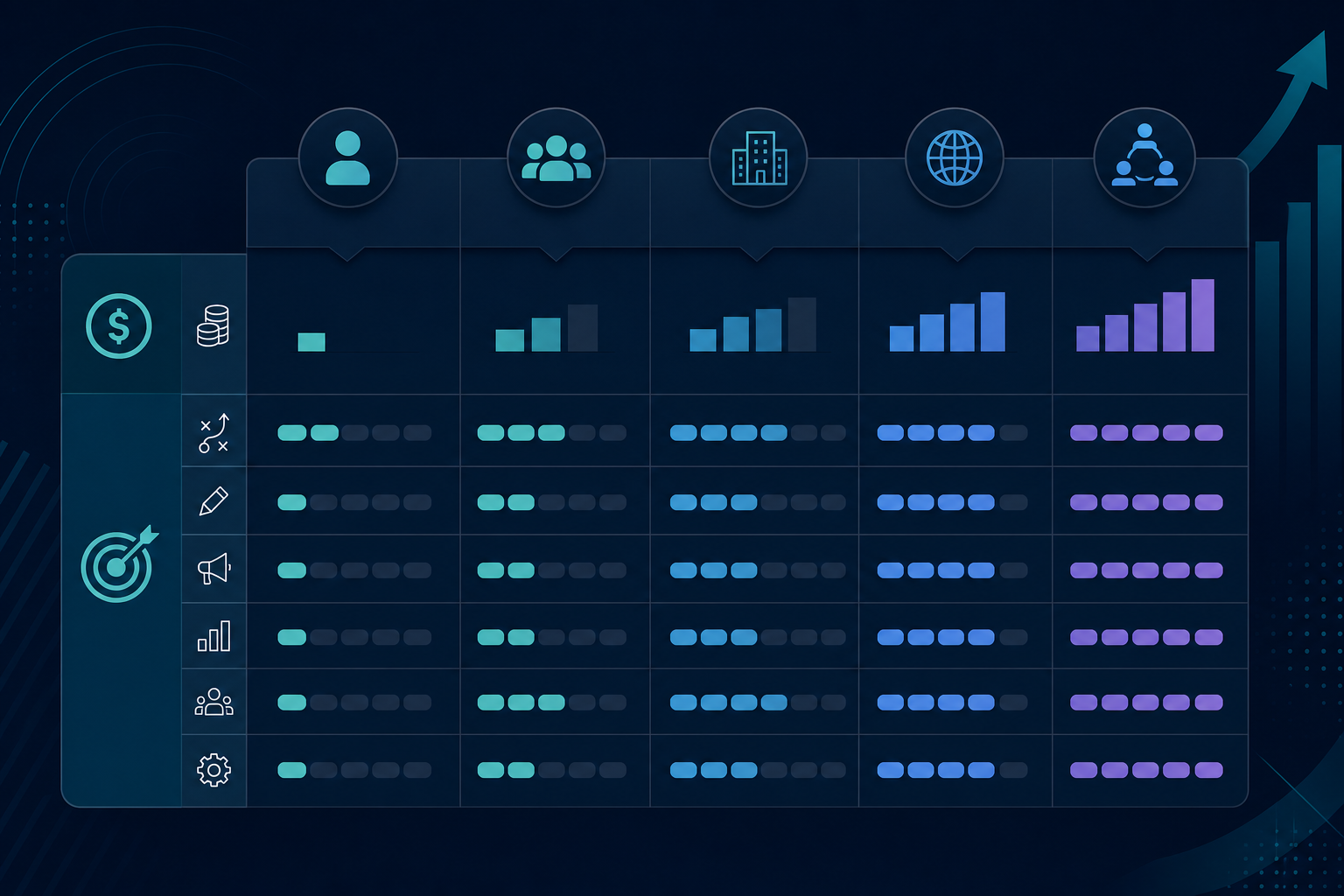
When is a coordinator enough — and when do you need Full Stack?
Coordinator is enough when: marketing budget under €50,000/year, one main channel (e.g. Meta only or Search only), agency handles deep expertise and coordinator manages schedules, local brand with few channels.
Full Stack makes sense when: budget €50,000–500,000/year, multiple channels simultaneously, SEO/GEO strategically important, board expects unified reporting, previous vendors created channel silos.
Transition path: many start with a coordinator, realize vendor coordination takes too much time, and move to a Full Stack partner — the coordinator can remain as internal link to sales and product. Read scale-up marketing for phasing.
Do not replace strategic leadership with a coordinator: if you need budget allocation, QBR reporting, and board sparring, consider a fractional CMO alongside Full Stack execution.
- Under €50k budget: coordinator + one agency may suffice
- €50–500k budget: Full Stack partner often more effective
- Multiple channels + GEO: Full Stack almost always justified
- Hybrid: internal coordinator + external Full Stack is valid
Common mistakes
We see these mistakes often when a company has hired a coordinator and expects Full Stack-level results without an integrated partner.
- Expecting channel expertise in all channels from a coordinator
- Multiple agencies without shared data or strategic owner
- SEO and GEO left for "later" — competitors take organic growth
- Reports compiled manually — decisions weeks late
- Coordinator replaces marketing director — strategic gap remains
- Choosing Full Stack partner on price alone without integration requirements
Decision checklist
Review before hiring a coordinator or switching to a Full Stack partner:
If you answered "no" to more than two questions, Full Stack is likely better than coordinator + multiple vendors. Also compare Full Stack vs. agency.
- Is shared conversion and attribution data in place?
- Does one party strategically own all four channels?
- Are you reporting business outcomes or only channel metrics?
- Is GEO in strategy — not just SEO?
- Will the current model survive the next growth phase?
Frequently asked questions
Can a marketing coordinator replace a Full Stack partner?
No. A coordinator manages process and schedules; Full Stack brings channel expertise and integrated execution. The best combo can be internal coordinator + external Full Stack partner.
How much does a marketing coordinator cost vs. Full Stack?
Coordinator €4,000–5,500/mo plus agencies €3,000–12,000/mo. Full Stack partner €4,000–12,000/mo total. Integrated model is often cheaper and produces better data.
Does a small company need Full Stack marketing?
Under €50,000 annual budget, one channel and one agency is often enough. When channels multiply or SEO/GEO become strategic, Full Stack approach pays off.
How does GEO relate to coordinator vs. Full Stack?
GEO (Generative Engine Optimization) requires content, technical foundation, and ongoing monitoring — rarely a coordinator's core skill. Full Stack includes GEO as part of the whole. Read SEO vs GEO.
Can coordinator and Full Stack work together?
Yes. Internal coordinator links marketing to sales and product; Full Stack partner runs channels and data. This is often the best model for growth companies.